
Unlock Your Dental Crowns and Bridges Cost in Austin, TX
Related Posts


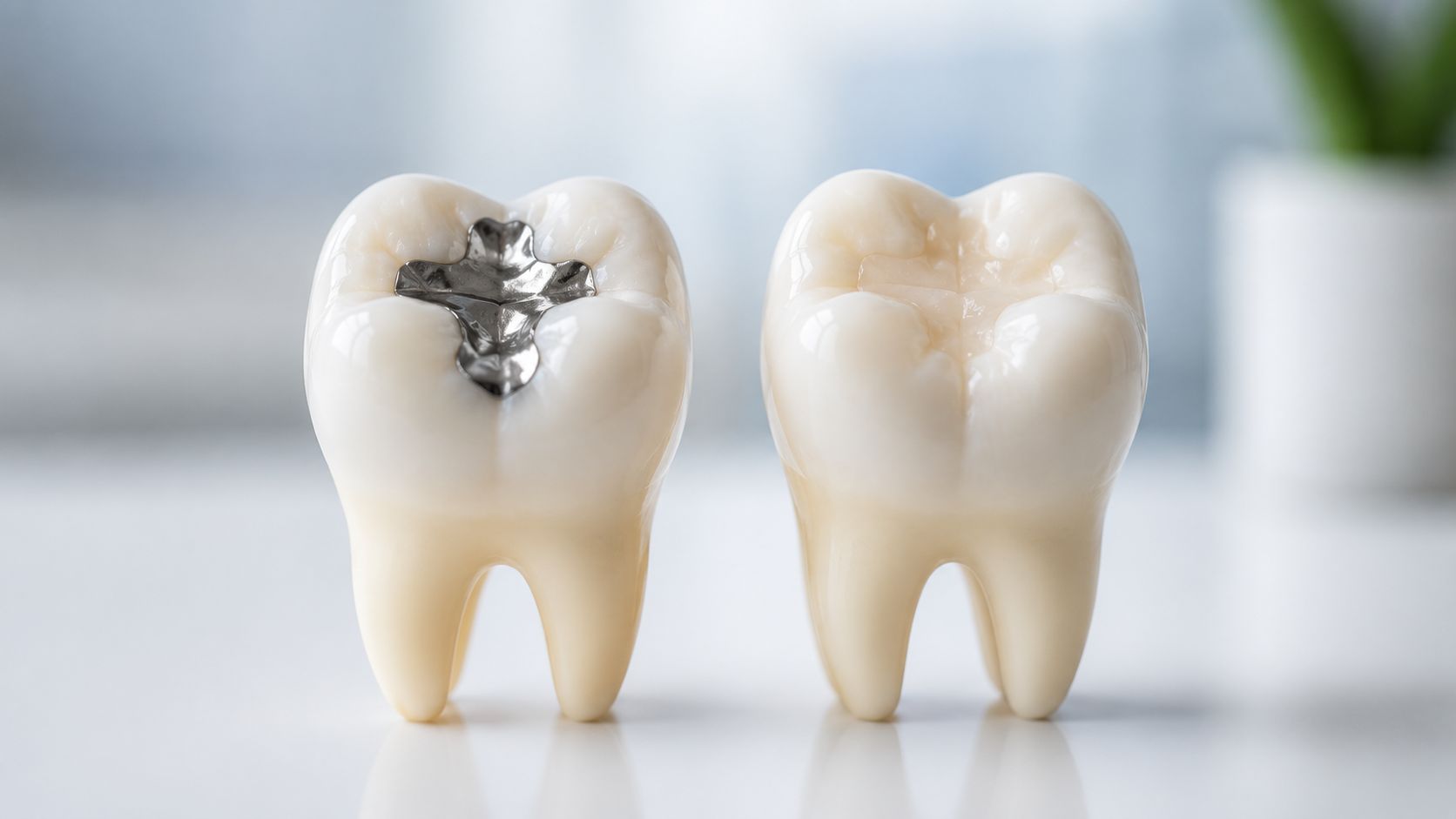



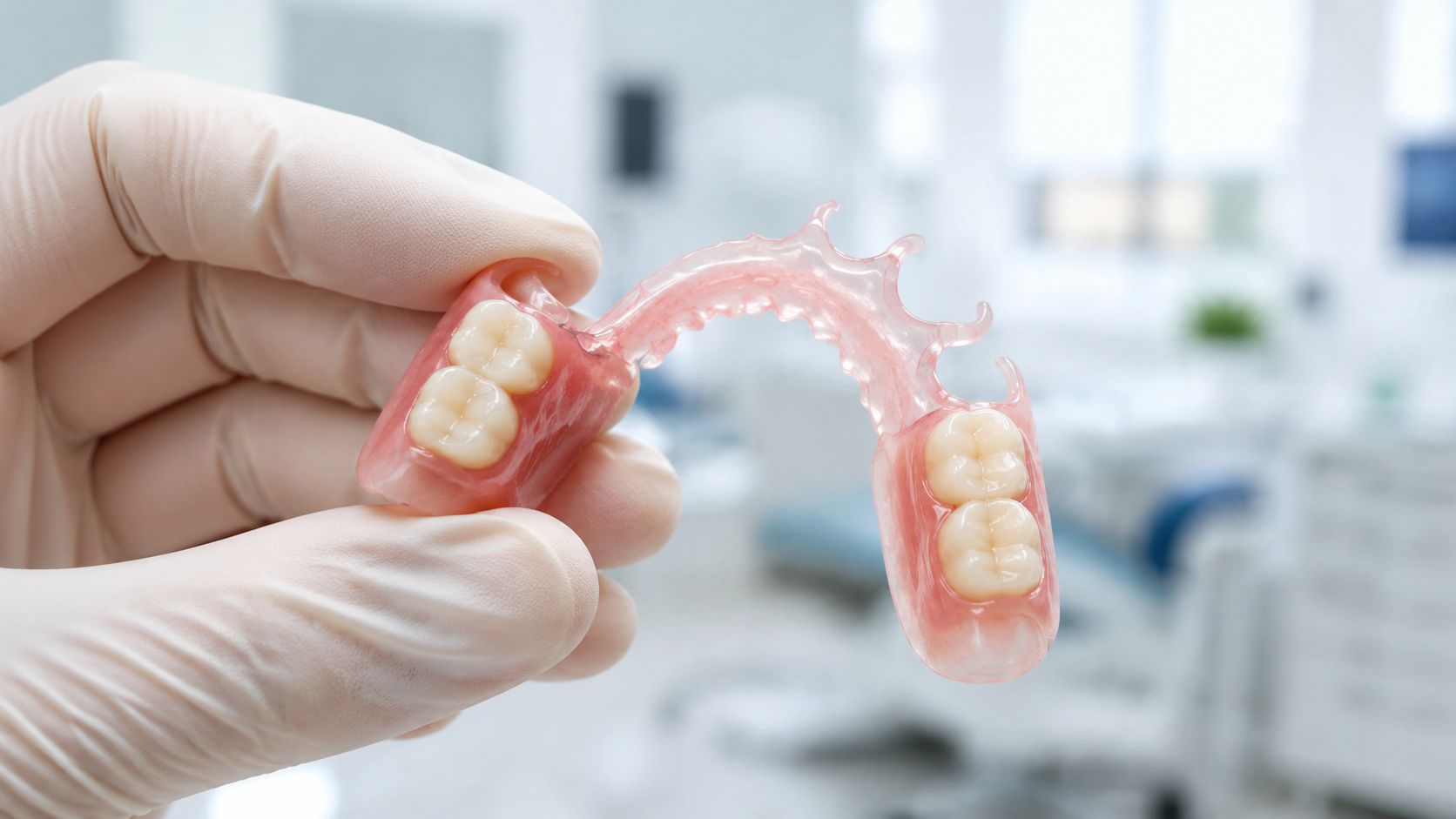
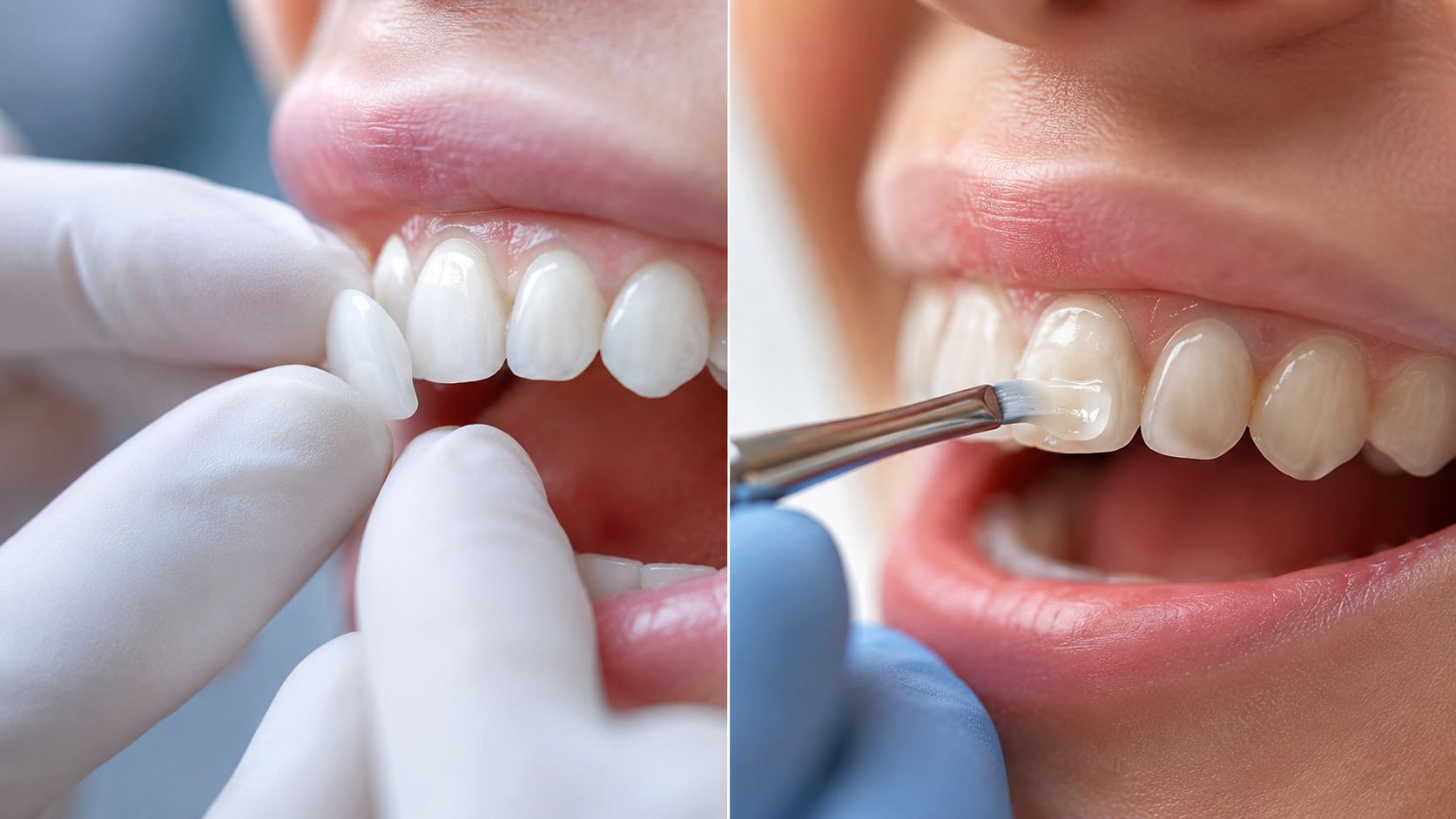
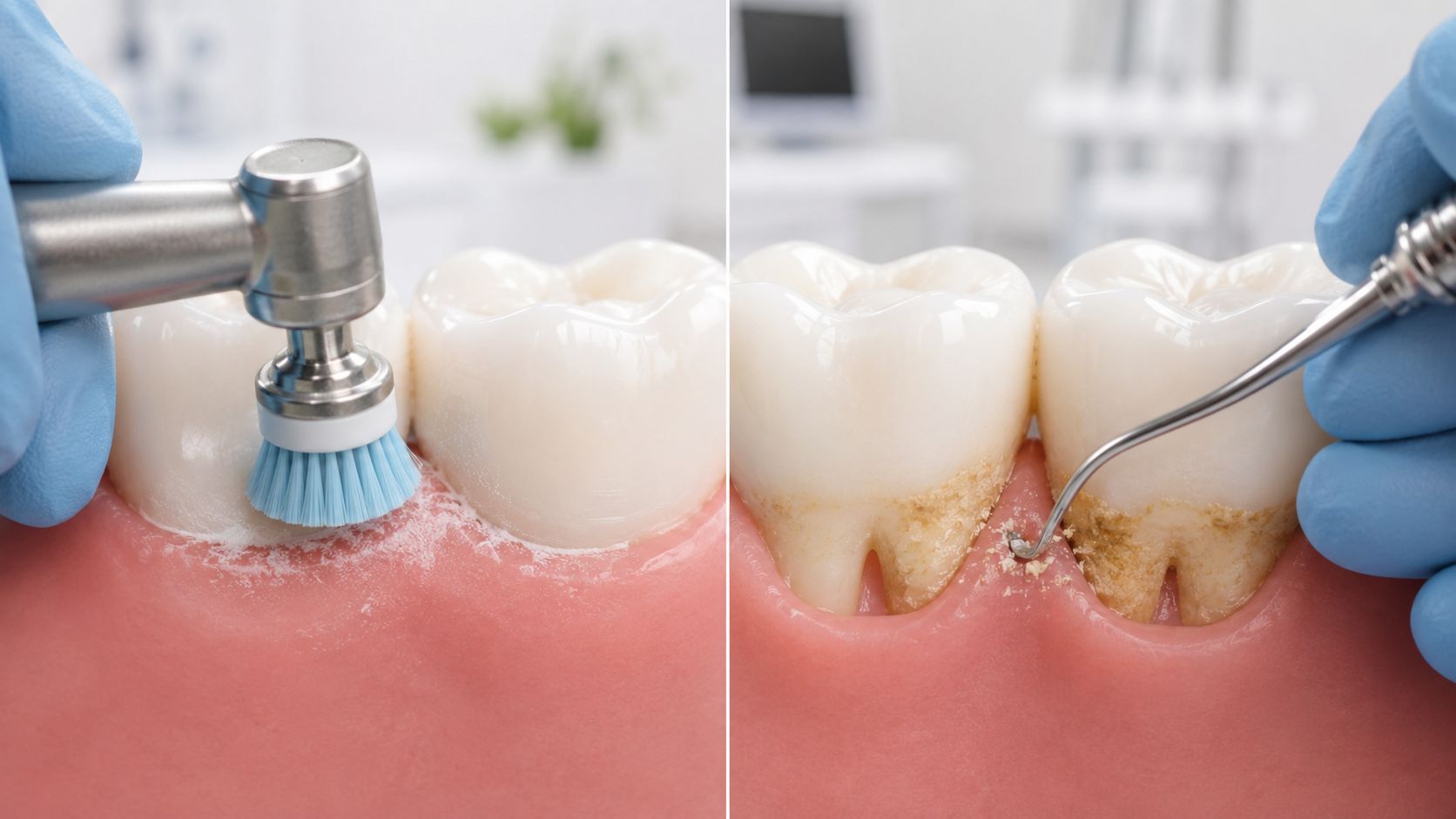
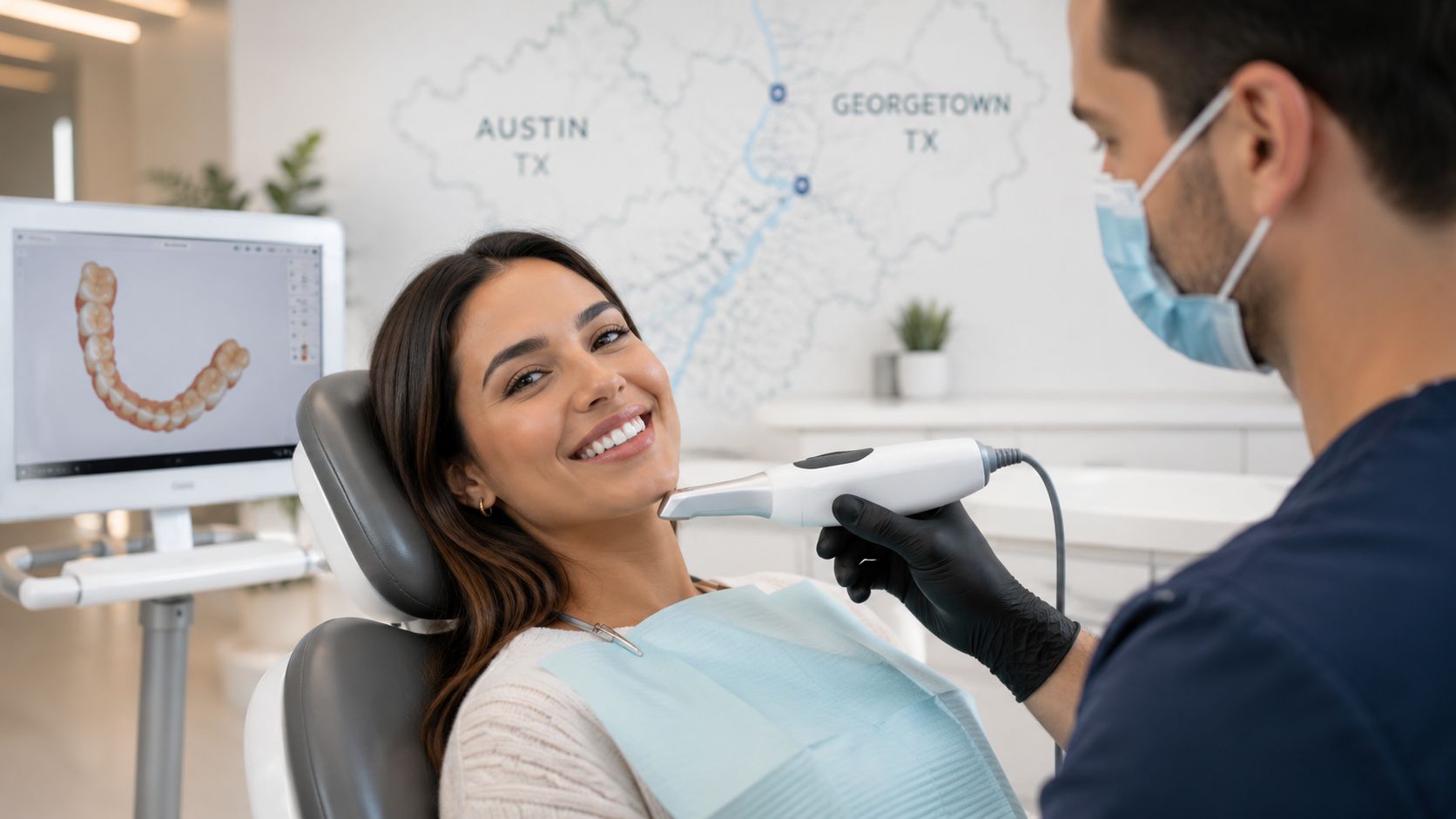

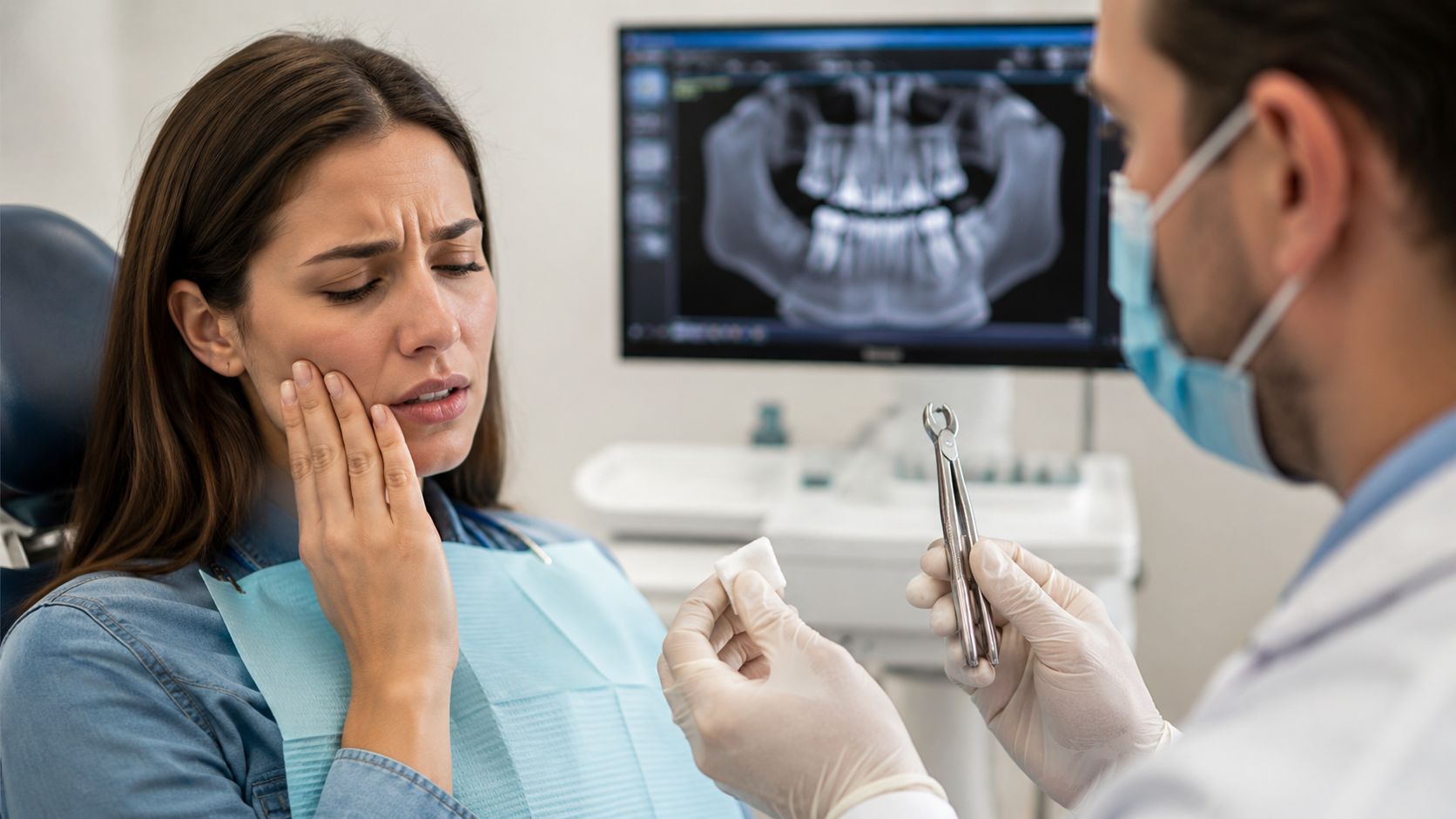
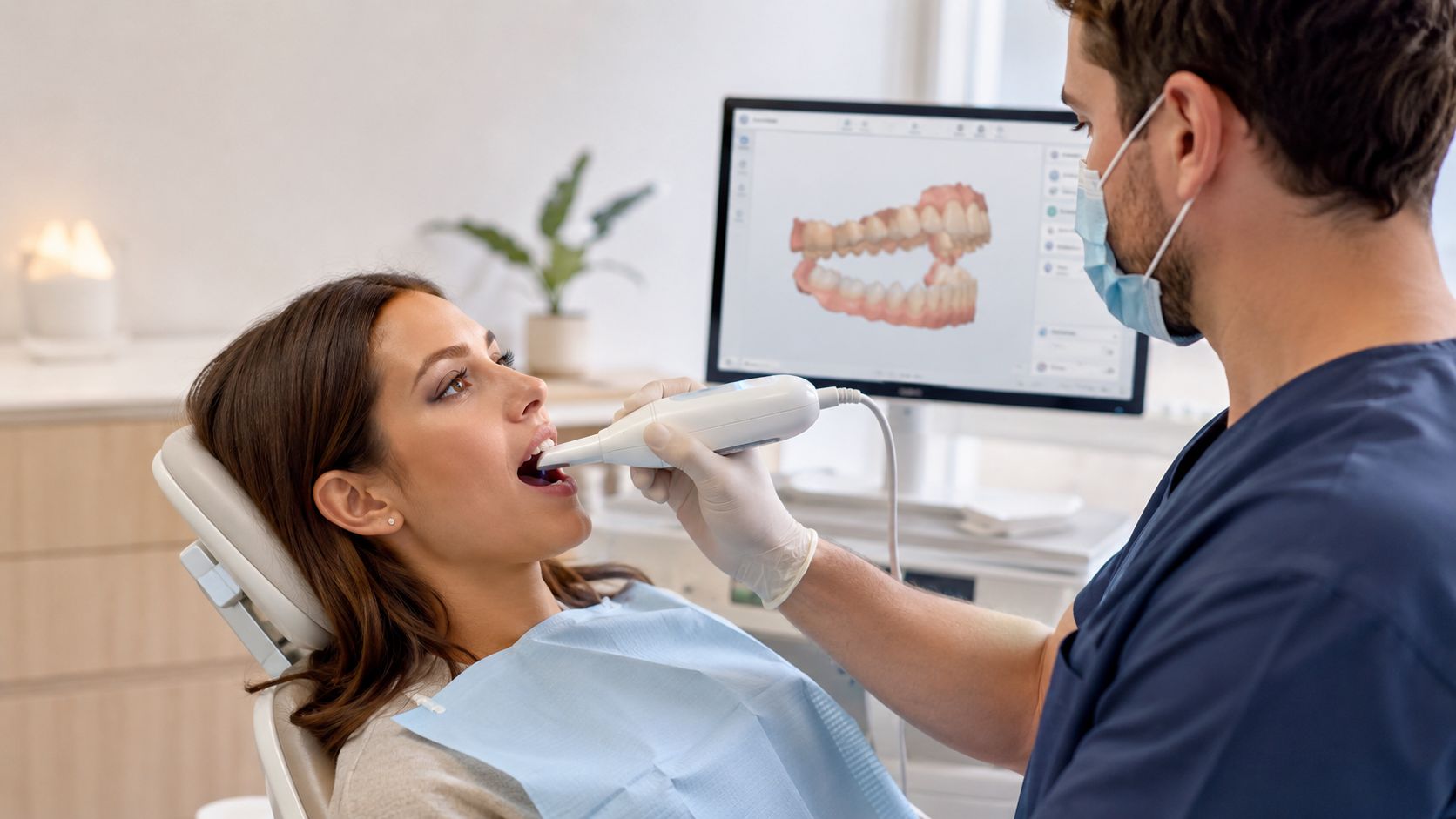

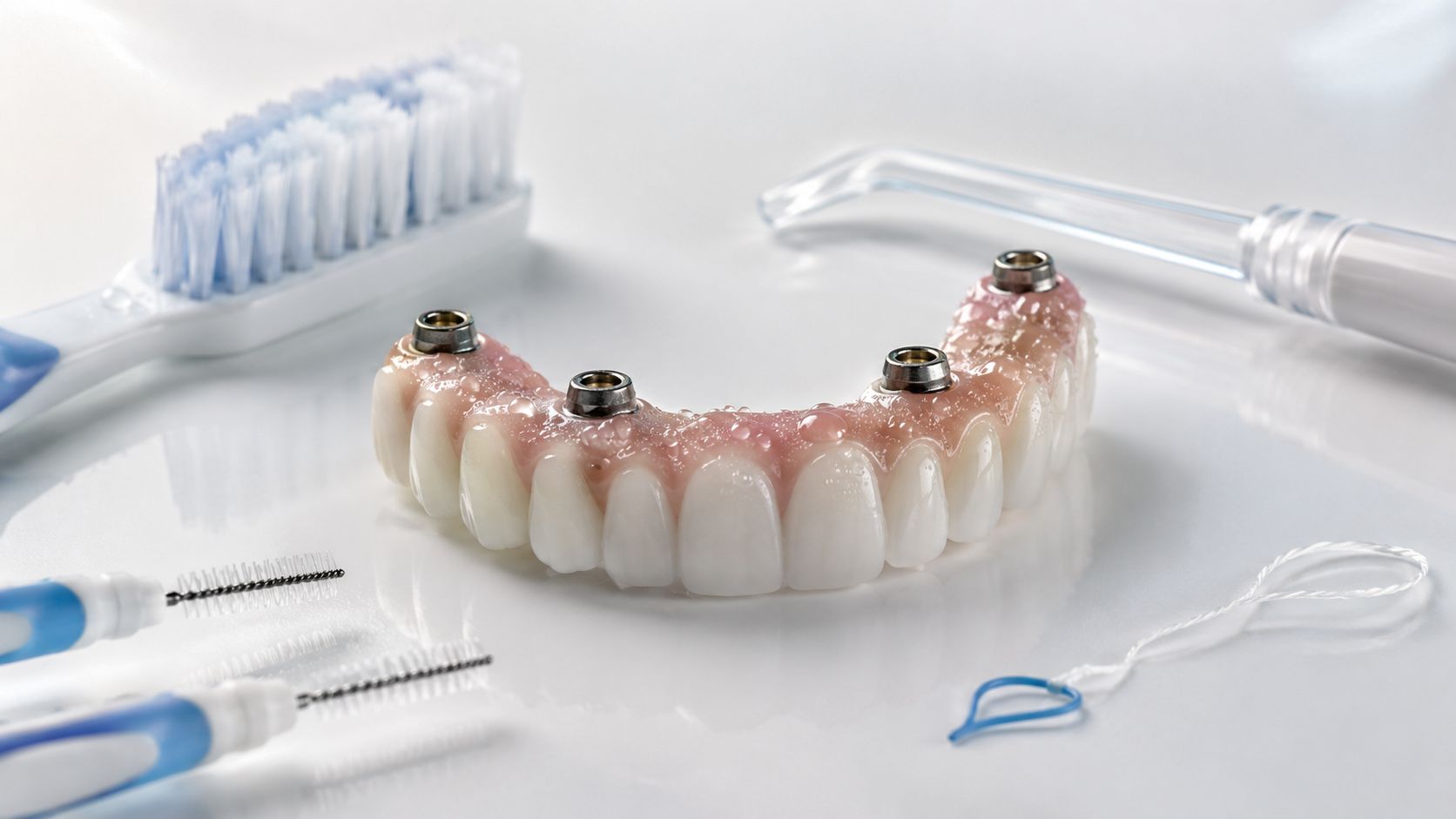
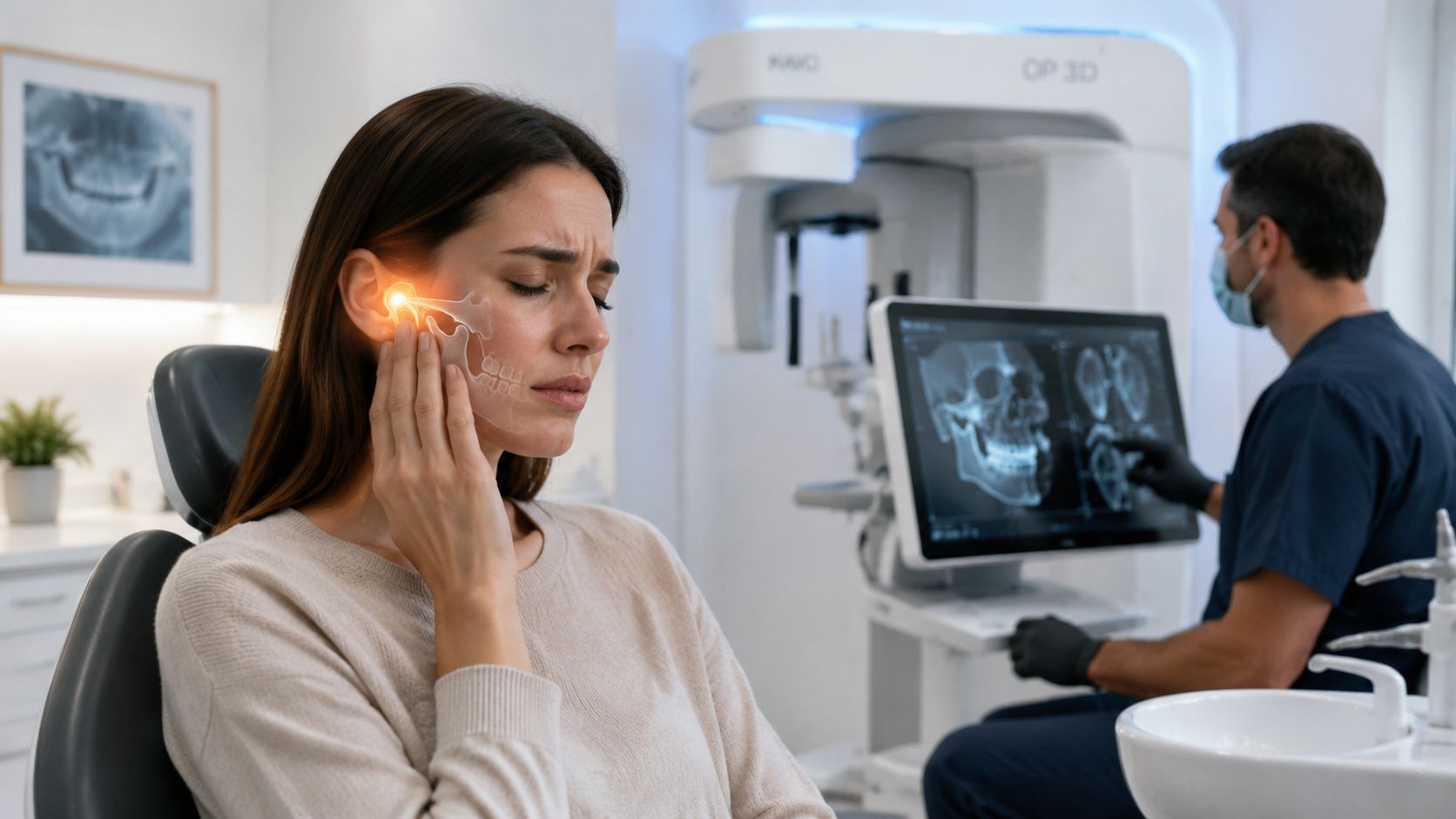
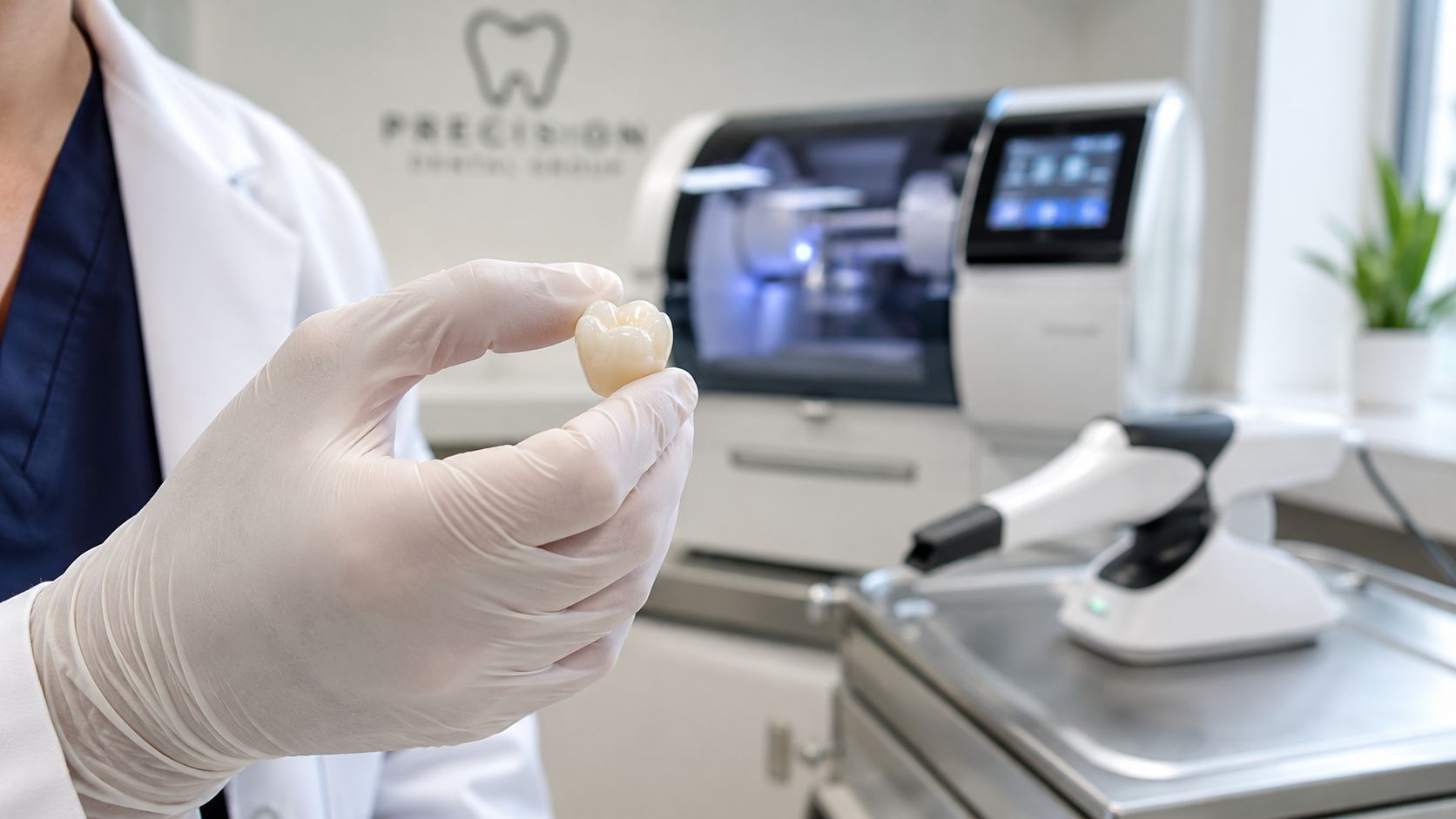

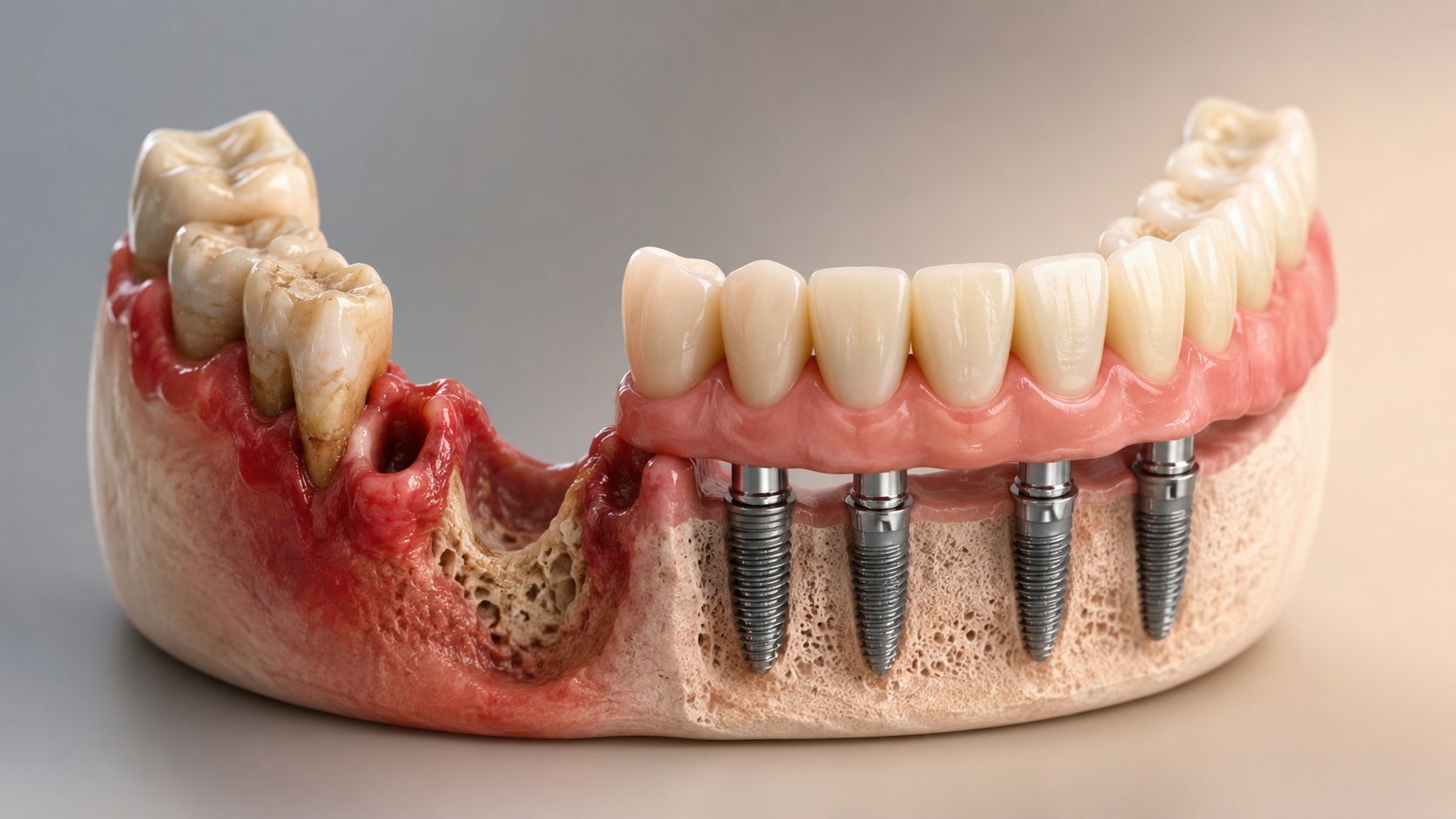

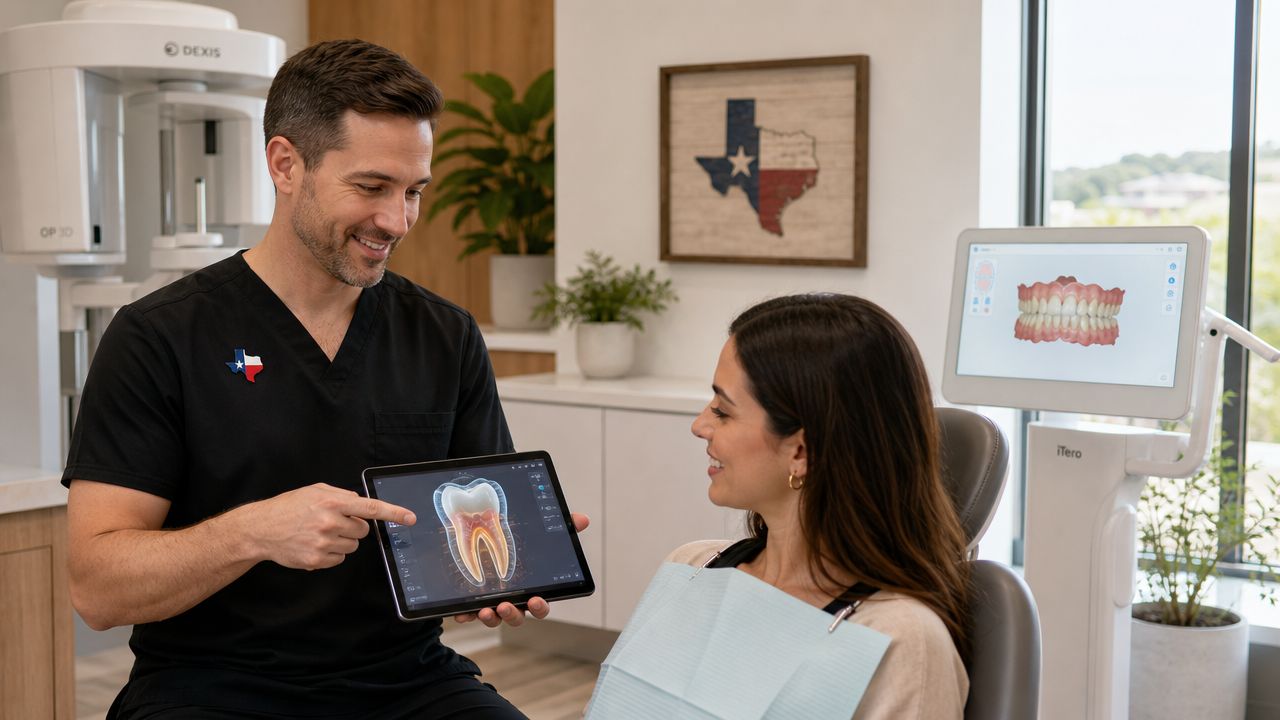
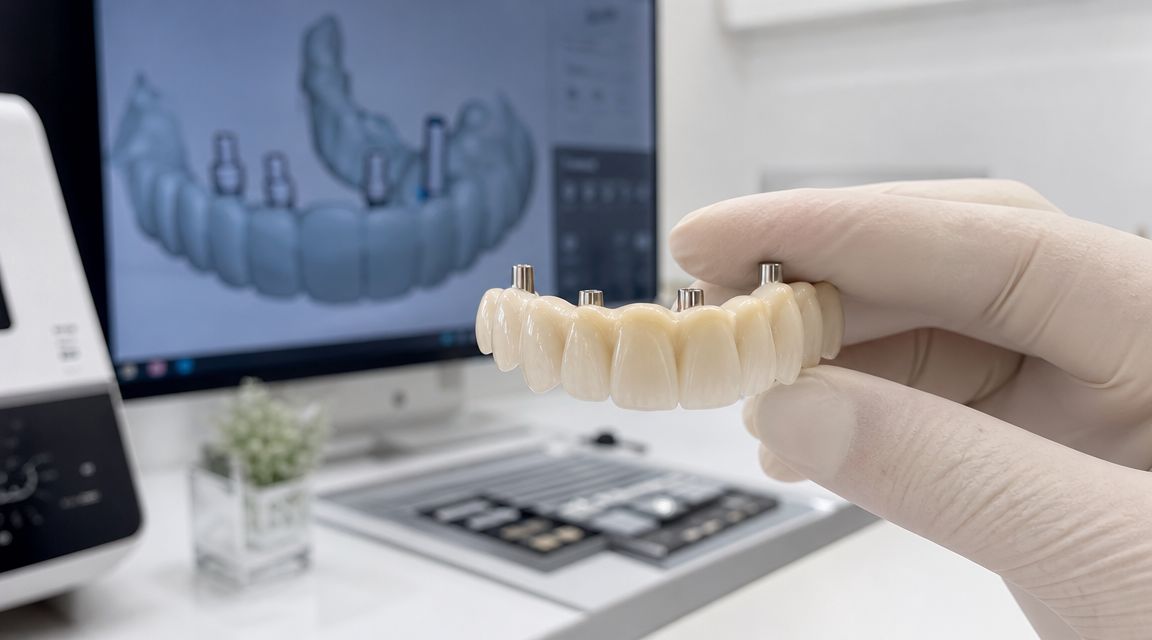
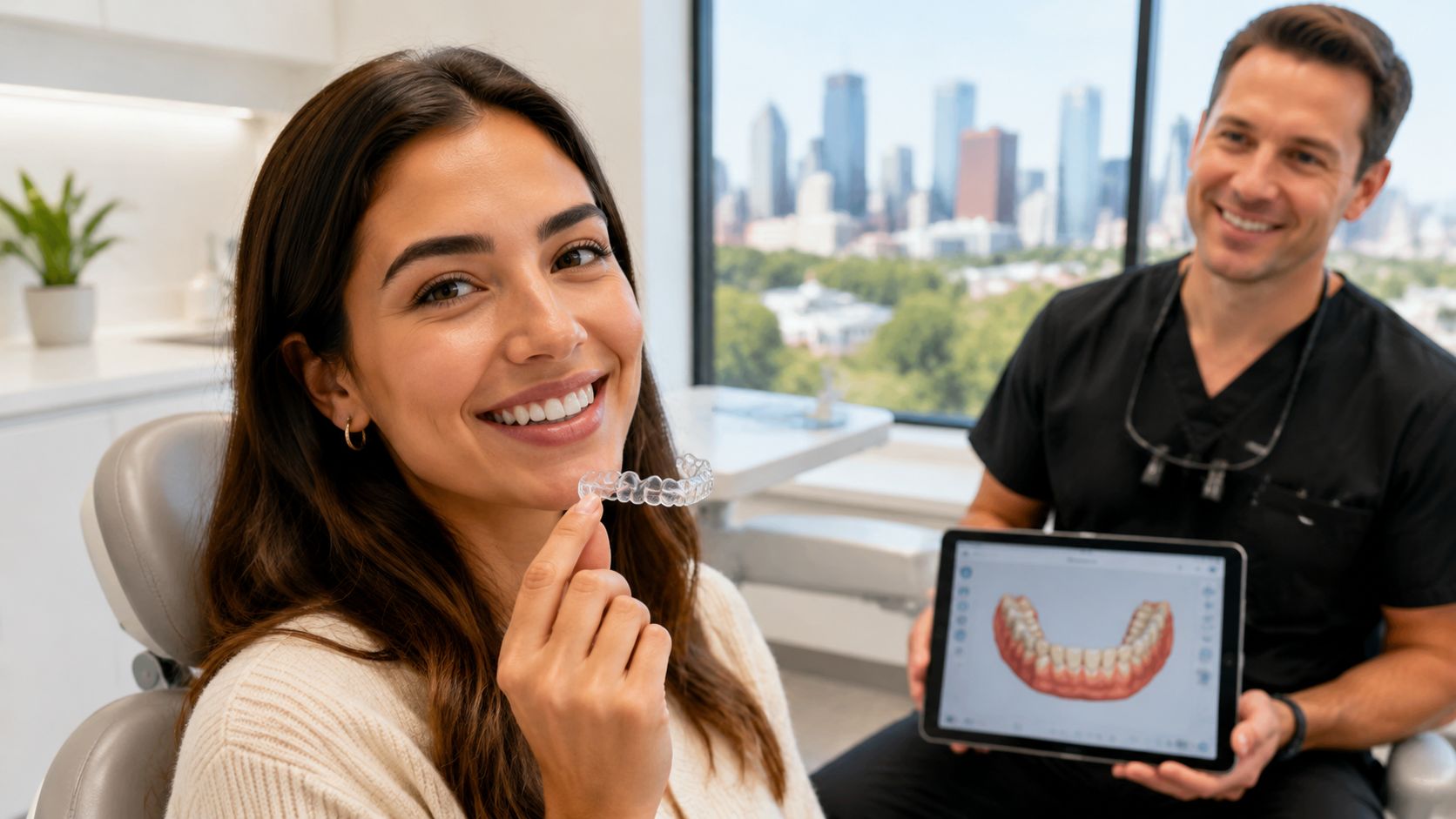








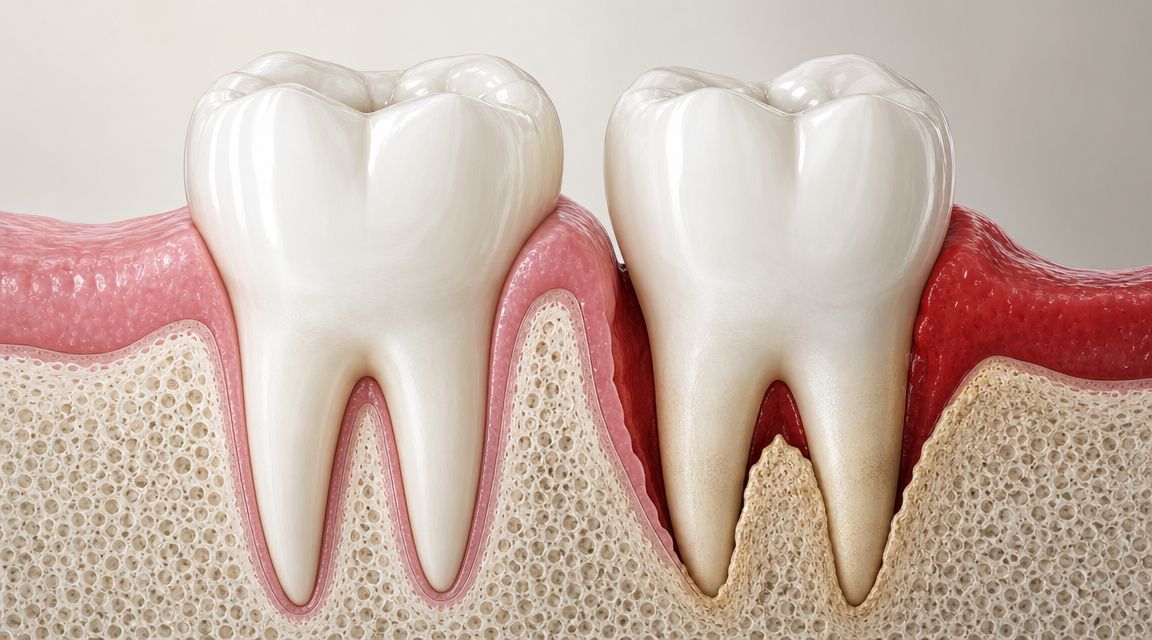









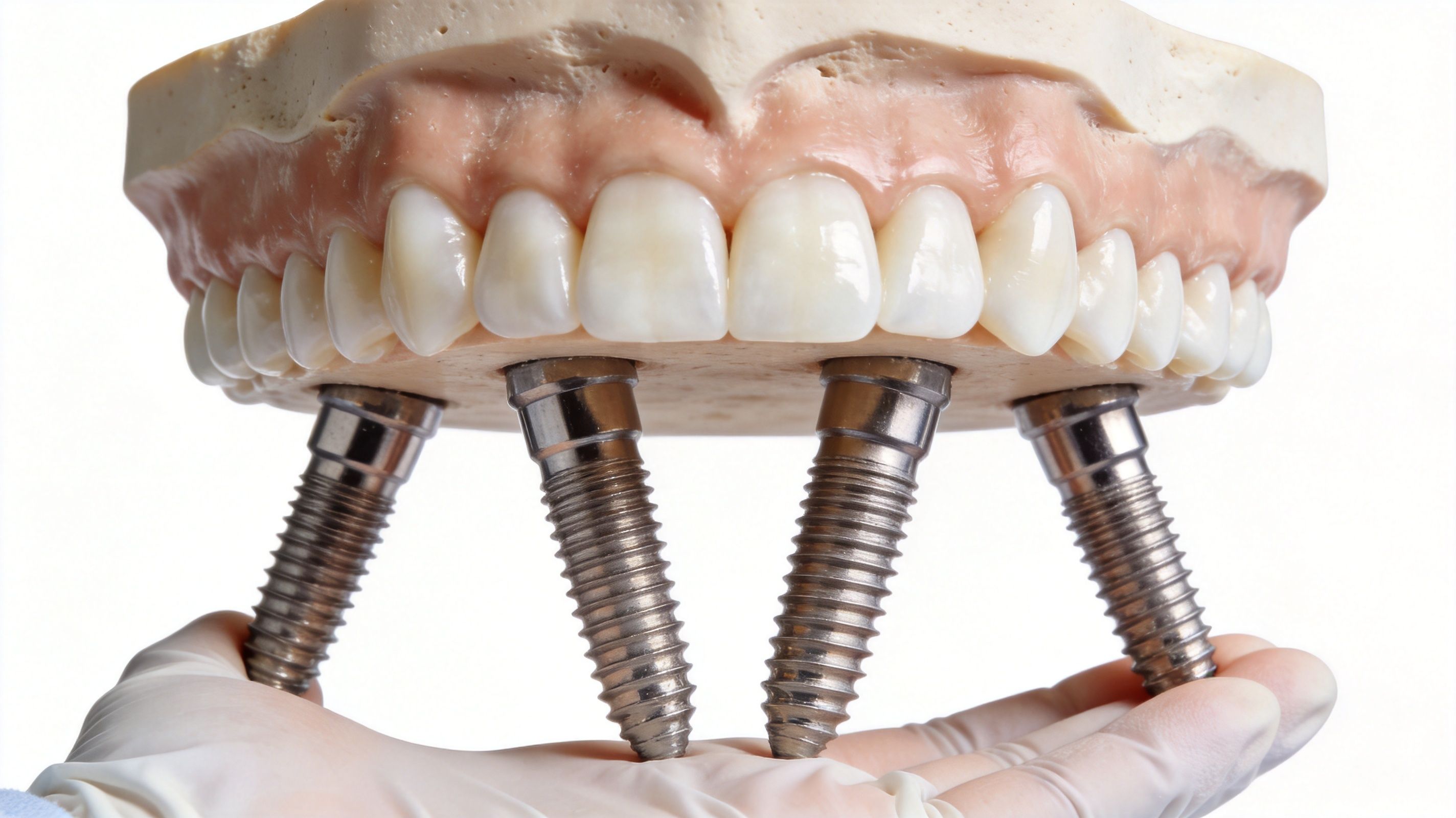



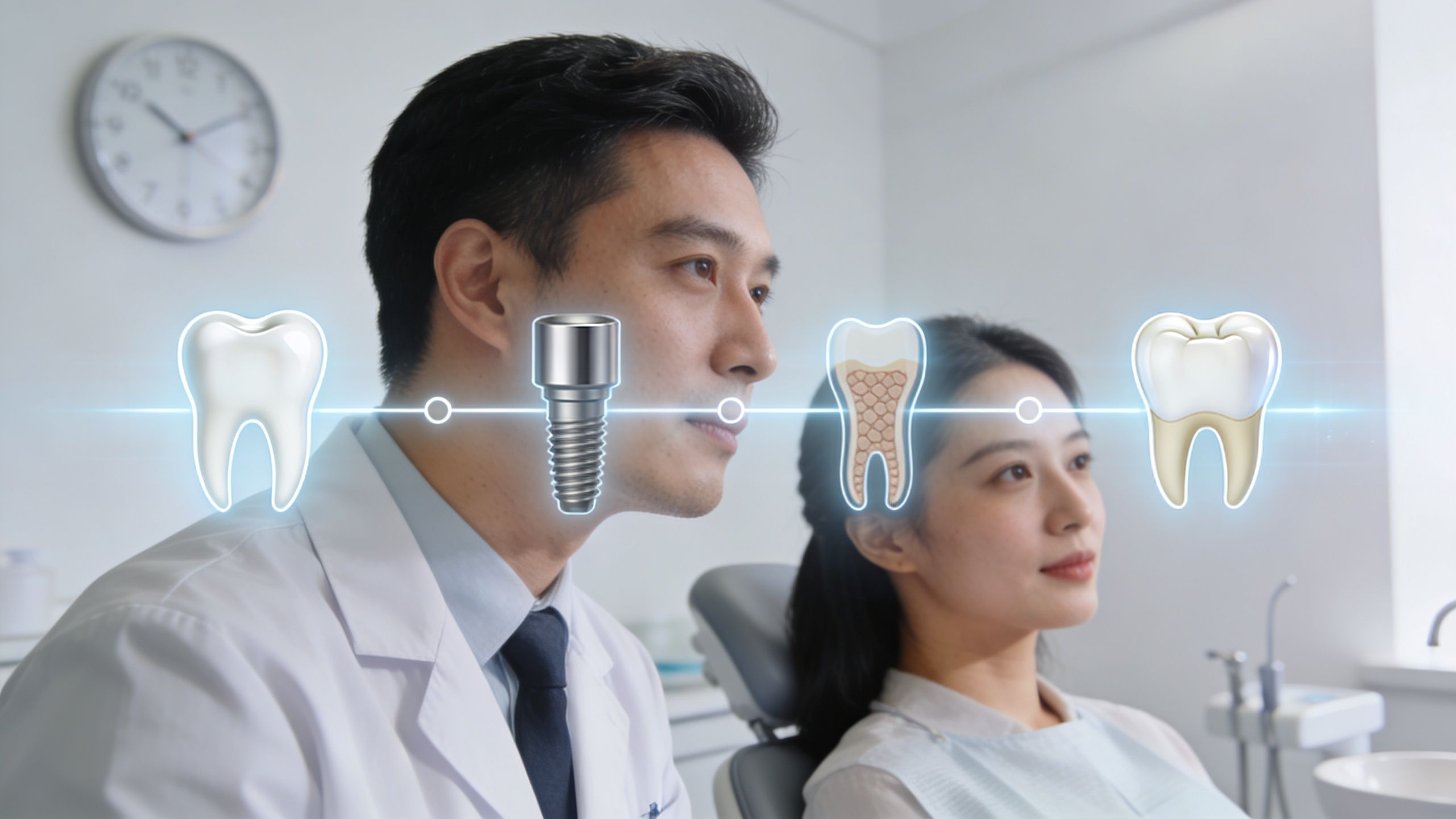







A single dental crown in the U.S. typically costs $800 to $2,500 per tooth, and a dental bridge usually ranges from $2,000 to $4,500 without insurance. In Central Texas, patients often find that the final dental crowns and bridges cost depends on the material used, how complex the case is, and whether the office can make restorations more efficiently with in-house technology.
If you're reading this after cracking a tooth on dinner, losing an old crown, or getting tired of hiding a gap in your smile, you're not alone. Many patients start by searching for a dentist near me in Austin, Georgetown, Round Rock, or Cedar Park because they want one thing first. A clear answer about what treatment will cost, and whether it's worth it.
That uncertainty is understandable. Crowns and bridges are a meaningful investment, but they also protect chewing, speech, comfort, and confidence. Leaving a damaged or missing tooth untreated can make everyday problems harder, from sensitivity and pain to shifting teeth and bite changes.
This guide gives you the practical side of the decision. You'll see what crowns and bridges do, what usually affects the price, how insurance and financing can help, and why local factors in Austin and Georgetown matter more than many national articles admit.
Restoring Your Smile in Austin and Georgetown
A lot of crown and bridge conversations start with a small moment that suddenly feels big. You bite into something crunchy and feel a sharp crack. Or you catch your reflection and notice that the missing tooth you've learned to work around is now affecting how you smile, chew, or speak.
That’s usually when patients start looking for a dentist in Austin, TX or dentist in Georgetown, TX who can explain the options without making the process feel overwhelming. They want honesty. They want a realistic plan. They want to know whether a crown can save the tooth or whether a bridge, implant, or another restorative treatment makes more sense.

Why patients act sooner now
Crowns and bridges aren't niche procedures. They’re a core part of modern restorative dentistry, and demand continues to grow. The global market for dental crowns and bridges is projected to reach USD 6.13 billion by 2033, and North America is projected to reach USD 1.47 billion in 2026, according to dental crowns and bridges market projections from Straits Research.
Those numbers matter because they reflect what many dentists see every day. People are keeping their teeth longer, they care about appearance as well as function, and they want restorations that look natural and hold up well.
Practical rule: A damaged tooth rarely gets cheaper to fix by waiting. Early treatment usually preserves more tooth structure and gives you more options.
What patients in Central Texas usually need
In Austin, Georgetown, Wells Branch, Liberty Hill, and nearby communities, patients commonly come in with one of these concerns:
- A cracked or heavily filled tooth: It may still be present, but it’s weak and needs protection.
- A tooth after root canal treatment: The tooth can function well, but it often needs added strength.
- A missing tooth: The goal shifts from repair to replacement.
- An older restoration that failed: A crown or bridge may need replacement because the supporting tooth has changed.
Some people also compare crowns and bridges with dental implants near me, especially if the tooth is already missing. That’s a worthwhile conversation, but the right choice depends on your bite, your neighboring teeth, your gum and bone health, and your budget.
The Foundation of a Healthy Smile What Crowns and Bridges Do
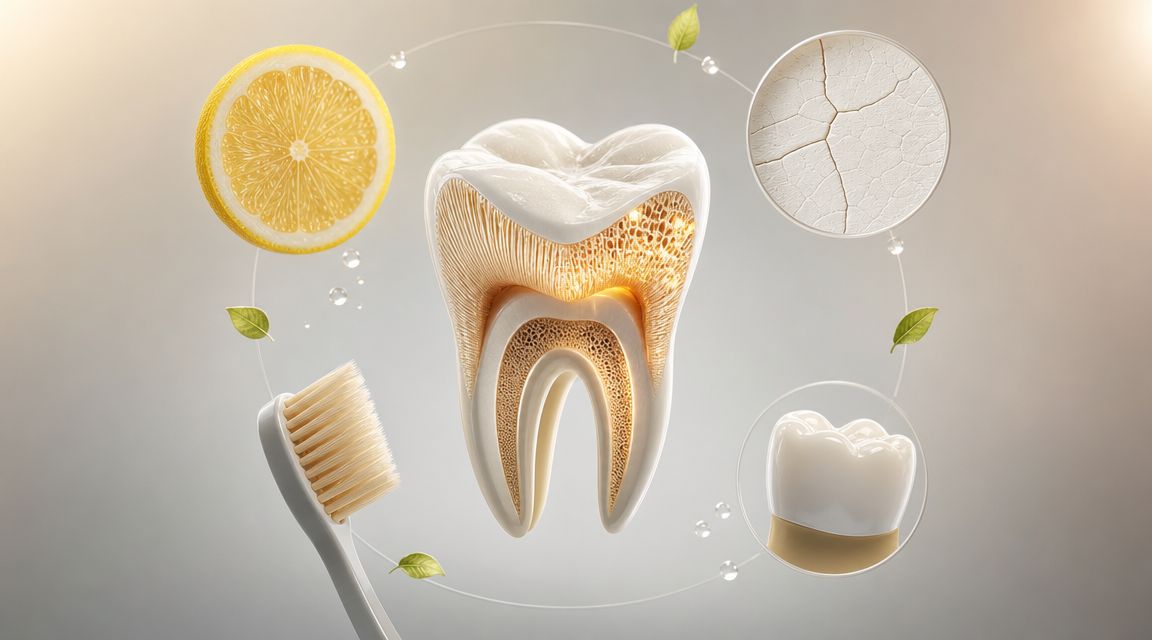
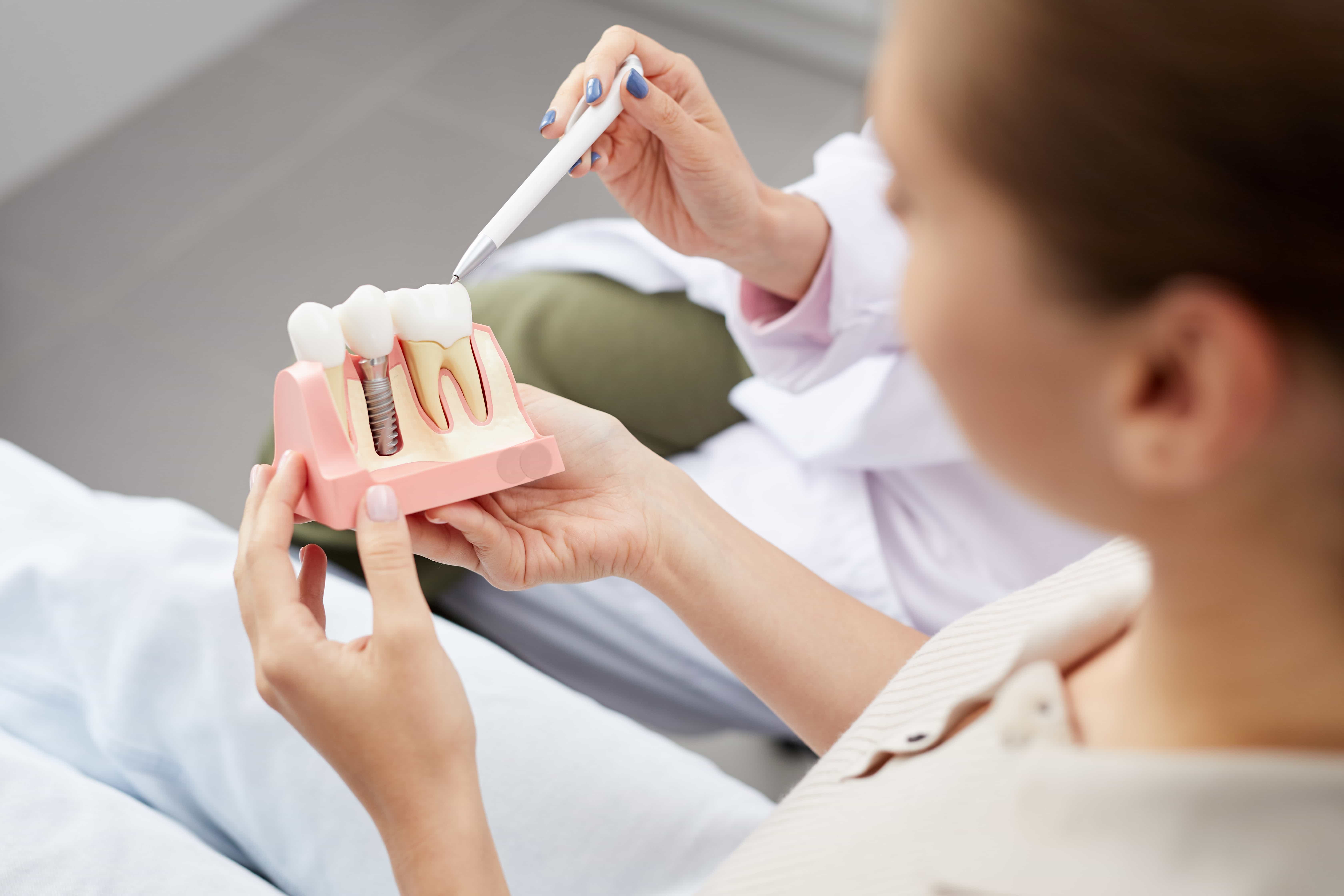
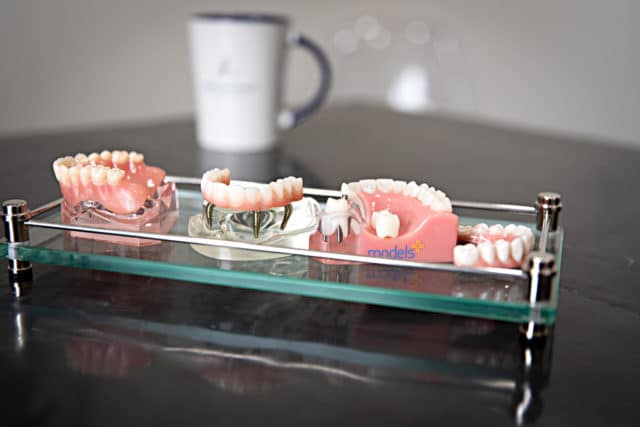
A dental crown is a custom cover that fits over a damaged tooth. A dental bridge replaces one or more missing teeth by connecting an artificial tooth to support on either side. Both restore function, but they solve different problems.
The easiest way to think about it is this. A crown protects a tooth that’s still there. A bridge fills a space where a tooth is gone.
A crown protects what you still have
If a tooth is cracked, badly worn, weakened by a large filling, or treated with a root canal, a crown acts like a helmet around it. It supports the tooth structure, helps you chew more comfortably, and improves the appearance of a tooth that looks broken or discolored.
A crown is often the right answer when the tooth can still be saved. In many cases, that’s better than removing the tooth because keeping natural tooth structure usually preserves a more familiar bite and simpler hygiene routine.
A crown is usually about preservation. The tooth remains in place, and the restoration helps it keep doing its job.
A bridge replaces a missing tooth
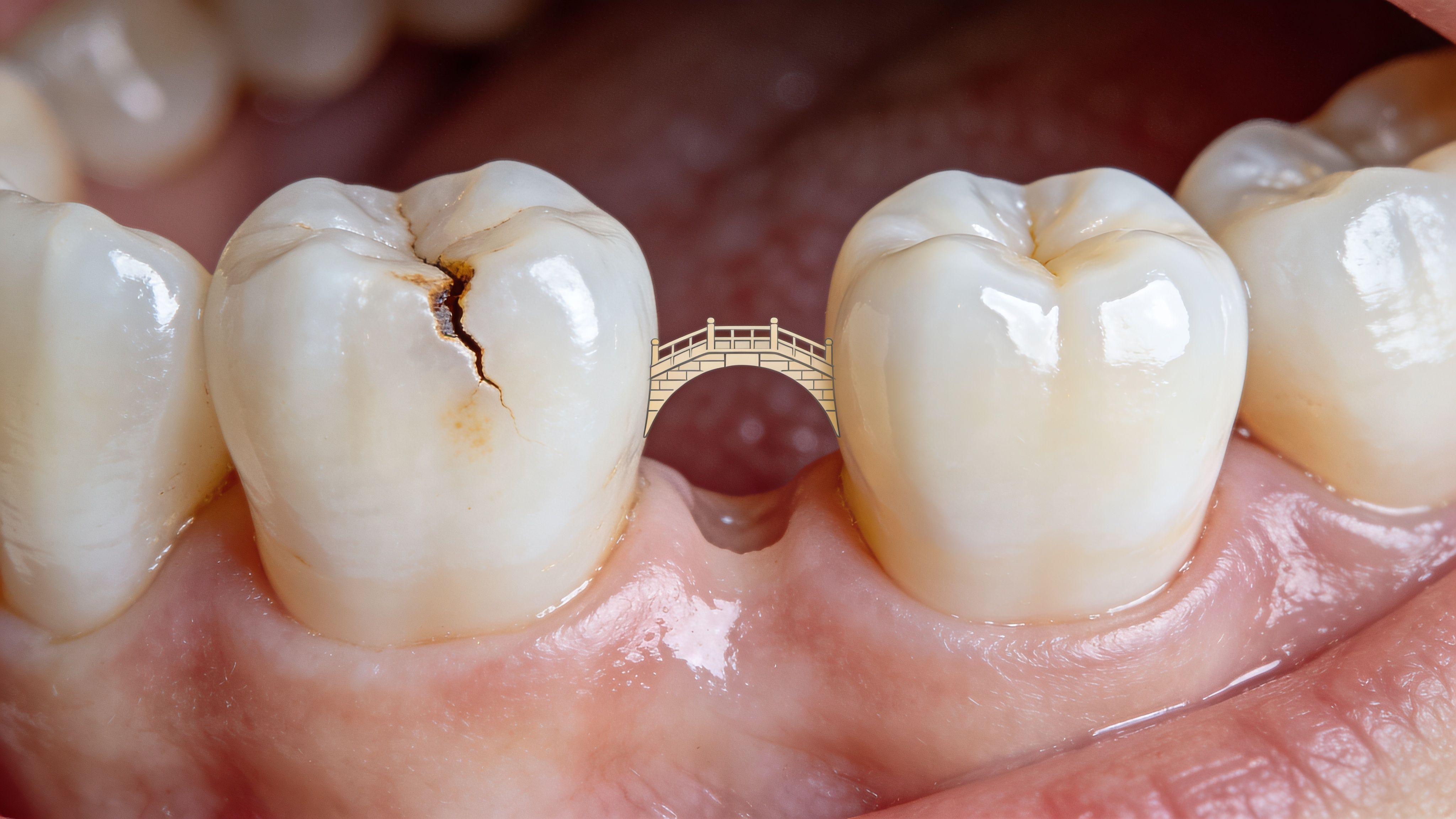
A bridge does something different. It spans the gap left by a missing tooth so you can chew more evenly and keep nearby teeth from drifting into the open space. That matters because even one missing tooth can change how your bite comes together.
Traditional bridges rely on support from neighboring teeth. If those teeth already need crowns, that can make a bridge especially practical. If the neighboring teeth are healthy and untouched, some patients also explore implants before deciding.
For a closer patient-friendly explanation of how bridges work, see what a dental bridge is and when it’s used.
What happens if you wait
Crowns and bridges are restorative treatments, but they also help prevent additional problems.
- With a damaged tooth: Cracks can deepen, sensitivity can increase, and the tooth can become harder to save.
- With a missing tooth: Neighboring teeth may shift, cleaning becomes harder, and chewing can become uneven.
- With either problem: You may start favoring one side of the mouth, which can affect comfort over time.
How this fits into broader dental care
A crown or bridge often sits in the middle of a larger treatment plan. Some patients need a new patient exam, digital x-rays, or a root canal before a crown. Others compare a bridge with cosmetic dentistry, whitening, or implants because they want both strength and a more natural smile.
That’s normal. Restorative dentistry rarely exists in isolation. The best treatment is the one that solves the actual problem while fitting your long-term oral health goals.
Decoding the Price Tag Typical Costs in Central Texas
The hardest part of cost conversations is that patients often find broad national numbers online without much explanation. Those figures can be helpful, but they don’t fully reflect what changes the fee in Austin, Georgetown, Cedar Park, or Round Rock.
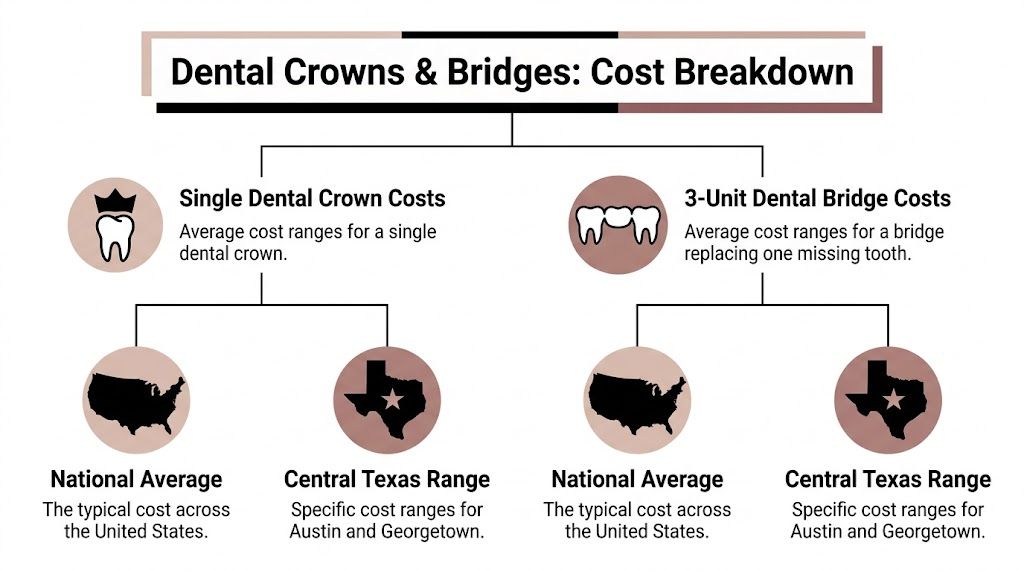
Here’s the baseline. In the U.S., a single dental crown can cost $800 to $2,500 per tooth without insurance in 2026, while a dental bridge typically ranges from $2,000 to $4,500. The U.S. market for these restorations is projected to reach $1,170.7 million by 2030, according to U.S. dental crowns and bridges market data from Grand View Research.
What those ranges mean in real life
For most patients in Central Texas, the practical takeaway is simple. If you need one tooth restored, you’re usually looking at crown-level pricing. If you need one missing tooth replaced with a standard bridge, the cost usually rises because multiple units are involved.
A bridge is not just “one fake tooth.” It often includes the replacement tooth plus the supporting structures attached to neighboring teeth. That’s why the price is typically higher than a single crown.
Why local pricing feels different from national averages
National numbers flatten out important details. In real offices, two patients can both say they “need a crown” and have very different treatment needs.
A straightforward crown on a stable tooth is one scenario. A crown that needs additional buildup, more involved design, or a premium material is another. The same goes for bridges. A simple replacement case and a more demanding bite case won’t be priced the same, even if both are called “bridges.”
To make the comparison easier, use this quick reference.
| Restoration | Typical U.S. range | What usually affects the final fee |
|---|---|---|
| Single dental crown | $800 to $2,500 | Material, tooth condition, preparation needs, lab workflow |
| Dental bridge | $2,000 to $4,500 | Number of units, support teeth, material, complexity |
Patients often find it helpful to hear a visual explanation before the consultation. This short overview can help frame the conversation:
A better way to think about cost
The right question usually isn’t “What’s the cheapest crown or bridge?” It’s “What am I paying for, and will it hold up well for my mouth?”
Cheap dentistry can become expensive dentistry if the restoration doesn’t fit well, chips early, or forces you into replacement sooner than expected.
That’s why local consultations matter. An office needs to examine the tooth, evaluate the bite, review x-rays or scans, and determine whether the issue is purely restorative or connected to something else, such as clenching, decay, or gum problems.
If you’re searching for a cosmetic dentist near me, emergency dentist, or dentist near me because a tooth broke suddenly, cost matters. Precision matters too. The two are connected more often than patients realize.
What Determines the Final Cost of Your Treatment
The fee for a crown or bridge doesn’t come from one line item. It reflects the restoration itself, the material used, the condition of the tooth or missing area, and how the office designs and produces the final result.
Material choice changes both price and value
Not all crown materials perform the same way. Some are chosen for appearance, some for durability, and some for balancing both.
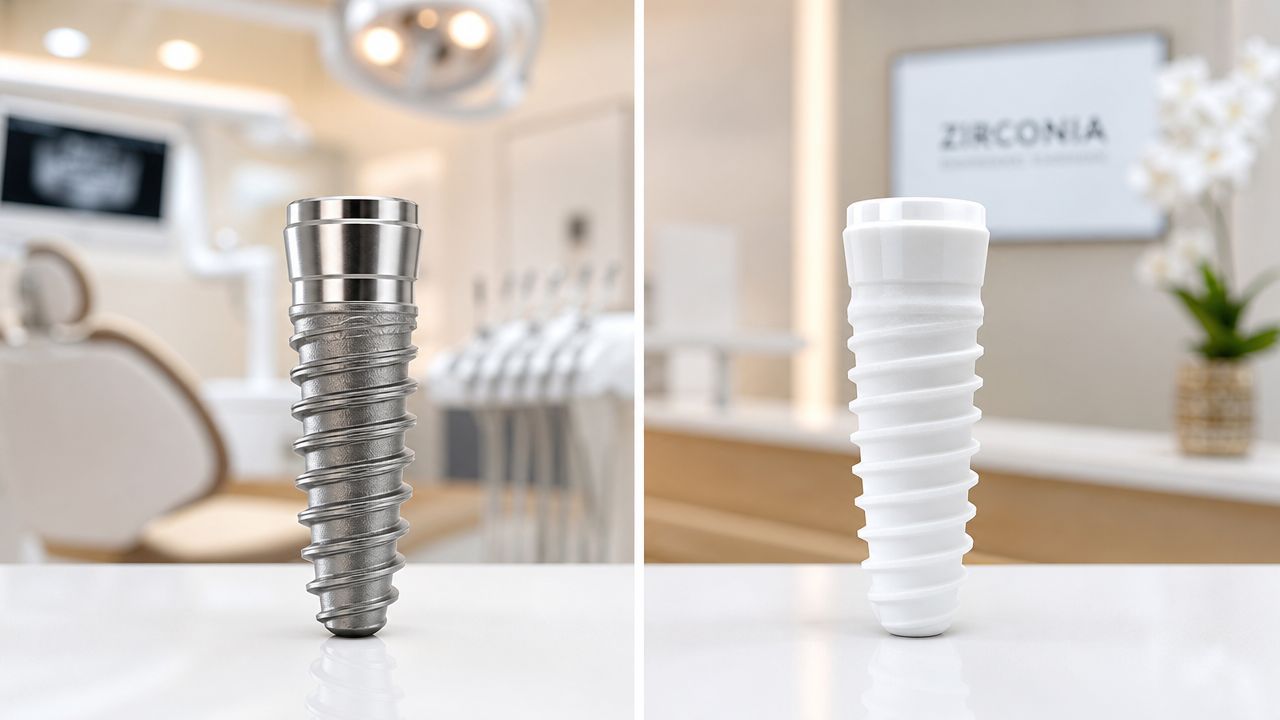
Zirconia is often priced at $1,200 to $2,500 per tooth and is known for high strength and long service life, according to this dental crown material cost and longevity guide. That same source notes that zirconia crowns may last 15 to 20 years, while porcelain-fused-to-metal restorations often fall into a shorter service range.
Here’s a simple comparison patients can use during decision-making.
Dental Crown Material Comparison
| Material | Average Cost Range (per tooth) | Typical Lifespan | Best For |
|---|---|---|---|
| Zirconia | $1,200 to $2,500 | 15 to 20 years | Back teeth, patients who want durability, patients who want a strong all-ceramic option |
| Porcelain-fused-to-metal | Qualitatively lower than premium zirconia options in many cases | 8 to 15 years | Situations where strength and conventional design are both considered |
| All-ceramic or porcelain-style esthetic options | Varies by case and design | Varies by case | Front teeth and patients focused on a natural appearance |
What usually works well is matching the material to the tooth’s job. Front teeth often push the conversation toward esthetics. Back teeth, where chewing force is heavier, often make strength the priority.
Complexity matters more than many people expect
The restoration itself is only part of the total treatment picture. The supporting tooth has to be healthy enough to hold it.
If a tooth has extensive decay, an old large filling, or structural loss, it may need additional preparation before the crown goes on. If the tooth is missing, the design of the bridge and the condition of neighboring teeth influence the fee.
A more demanding case takes more planning, more chair time, and more precision. That’s why two restorations of the same type can carry different total costs.
Clinical reality: The cheapest-looking estimate on paper isn’t always the least expensive option over time if it leaves important problems unaddressed.
Bridges vary widely by design
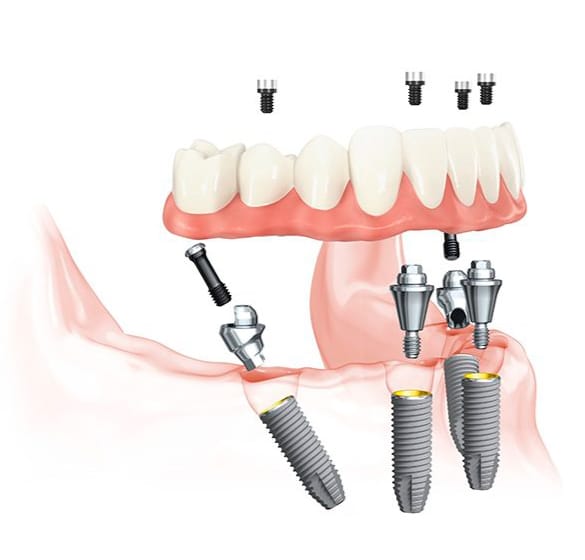
Bridge pricing changes quickly as design becomes more involved. Traditional 3-unit bridges are commonly listed at $1,500 to $5,000, while implant-supported bridges can be much higher, according to this dental bridge cost discussion.
That difference exists because support matters. A bridge held by natural teeth is one type of engineering problem. A bridge connected to implants is another.
Some bridge designs are more conservative in cost but can involve more trade-offs in stress on support teeth or long-term maintenance. Others cost more upfront but may provide better support in the right clinical setting.
Bridge vs implant for one missing tooth
Many patients in Austin and Georgetown compare a bridge with a single implant. There isn’t one universal winner.
A bridge can be a very practical choice when the neighboring teeth already need crowns or when a patient wants a fixed replacement without implant surgery. An implant can be appealing when the neighboring teeth are healthy and the goal is to avoid reshaping them.
The decision often comes down to these questions:
- What condition are the neighboring teeth in
- How important is preserving untouched tooth structure
- What does the bite look like
- What fits the current budget
- What maintenance commitment feels realistic
Technology affects fit, timing, and value
Patients sometimes assume technology only changes convenience. It also affects quality and cost control.
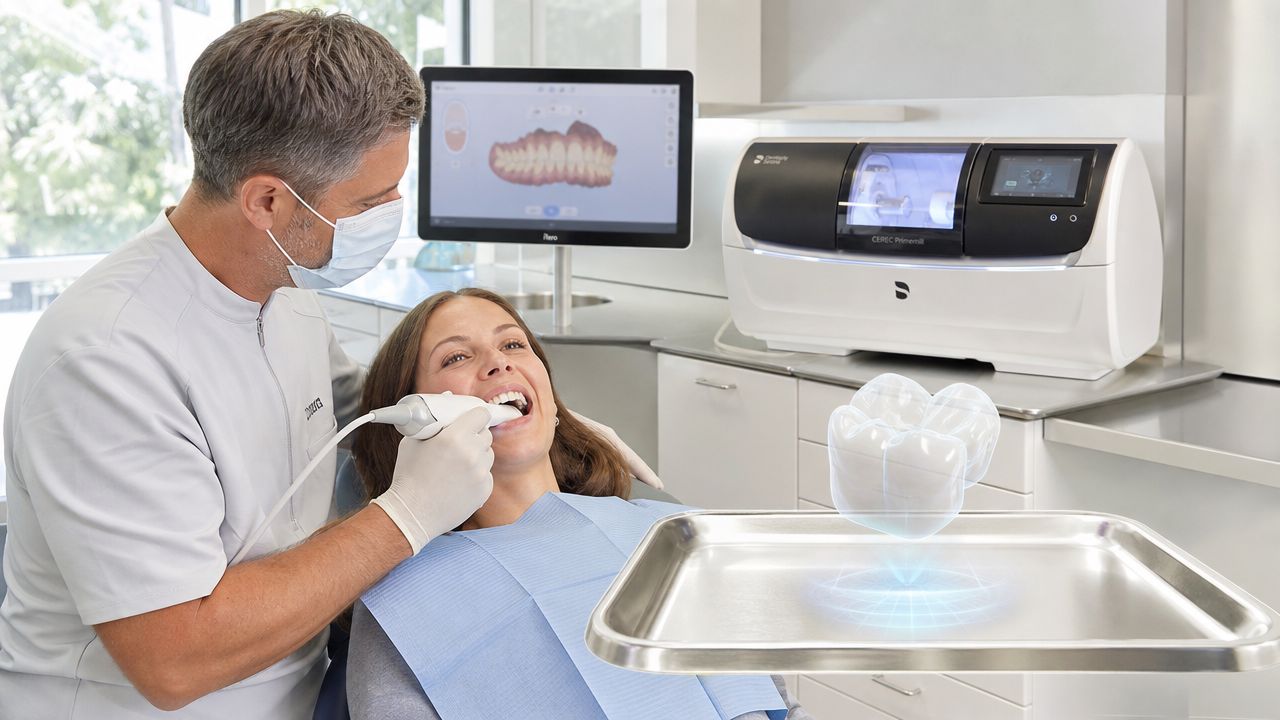
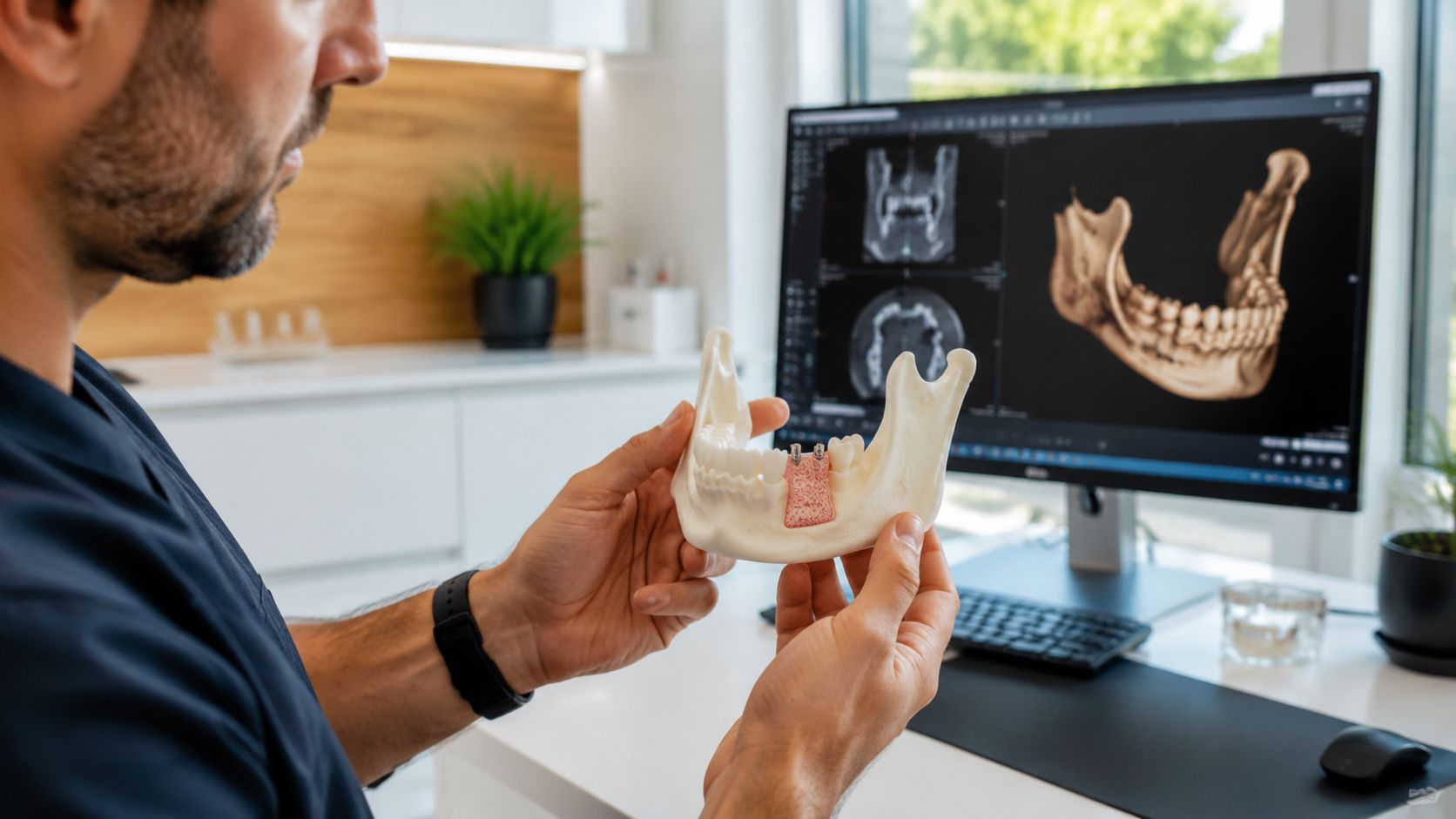
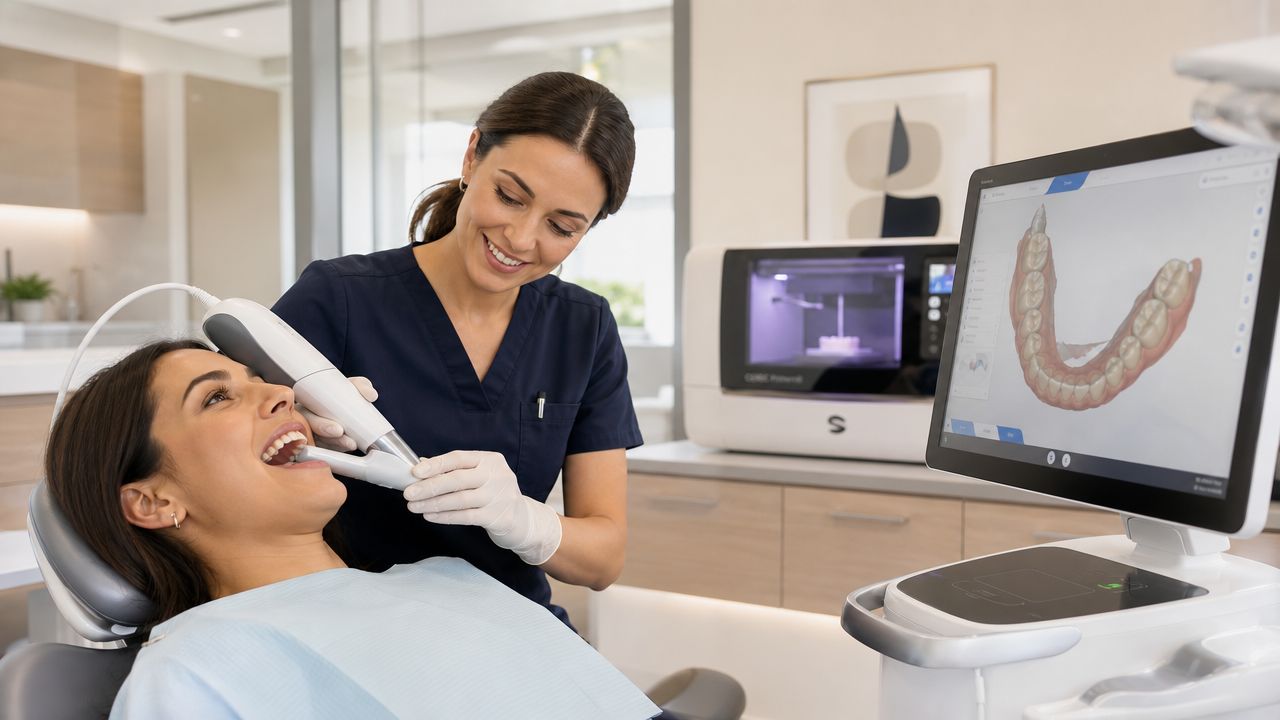
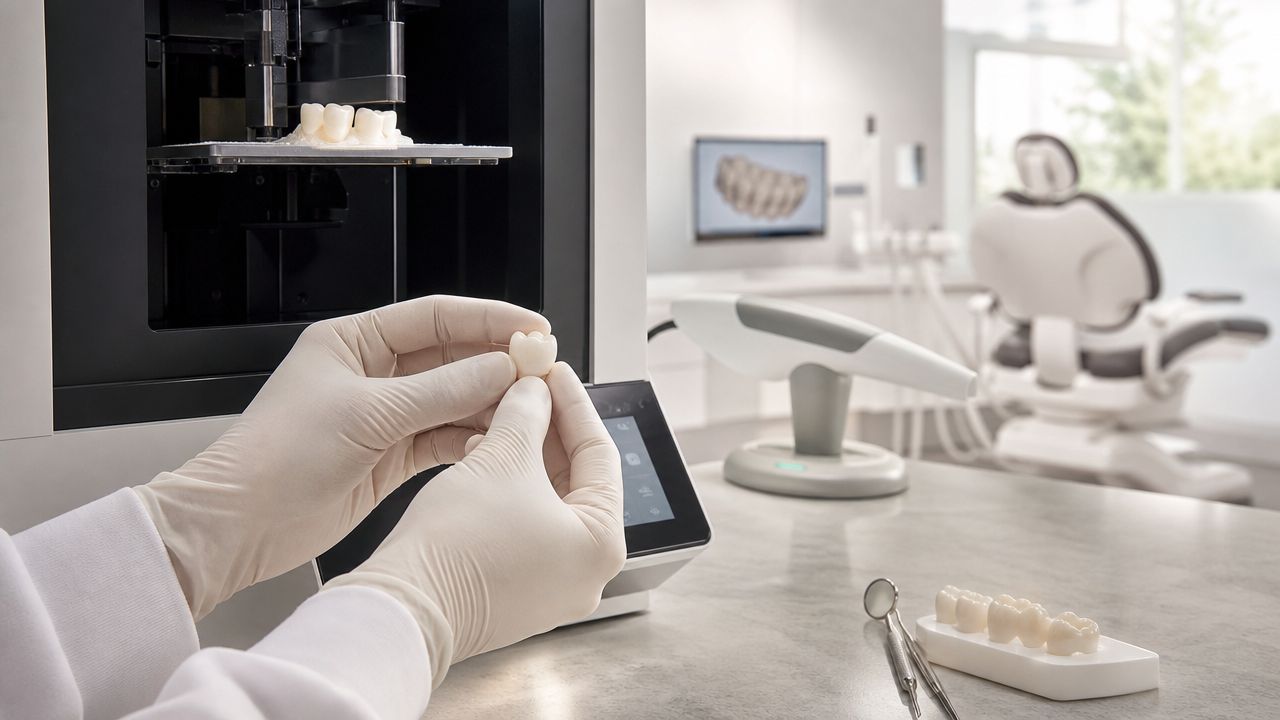
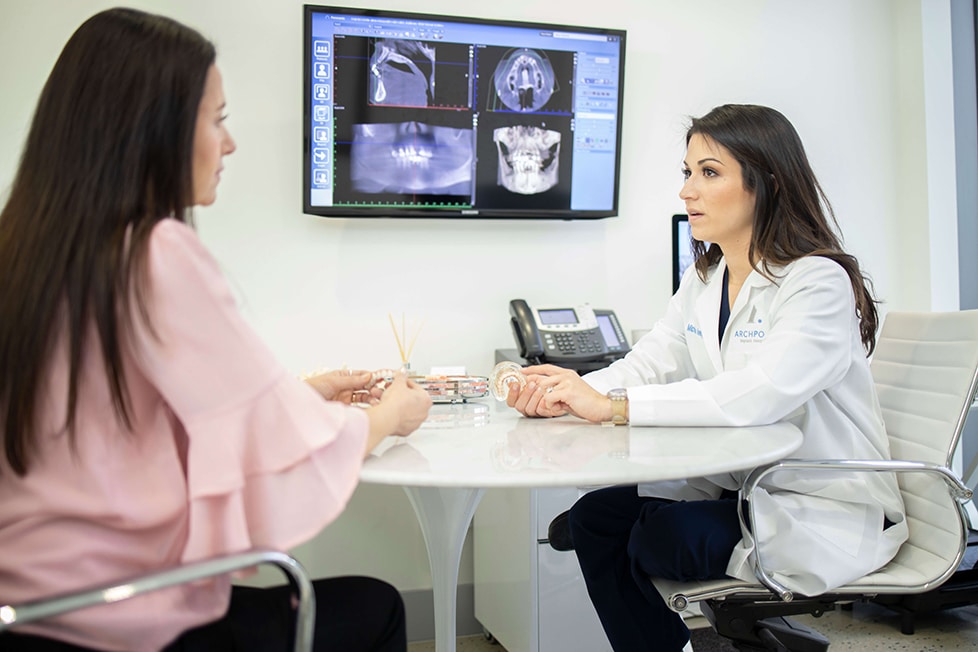
Digital scanners, 3D CT imaging, and in-house production can improve planning and shorten the time between preparation and final placement. In practices using these tools, the process can feel more predictable because the restoration is designed from detailed digital records instead of relying only on traditional methods.
That doesn’t mean every high-tech option is automatically the right one. It does mean the process behind the crown or bridge matters. Fit, accuracy, and turnaround are part of the value you’re paying for.
How to Make Your New Crown or Bridge Affordable
Most patients don’t object to paying for dentistry because they think their teeth don’t matter. They worry because they’re trying to balance treatment with everything else in life. That’s reasonable, and the financial plan should be part of the clinical discussion, not an afterthought.
Start with insurance benefits
Many dental plans help with medically necessary crowns, and some plans cover 50 to 80 percent of those restorations, while cosmetic cases may receive less coverage, according to the verified U.S. market data cited earlier in this guide.
That’s why a benefits check matters before treatment begins. The label on the treatment can affect coverage, and so can annual maximums, waiting periods, and whether a replacement is considered necessary under your plan rules.
A practical first step is to ask for a pre-treatment estimate. That won’t answer every question, but it often gives you a much clearer sense of your likely out-of-pocket cost.
Payment options can spread out the investment
If insurance doesn’t cover the full amount, patients often do best when they divide the cost into manageable pieces instead of delaying care.
Common ways people make treatment work include:
- Insurance first: Apply available major restorative benefits before using any financing.
- Phased care: If more than one tooth needs work, treatment can sometimes be prioritized.
- Monthly payments: Many patients prefer fixed payments over paying everything at once.
- Flexible financing partners: Some offices offer third-party payment solutions designed for healthcare expenses.
For details on available coverage support and payment pathways, review 3D Dental financing and insurance options.
A crown or bridge is easier to budget for when the office gives you a written treatment plan, verifies benefits, and shows more than one payment path.
Don’t let a short delay become a bigger bill
Putting off a crown on a tooth that is already breaking down can turn a restorable case into an extraction and replacement case. That’s the kind of cost jump patients rarely want.
If you’re also weighing tooth extraction, dental implants, or emergency care because the tooth has become painful or unstable, getting examined promptly usually keeps more options on the table.
The 3D Dental Advantage for Your Crown or Bridge
A patient in Austin or Georgetown may look at two crown estimates that seem close on paper and still have a very different experience in the chair. The difference often comes down to how the office designs, makes, and adjusts the restoration.
National averages are a starting point, not a treatment plan. As noted earlier, CareCredit’s dental bridge cost overview shows that bridge fees can vary widely by region and case type. In Central Texas, one of the biggest variables is whether your dental office depends entirely on an outside lab or can complete more of the work in-house.
Why in-house production matters
If every case has to leave the office for design, fabrication, and revisions, the process usually takes longer and gives the dentist less control over the final details. Shipping, lab communication, and remake delays all add time. In some cases, they add cost too.
An in-house lab changes that workflow.
For patients, that usually means:
- Shorter turnaround times: Fewer delays between tooth preparation and final delivery
- Closer quality control: The dentist and lab team can communicate directly about shade, contours, and bite
- Quicker refinements: Small adjustments are often easier to handle without restarting the whole process
- Better value: Reducing outside lab dependency can help keep treatment more cost-conscious
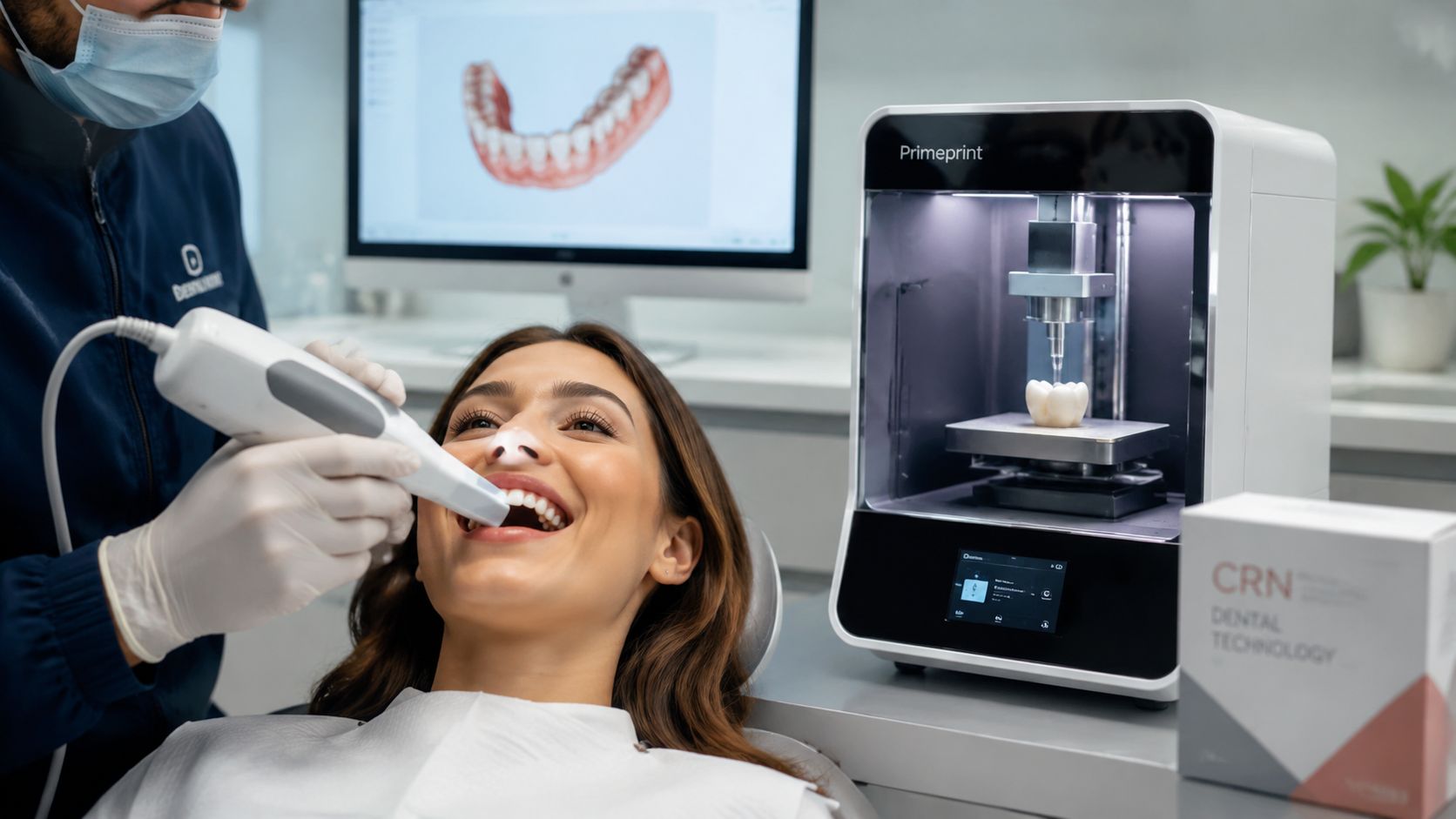
3D Dental uses this model with an in-house lab, digital scanners, 3D CT imaging, digital x-rays, and 3D printing to plan and produce restorations with more precision.
Technology should make treatment more precise and more comfortable
Patients care about fit, comfort, appearance, and how long the process takes. Those are the key standards.
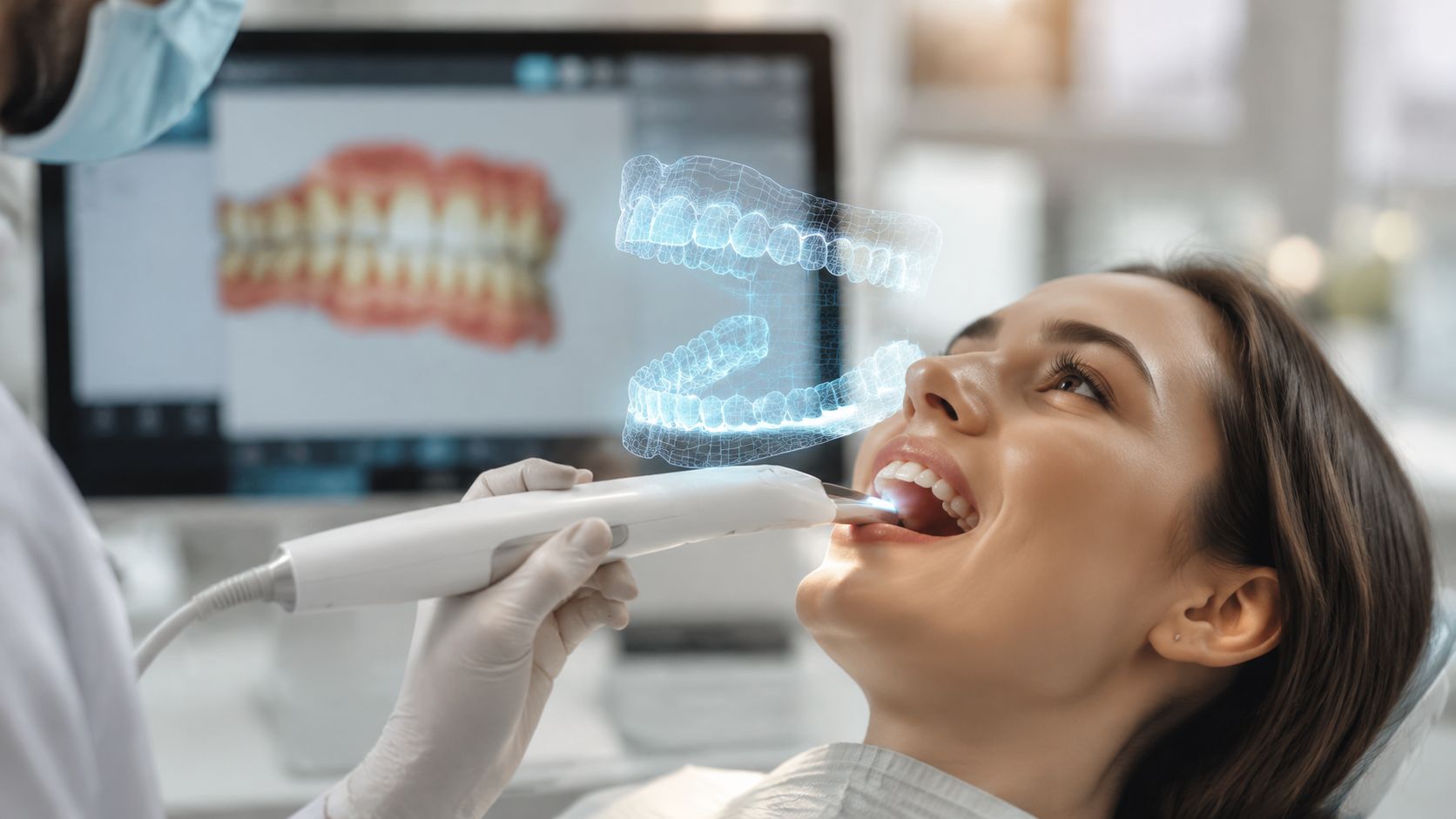
Digital impressions can be more comfortable than traditional trays. 3D imaging gives a clearer view of the tooth, roots, bone support, and surrounding structures before a crown or bridge is finalized. Digital design also helps refine the bite and contacts so the restoration feels more natural when you chew.
I see the benefit most clearly in adjustment appointments. Better imaging and better design do not remove every variable, but they often reduce the guesswork that can slow treatment down.
Good technology should improve the fit, reduce delays, and lower the chance of avoidable remakes.
What patients in Central Texas gain from this approach
For patients in North Austin, Georgetown, Wells Branch, Cedar Park, Round Rock, and Liberty Hill, value is not just the lowest fee. Value is getting a crown or bridge that is made accurately, delivered efficiently, and built to function well over time.
That is the part many generic cost articles miss. A complete financial picture includes your time, the number of visits, the chance of revisions, and how predictable the result is. An office with an in-house lab and strong digital workflow can often offer a better overall experience, not just a different price.
Your Questions About Crowns and Bridges Answered
How long do crowns and bridges last
It depends on the material, your bite, and how well you maintain them. Verified data in this guide shows that some restorations, such as zirconia crowns, can have long service lives, while bridges also offer durable function when properly cared for. A bridge may eventually need replacement, especially if the supporting teeth change over time.
Does getting a crown or bridge hurt
Most patients do well with local anesthetic and careful treatment planning. You may feel pressure during the appointment and some soreness afterward, but the procedure itself is usually very manageable. If the tooth is already inflamed or broken, treatment often feels better than continuing to live with the problem.
How do I take care of a bridge
Brush as usual, but pay close attention to the support teeth and the area underneath the replacement tooth. Bridges need more intentional home care than a single crown because plaque can collect around the connectors and under the pontic.
Will my crown or bridge look natural
Yes, when the material and shade are chosen carefully. The most natural-looking result comes from matching the restoration to your bite, gumline, and surrounding teeth rather than just choosing the whitest possible shade.
Should I whiten my teeth before getting a crown
If you’re planning teeth whitening, it’s smart to discuss that before the final crown or bridge is made. Restorations don’t whiten the way natural teeth do, so sequencing matters if you want the most even cosmetic result.
Is a bridge better than an implant
Not always. A bridge can be a practical, fixed option, especially if neighboring teeth already need crowns. An implant can be a strong option if the adjacent teeth are healthy and you want to avoid reshaping them. The right answer depends on your oral health, budget, and long-term goals.
If you’re comparing options for a damaged or missing tooth in Austin or Georgetown, schedule a consultation with 3D Dental. You’ll get a clear exam, a realistic treatment recommendation, and transparent guidance on what your crown or bridge may involve financially so you can move forward with confidence.
Ready to get started?
Schedule a free, no obligation consultation with our team and see what's possible for your smile!
Georgetown
- Mon-Thurs8:30am-5pm
- Fri8am-3:30pm
- Sat-SunClosed
Austin
- Mon-Tues8am-5pm
- Wed-Thurs9am-6pmFri8am-2pm
- Sat-SunClosed