
What Is All on 4 Implants? Your Guide to Full-Arch Solutions
Related Posts




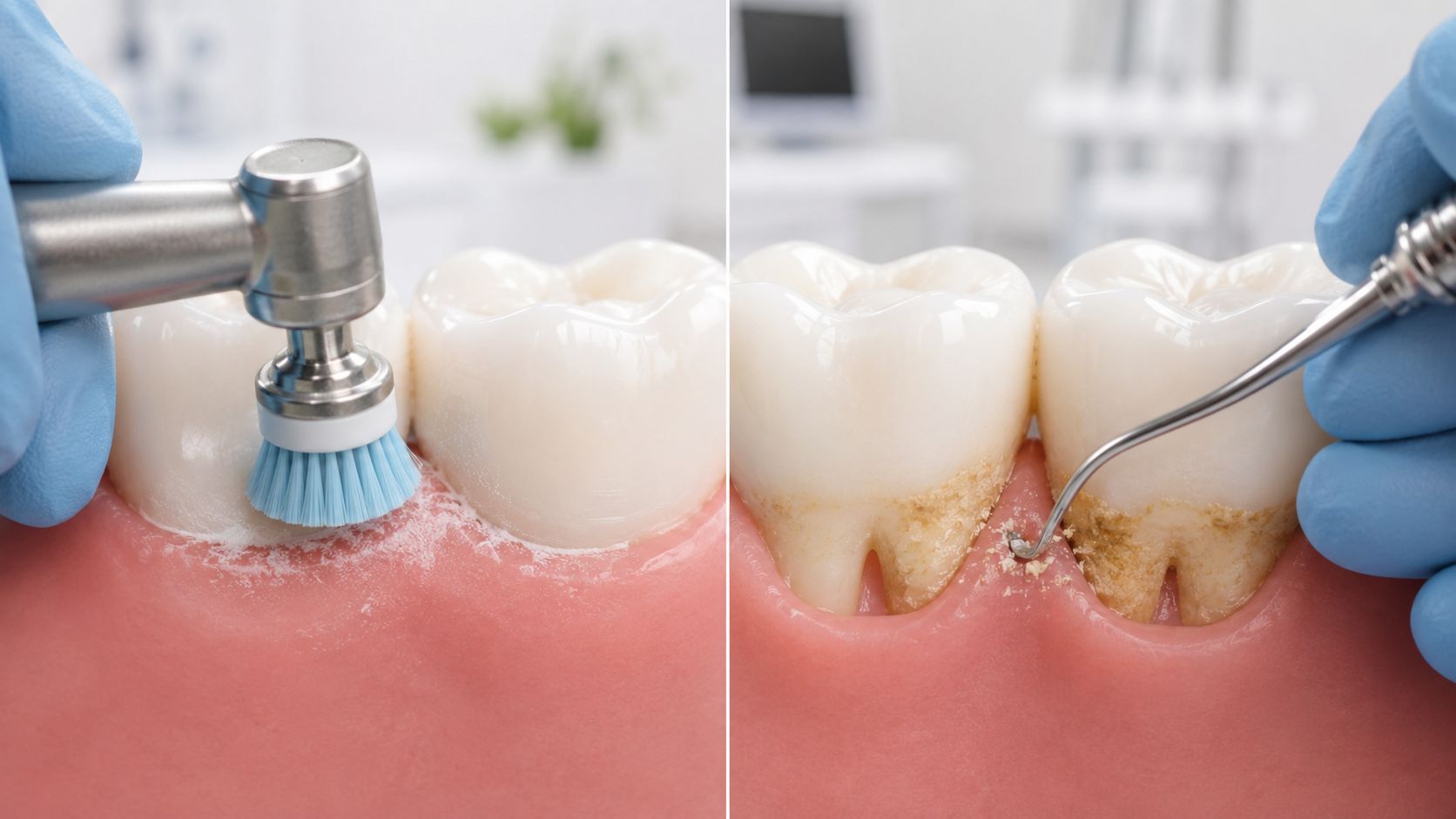
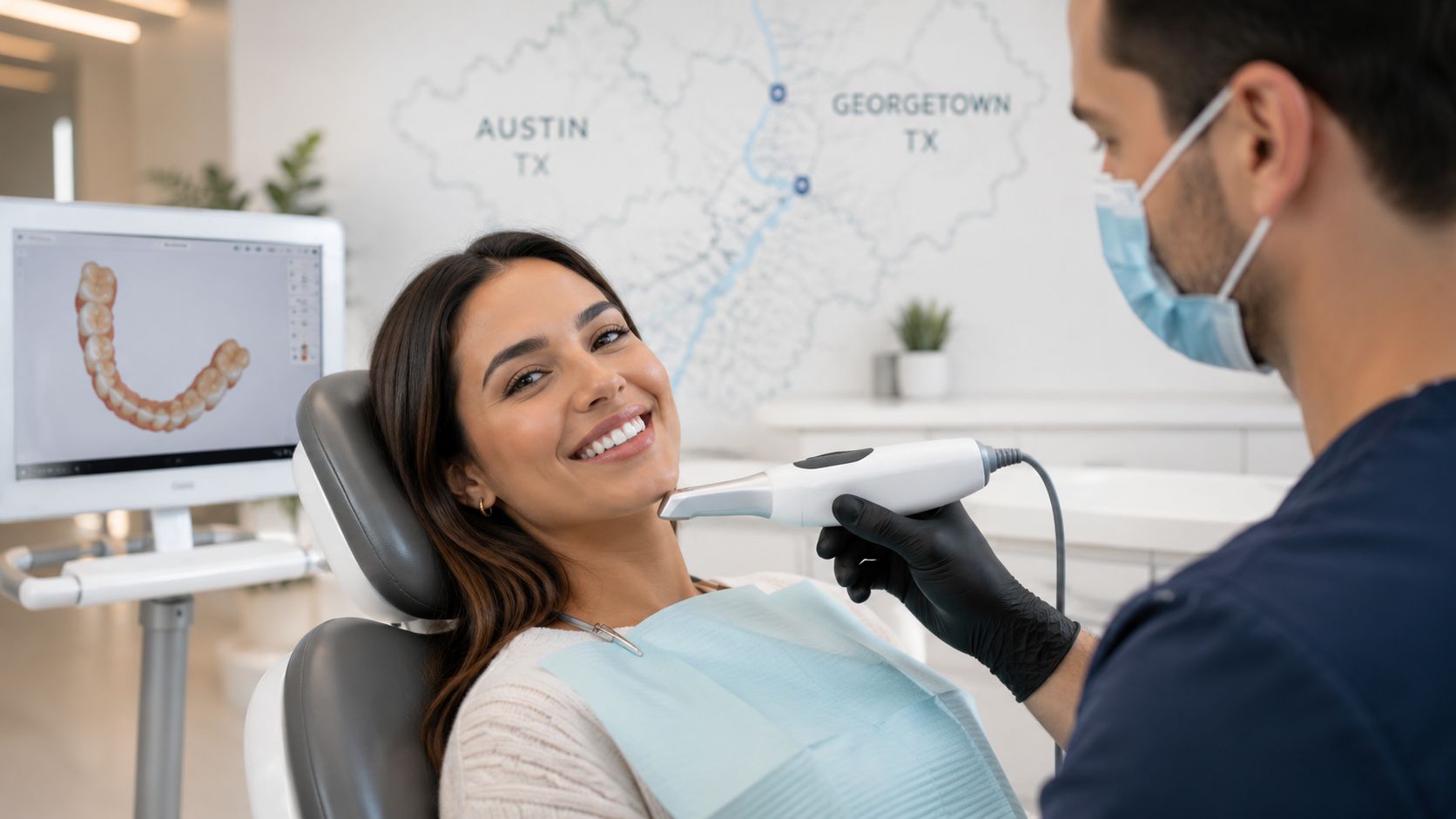
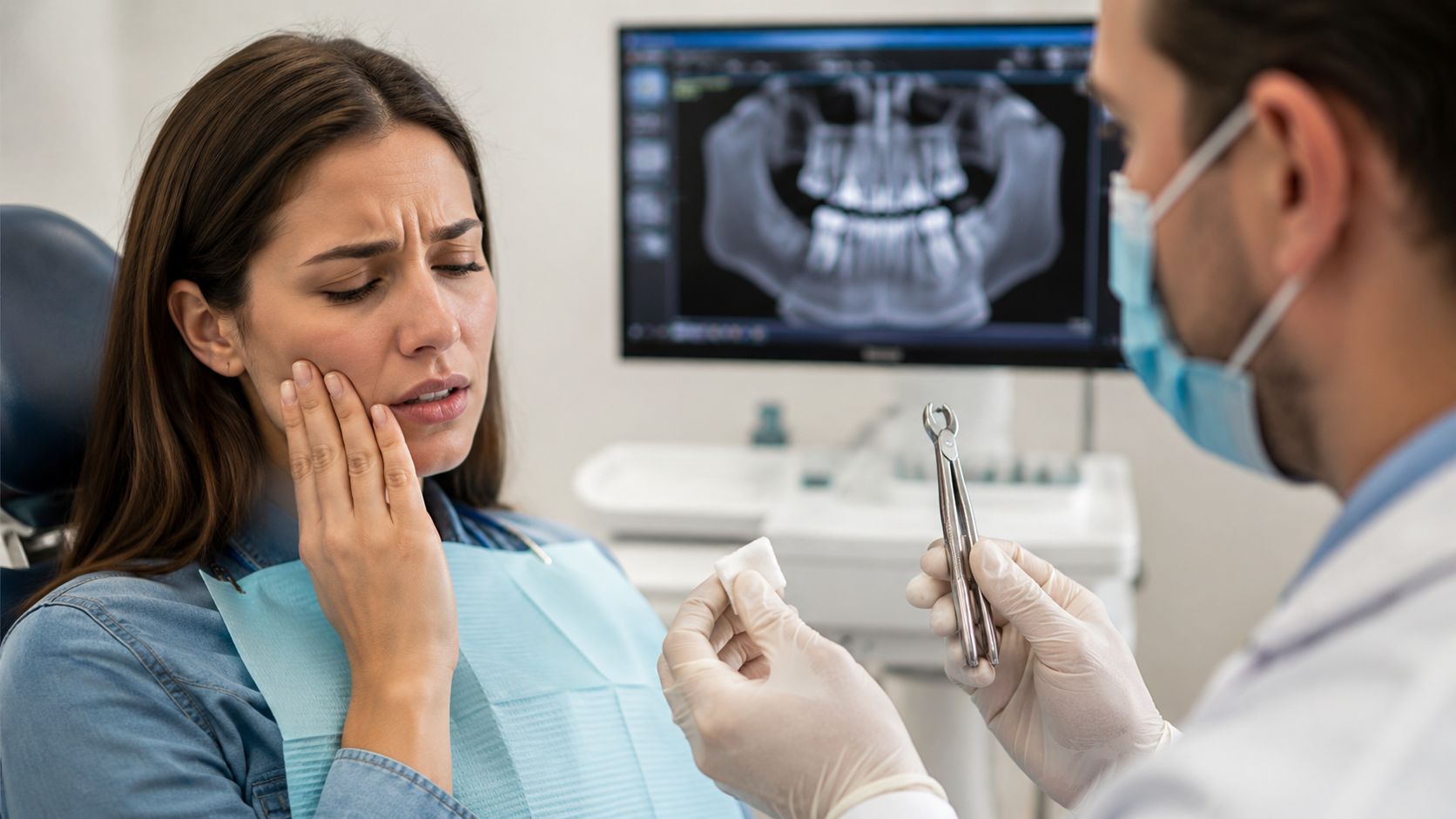

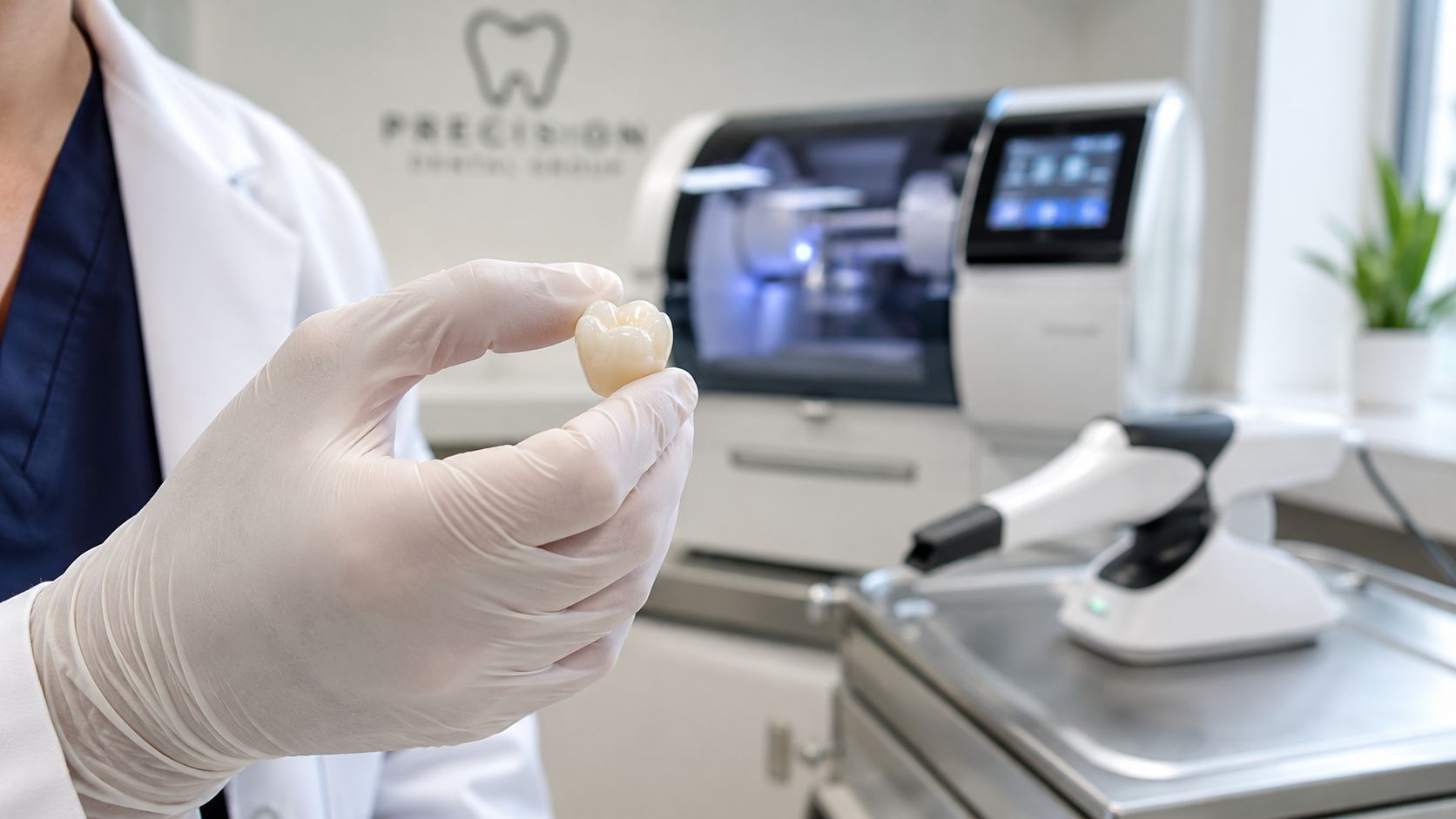

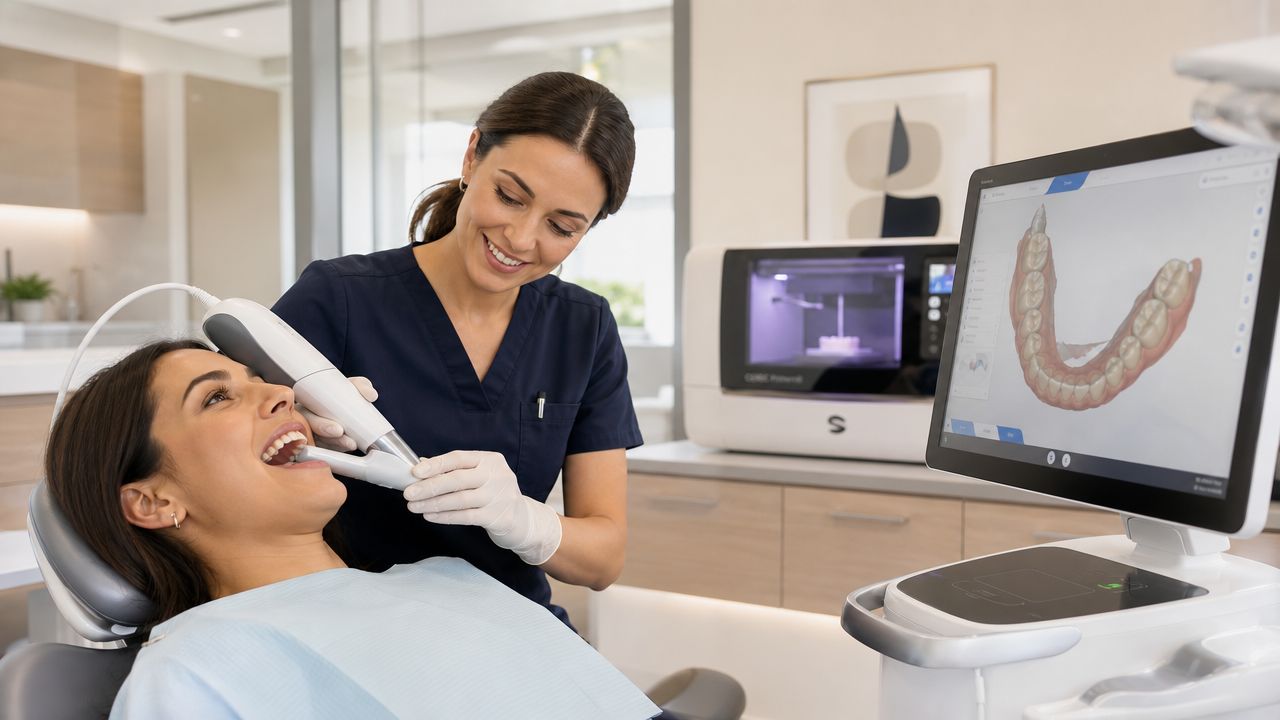
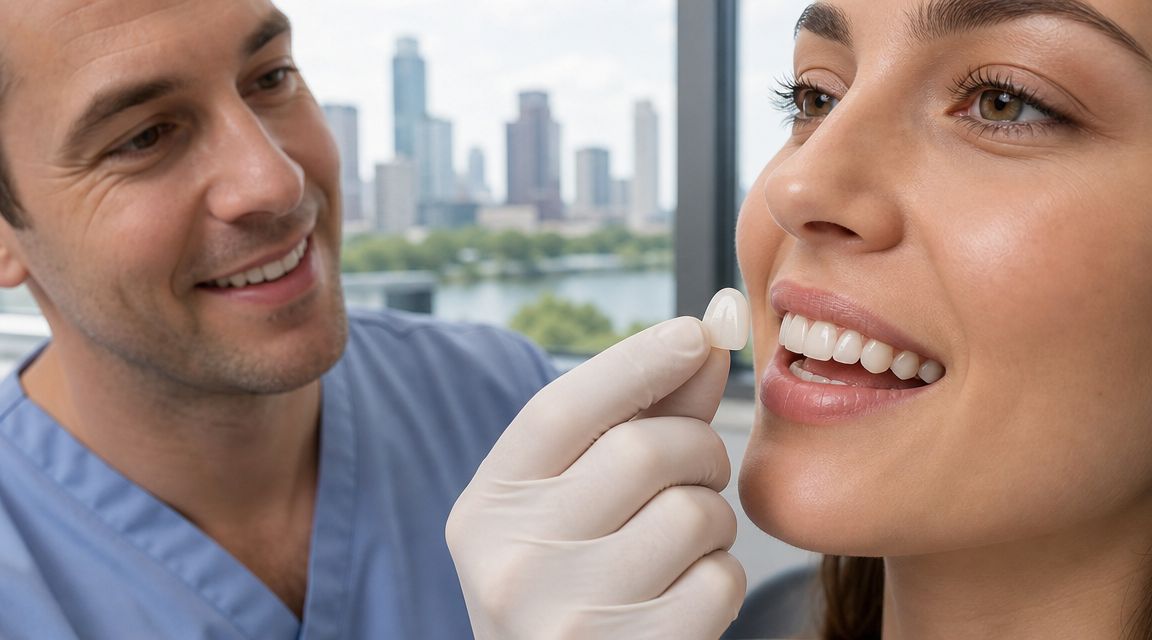
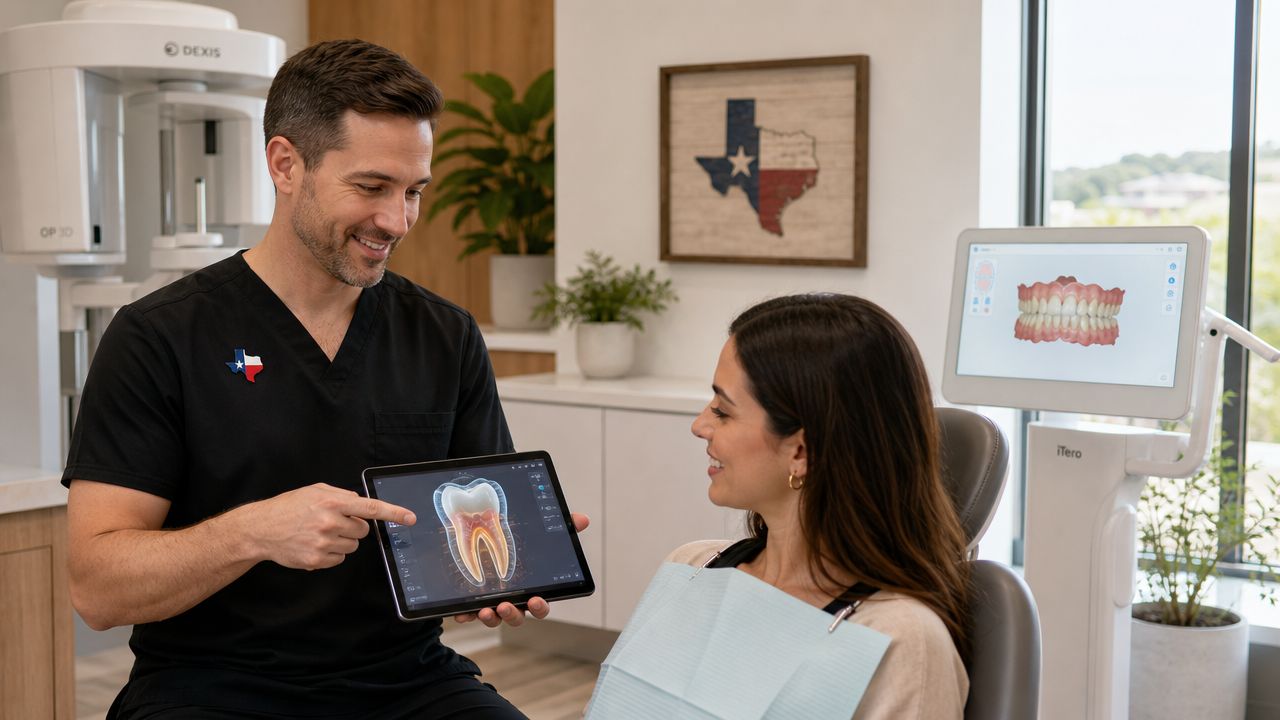
















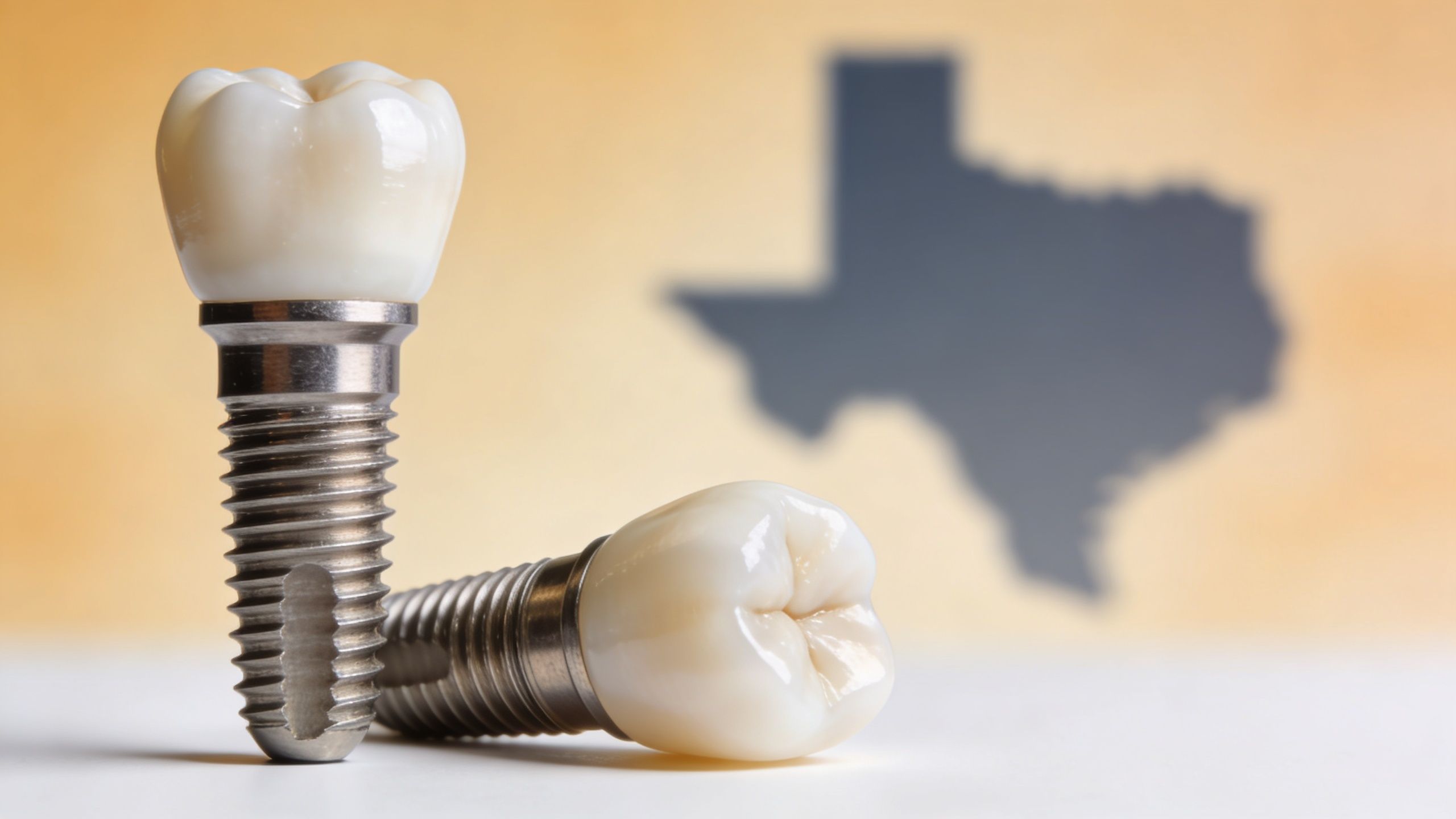


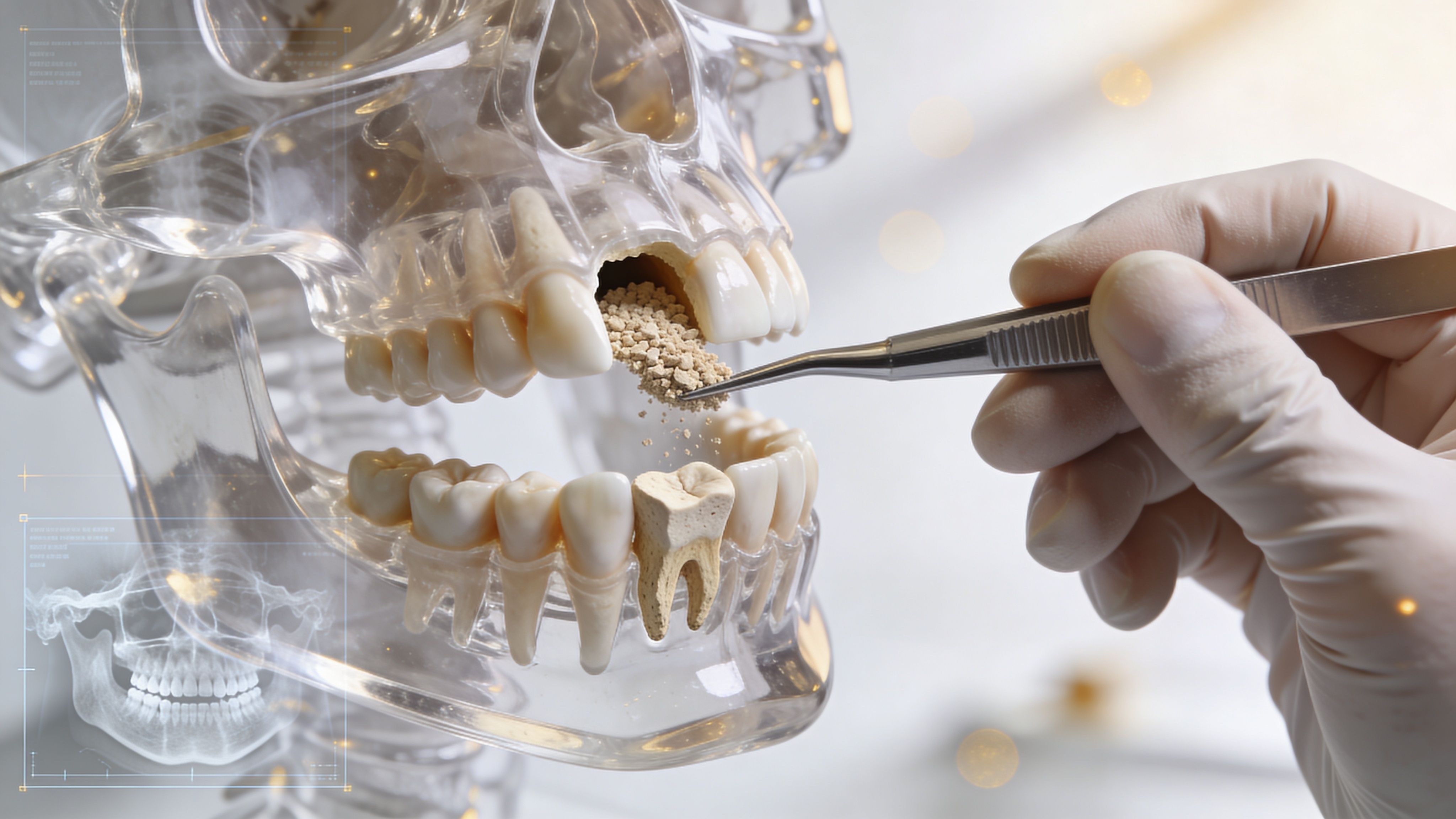



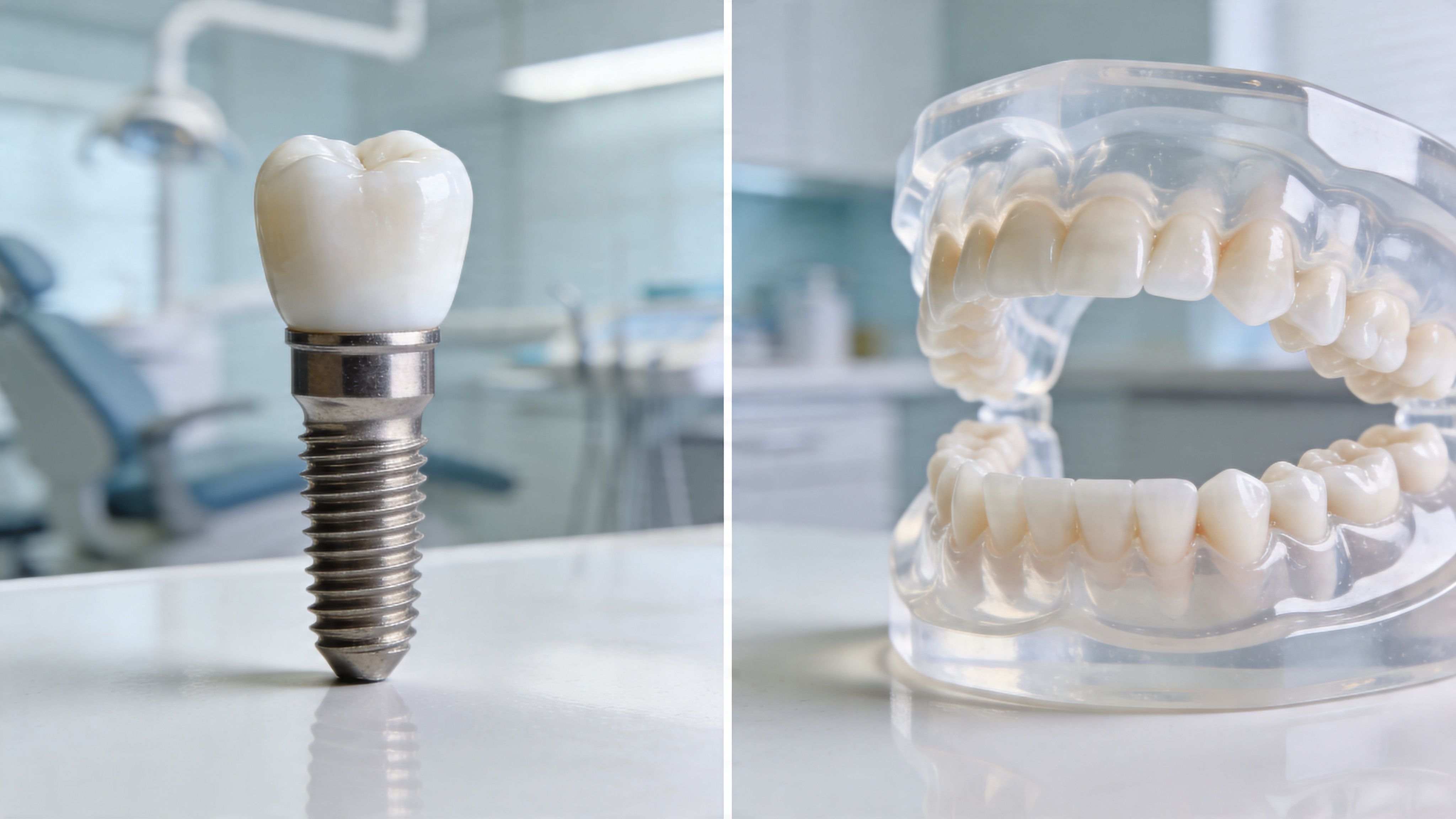
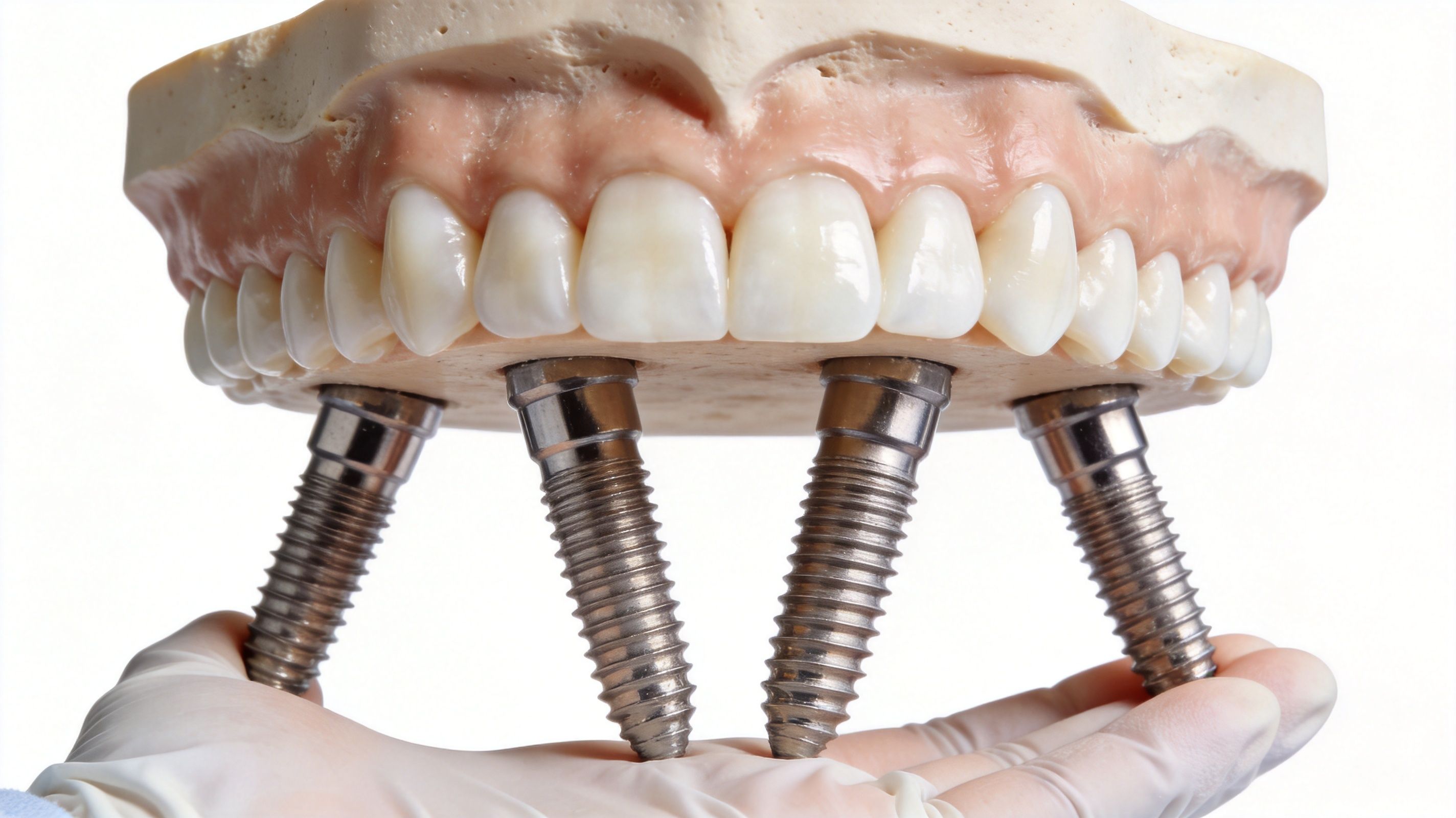
If you're searching for dental implants near me in Austin or Georgetown, there's a good chance you're dealing with more than missing teeth. Many people who ask about what is all on 4 implants are already tired of hiding their smile, avoiding certain foods, or managing dentures that move at the worst time. That frustration is real, and it usually builds slowly. First it's one failing tooth, then several, then a point where eating, speaking, and smiling no longer feel easy.
In consultation, I often find that patients aren't only looking for teeth. They're looking for stability. They want to know if they can go to dinner in Austin, take family photos in Georgetown, or talk at work without worrying about how their mouth looks or feels. They also want a clear answer, not a confusing sales pitch.
All-on-4 is one of the most practical solutions we have for full-arch tooth replacement. It replaces an entire upper or lower set of teeth using four strategically placed implants and a fixed bridge. In the right case, it can restore function, appearance, and confidence with fewer moving parts than many people expect.
Restore Your Smile with a Dentist Near You in Austin TX
A common story starts like this. Someone from North Austin, Cedar Park, Round Rock, or Georgetown has spent years trying to make things work with damaged teeth, partials, or loose dentures. They chew on one side. They skip foods they used to enjoy. They smile with their lips closed. Eventually they search for a dentist near me or dental implants near me because they want a long-term answer, not another short-term patch.
That search often comes after a frustrating stretch of dental problems. Teeth break. Old dental work stops holding up. Dentures may fit poorly as the jaw changes. Even daily routines become stressful when you're always thinking about what you can eat, how you sound, or whether your teeth will stay in place.
Practical rule: If your current teeth or dentures control your day, it may be time to look at a full-arch solution instead of fixing one problem at a time.
For many adults, what is all on 4 implants becomes the key question because it offers a fixed replacement for a full arch without the complexity of replacing every tooth with its own implant. It gives patients a way to move from failing teeth to a more secure smile with a treatment plan that's structured and understandable.
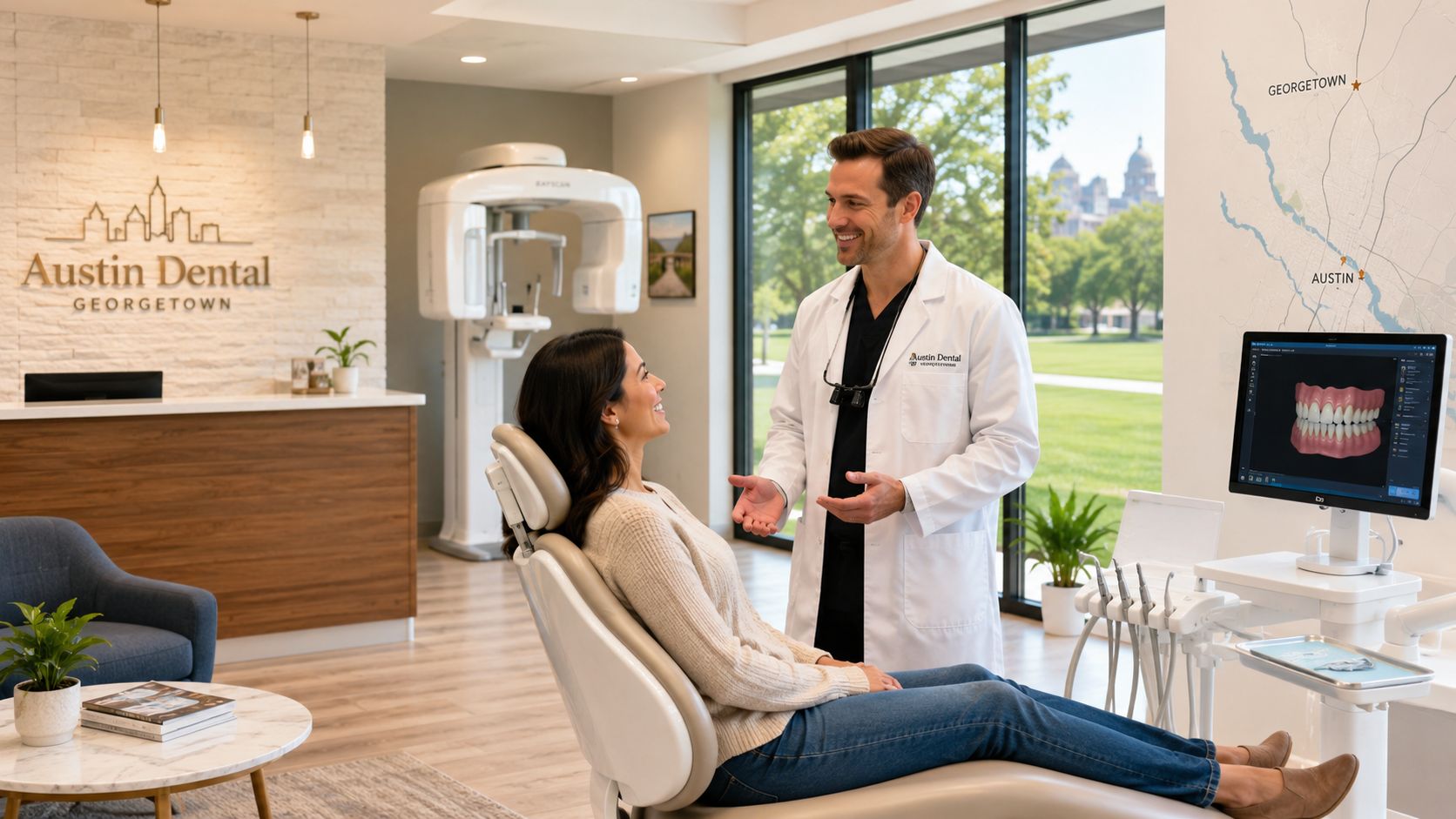
People looking for a dentist in Austin, TX or dentist in Georgetown, TX also want care that feels local and personal. They don't want to be rushed through a major decision. They want a team that explains the trade-offs clearly, uses modern imaging, and builds a plan around comfort, function, and realistic expectations.
Understanding the Impact of Full-Arch Tooth Loss
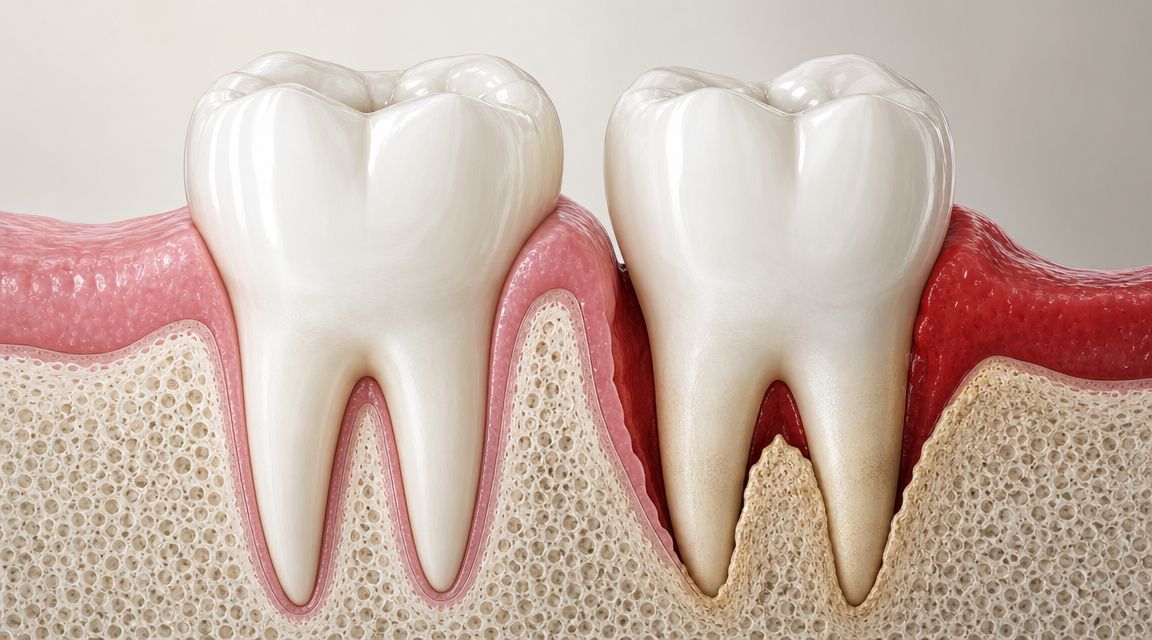
When most or all teeth in an arch are missing, the problem isn't just cosmetic. Your mouth loses support, your bite changes, and your jawbone no longer gets the stimulation that natural tooth roots normally provide. Over time, that can change the way your face looks and the way your mouth functions.
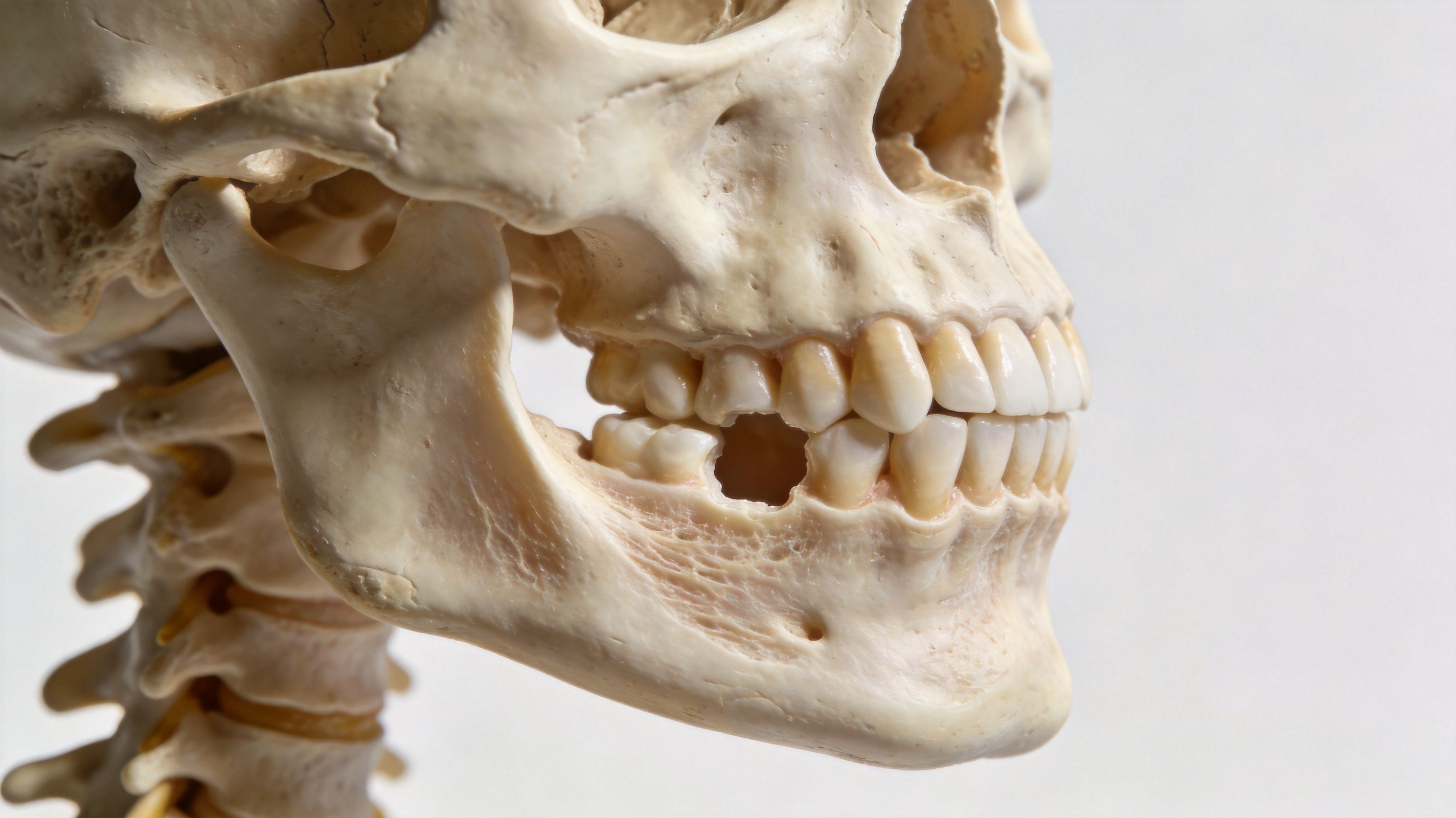
Why missing teeth affect more than your smile
If you've lost many teeth, chewing becomes less efficient. People often adapt by avoiding tougher or healthier foods and sticking with what's easy to manage. Speech can also change, especially when front teeth are missing or dentures move during conversation.
There's an emotional cost too. Patients often describe pulling back socially, covering their mouth when they laugh, or delaying treatment because they feel overwhelmed. That combination of function loss and self-consciousness is why full-arch care matters so much.
A stable replacement does more than improve appearance. It helps restore daily confidence in situations that should feel ordinary, like ordering at a restaurant, speaking in meetings, or smiling in family photos.
Why removable solutions don't always solve the whole problem
Traditional dentures can still be useful in some cases, but they don't work for everyone. A removable appliance may shift, rub, or feel bulky. As the jaw changes over time, fit can become more difficult.
That matters because people with major tooth loss usually want more than a visible replacement. They want something that feels secure. They want to stop planning meals around limitations. They want less worry, not more maintenance.
Full-arch tooth loss affects chewing, speech, facial support, and confidence at the same time. A durable solution has to address all of those, not just the appearance of the teeth.
For patients considering restorative dentistry, this is often the turning point. Once you understand the wider effect of missing teeth, options like All-on-4 dental implants make more sense as a health decision, not just a cosmetic one.
What Are All on 4 Dental Implants
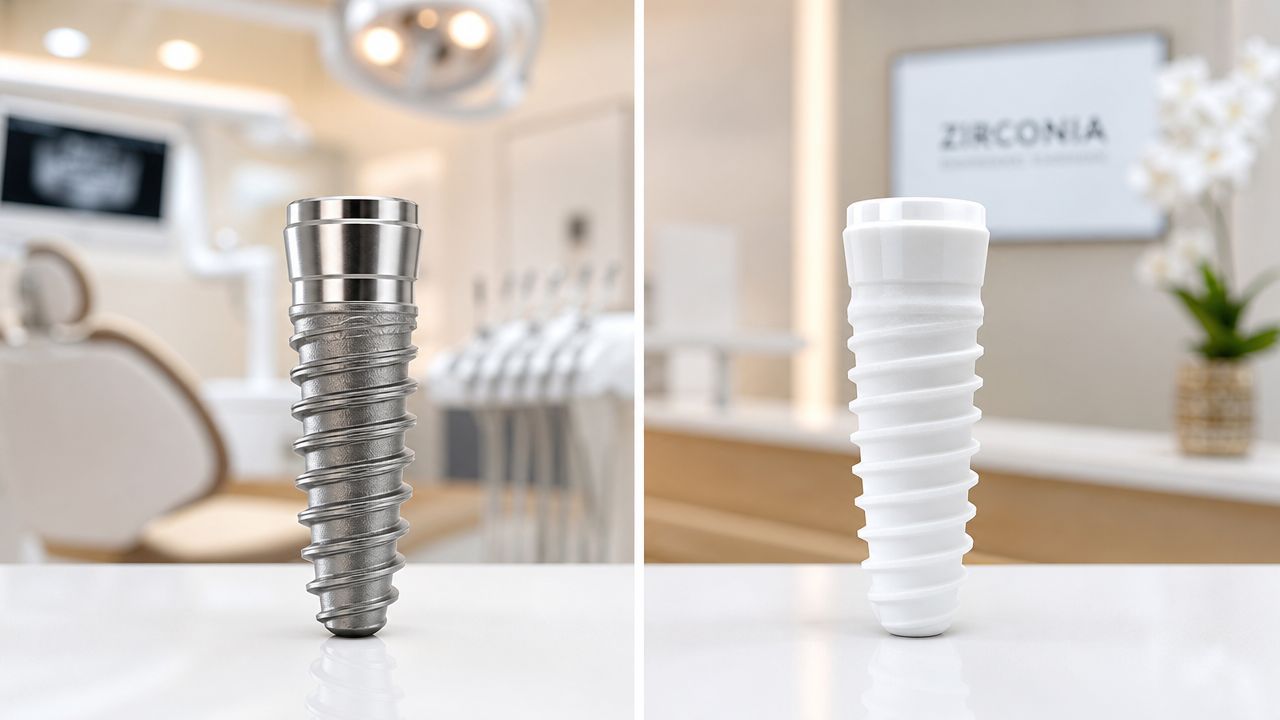
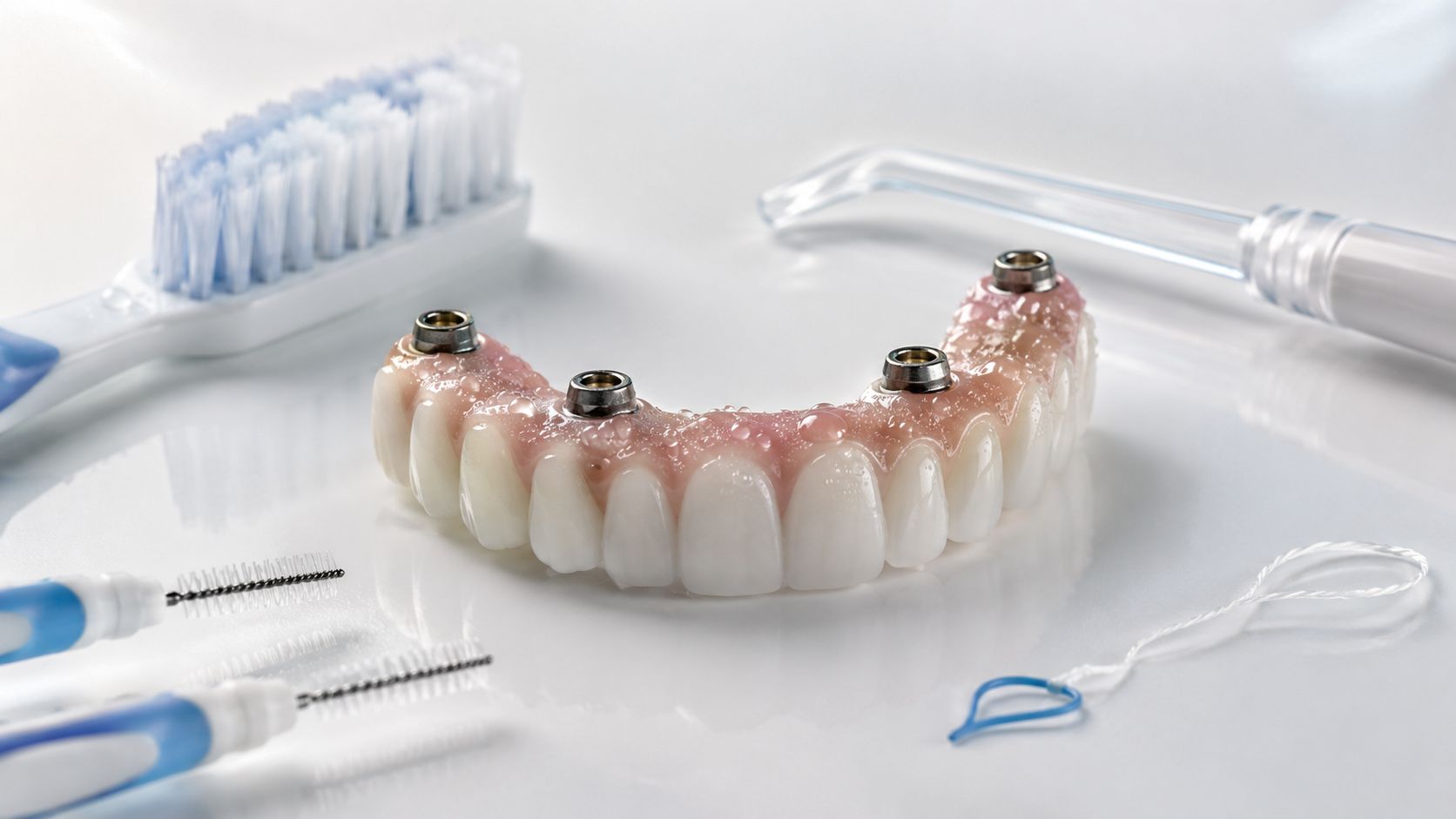
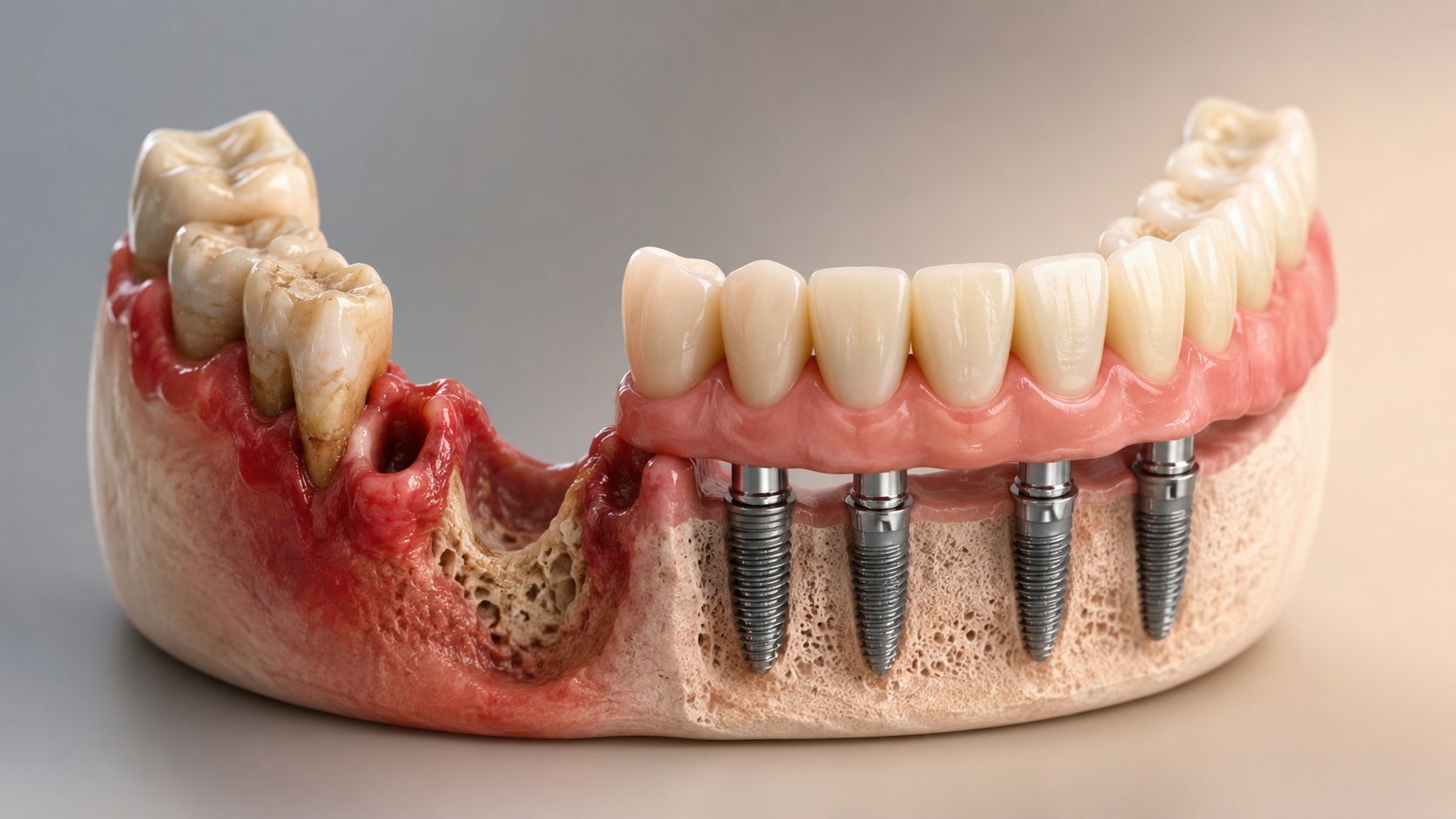
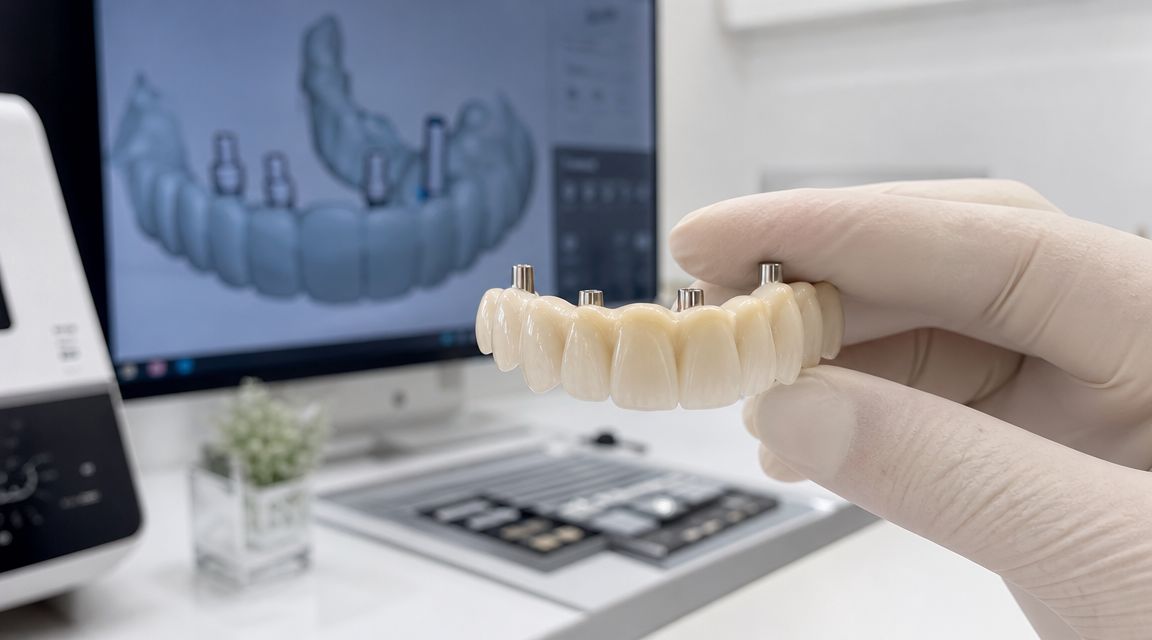
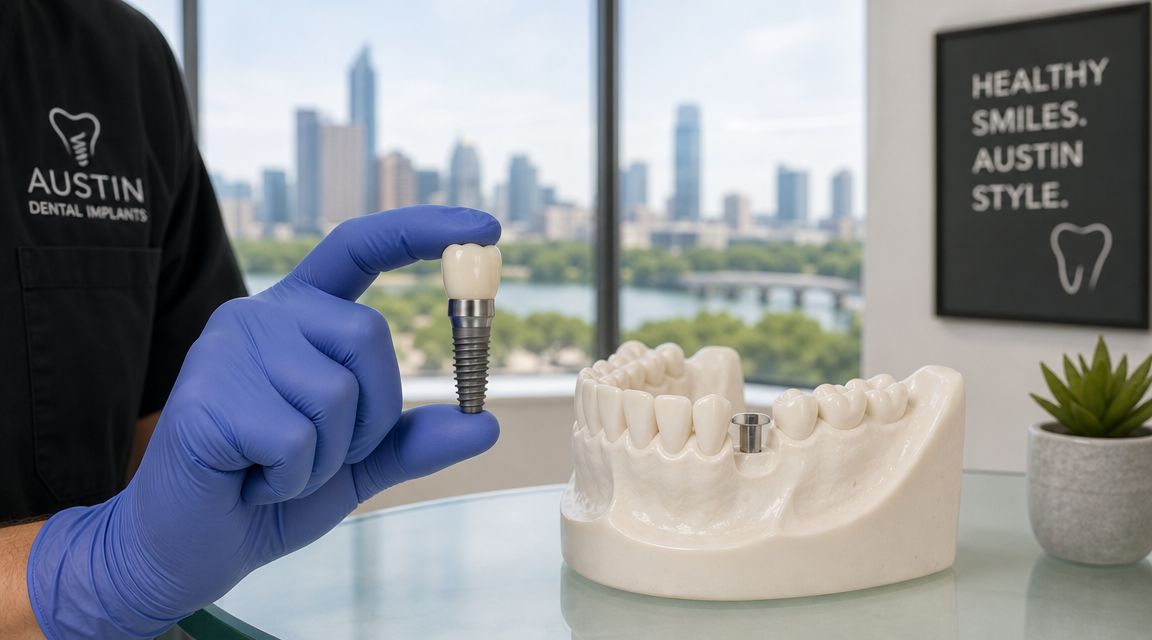
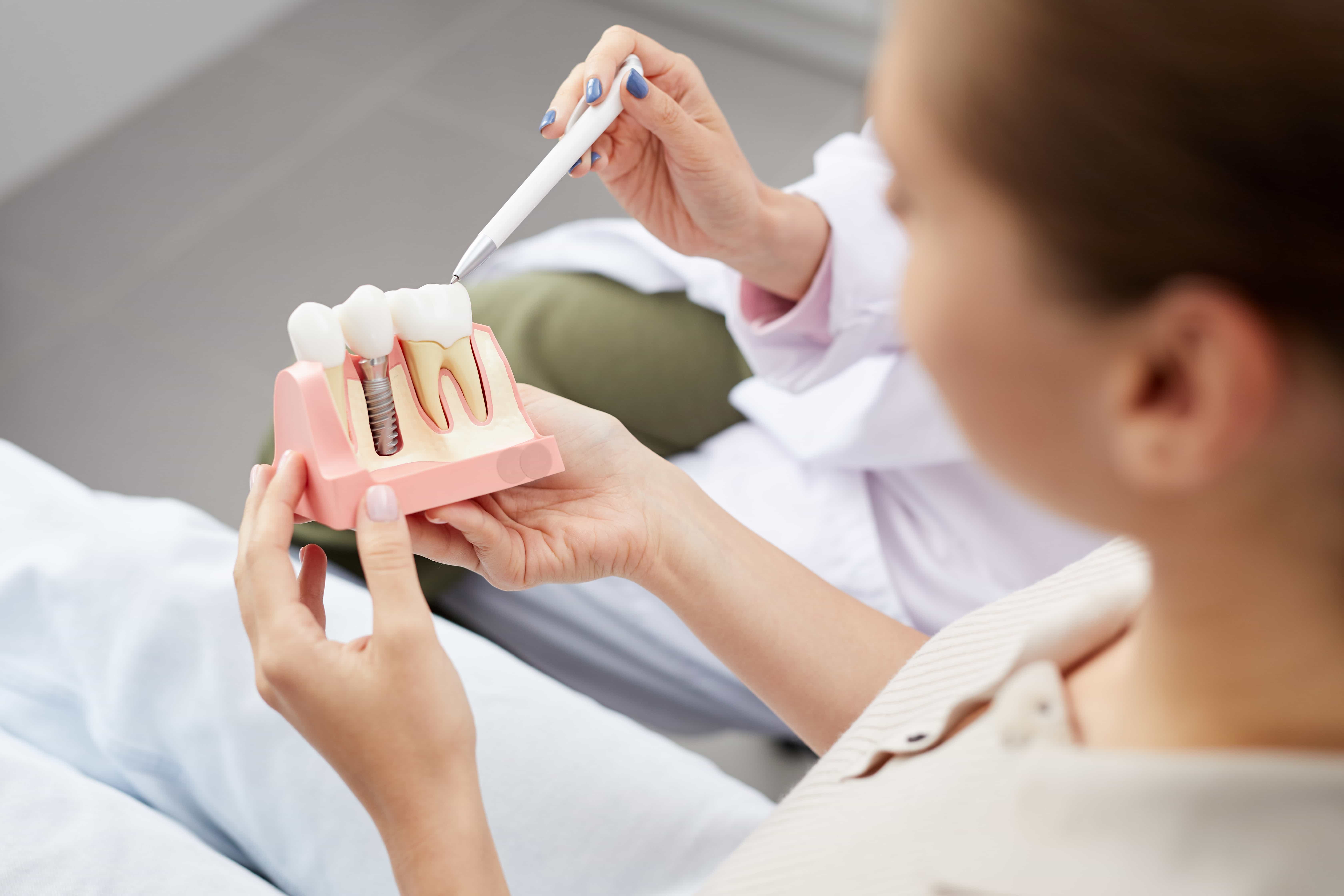
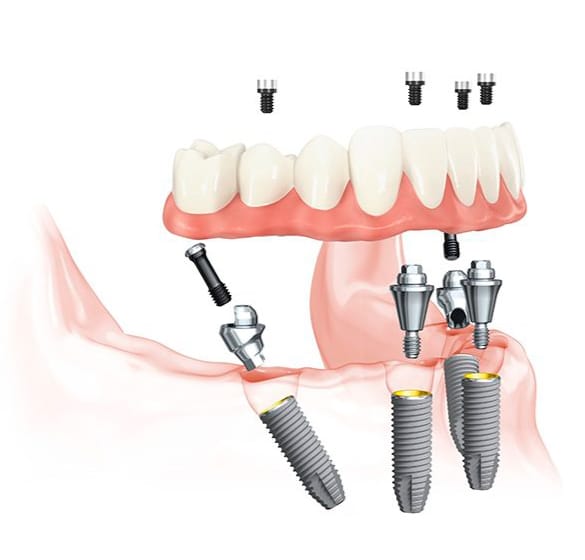
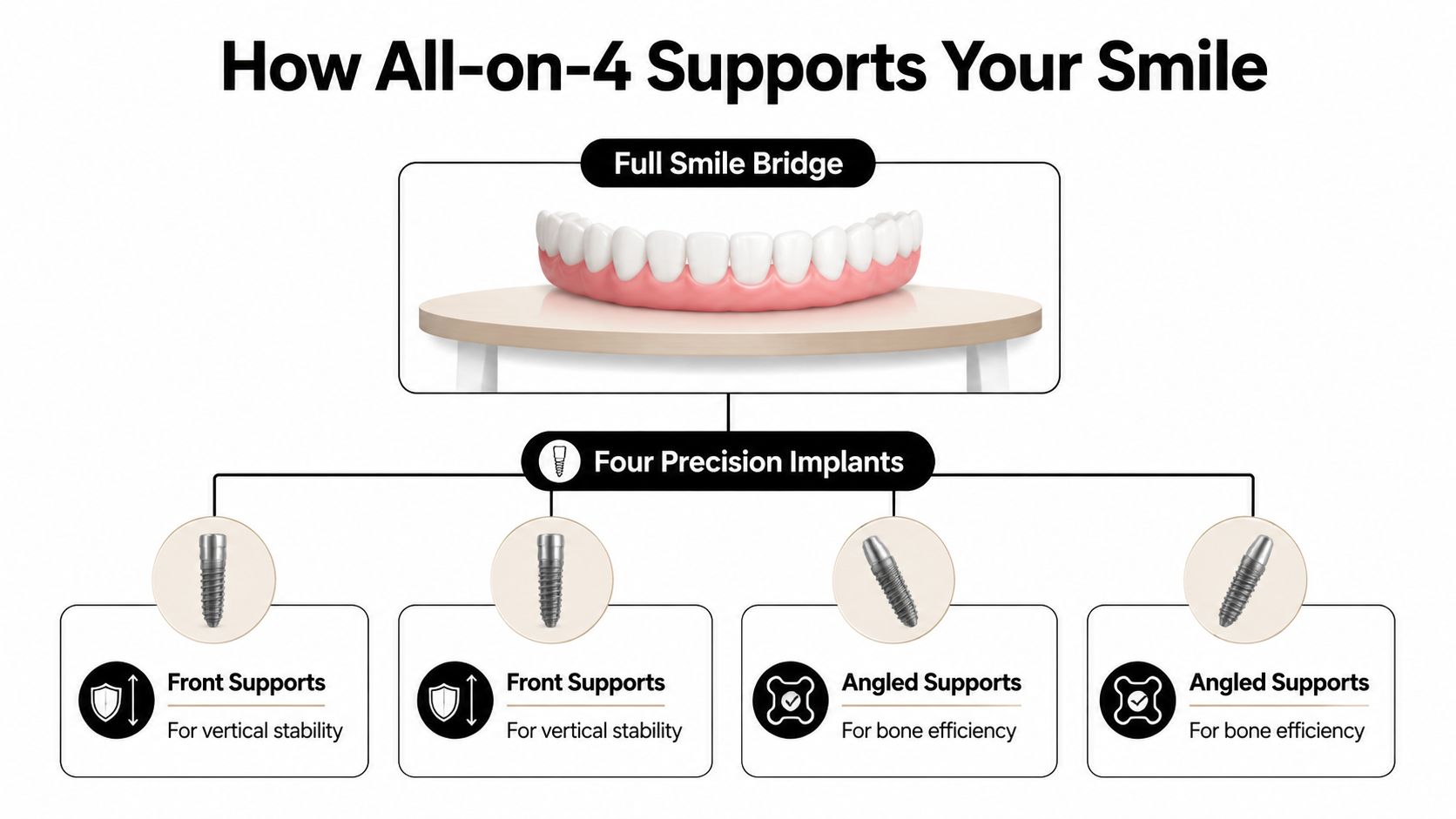
All-on-4 dental implants are a full-arch tooth replacement system. Instead of placing an implant for every missing tooth, the dentist uses four strategically placed titanium implants to support a fixed bridge of replacement teeth. This system functions similar to a table. You don't need a leg under every inch of the tabletop. You need strong support points in the right places.
That design is what makes the treatment efficient. The bridge is anchored to four implants, creating a secure foundation for a full row of teeth. For the right patient, this can provide a non-removable alternative to traditional dentures.
How the four implants are positioned
The placement isn't random. The two front implants are generally placed more vertically in the front part of the jaw, where bone is often strongest. The two back implants are tilted.
The All-on-4 technique places two posterior implants at a 30 to 45 degree angle, which helps engage denser available bone in the front of the jaw while avoiding structures like the sinus and major nerves, according to this All-on-4 overview. That angulation is one of the reasons the treatment can often avoid more invasive preparatory procedures.
Why that design matters to patients
Many people who need full-arch replacement have already lost bone over time. Traditional implant approaches may require more implants and may be more likely to need grafting first. All-on-4 was developed to make better use of the bone that's available.
Patients usually care most about the following:
- Fixed support: The bridge is attached to implants, so it doesn't come in and out like a denture.
- Efficient planning: Fewer implants can mean a more simplified full-arch treatment plan.
- Bone-friendly positioning: The angled back implants are designed to use available bone more effectively.
- Natural daily function: Patients typically choose this option because they want more confidence with eating, speaking, and smiling.
What makes it different from replacing teeth one by one
A full arch doesn't always need a separate implant for each missing tooth. That's the core idea behind what is all on 4 implants. It's a structural solution, not a one-to-one replacement strategy.
This can be especially helpful for adults with extensive tooth loss, multiple failing teeth, or long-term denture use. In those cases, rebuilding the mouth one tooth at a time may not be the most practical path. A full-arch approach can be more direct and easier for patients to understand.
The question isn't just "How do we replace teeth?" It's "How do we rebuild a stable foundation for the whole arch?"
Your All on 4 Treatment Journey at 3D Dental
Patients usually feel better once they understand the sequence. Full-arch implant treatment sounds like a major undertaking until it's broken into steps. Then it becomes much more manageable.
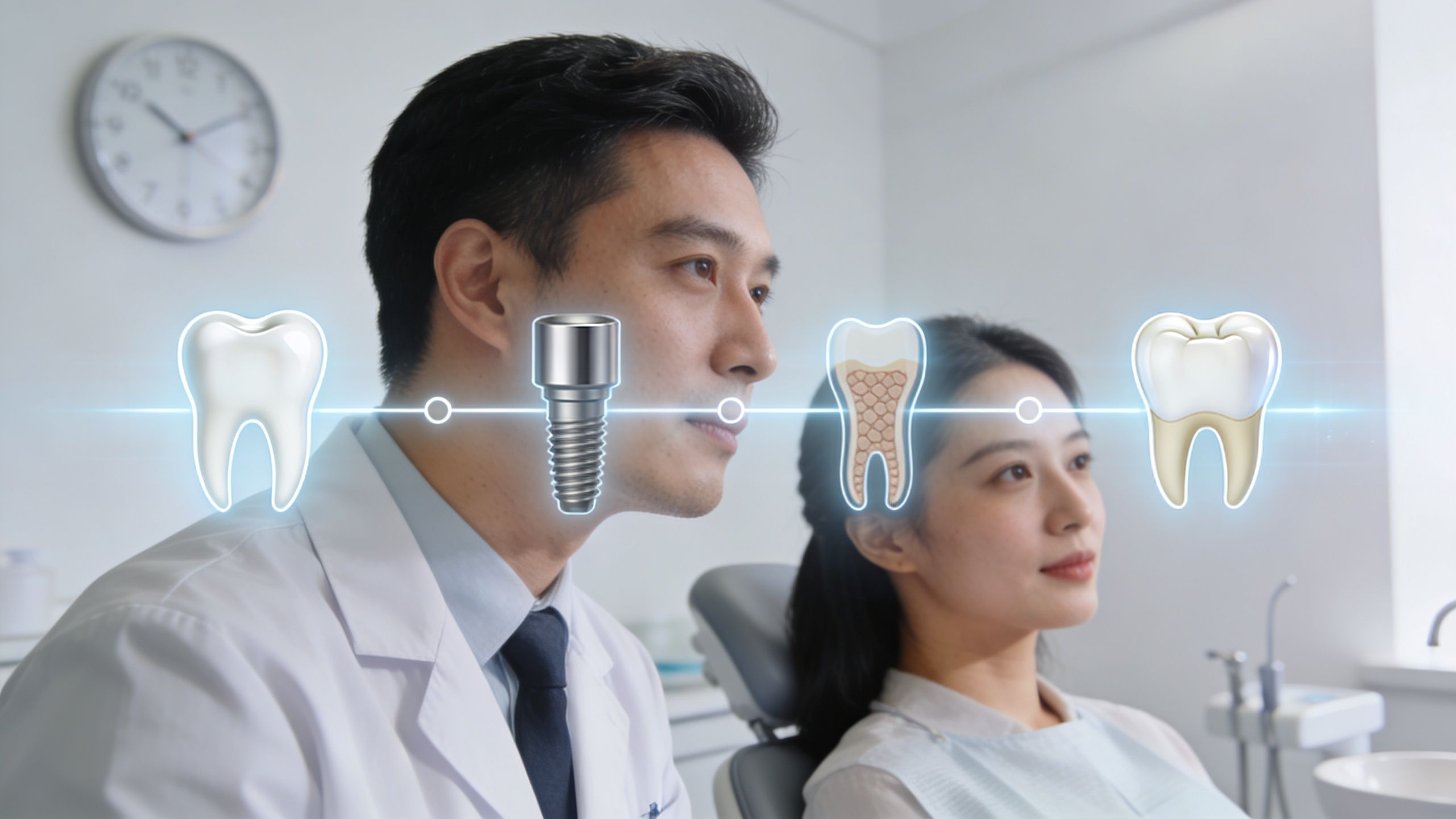
The consultation and digital planning
Your first visit centers on diagnosis and fit. We review your dental history, current symptoms, goals, and any concerns about surgery, healing, or appearance. For patients who have been searching for a dentist near me or cosmetic dentist near me because their smile has reached a breaking point, the process now becomes concrete.
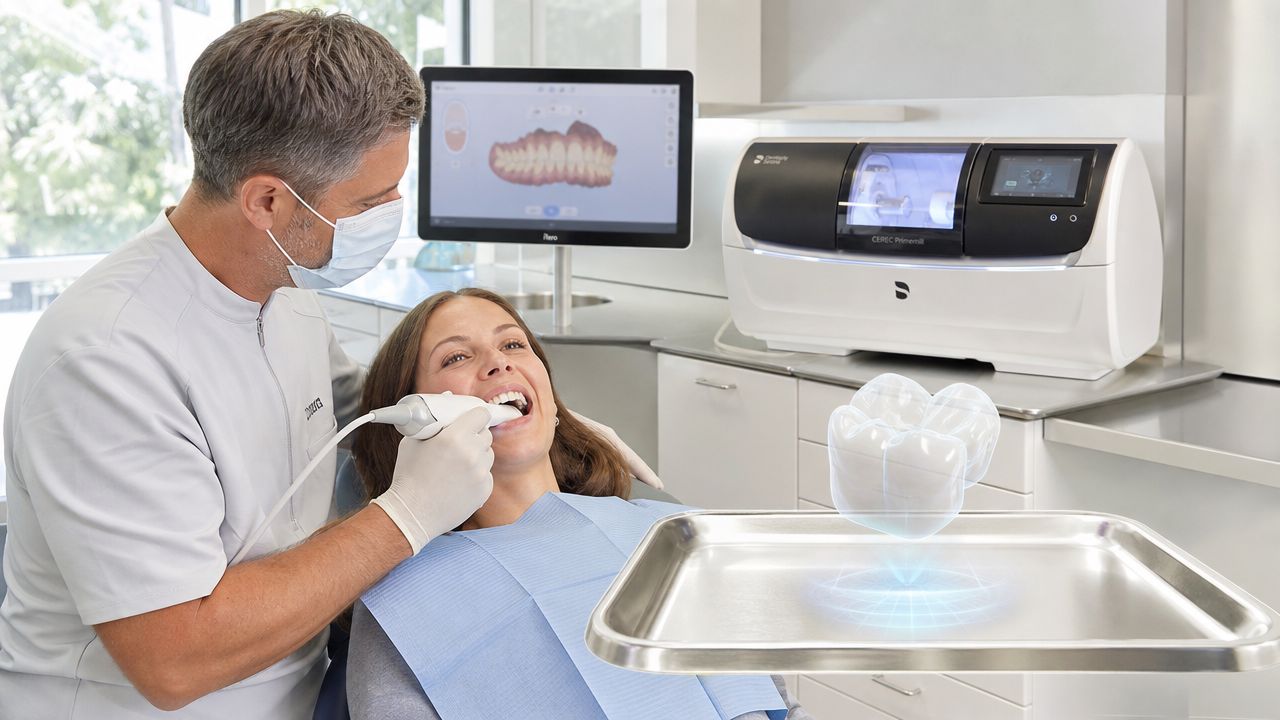
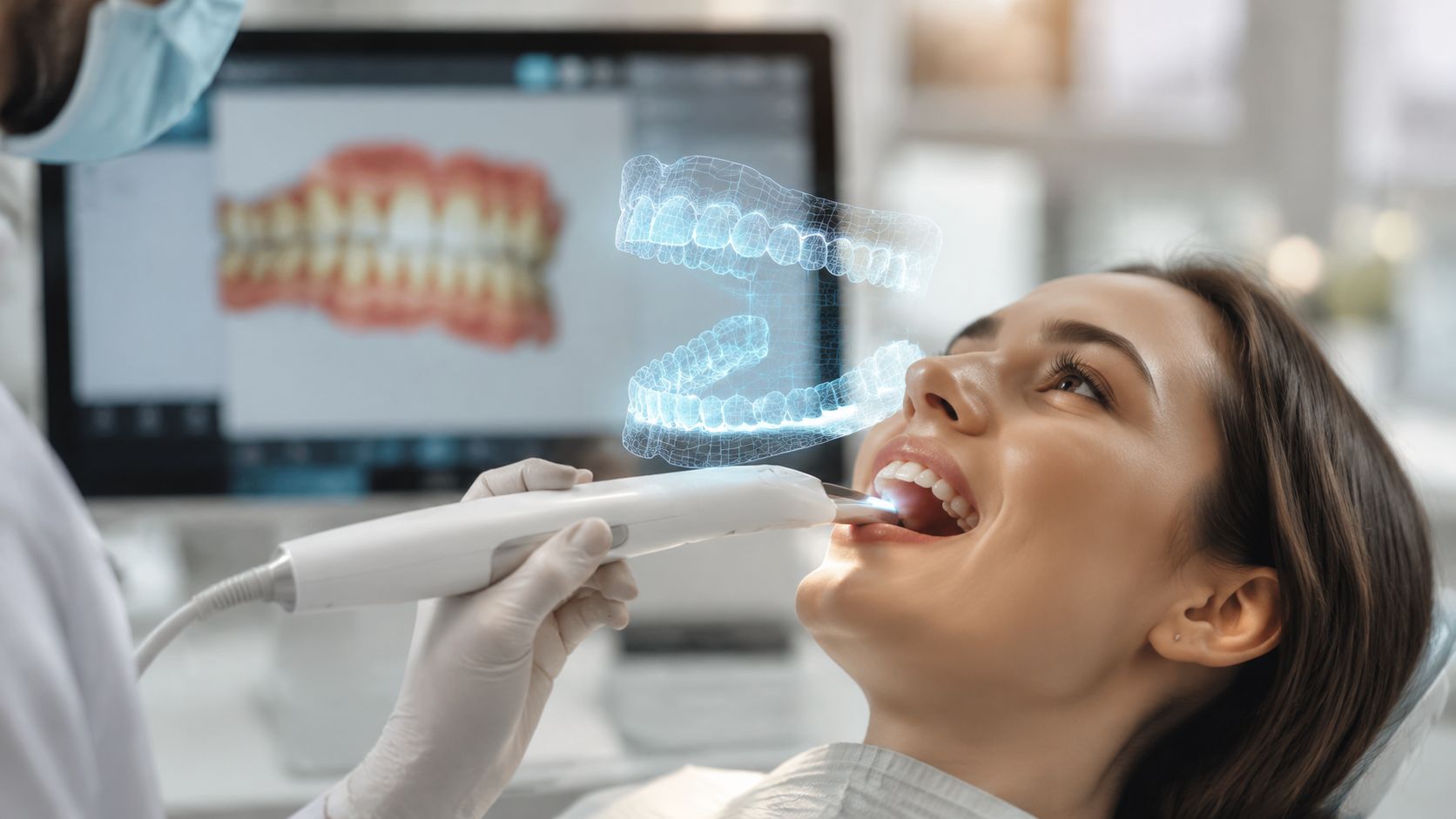
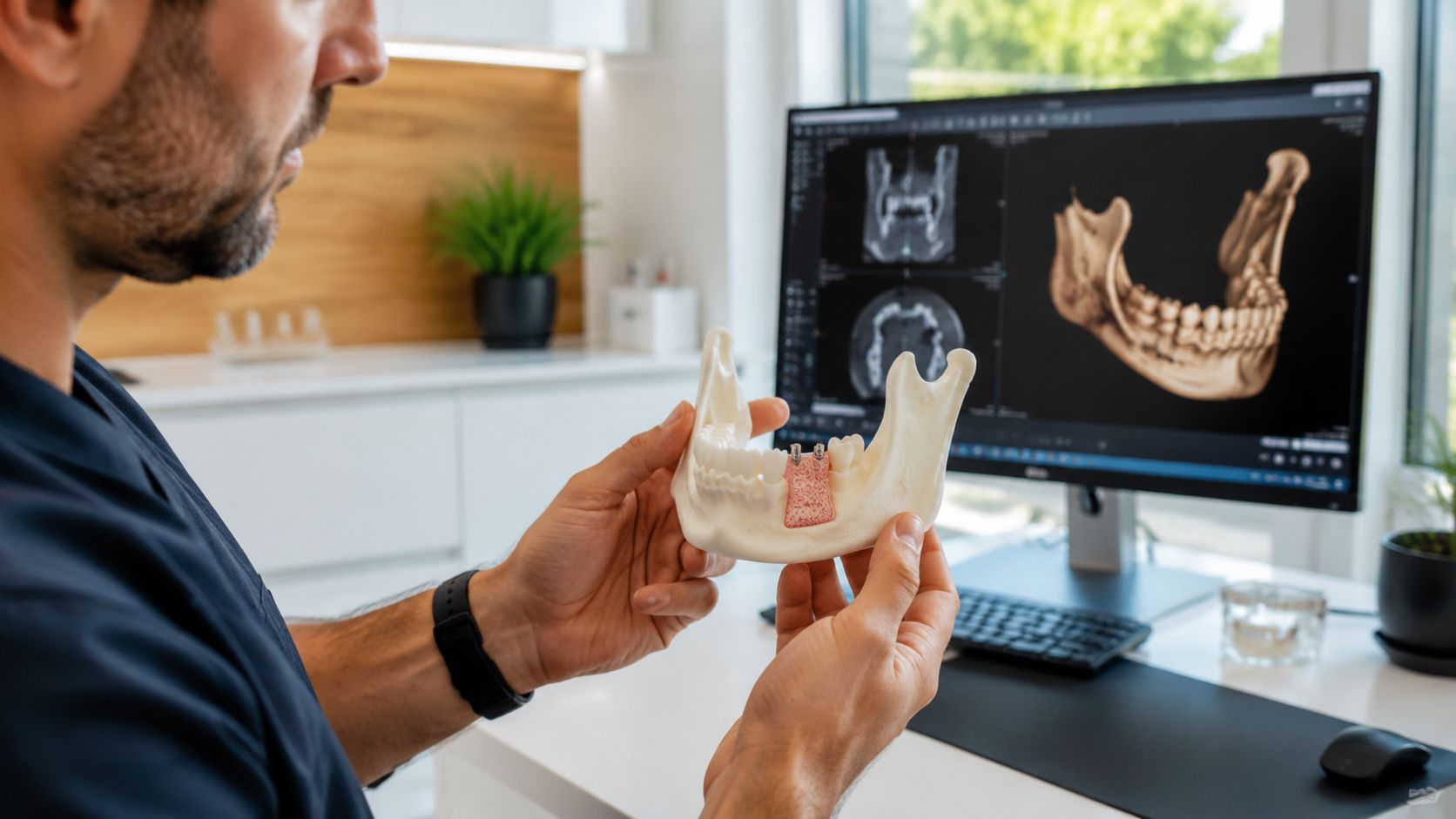
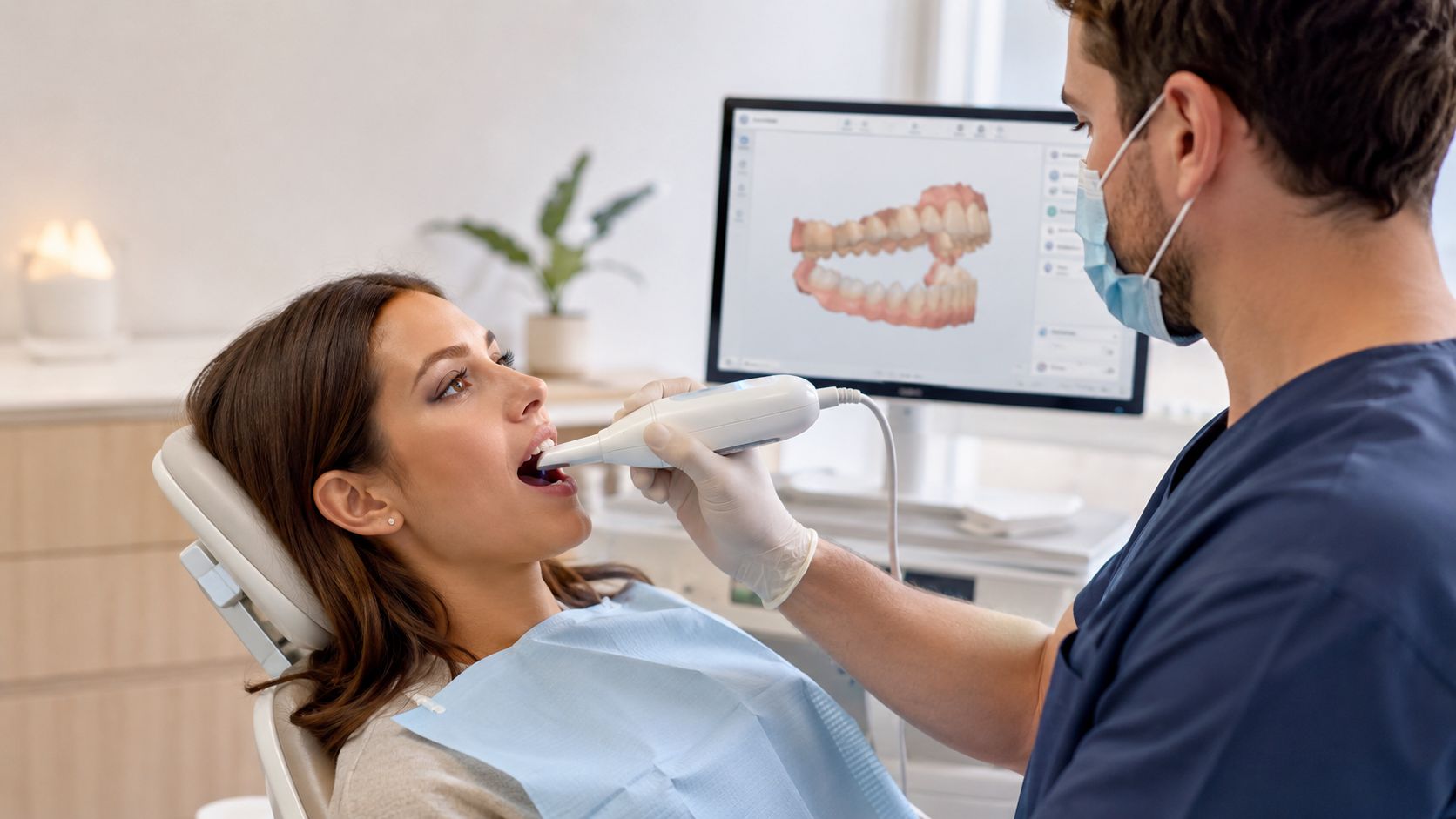
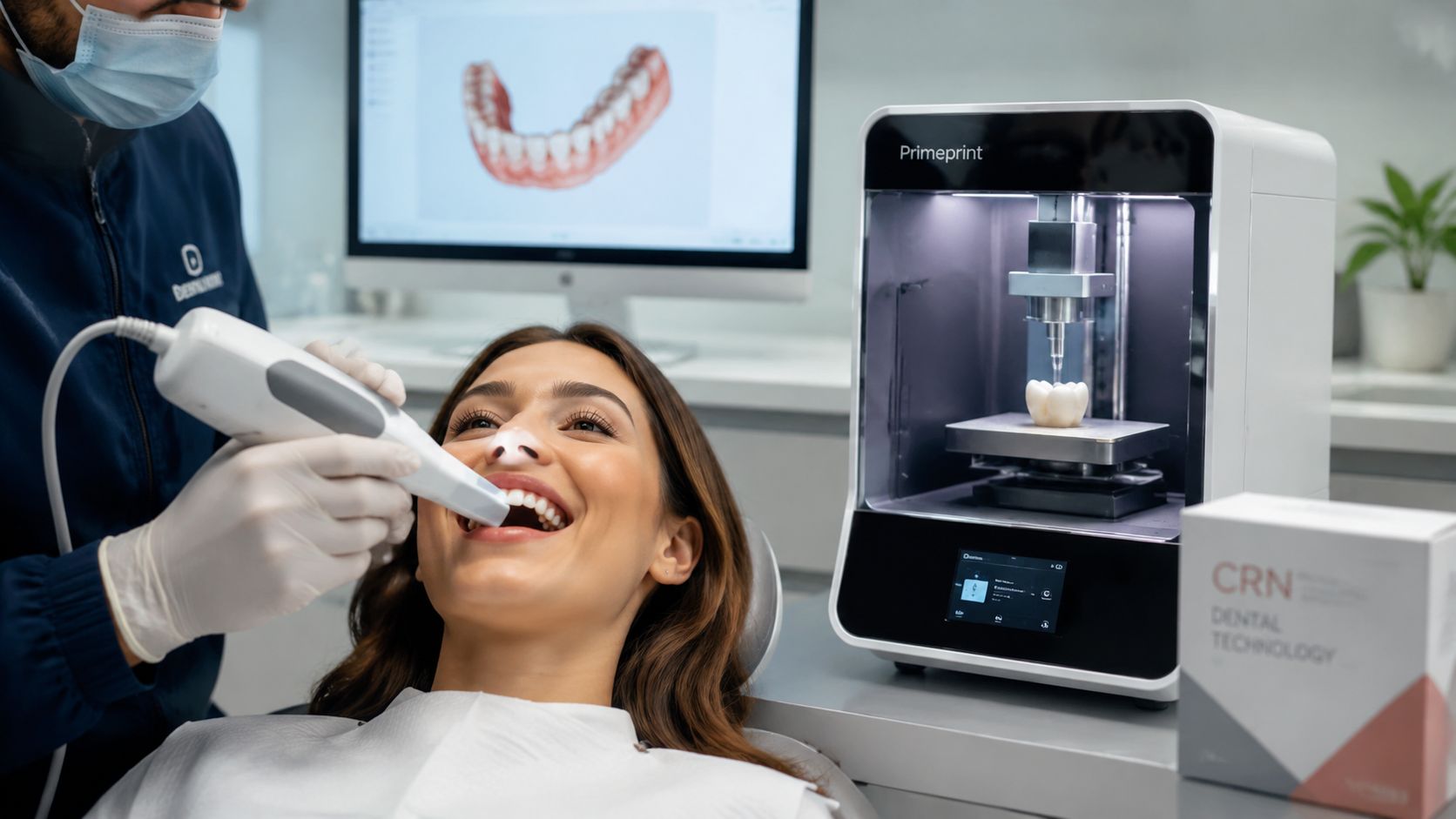
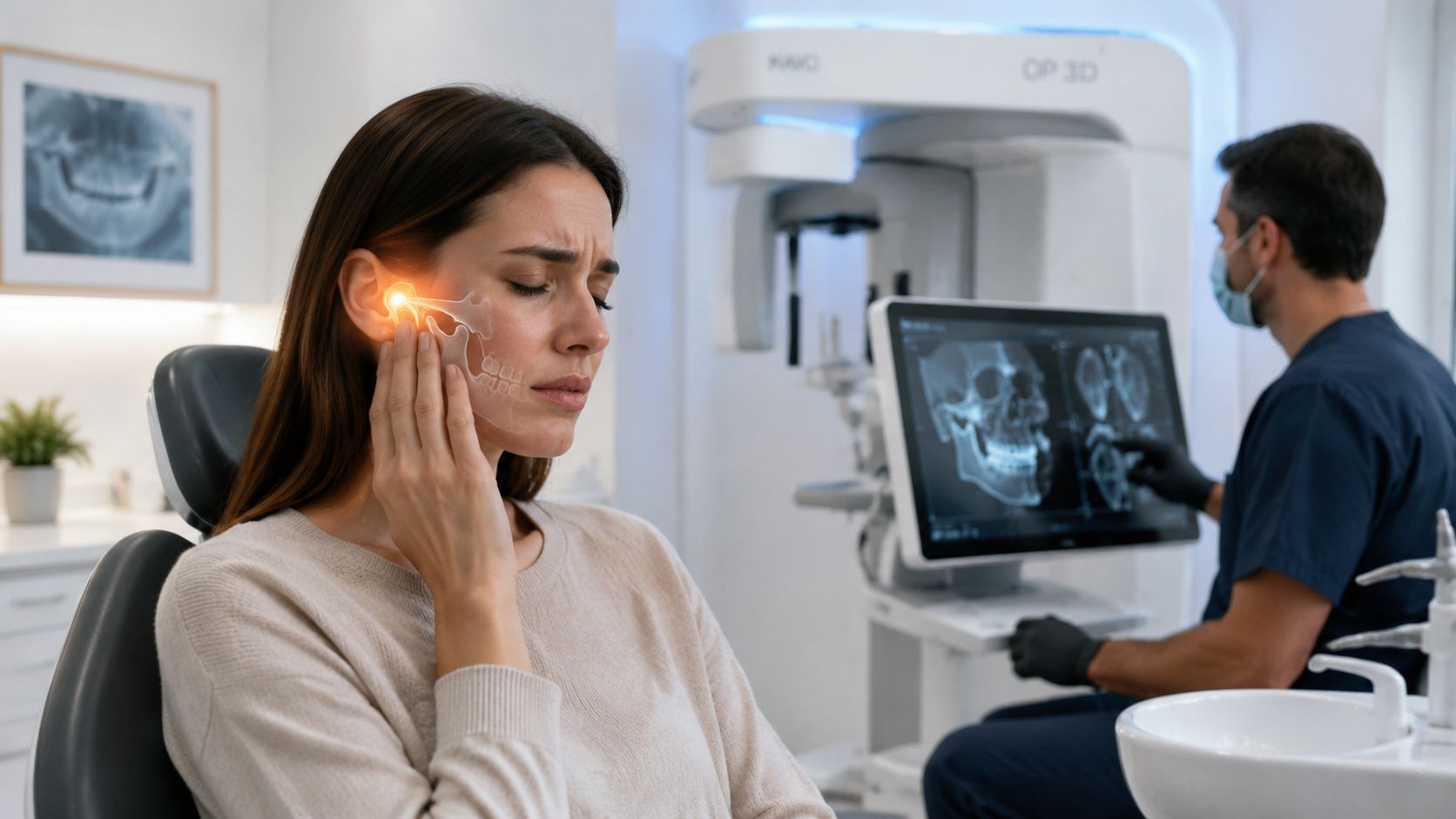
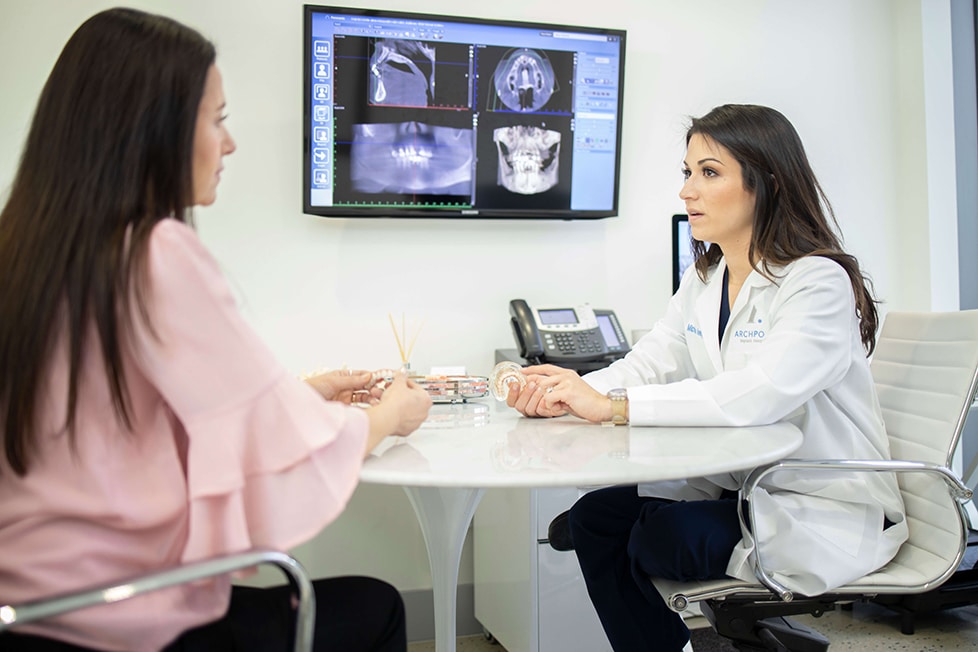
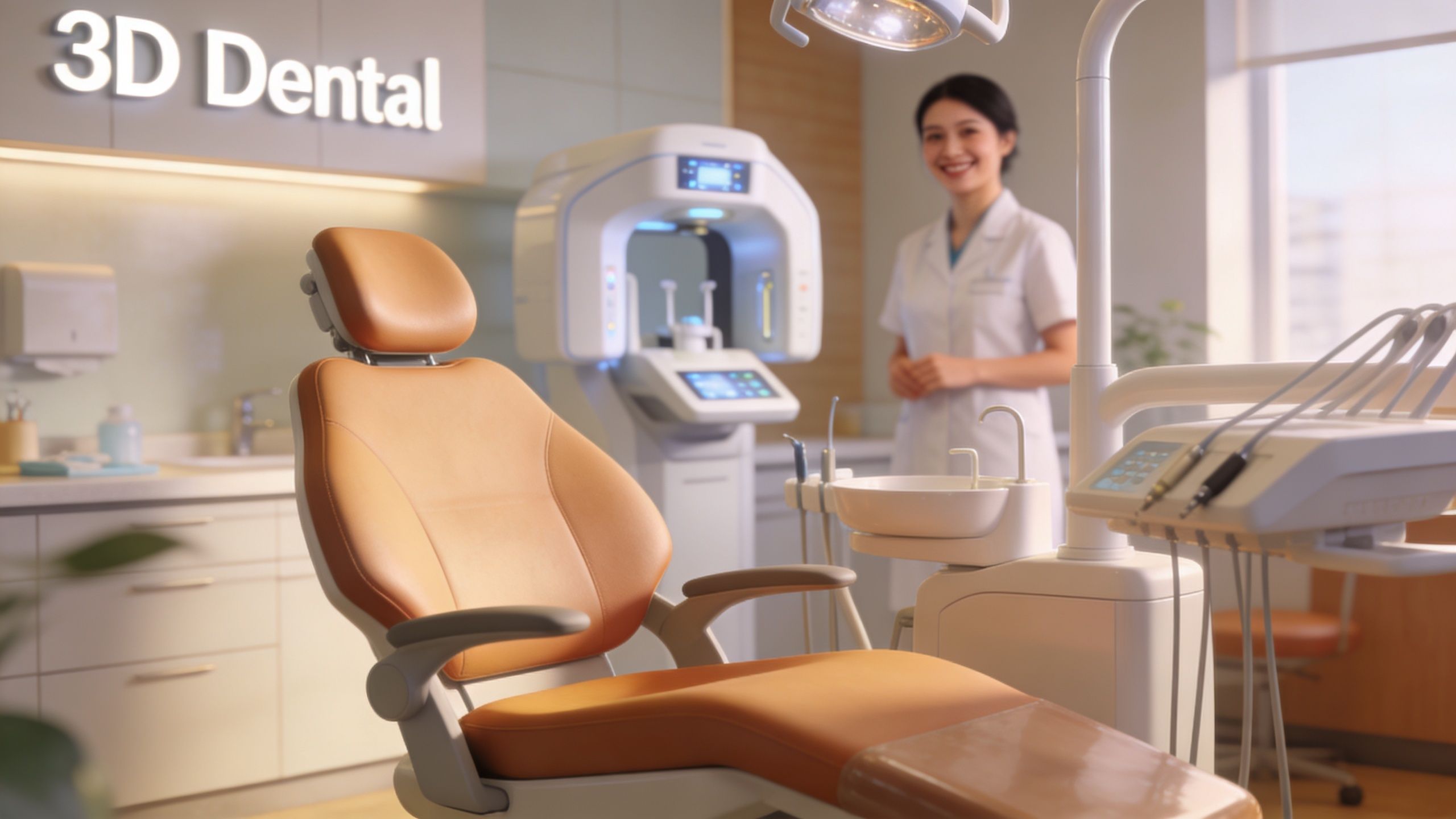
At 3D Dental, planning for full-arch implant cases includes 3D CT imaging, digital records, and a detailed review of your bone anatomy and bite. That matters because implant position has to be precise. We aren't guessing where implants should go. We map the available bone, identify important structures, and plan the restoration around how the final smile should function.
The day of implant placement
Once the plan is finalized, the implants are placed in the jaw at the preplanned positions. If damaged teeth need to be removed first, that can be coordinated as part of treatment. Patient comfort and surgical control drive this stage.
The All-on-4 concept has been in use since the late 1990s, and clinical studies confirm long-term implant survival rates exceeding 95%, with one landmark 10-year prospective study reporting a 99.2% success rate, as summarized in this review of All-on-4 success data. Those outcomes are why many clinicians view it as a predictable option for full-mouth rehabilitation.
Temporary teeth and early healing
One of the biggest questions patients ask is whether they'll have teeth during healing. In many cases, they do. A temporary fixed bridge is often provided so you don't leave feeling incomplete.
That early bridge has an important job. It restores appearance and basic function while the implants heal and integrate. It also gives us a chance to evaluate speech, bite, comfort, and smile design before the final restoration is made.
A short look at the process can help make the timeline feel more familiar.
The final bridge and finishing phase
After healing, the temporary restoration is replaced with the final bridge. This stage focuses on long-term fit, appearance, and durability. Small details matter here. Tooth shape, bite balance, lip support, and how the bridge sits against the gums all affect the final result.
Patients often find this phase especially rewarding because the process starts to feel complete. You're no longer imagining the outcome. You're seeing how the final smile fits your face and your routine.
A typical journey includes:
- Initial evaluation: Exam, imaging, and discussion of goals.
- Treatment design: Digital planning for implant positions and smile outcome.
- Surgery appointment: Implant placement and any needed extractions.
- Provisional phase: Temporary fixed teeth during healing.
- Final restoration: Delivery of the long-term bridge.
Benefits of All on 4 Compared to Other Options
When patients compare full-arch solutions, they usually want a straight answer. How does All-on-4 compare to removable dentures? How does it compare to replacing a full arch with many individual implants? The right choice depends on your mouth, your goals, and how much treatment complexity you're willing to take on.
Where All-on-4 stands out
The biggest advantage is efficiency without giving up stability. The All-on-4 system can eliminate bone grafting in over 90% of cases by using available bone geometry, and traditional methods can cost over $50,000 and require multiple months of healing for grafts alone, according to this overview of All-on-4 treatment advantages. For many patients, that's a meaningful difference in both treatment burden and timeline.
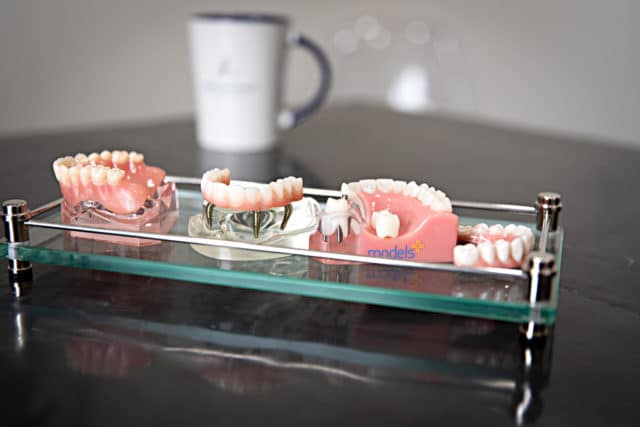
Removable dentures can restore appearance, but they don't offer the same fixed feel. A full arch supported by multiple single implants can be effective too, but it may involve more implants, more surgery, and more preparatory work.
Comparing full-arch choices
| Feature | All-on-4 Implants | Traditional Dentures | Multiple Single Implants |
|---|---|---|---|
| Stability | Fixed in place | Removable | Fixed |
| Daily feel | More like a secure prosthetic arch | Can shift or loosen | Secure, but often more complex for full arch cases |
| Bone grafting needs | Often reduced | Not applicable | More likely in some full-arch cases |
| Treatment complexity | Streamlined full-arch approach | Simpler appliance, less fixed function | More extensive planning and surgery |
| Chewing confidence | Stronger sense of security | Can be limited by movement | Strong support when appropriate |
| Maintenance style | Home care plus professional maintenance | Remove and clean daily | Home care plus professional maintenance |
What works well and what doesn't
All-on-4 works well for patients who want a fixed option and need to replace most or all teeth in an arch. It also works well when there is enough usable bone in the right locations to support the implants strategically.
What doesn't work is choosing a treatment only because it sounds fast. Some patients are better candidates for another path based on bone anatomy, medical factors, or expectations. Good treatment planning means matching the method to the person, not forcing every patient into the same answer.
If your goal is "I want teeth that stay put," All-on-4 usually enters the conversation quickly. If your priority is the lowest upfront commitment and you're comfortable with a removable option, dentures may still be part of the discussion.
Candidacy Risks and Long-Term Success
Not everyone who wants All-on-4 is automatically a candidate, but many adults are. The main question is whether the mouth can support a stable, long-term result. That depends on bone quality, gum health, overall health, bite forces, and commitment to maintenance.
Who tends to be a good fit
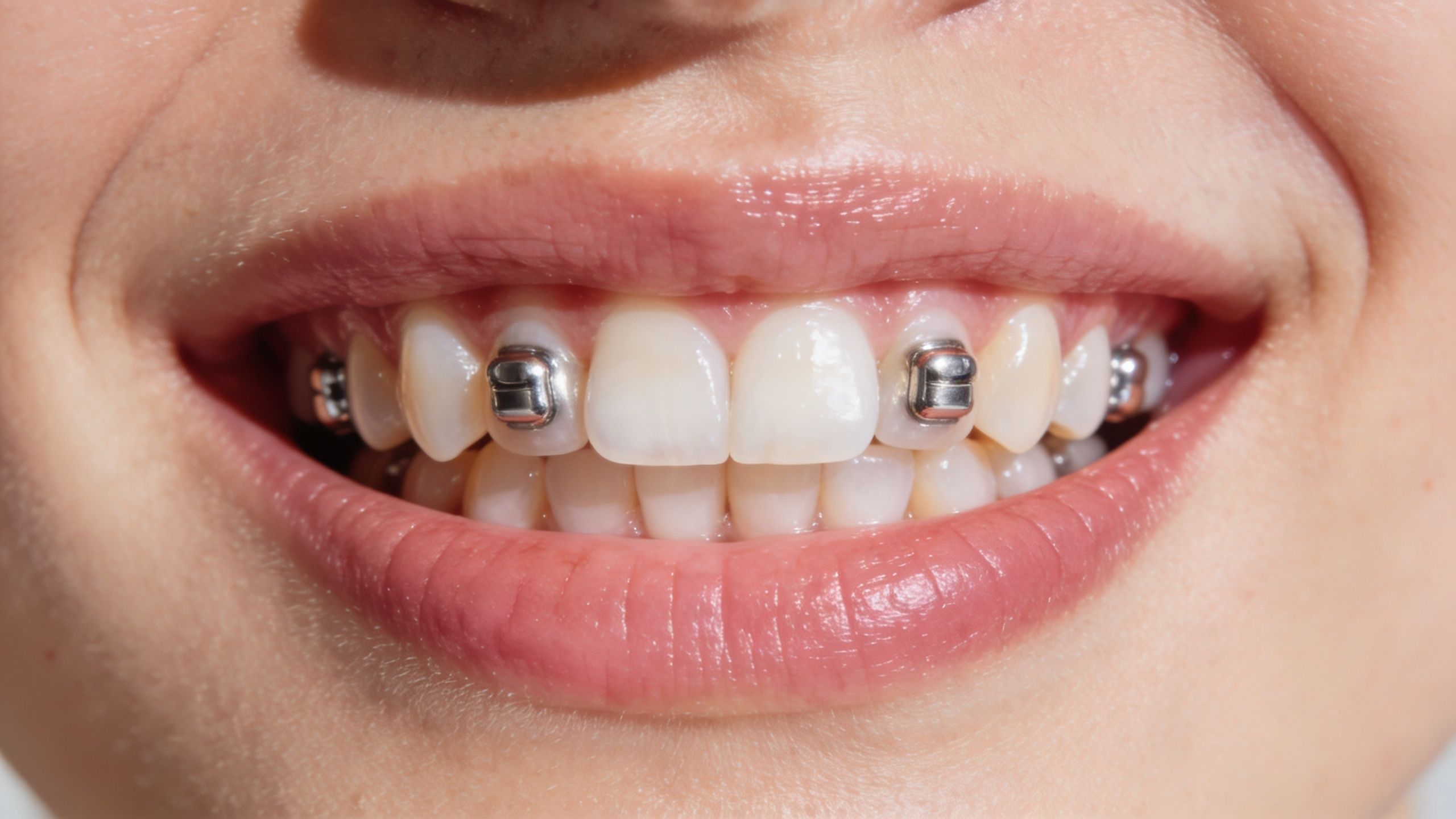
Good candidates often include adults with extensive tooth loss, failing teeth, or long-term denture wear who want a fixed solution. Some have been told they may not have enough bone for traditional full-arch implant treatment. Because All-on-4 uses strategic angulation and careful planning, it may still be possible in cases that look challenging at first glance.
The consultation matters here. A mouth that seems straightforward in photos can turn out to be more complex once imaging reveals bite patterns, bone contours, or anatomical limitations.
What patients need to know about risk
This treatment has a strong track record, but it isn't maintenance-free. Peri-implantitis can affect 10 to 20% of cases, often due to poor hygiene, and advanced pre-surgical bone density mapping with 3D CT imaging can help prevent up to 25% of potential failures through precise planning, as noted in this discussion of All-on-4 treatment planning and risk.
That means long-term success depends on two things. First, the implants need to be placed in the right position for the right patient. Second, the patient has to care for them well after treatment.
For practical home guidance, this article on how to care for dental implants gives patients a useful starting point.
What helps implants last
A few habits make a major difference:
- Keep daily hygiene consistent: Implant bridges need thoughtful cleaning, especially underneath the prosthesis.
- Attend maintenance visits: Regular professional checks help catch problems before they grow.
- Report changes early: Bleeding, swelling, looseness, or bite changes shouldn't be ignored.
- Protect the investment: If you clench or grind, your dentist may recommend steps to reduce stress on the restoration.
Success isn't only about the surgery. It's about what happens after the surgery, month after month and year after year.
All on 4 Costs and Financing in Austin and Georgetown
Cost matters, and most patients want direct answers. The price of All-on-4 depends on the condition of your mouth, whether extractions are needed, the complexity of the case, the type of final restoration, and how treatment is staged. That's why an online estimate can only go so far.
It's better to think of full-arch treatment as a complete plan rather than a single line item. You're paying for diagnosis, imaging, surgical planning, implant placement, temporary teeth, follow-up care, and the final bridge. A lower quote isn't always a better value if key parts of treatment are missing or unclear.
If you want a closer look at what affects pricing, this guide on All-on-4 dental implants cost can help you understand the variables before your consultation.
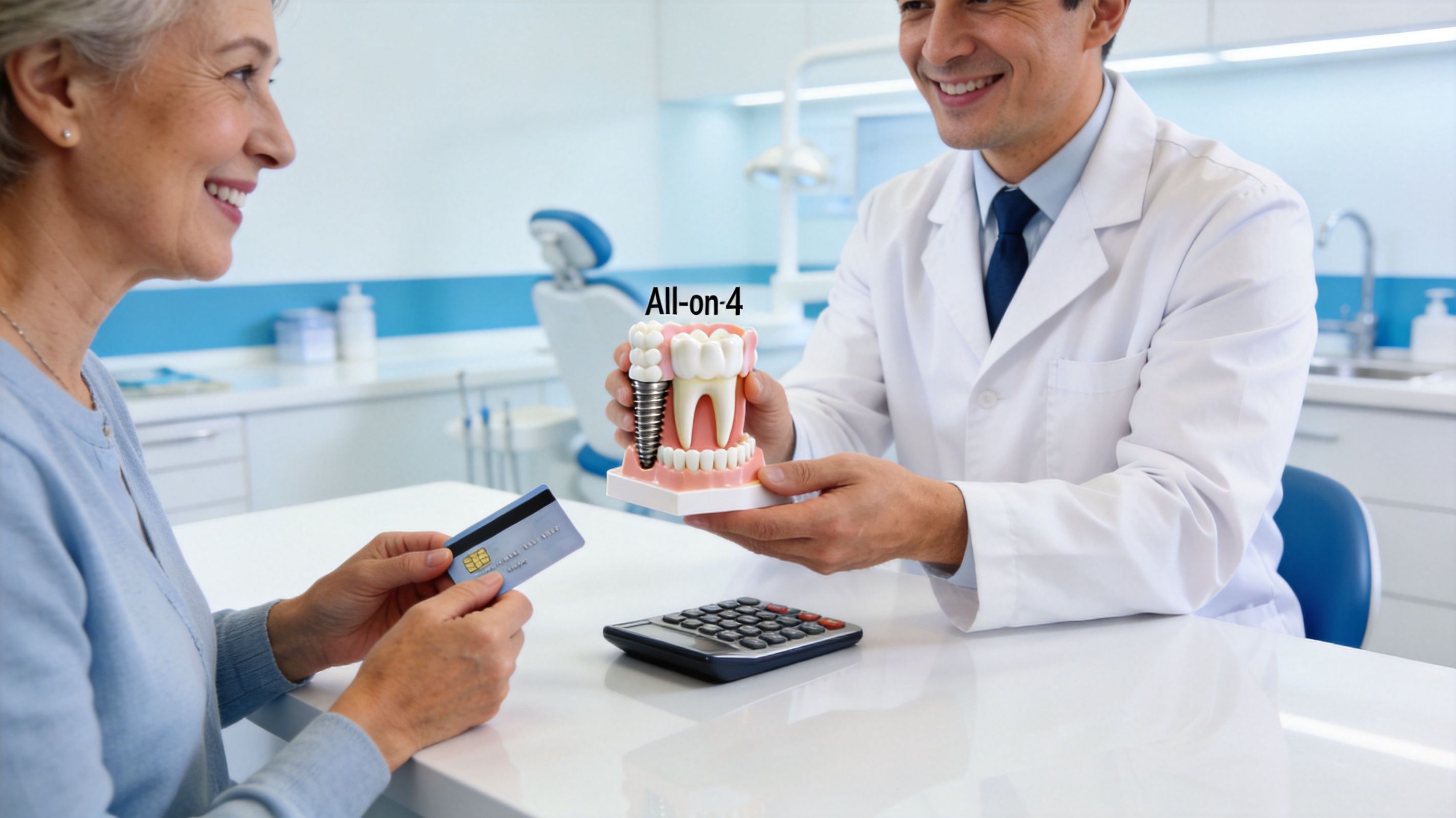
For many patients in Austin, Georgetown, Wells Branch, Liberty Hill, Cedar Park, and Round Rock, financing is what makes treatment possible now instead of someday. Payment options such as Cherry and Sunbit can help break larger treatment plans into manageable monthly payments. That gives patients more room to move forward on health, comfort, and confidence without delaying care because of timing alone.
A consultation is still the best next step because it replaces guesswork with a personalized plan. You get clear information about candidacy, timing, and what treatment would involve in your case.
If you're ready to explore what is all on 4 implants with a clear, no-pressure consultation, contact 3D Dental. Patients in Austin, Georgetown, Wells Branch, Cedar Park, Round Rock, and Liberty Hill can schedule a visit to review imaging, discuss goals, and get a personalized full-arch treatment plan built around comfort, function, and long-term success.
Ready to get started?
Schedule a free, no obligation consultation with our team and see what's possible for your smile!
Georgetown
- Mon-Thurs8:30am-5pm
- Fri8am-3:30pm
- Sat-SunClosed
Austin
- Mon-Tues8am-5pm
- Wed-Thurs9am-6pmFri8am-2pm
- Sat-SunClosed