
How to Care for Braces: A Guide from Austin, TX Experts
Related Posts






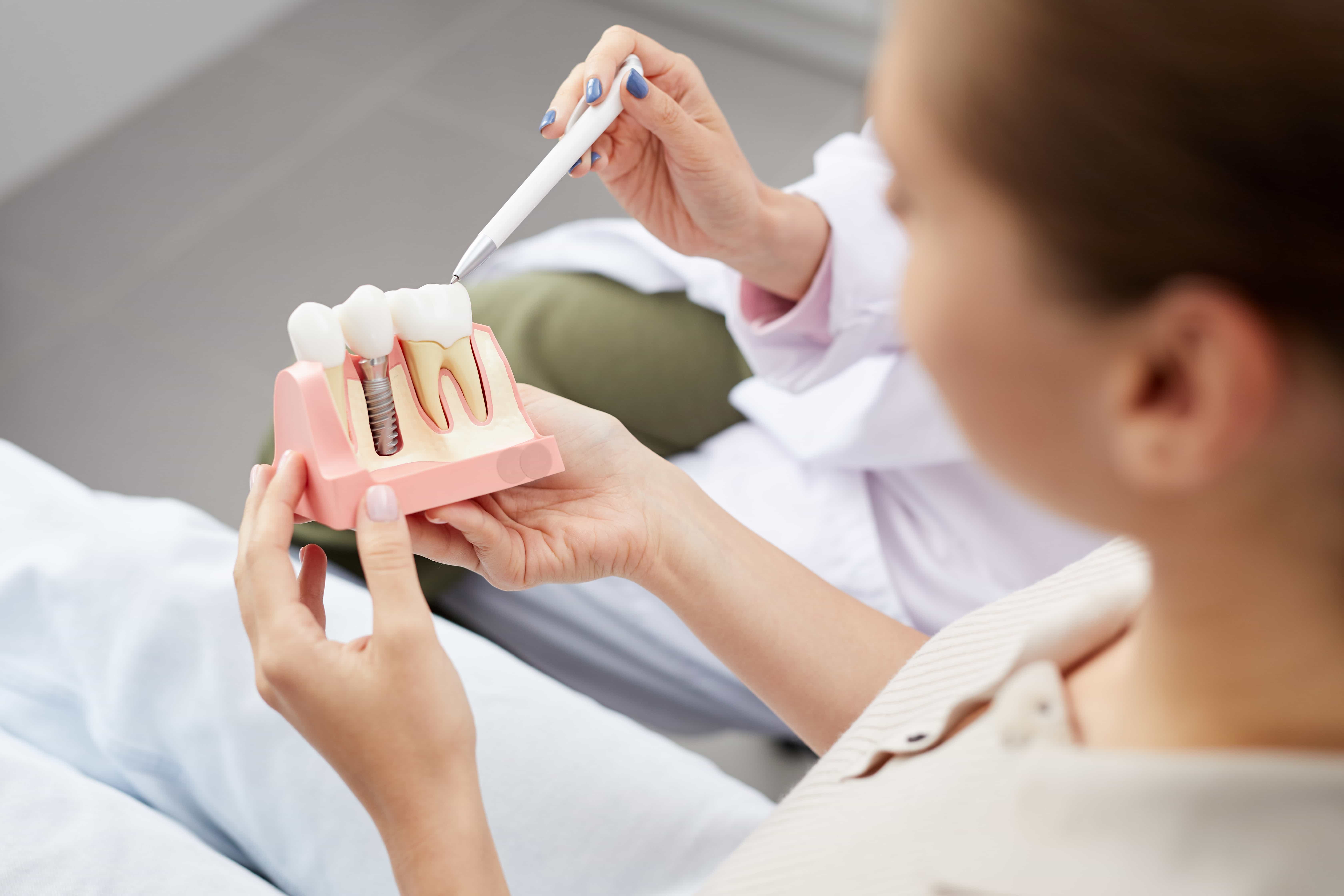
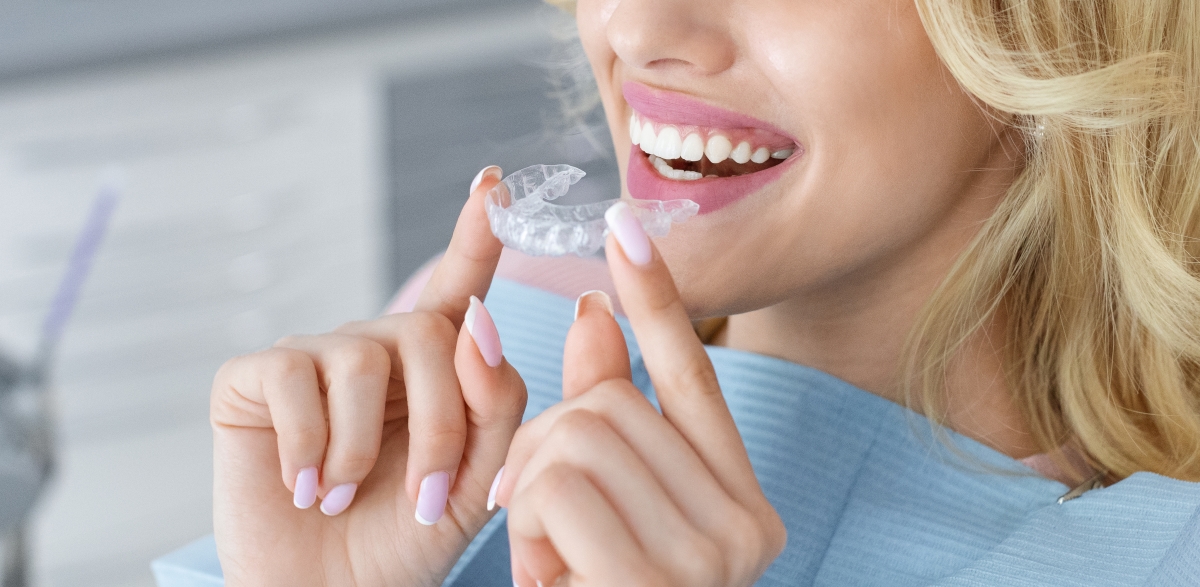









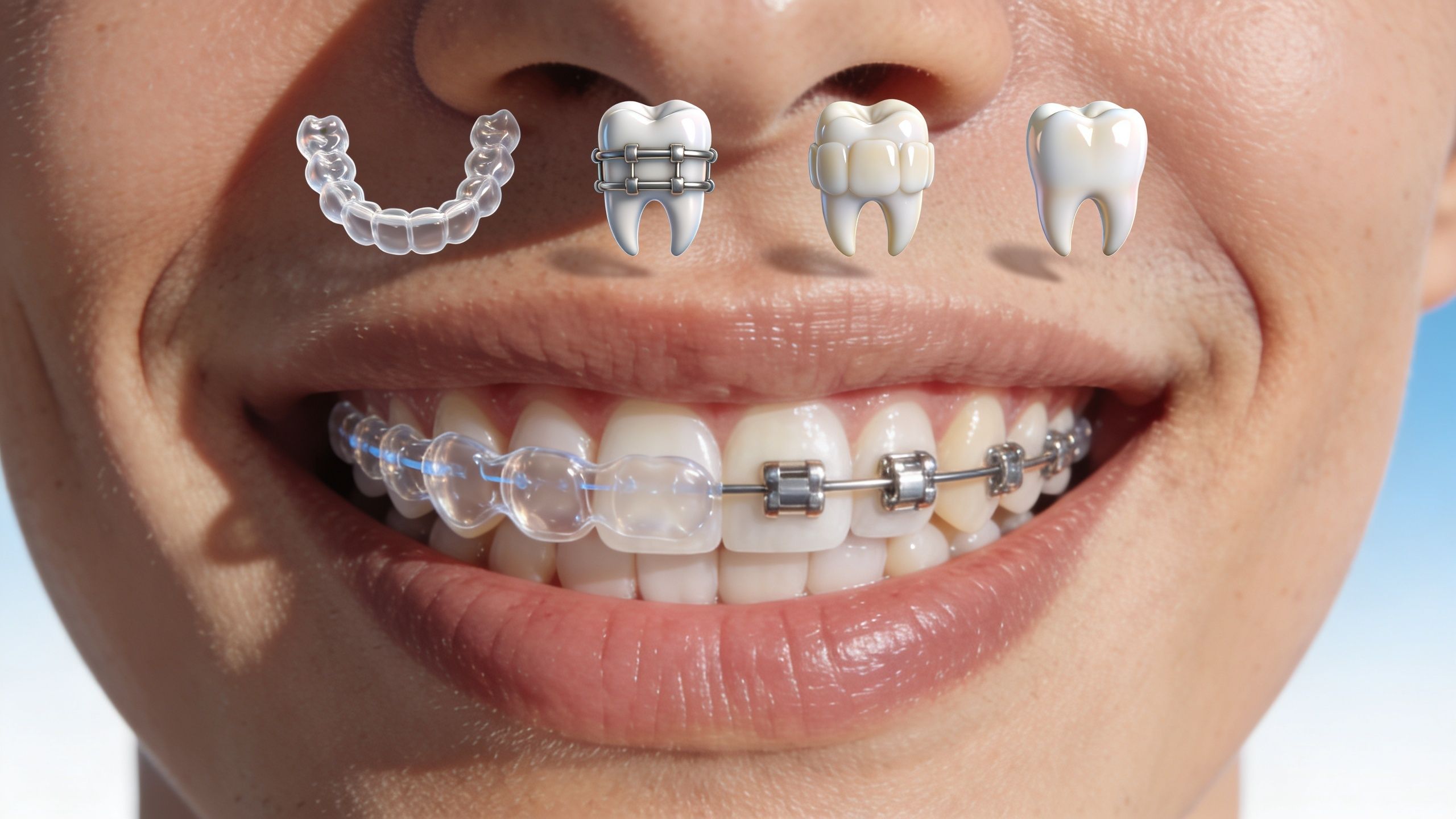







You get your braces on, head out into the Austin heat, and by dinner you are already wondering what changes tonight. How do you brush around the brackets? What happens if food gets stuck before you make it home? If a wire starts rubbing during class or at work, do you need to worry?
Those are the questions new patients ask us every day at 3D Dental in Austin and Georgetown. The adjustment is real, but it is usually smaller than people expect once they have a clear routine and know which problems need attention.
Learning how to care for braces is less about perfection and more about staying steady with a few habits that protect your teeth and keep treatment on track. Good home care keeps small issues from turning into broken brackets, irritated gums, or extra time in treatment. It also gives patients more confidence, which matters a lot during the first few weeks.
The goal of this guide is practical help from a local orthodontic team that sees real schedules, real school lunches, real commutes, and real slipups. If you live in Austin or Georgetown, you do not need generic advice. You need braces care that works on busy weekdays and holds up over the full course of treatment.
Your Guide to a Healthy Smile with Braces in Austin
A lot of patients think braces care has to be complicated. It doesn't. It does, however, need to be deliberate.
Brackets and wires create extra surfaces where food and plaque can collect, so the routine that worked before braces usually needs an upgrade. That's true whether you're a middle school student in Round Rock, a parent in Cedar Park, or an adult professional commuting through North Austin. The goal stays the same for everyone. Keep the teeth clean, protect the hardware, and make each adjustment appointment count.
Why braces are worth the effort
Braces work because they move teeth in a controlled, steady way over time. That only works well when the appliances stay intact and the teeth around them stay healthy.
The reason many orthodontists still consider braces a trusted option is simple. They're highly effective when patients follow through with care at home and keep regular visits. Reported data shows braces achieve proper bite alignment in 88% to 90% of cases according to this orthodontic success summary.
Braces don't ask for perfection. They ask for daily attention.
That matters because patients often worry that one sore day or one awkward meal means they're doing something wrong. Usually, they're not. The bigger issue is repeated neglect, such as skipping cleaning after meals, waiting too long to address irritation, or continuing to eat foods that break brackets.
What new braces patients should expect
The first week is usually the biggest adjustment. Teeth may feel tender. Eating may feel slower. Brushing may take longer than usual. All of that is normal.
What works is settling into a repeatable routine:
- Clean after meals: Food sitting around brackets for hours makes everything harder later.
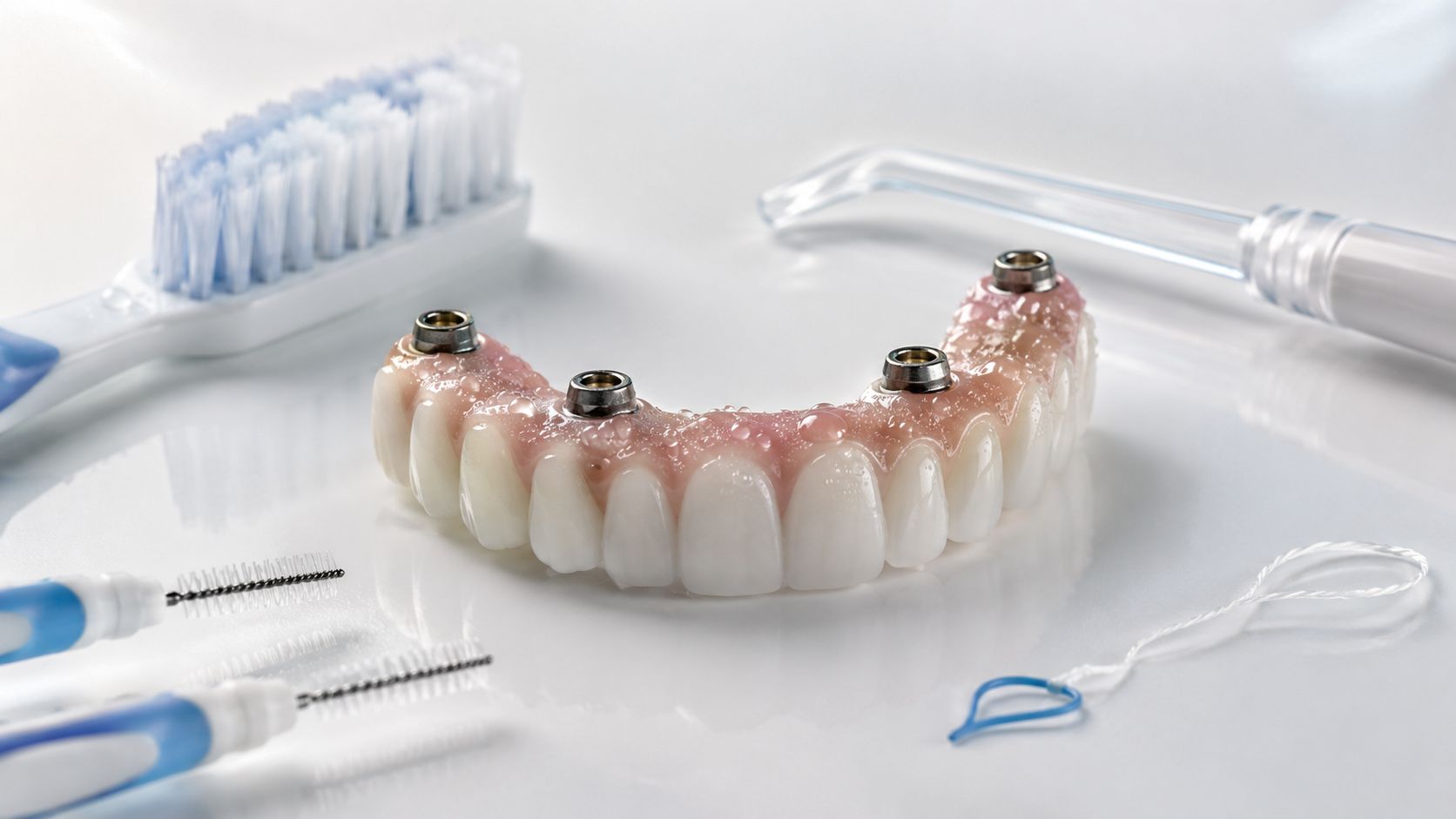
- Use the right tools: A standard toothbrush helps, but floss threaders, interdental brushes, and fluoride rinses make braces care much more effective.
- Call when something feels off: A loose bracket or poking wire is easier to handle early than after days of irritation.
For families searching for a dentist in Austin, TX or dentist near me for orthodontic support, the most important thing to know is this. Good braces results usually come from simple habits done well, over and over.
Mastering Your Daily Braces Cleaning Routine
If there's one part of braces care that affects everything else, it's your cleaning routine. Patients often assume brushing harder is the answer. It isn't. Thorough, methodical cleaning is what works.

The sequence that works
A reliable braces routine has three parts. Brush carefully around every bracket and along the gumline, floss under the archwire, then rinse to reach the areas a brush may miss. Orthodontic guidance commonly recommends brushing after meals and snacks, using a 45-degree angle above and below the brackets, and spending about 2 to 3 minutes each time according to this braces hygiene care guide.
That sequence matters because brushing alone doesn't remove everything around fixed hardware. Food packs into corners. Plaque sits around bracket edges. If you only do a quick morning and night brush, those areas tend to get missed.
How to brush without wasting time
When you brush with braces, slow down enough to be precise. Angle the bristles toward the gumline first, then tip them to clean above and below each bracket. Clean the front of the brackets, the chewing surfaces, and the backs of the teeth.
A few practical points make a big difference:
- Use a soft-bristled brush: It's easier on your gums and better around brackets.
- Work in sections: Move tooth by tooth instead of scrubbing the whole mouth at once.
- Replace worn brush heads: Bristles fray faster with braces, so don't keep using a brush that's already splayed.
Practical rule: If you finish brushing in a rush, you probably cleaned the easiest surfaces and missed the ones that need the most attention.
Cleaning between teeth and wires
Flossing is the part many patients want to skip. It's also one of the biggest differences between average braces hygiene and excellent braces hygiene.
Thread the floss under the archwire with a floss threader or use orthodontic floss designed for braces. A water flosser can also help, especially for patients who struggle with traditional flossing. The point isn't to use every gadget on the shelf. The point is to use a tool that helps you clean consistently between teeth and around the hardware.
Later in the day, this visual walkthrough can help reinforce the technique:
The rinse step many people underestimate
After brushing and flossing, finish with an antibacterial or fluoride mouthwash. The recommended routine is brushing after every meal, flossing daily before bed, and rinsing with an antibacterial mouthwash, and following that full routine can reduce the risk of treatment complications by an estimated 70% according to oral care guidance for braces.
That doesn't mean mouthwash replaces brushing or flossing. It means rinsing is the final pass that helps clean difficult areas and supports enamel while you're wearing braces.
For many patients, the most realistic solution is a small travel kit with a toothbrush, toothpaste, floss threaders, and rinse for work, school, or after meals on the go. That's often what turns good intentions into a routine you can maintain.
Eating with Braces Foods to Enjoy and Avoid
Most braces food advice sounds like a punishment list. It shouldn't. It's not that certain foods are “bad.” It's that some foods put too much force on brackets and wires or get trapped so easily that they create avoidable problems.
Patients usually do better when they think in categories instead of memorizing a huge list.
Foods that are usually easier on braces
Soft, easy-to-chew foods are your friend, especially right after an adjustment when your teeth feel tender. Good options often include yogurt, pasta, soft fruits, eggs, soups, rice, mashed potatoes, soft fish, and steamed vegetables.
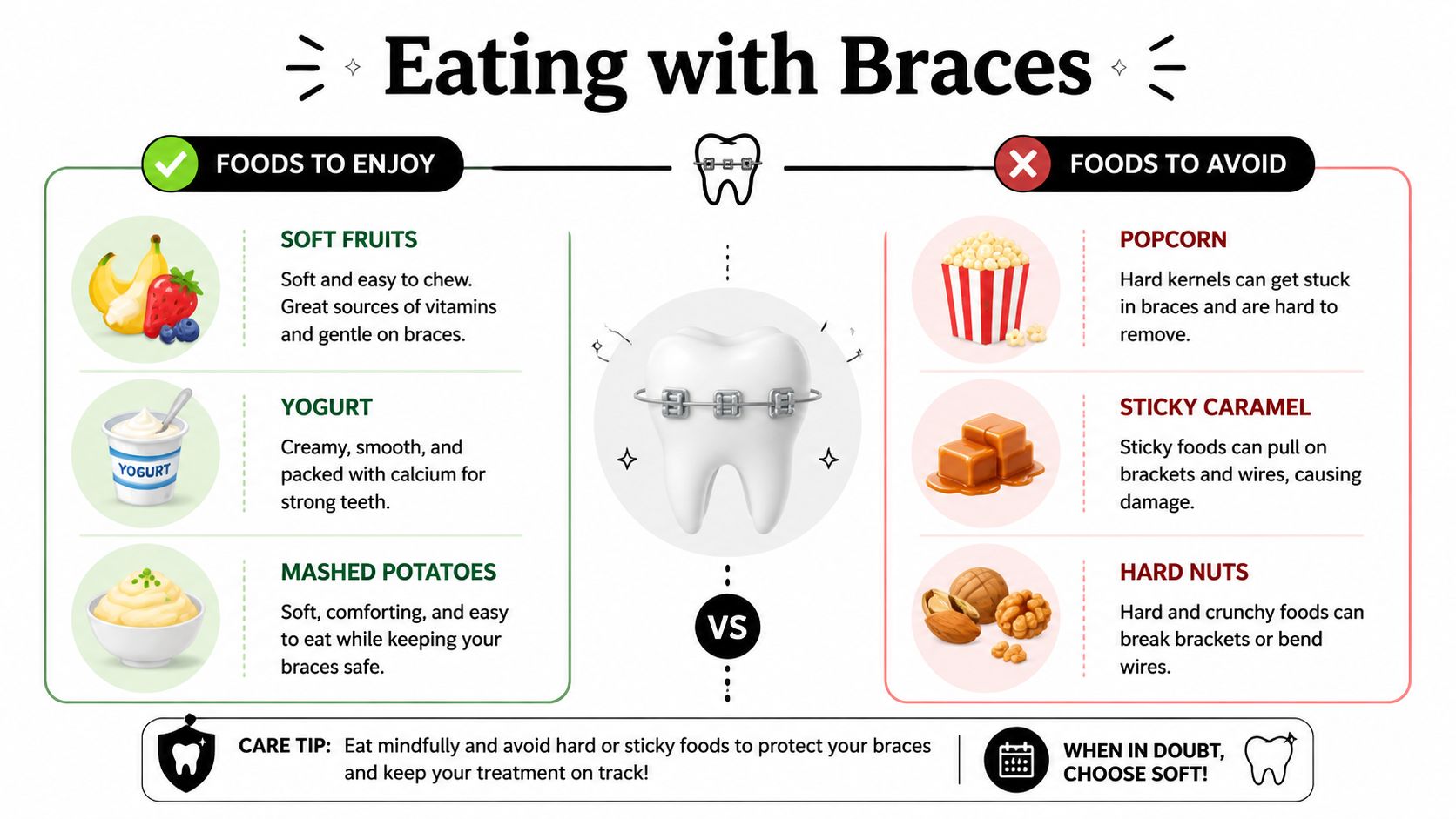
If you want more meal ideas, our guide to the best foods for braces gives practical options that work for school lunches, workdays, and family dinners.
Foods that cause the most trouble
The foods that most often damage braces tend to fall into a few predictable groups:
- Hard foods: Nuts, ice, hard pretzels, and hard candies can crack or loosen brackets.
- Sticky foods: Caramel, chewy candy, and similar foods can pull at wires and cling around braces.
- Crunchy bite-first foods: Corn on the cob, whole apples, and thick crusts can be risky if you bite directly with the front teeth.
What works better is changing how you eat, not just what you eat. Cut firmer foods into smaller pieces. Choose softer versions when possible. If something feels like it takes force to bite through, it probably isn't a smart braces choice.
A good test is simple. If you have to crunch hard, tear forcefully, or peel a sticky food off your teeth, your braces probably won't like it either.
Smart swaps that make life easier
You don't need to feel left out at restaurants, school events, or family cookouts in Georgetown or Liberty Hill. Most meals can be adjusted with a few simple choices.
| Situation | Better choice with braces |
|---|---|
| Snack craving | Yogurt, soft cheese, banana, or a smoothie |
| Burger night | Cut the burger into smaller bites instead of biting straight in |
| Taco night | Choose softer fillings and chew carefully |
| Apple craving | Slice it thin instead of biting into it whole |
The goal isn't a perfect diet. It's fewer broken brackets, less soreness, and steadier progress.
Handling Soreness and Common Orthodontic Issues
Even with excellent habits, braces have an adjustment period. A little soreness after new braces or a tightening visit is normal. So is the occasional moment when a wire rubs your cheek or a bracket feels awkward.
What matters is knowing what you can handle at home and what deserves a call.
If your teeth feel sore after an adjustment
A common scenario is this. You leave your visit feeling fine, then later that evening your teeth feel tender when you chew. That usually means the braces are doing their job.
In that situation, stick with softer foods for a day or two, rinse gently with warm saltwater, and avoid testing sore teeth with crunchy foods. Most discomfort is temporary and settles as your mouth adjusts.
If a wire is poking or a bracket is rubbing
Orthodontic wax earns its place in every braces kit. Appliance breakage from hard or sticky foods is a common failure point, and having orthodontic wax on hand can provide temporary relief from a poking wire or irritating bracket until you can visit your orthodontist according to this expert braces care guide.
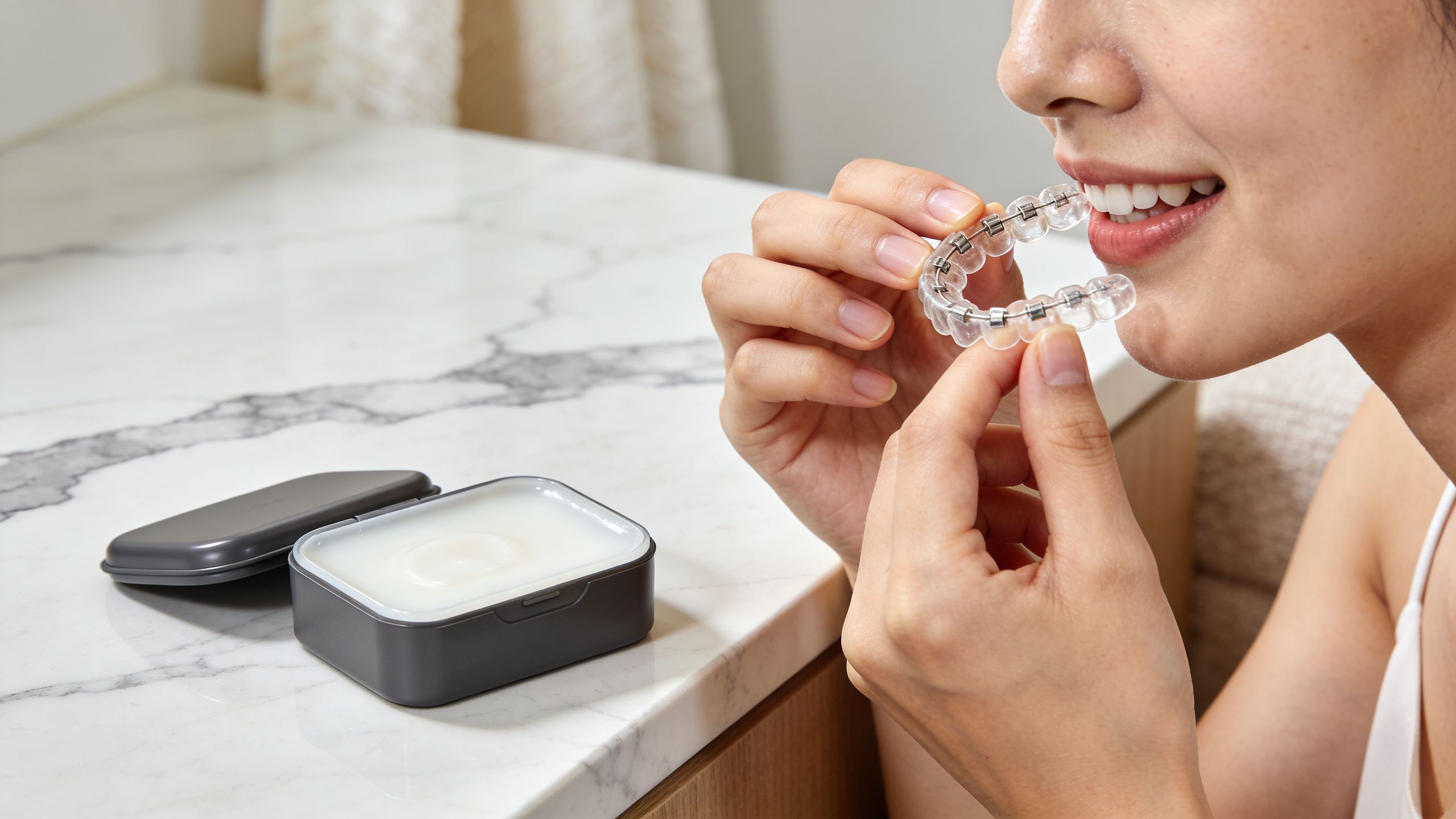
Dry the area gently, roll a small piece of wax, and press it over the spot that's irritating your cheek or lips. It's a temporary fix, not a permanent repair, but it can make the rest of your day much more comfortable.
When to wait and when to call
Some braces issues can wait until the next business day. Some shouldn't.
Use this quick guide:
- Usually manageable at home: Mild soreness, minor rubbing, food stuck around brackets, or wax-covered irritation
- Call the office soon: Loose bracket, bent wire, a wire that won't stay out of the way, or pain that keeps getting worse
- Seek urgent dental help: Significant swelling, trauma to the mouth, or anything that feels like a true dental emergency
Small problems tend to stay small when you report them early.
Patients looking for an emergency dentist in Austin or Georgetown often aren't sure whether orthodontic discomfort counts as an emergency. Usually it doesn't, but if you're dealing with injury, severe pain, or swelling, don't wait and guess. Call.
Braces for Every Age and Lifestyle
It often shows up in ordinary moments. A teenager gets home from school, drops a backpack by the door, and forgets to brush until bedtime. An adult finishes lunch between meetings and realizes there is no time for a full cleanup before the next appointment. Braces care has to hold up in real life, not just in a perfect routine.
The basics stay the same at any age. Keep brackets and wires clean, protect them from avoidable damage, and set up habits you can repeat on busy days.
What changes is the routine around your schedule.
For teens building habits
For teens, fewer decisions are often better than more. A simple system usually works better than good intentions. Keep the same supplies in the same place at home, and pack the same items each school day so nothing gets missed in the rush out the door.
For students in Austin, Wells Branch, or Round Rock, a braces kit can include:
- A travel toothbrush and toothpaste: Useful after lunch or snacks
- Floss threaders or orthodontic floss: A practical bedtime step when food gets caught around brackets
- Orthodontic wax: Helpful during sports, band, or long school days
- A small mirror: Useful for checking for trapped food before class or practice
Parents often ask what makes the biggest difference. Consistency does. A short routine done every day is better than an overcomplicated plan that only happens a few times a week.
For adults fitting braces into real life
Adults usually understand the instructions right away. The harder part is fitting them into work, childcare, commuting, travel, and everything else already on the calendar.
A stripped-down routine helps. If you cannot brush after a meal, rinse well with water and brush as soon as you can. Keep supplies at your desk, in your bag, or in the car so you are not relying on memory alone. Patients who want a realistic overview of braces treatment and follow-up care often do better when they plan for the middle of the day, not just morning and night.
The best braces routine is the one you can keep on a busy Tuesday.
Patients looking for a local orthodontic team in Austin or Georgetown usually want care that fits normal life. That is a fair expectation. Braces should improve your smile without turning every school day, workday, or weekend outing into a hassle.
Your Partner for Orthodontic Care in Austin and Georgetown
Braces treatment works best when home care and professional care support each other. You do the daily work at the sink, after meals, and during busy days away from home. Your dental team checks progress, adjusts treatment, and helps solve problems before they turn into delays.
That's one reason patients often benefit from choosing a practice that can support more than just bracket adjustments. During orthodontic treatment, routine cleaning and exams, dental x-rays when needed, and check-ins for irritation or breakage all matter. If something unexpected happens, it also helps to have access to broader dental care, including urgent visits when needed.
What patients can expect in Austin and Georgetown
At 3D Dental, braces patients in North Austin and Georgetown can discuss treatment and follow-up care through our dental braces service. The practice also offers a full range of dentistry under one roof, including preventive visits, cosmetic dentistry, restorative dentistry, emergency dental care, and services such as teeth whitening, tooth extraction, and dental implants for patients with other oral health needs.
For new patients, that usually means a more connected experience. Your exam, imaging, treatment planning, and follow-up care can happen with one team that already knows your history and your goals.
Why local follow-up matters
Orthodontic treatment isn't a one-visit service. Questions come up in the middle of treatment, not just on day one. A sore spot develops before a long weekend. A bracket loosens during dinner. A parent wants to know whether a teen's cleaning routine is really working. An adult patient wants a more practical plan for office lunches and travel days.
Those moments are exactly why local access matters. If you live in Austin, Georgetown, Cedar Park, Liberty Hill, or nearby communities, having a dental team close to home makes it easier to stay on track instead of putting off care.
If you've been looking for a dentist in Austin, TX, a dentist near me, or a practice that can help with braces and broader dental care, the right fit is one that makes treatment clear, organized, and realistic from the start.
If you're ready to start braces treatment or want guidance on caring for your current orthodontic appliances, schedule a visit with 3D Dental. Our Austin and Georgetown team helps teens and adults with braces, preventive care, emergency dental needs, and full-service treatment planning so you can move toward a healthier, more confident smile.
Ready to get started?
Schedule a free, no obligation consultation with our team and see what's possible for your smile!
Georgetown
- Mon-Thurs8:30am-5pm
- Fri8am-3:30pm
- Sat-SunClosed
Austin
- Mon-Tues8am-5pm
- Wed-Thurs9am-6pmFri8am-2pm
- Sat-SunClosed