
Social Media Dental Marketing Guide for Austin Dentists
Related Posts

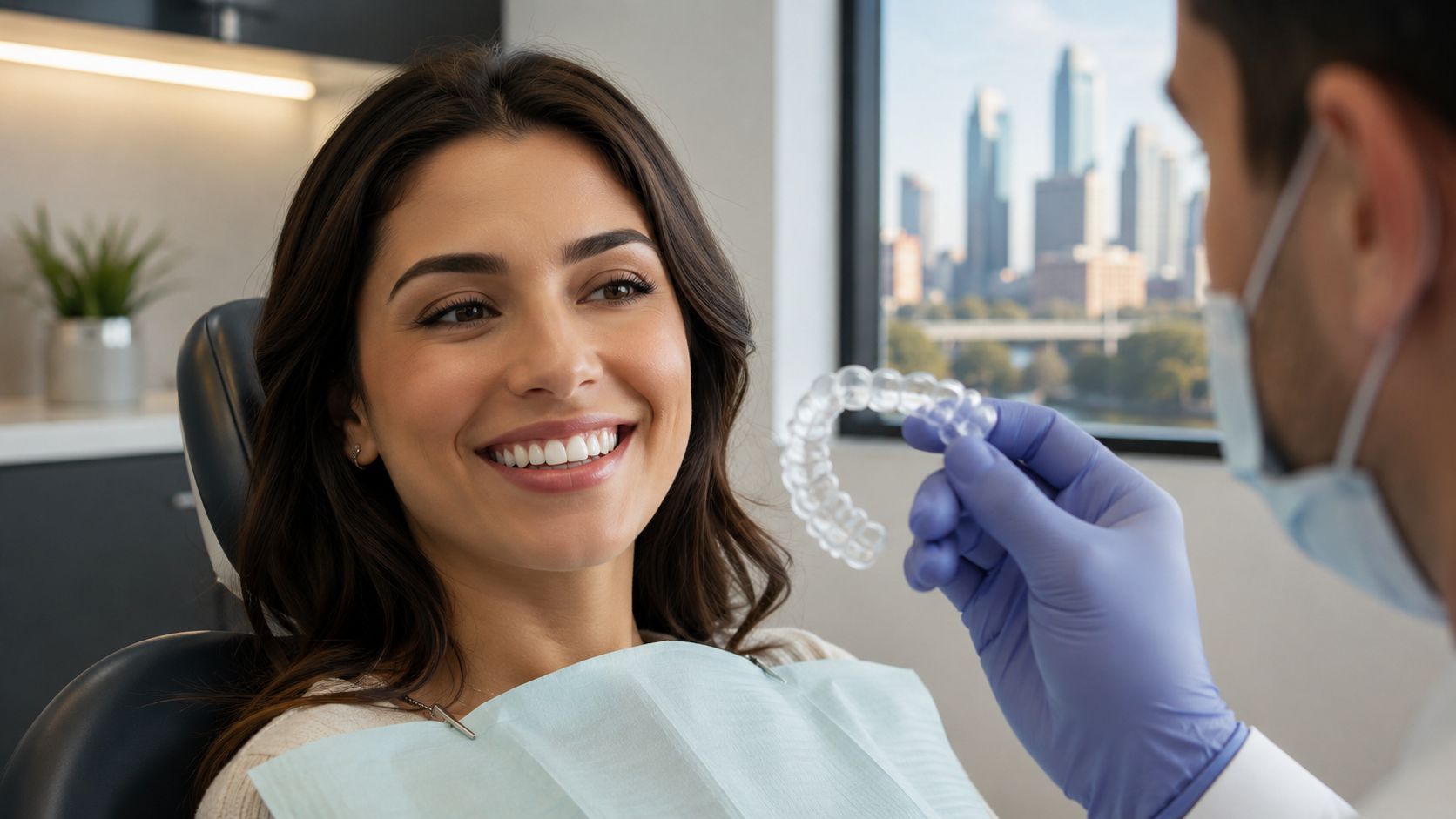
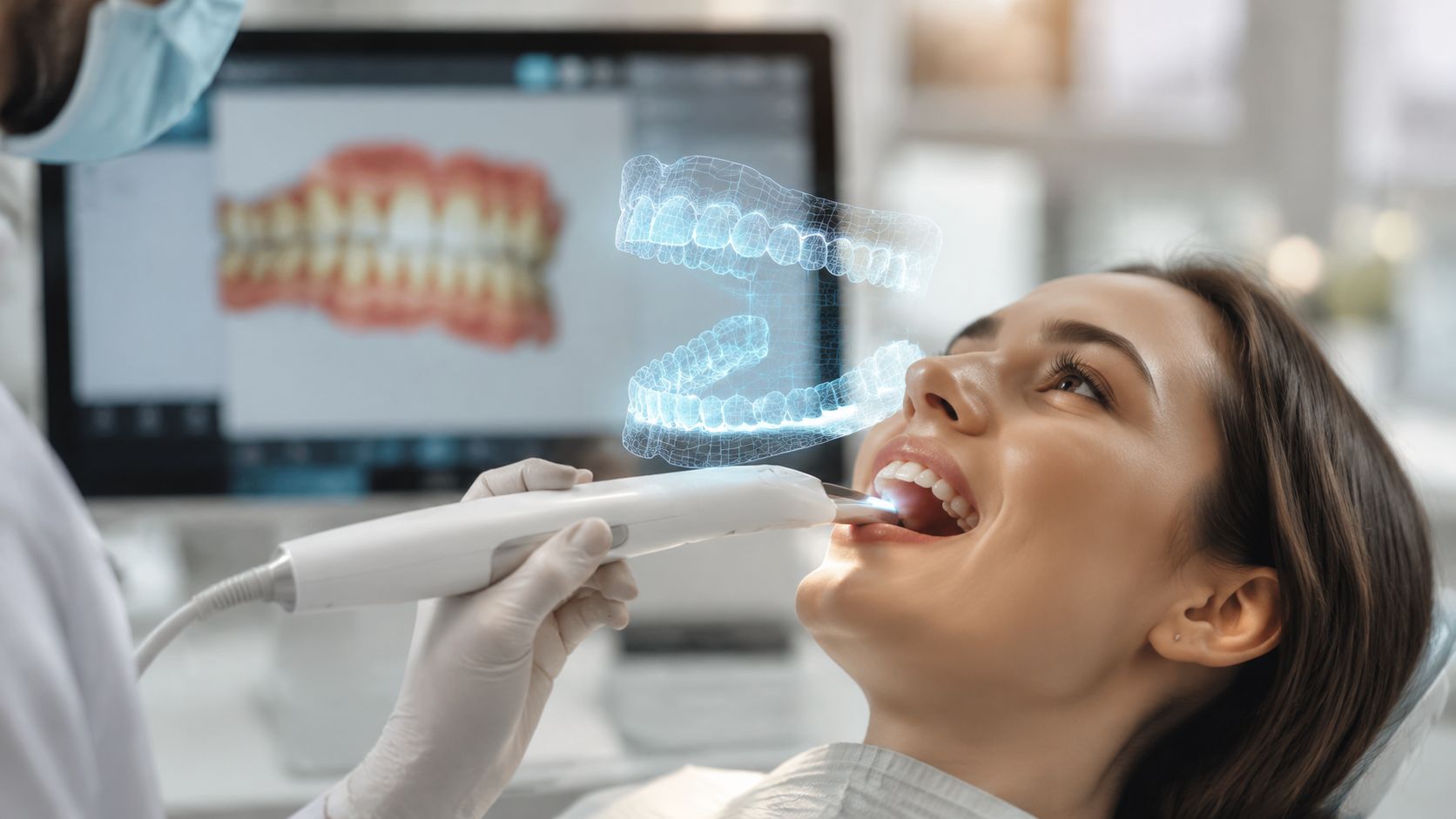
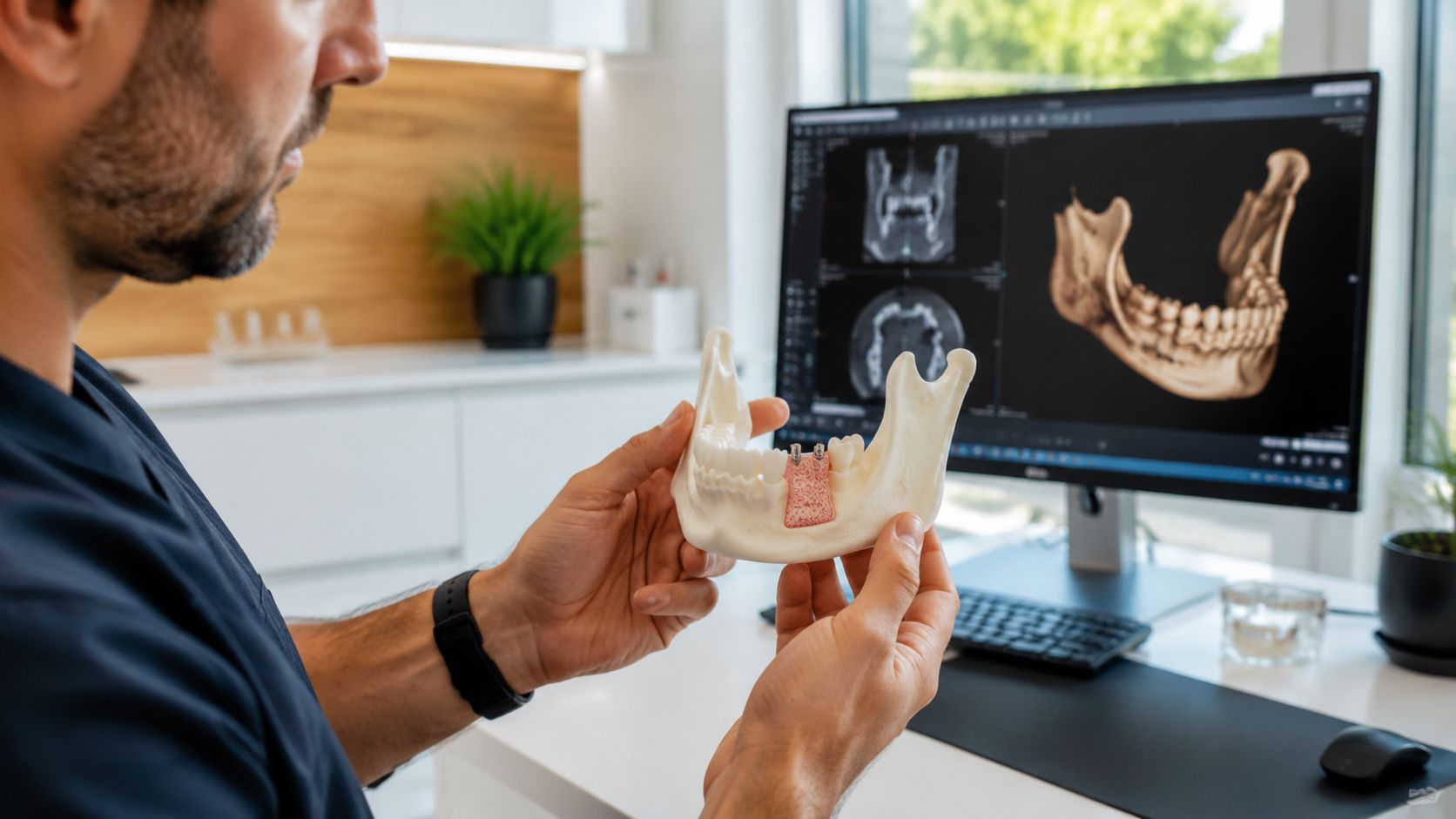
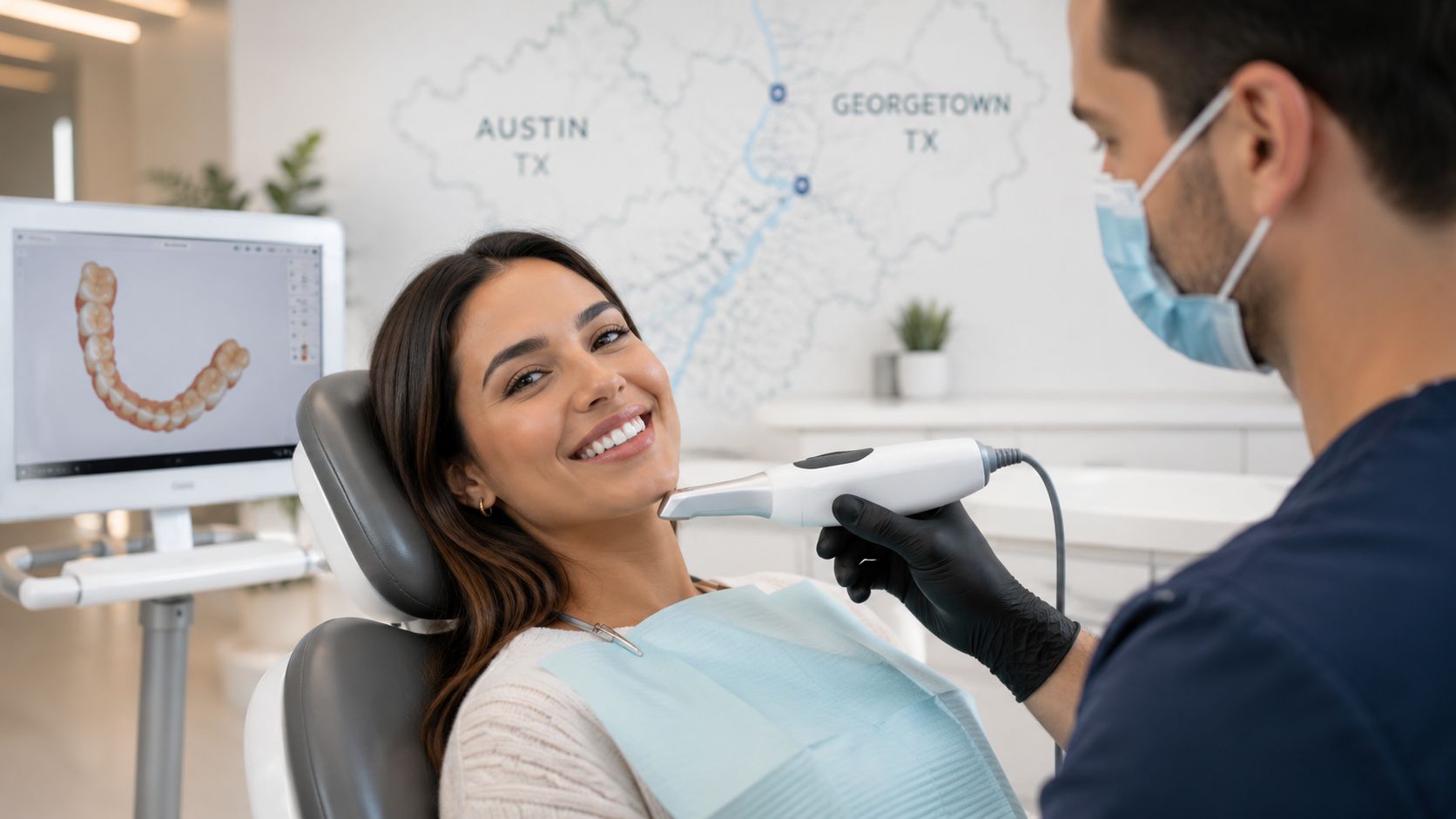
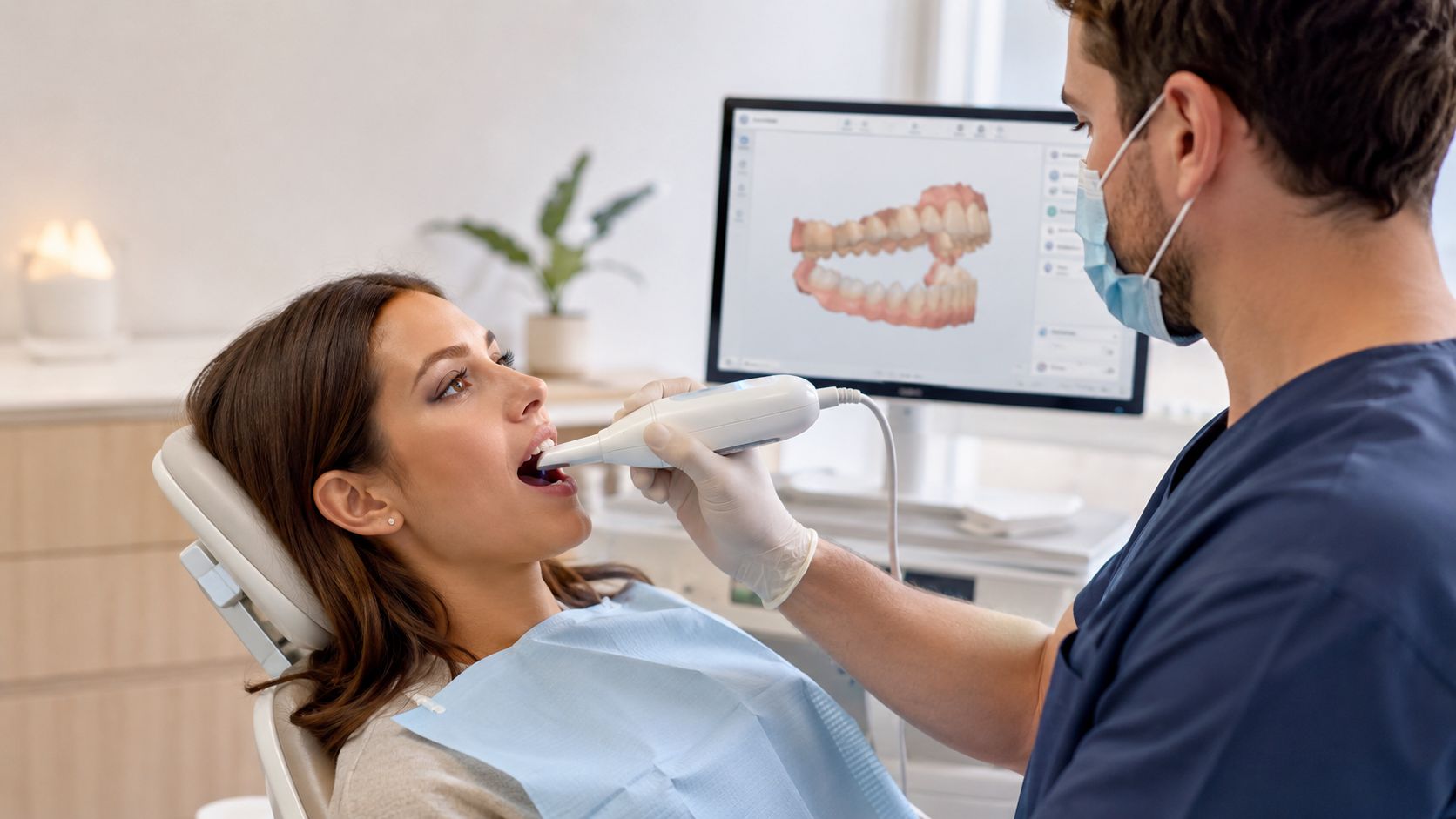
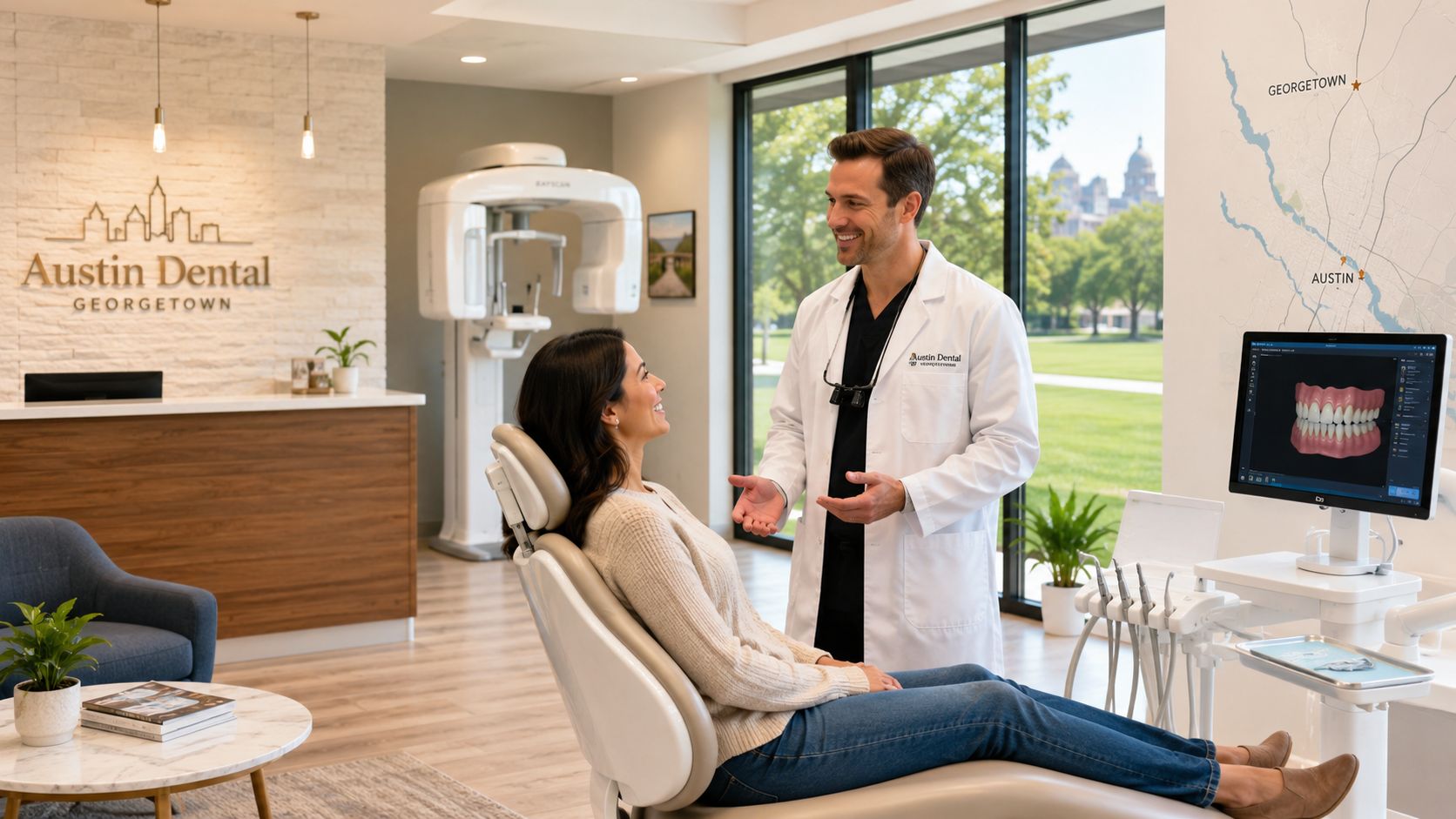
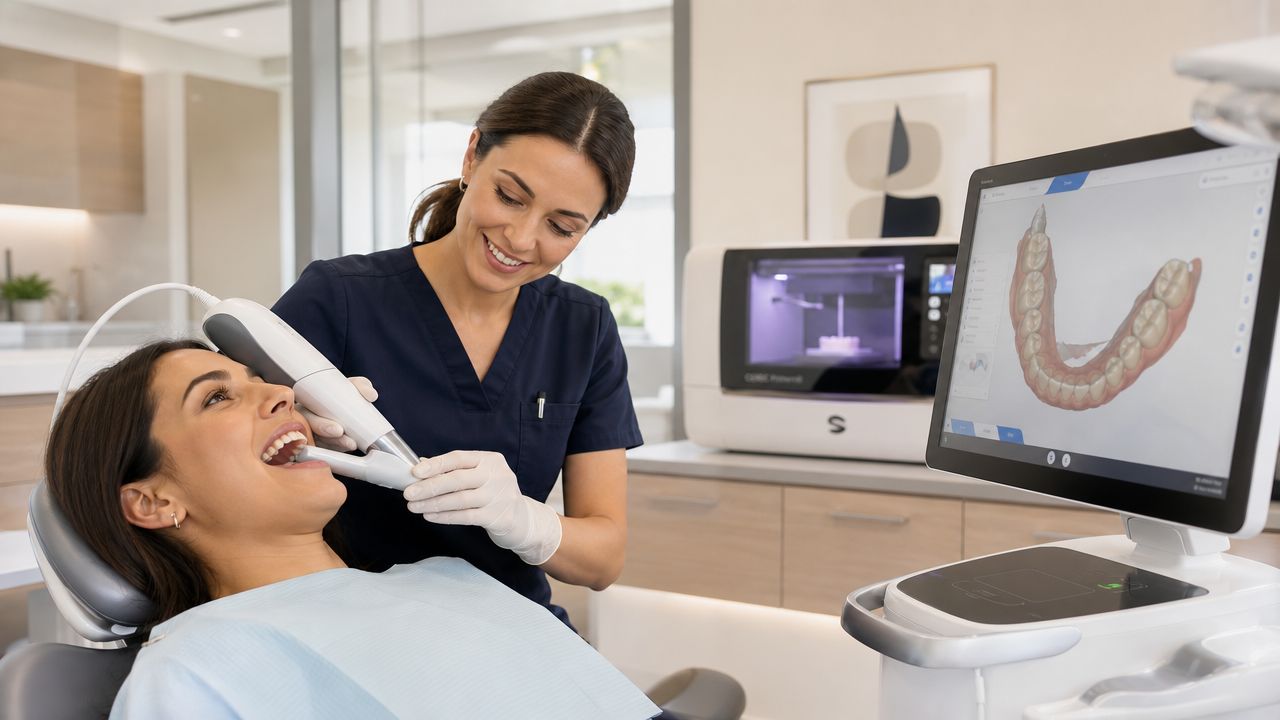
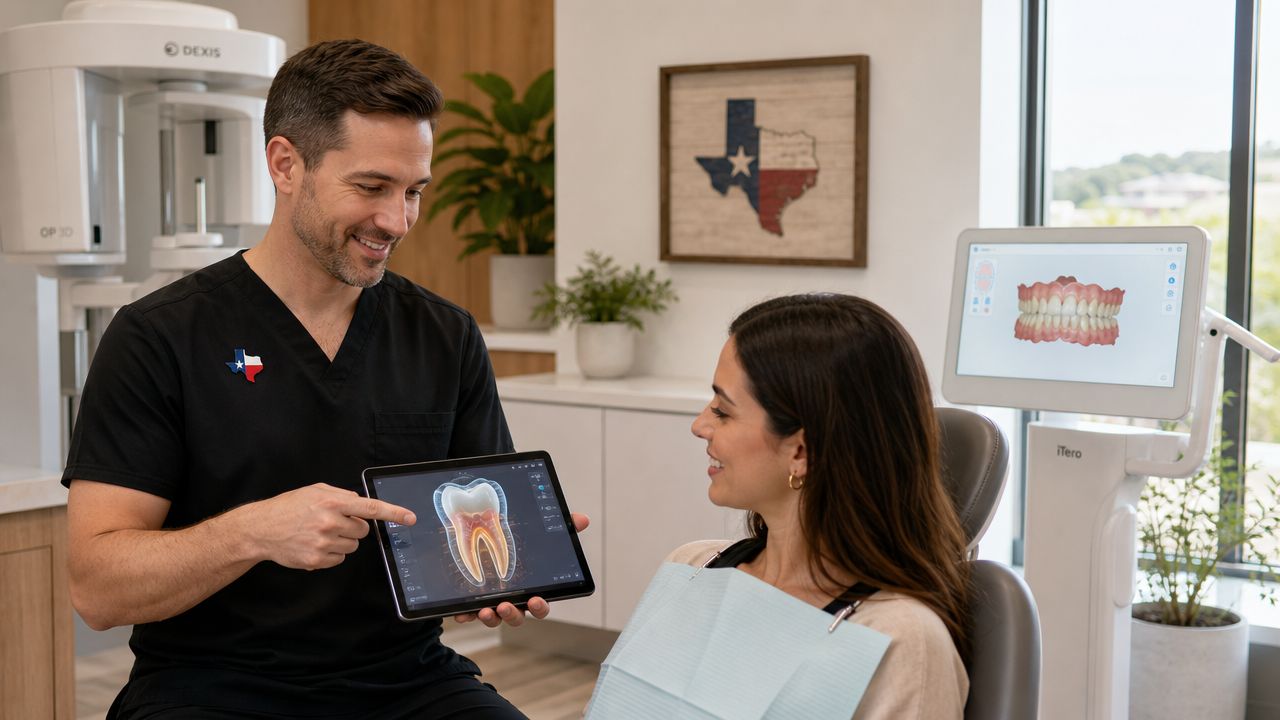
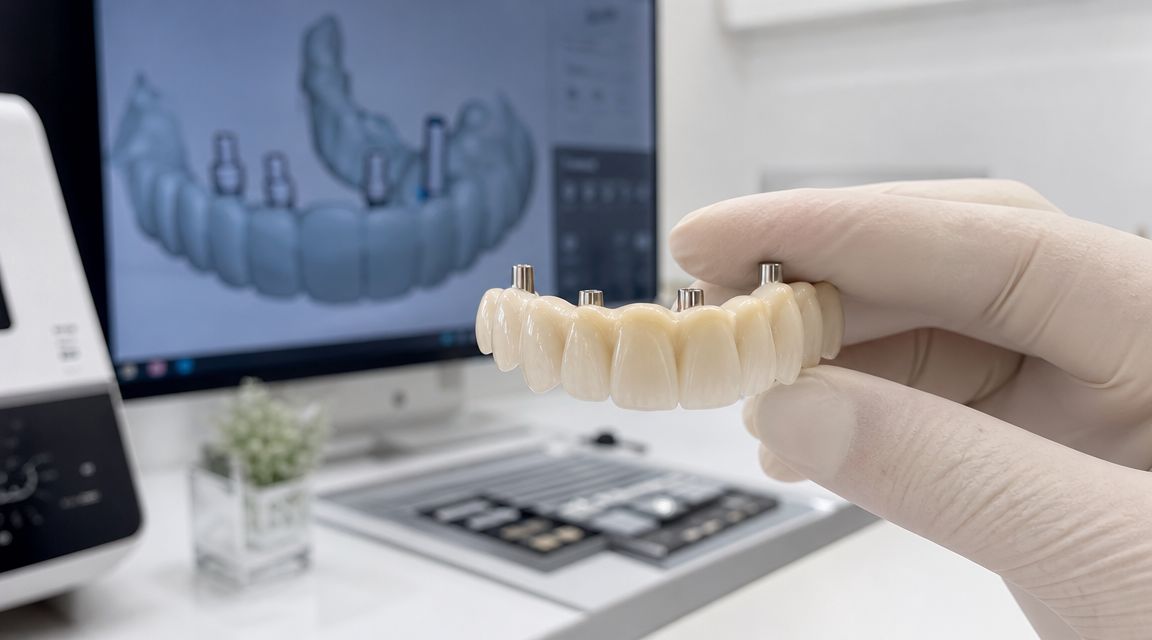
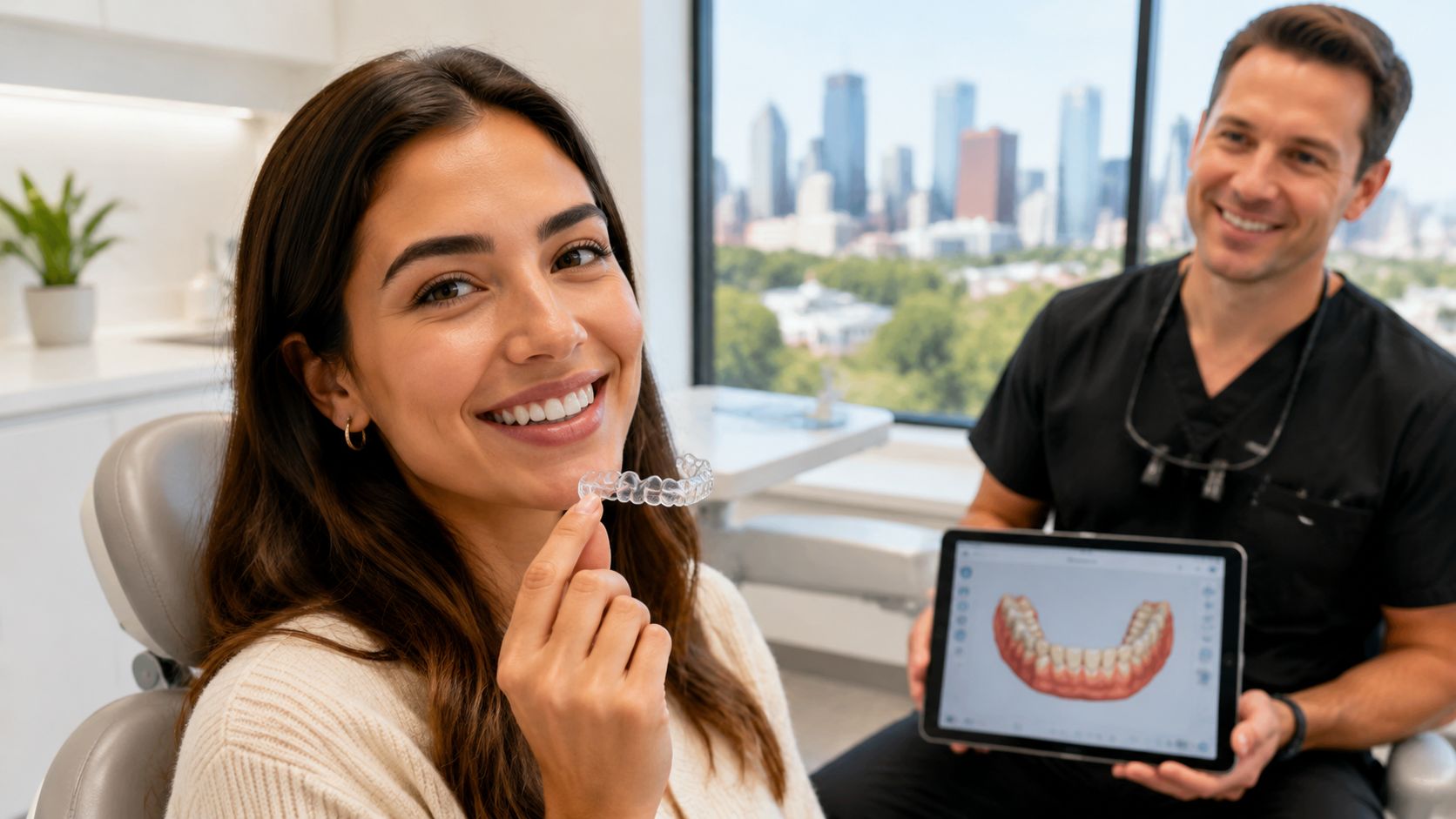
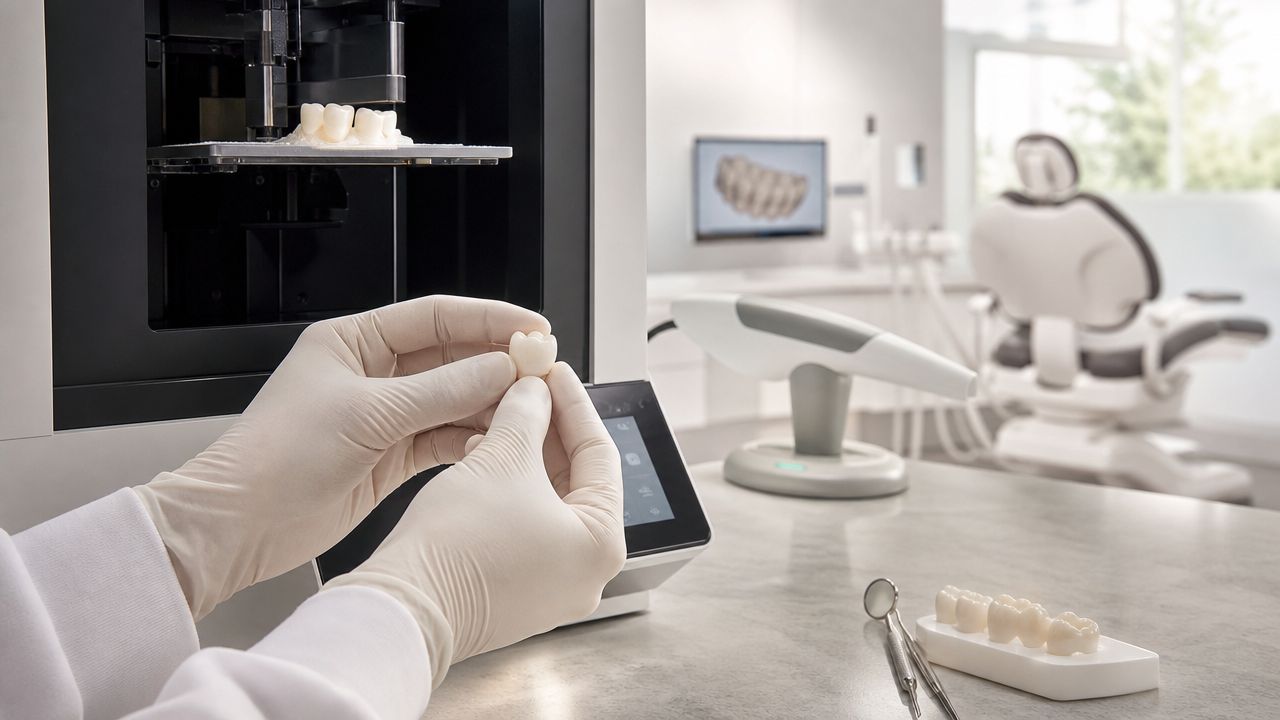
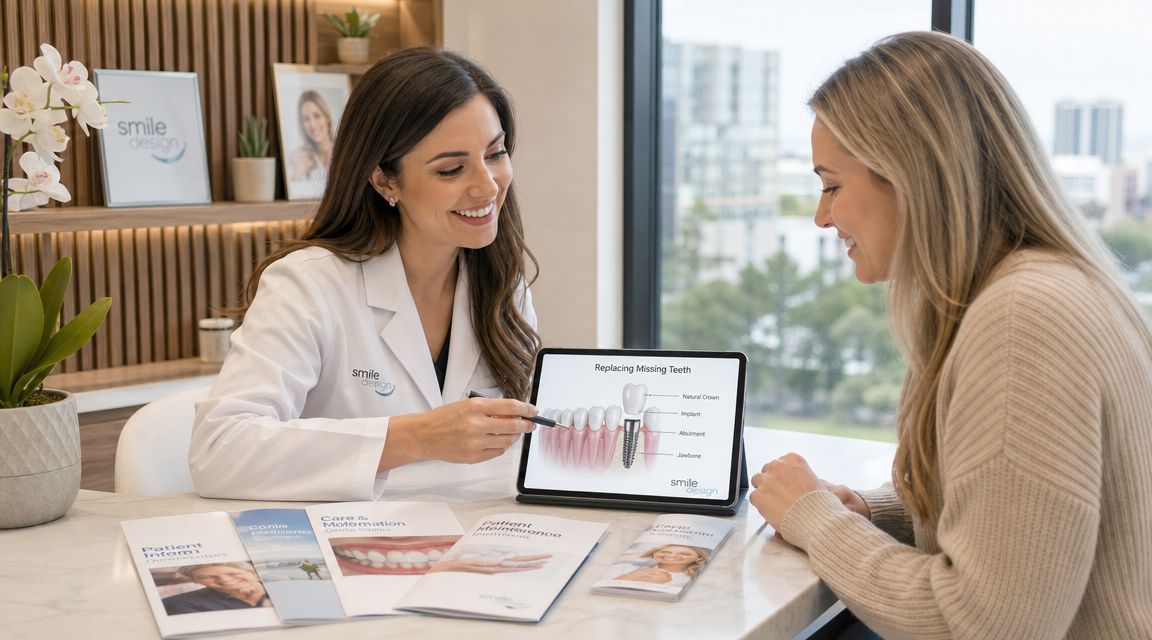


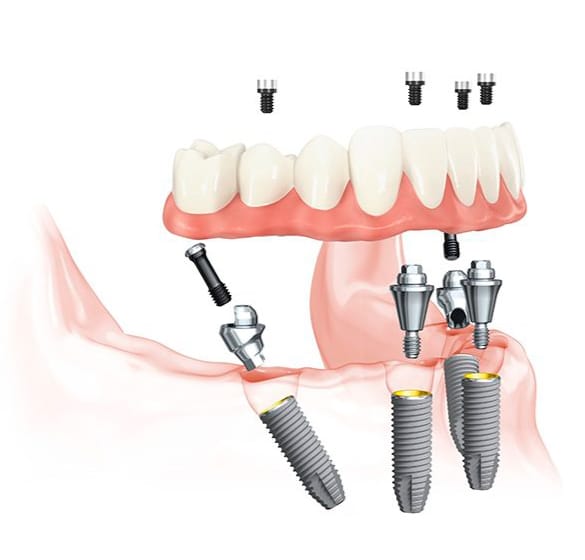





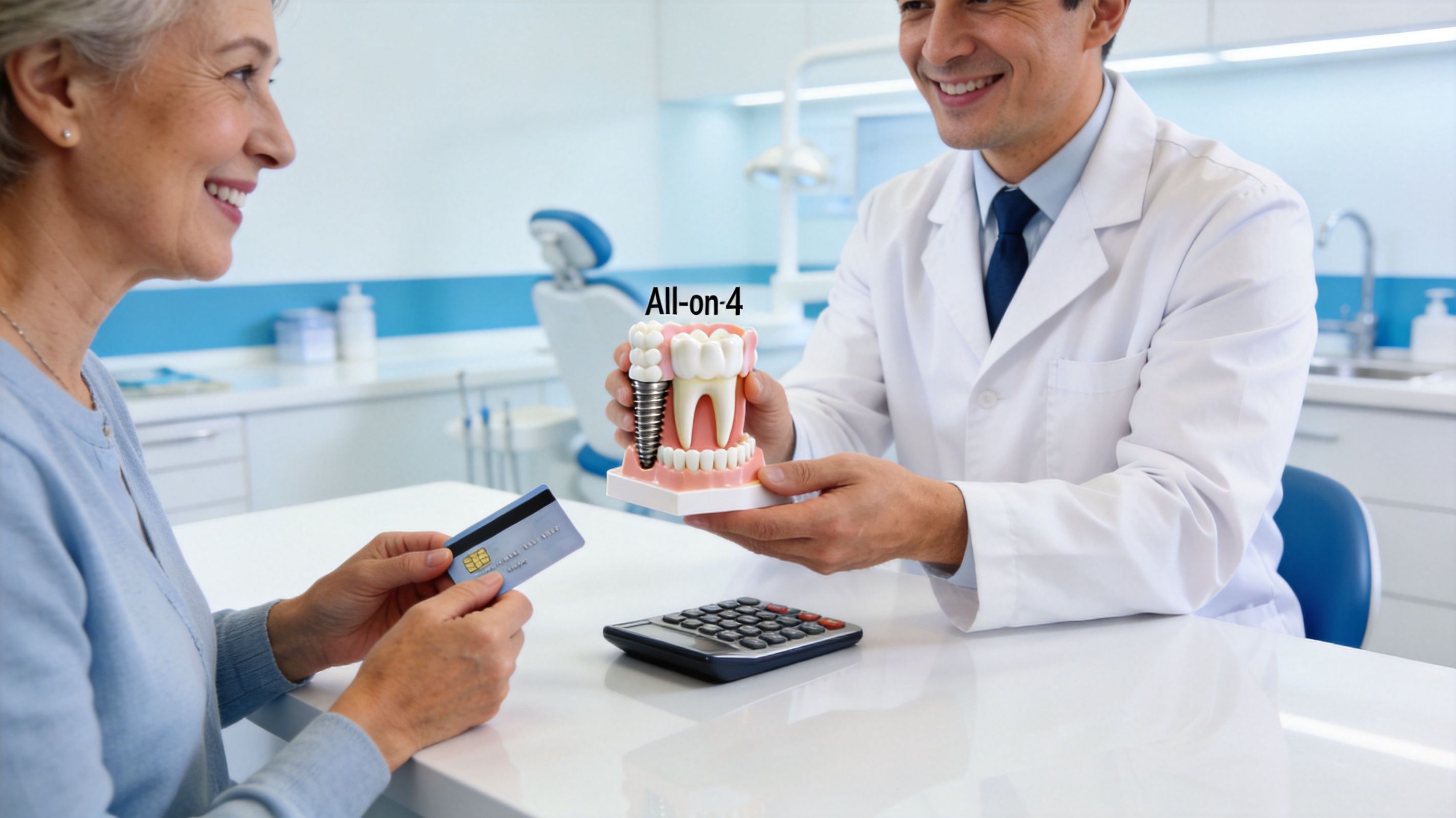



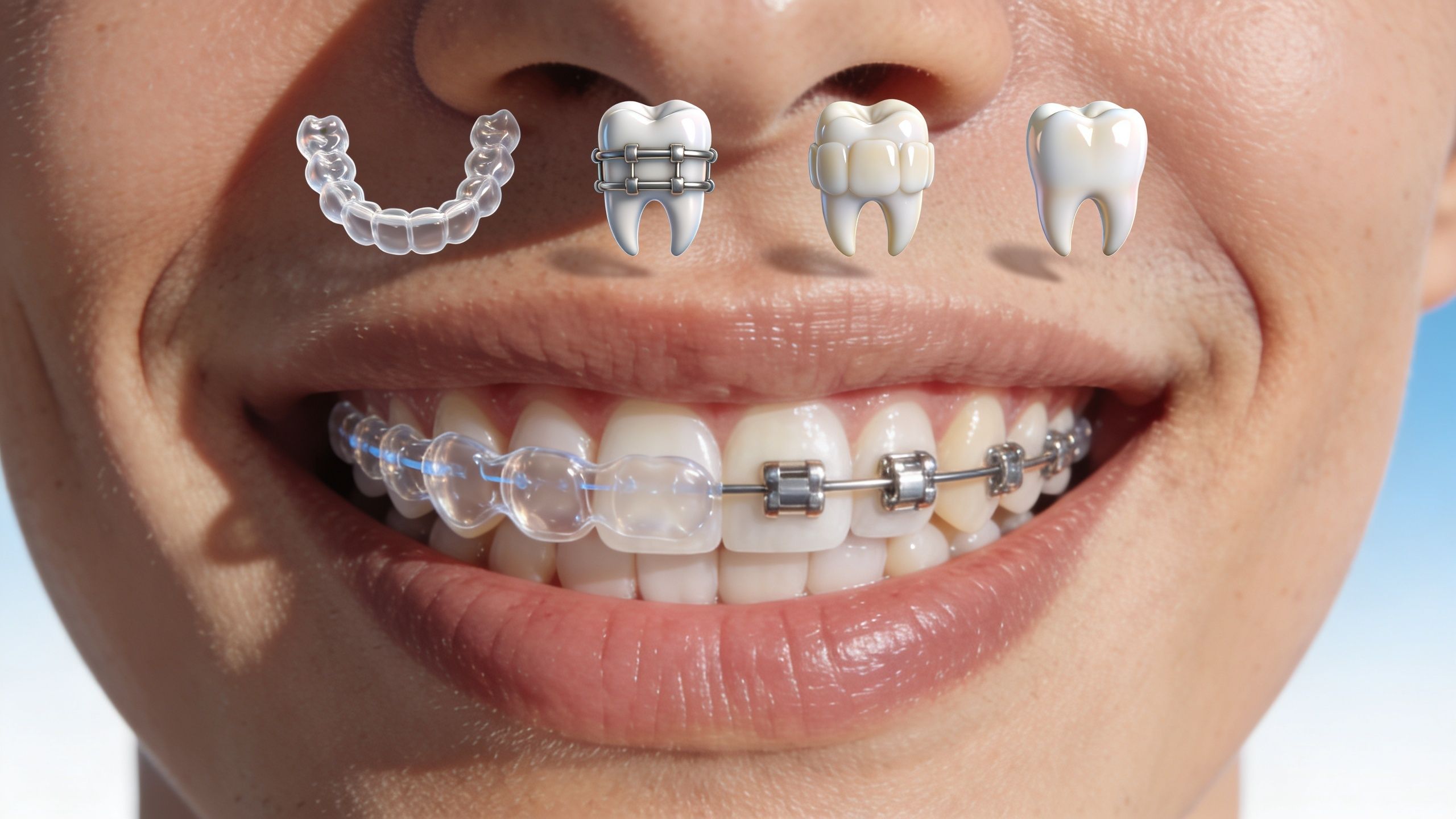


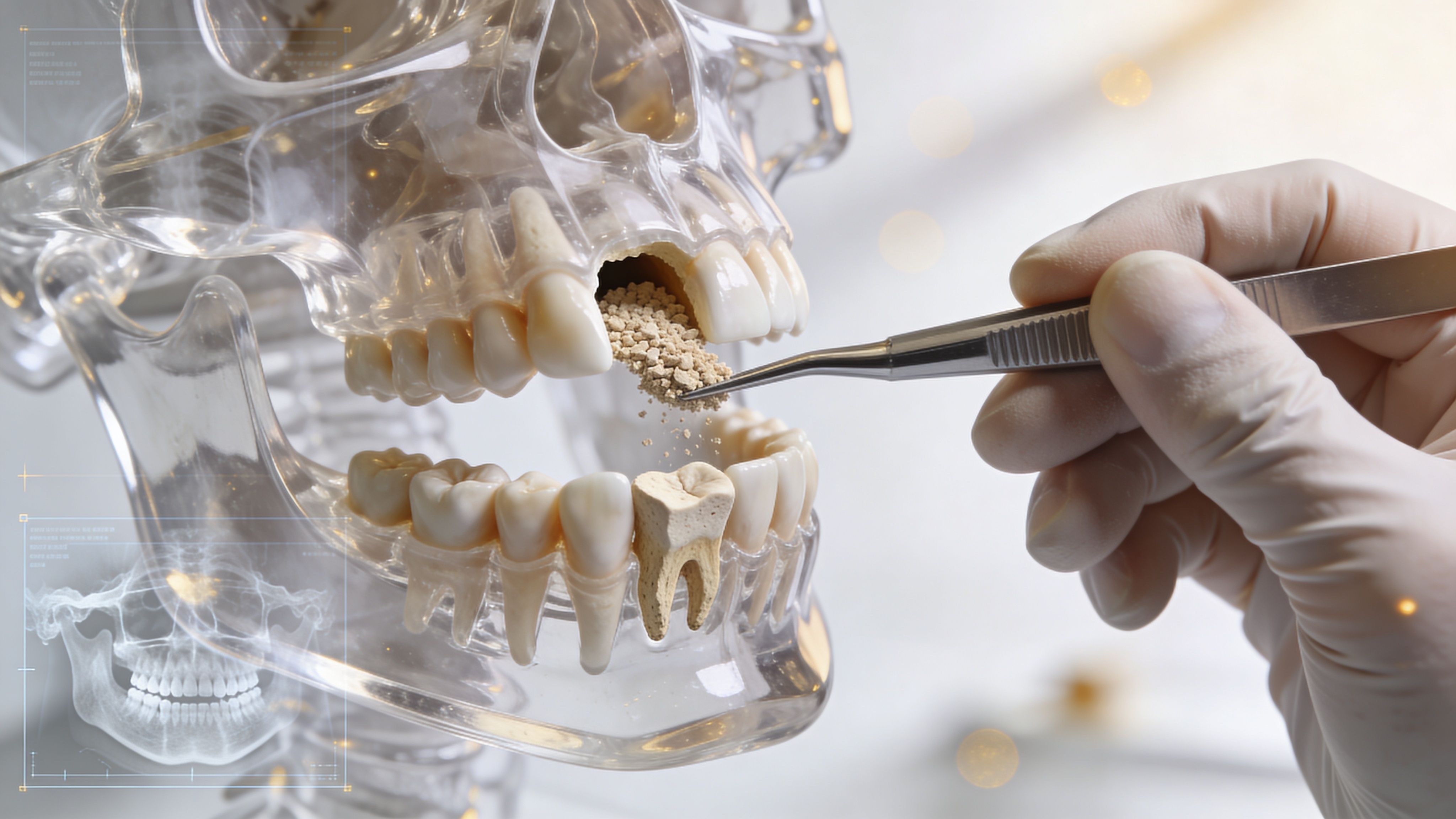


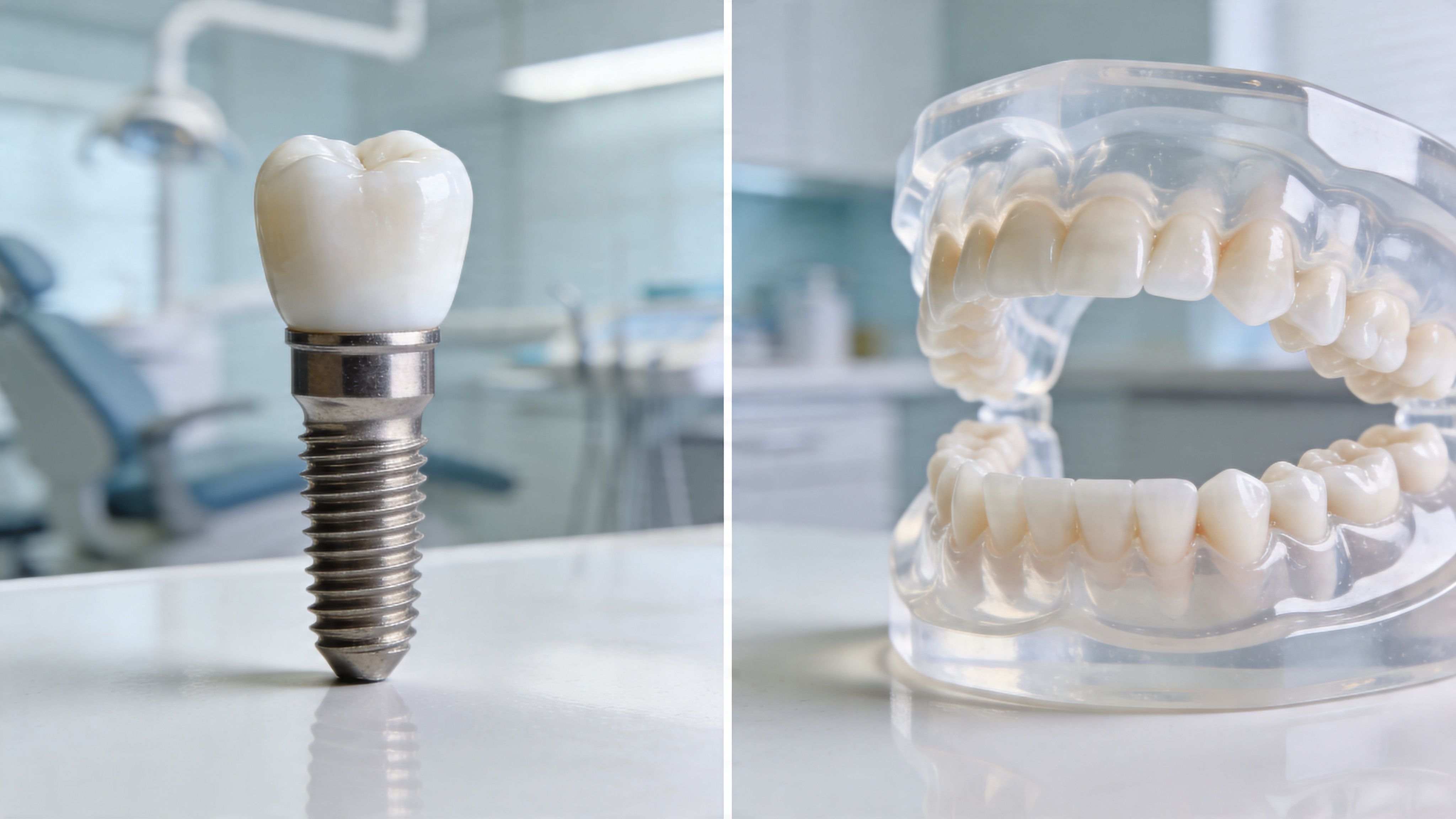
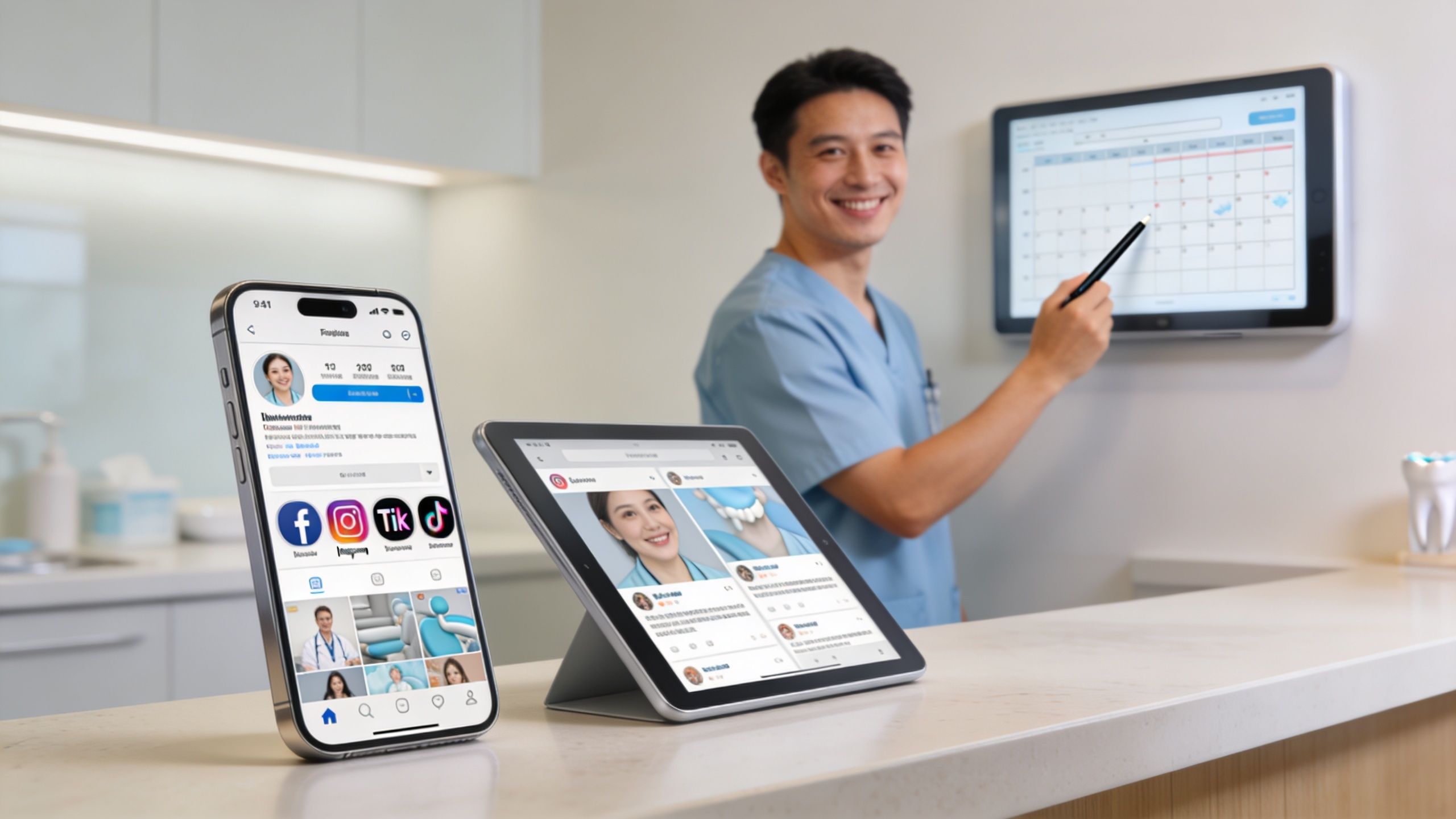
If you're running a dental practice in Austin or Georgetown, you already know the pattern. A patient searches for a dentist near me, clicks a few websites, checks reviews, then opens Instagram or Facebook before deciding whether to call. That final step matters more than many practices admit.
For high-value treatment, especially dental implants near me, All-on-4, veneers, and orthodontics, patients rarely book on the first touch. They look for signs that your office is active, credible, local, and safe. Social media dental marketing works best when it supports that decision, not when it tries to act like entertainment.
In North Austin, Georgetown, Round Rock, Cedar Park, Wells Branch, and Liberty Hill, the practices that win on social don't usually look the loudest. They look the most trustworthy. Their pages show the team, explain treatment clearly, answer common fears, and make it easy for a patient to take the next step.
Why Social Media Is a Vital Tool for Austin Dentists in 2026
A referral still carries weight. But referrals don't close themselves anymore.
A patient may hear your name from a friend, then search your practice, read reviews, visit your website, and scan your social profiles before scheduling a cleaning, an emergency dentist visit, or an implant consultation. In that path, social media acts like a digital handshake. It helps patients decide whether your practice feels established, professional, and familiar.
According to MouthWatch's dental marketing trends for 2025, 77.5% of practices said referrals were their most effective marketing channel, while digital marketing accounted for 17% of reported success. That's the important shift. Social media didn't replace referrals. It started reinforcing them.
Social validates what patients already suspect
Most patients don't expect a dental office in Austin, TX or Georgetown, TX to become a viral brand. They want proof that you're real, current, and attentive. A quiet, outdated page sends the wrong signal, especially for treatments people compare carefully such as implants, cosmetic dentistry, or orthodontics.
Social media works when it answers basic trust questions fast:
- Is this office active: Recent posts suggest the practice is engaged and operating consistently.
- Do real people work here: Team photos and short videos make the office feel less anonymous.
- Does the environment look comfortable: Office tours, technology clips, and simple behind-the-scenes content reduce hesitation.
- Can this team explain treatment clearly: Educational posts help patients feel less intimidated by procedures like tooth extraction, implant placement, or veneers.
Social doesn't need to impress everyone. It needs to reassure the right patient at the right moment.
Local presence matters more than broad reach
For dental practices, especially in competitive areas of North Austin, broad awareness is less useful than local recognition. A warm Facebook post about your office culture can matter more than a flashy trend if the person seeing it lives nearby and is actively comparing providers.
That matters for every service line. Someone searching for an emergency dentist wants responsiveness. Someone looking for a cosmetic dentist near me wants confidence and visual proof. Someone exploring dental implants near me wants competence, consistency, and a clear treatment process.
The practices that get results from social media dental marketing usually keep the message simple. Stay local. Show the team. Explain the service. Make the next step obvious.
Choosing the Right Platforms for Your Dental Practice
Not every platform deserves equal time. A dental office doesn't need to be everywhere. It needs to be visible where likely patients already spend time and where the format matches the service.
The easiest mistake is posting the same thing everywhere and calling that a strategy. A smarter approach is to assign each platform a job.
What each platform does best
Facebook is still strong for local trust, family dentistry, community visibility, and longer consideration cycles. If your office wants to stay top-of-mind for cleanings and exams, new patient exams, dental x-rays, emergency appointments, and household decision-makers, Facebook usually carries that well.
Instagram is better when appearance, transformation, and short visual education matter. Cosmetic dentistry, teeth whitening, veneers, clear aligners, braces, and implant education often fit Instagram more naturally because the platform rewards visual clarity and short-form video.
TikTok can work for myth-busting, team personality, and fast educational clips. It isn't mandatory for most practices, but it can be useful if someone on the team is comfortable on camera and can explain dental topics in a straightforward way.
LinkedIn isn't a primary patient-acquisition platform, but it can support referral relationships, professional credibility, recruiting, and local business visibility.
Platform Strategy for 3D Dental Services
| Service Category | Primary Platform | Content Goal | Target Audience Example |
|---|---|---|---|
| General and family dentistry | Build familiarity and local trust | Parents in Georgetown or Cedar Park looking for a dentist in Austin, TX area or nearby family care | |
| Emergency dental care | Reinforce responsiveness and access | Adults in North Austin, Wells Branch, or Round Rock needing quick care | |
| Cosmetic dentistry | Show aesthetic outcomes and confidence-building education | Adults searching cosmetic dentist near me, veneers, or teeth whitening | |
| Dental implants and All-on-4 | Educate, reduce fear, and drive consultation interest | Adults comparing full-arch solutions or implant options in Austin and Georgetown | |
| Orthodontics and clear aligners | Explain process and show lifestyle-friendly treatment | Teens and adults interested in braces or aligners | |
| Professional networking and referrals | Support credibility and connections | Local healthcare professionals and business contacts |
A practical way to allocate effort
If your team is small, don't split attention across four platforms at once. Start with the two that best fit your services and audience.
For most local dental practices, this is the cleanest setup:
- Use Facebook for community posts, team updates, financing reminders, service explainers, and patient-friendly education.
- Use Instagram for Reels, smile transformations with proper consent, office visuals, technology spotlights, and cosmetic or implant content.
- Add TikTok only if someone in the office can create short educational videos consistently without making the brand feel forced.
Practical rule: Pick one platform for trust-building and one for visual persuasion. Most practices don't need more than that to start.
A family-focused office in Georgetown may lean harder into Facebook. A practice that wants more veneers, orthodontics, and implant consultations in Austin may put more energy into Instagram. The choice should follow the service mix, not the latest app trend.
A Content Calendar That Attracts High-Value Patients
Most dental social feeds fail for one reason. They post whatever someone remembers to upload that week.
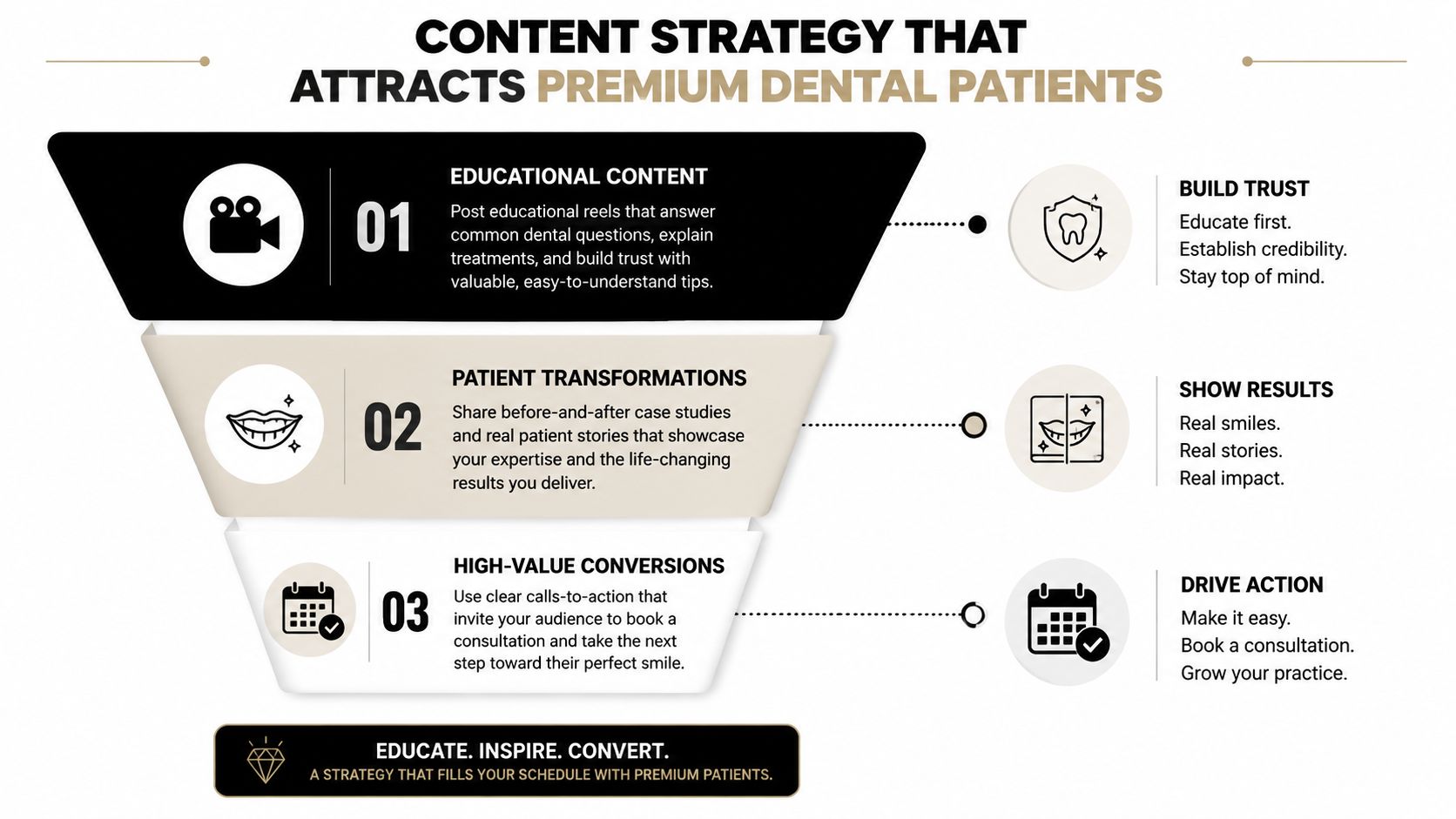
High-value patients don't respond to random activity. They respond to a feed that shows expertise, consistency, and relevance. For implant, cosmetic, and orthodontic cases, video-first content is often the strongest format. According to White Hat SEO's dental social media marketing benchmark, clinics using a structured social plan with video saw 18–32% higher new-patient enquiry rates.
Build around content pillars
A content calendar gets easier when every post falls into a small set of repeatable categories. For a dental office serving Austin and Georgetown, these pillars keep content focused without becoming repetitive.
Educational content
Many booked consultations begin with this type of information. Patients considering implants or All-on-4 often need plain-English answers before they're ready to talk.
Examples include:
- What a 3D CT scan helps your dentist evaluate
- The difference between replacing one tooth and a full arch
- What patients can expect during a new patient exam
- When tooth extraction leads into restorative planning
Behind-the-scenes content
People trust what they can see. A short office tour, sterilization workflow clip, or technology walkthrough can make a practice feel more transparent and modern.
This also works well for anxious patients who are still deciding where to book.
Service spotlights
Service posts should explain outcomes, candidacy, and the first step. They shouldn't read like brochures. A clean video about veneers, clear aligners, dental implants, or emergency care usually performs better than a graphic overloaded with text.
Community and local familiarity
A practice in Austin or Georgetown doesn't need generic lifestyle content. It needs local relevance. Team participation in community events, neighborhood updates, seasonal reminders, and simple in-office moments can make the brand feel rooted where patients live.
Video ideas worth filming
Short-form video works especially well for higher-consideration services because it helps patients hear tone, see technology, and understand treatment in context.
Good topics include:
- An All-on-4 patient journey: Focus on the process from consultation to smile outcome, without oversharing protected health information.
- A quick implant myth-busting Reel: Address common fears about discomfort, timing, or candidacy.
- Meet the periodontist or implant provider: Keep it direct and conversational.
- Office tour for nervous patients: Show the waiting area, treatment rooms, imaging technology, and friendly faces.
- Before-and-after discussion: Explain what changed and why the treatment plan worked, with proper written consent.
- A clear aligner day-in-the-life clip: Useful for adults comparing orthodontic options.
- What happens at a new patient exam: Ideal for family and general dentistry audiences.
Authentic beats polished in most dental social content. Patients usually care more about clarity and credibility than studio-level production.
A simple calendar built around these pillars is easier to maintain. It also creates a stronger path from awareness to consultation because each post has a job.
Targeting Implant and Cosmetic Patients with Paid Ads
Organic content builds trust over time. Paid social is what lets you put the right message in front of the right local patient this month.
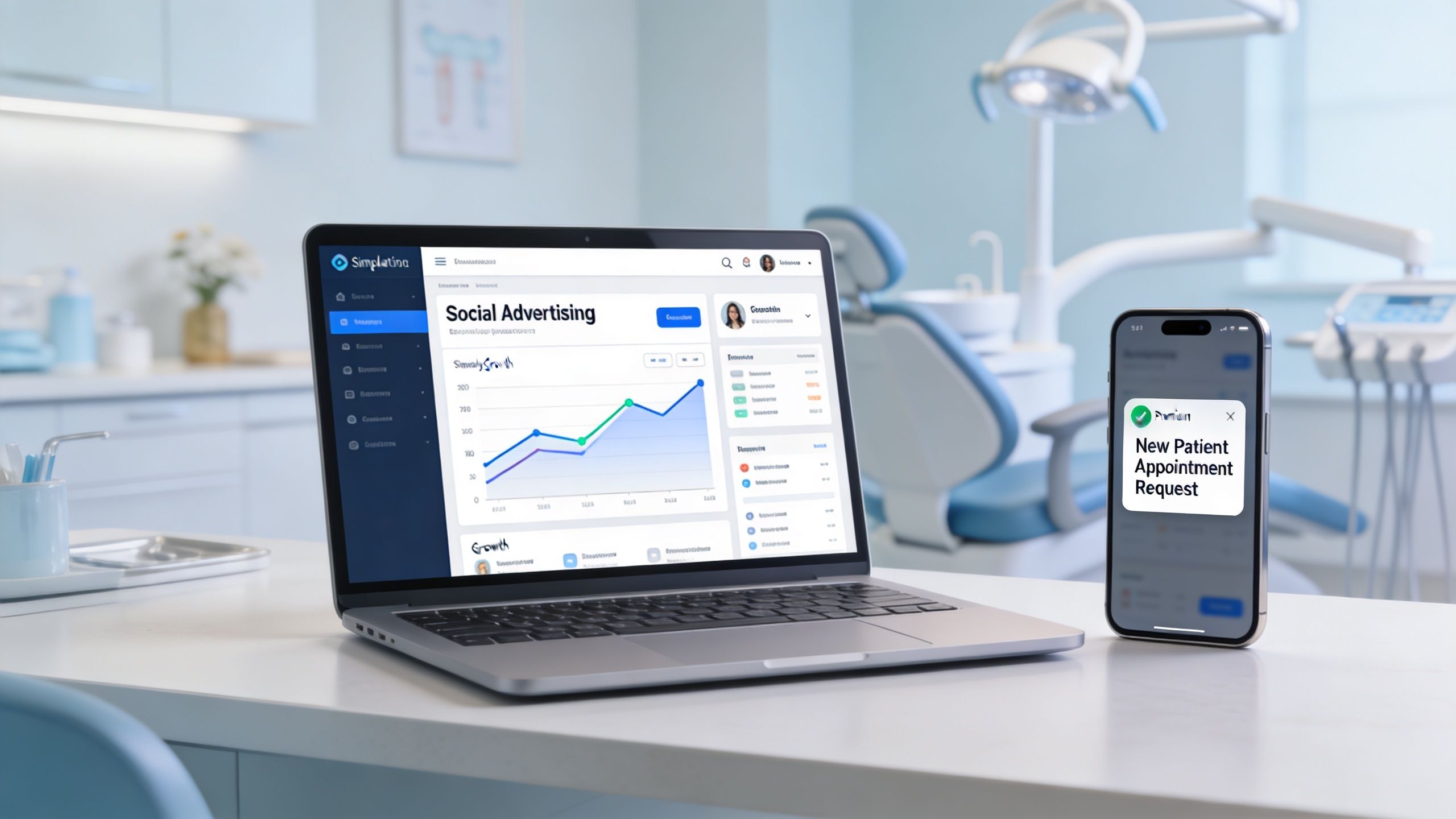
For dentists, broad targeting is usually where budget gets wasted. Paid social works best when it is tightly local and built around conversion, not attention. Dental Reviewed's guide to dental social media marketing recommends a 5–15 mile geographic radius, layered with age, interest, and similar audience targeting, with dental campaign benchmarks including cost per lead in the $10–$50 range.
A local ad setup that makes sense
If you're promoting implant consultations from a Georgetown office, start narrow. A radius around the office gives the platform a clear service area. Then layer audience signals that suggest interest in treatment rather than general browsing.
A practical setup often includes:
- Location targeting: Start with a radius around the office, then adjust based on where current implant and cosmetic patients come from.
- Service-specific creative: Use ad copy that speaks to one treatment, not every service under the roof.
- Relevant audience layers: Interests related to dental implants, cosmetic dentistry, smile makeovers, or restorative options can help narrow the audience.
- Conversion goal: Send people to a landing page or consultation page built for one action.
If you're discussing full-arch treatment, the ad should lead to a page that continues that exact conversation. For example, a practice promoting implant solutions could point visitors to an All-on-4 dental implants page in Austin rather than to a broad homepage.
What to track instead of likes
Paid ads should be judged by patient actions. A good campaign doesn't just generate engagement. It creates inquiries that the front desk can turn into scheduled visits.
Track these items closely:
- Website clicks: Did people leave the platform and visit the consultation page?
- Phone calls: Use call tracking so the office can identify which calls came from social ads.
- Form submissions: Count implant consult requests, cosmetic consult forms, or emergency appointment requests.
- Booked appointments: This is the metric that matters most operationally.
You can calculate cost per lead by dividing total ad spend by the number of qualified inquiries generated from that campaign.
Creative that fits high-value treatment
Implant and cosmetic patients usually need reassurance before urgency. A successful ad often includes a calm headline, a doctor or team face, a short explanation of the treatment, and a clear next step.
This walkthrough shows the ad environment many practices use to build and manage campaigns:
Avoid trying to market implants the same way you'd market a seasonal whitening offer. Full-arch and restorative cases involve more questions, more comparison, and more trust-building. Your ad should respect that.
Navigating Patient Privacy and HIPAA on Social Media
Many practices hold back on social media because they worry about crossing a line. That caution is justified. It can also become a competitive advantage when handled well.
A recent published review on social media use in dentistry notes that many dentists are hesitant to share treatment outcomes online because of privacy concerns and low trust in social media information, and it calls for stronger guidance and reliable web-based resources. In practice, that means the offices that create clear internal rules can publish with more confidence and less risk.

The three mistakes that create the most trouble
The first mistake is assuming verbal permission is enough. It isn't a strong workflow. If a patient appears in a photo, video, testimonial, or before-and-after post, the practice needs a written release that clearly explains how the content may be used.
The second is replying too specifically in comments or direct messages. A patient may write, "Thanks for fixing my broken tooth yesterday." The office still shouldn't confirm treatment details publicly. The safe move is to respond warmly and move the conversation to phone or secure channels.
The third is posting more clinical detail than the content needs. Social media is for trust-building and education. It usually doesn't require a detailed treatment history, appointment timeline, or identifying context.
Privacy isn't a brake on marketing. It's part of what makes patients trust your marketing.
A simple patient media consent checklist
A usable consent process doesn't need to be complicated, but it does need to be consistent.
Your Patient Media Consent checklist should cover:
- Identity of the practice: State which office may use the content.
- Type of content: Photo, video, testimonial, audio, or before-and-after images.
- Where it may appear: Website, Instagram, Facebook, paid ads, printed materials, or other marketing channels.
- What can be included: Name, first name only, anonymous image use, smile-only photo, or full face.
- Right to decline: Make clear that care does not depend on participation.
- Signature and date: Keep a signed record on file.
A visible privacy process also supports patient confidence beyond social media. Your office should make general privacy expectations easy to review through materials such as your patient privacy policy.
Safer ways to use social proof
You don't need to stop using testimonials or visual outcomes. You need cleaner rules for how they appear.
Good examples include anonymized smile-only images, short testimonial clips with signed consent, educational captions that focus on goals rather than private history, and team-reviewed approvals before anything goes live. The safest offices don't rely on memory. They use a checklist every time.
Measuring Social Media ROI for Your Dental Practice
A busy dental office can mistake activity for progress. The page looks updated. Reels get views. A few posts pick up comments. None of that proves social media dental marketing is producing booked care.
The more useful question in 2026 is the one raised in Lasso MD's dental marketing discussion: not whether a practice should post, but which posts improve high-intent discovery, booked consultations, and lead quality by platform. That shift matters because social content now affects how patients and AI-assisted discovery systems understand what your practice does.
Vanity metrics vs business metrics
Likes are not worthless. They just aren't enough.
If the goal is more implant consults, more cosmetic cases, or more new patient exams in Austin and Georgetown, then the office should track behaviors tied to scheduling. The right metrics sit closer to revenue.
Watch these instead:
- Clicks to booking pages: Especially pages for implants, cosmetic dentistry, emergency dental care, or new patient scheduling.
- Tracked phone calls: Calls that originate from social profile links, ads, or platform call buttons.
- Consultation forms: Requests tied to a specific service.
- Show rates and case acceptance: A lead that doesn't arrive or doesn't move forward isn't equal to a qualified patient.
How attribution should work
Attribution doesn't need to be perfect to be useful. It needs to be consistent.
A reliable setup often includes UTM parameters on social links, a call tracking number for campaigns, and landing pages aligned to one service. If someone clicks an implant Reel, visits the consultation page, and submits a form, that path should be visible in reporting.
The post itself is rarely the whole conversion. Social often assists the decision, then search, reviews, and the website close the appointment.
A simple ROI formula for campaign review
For social campaigns, the basic ROI formula is:
(revenue from social-media patients - total social-media spend) / total social-media spend × 100
That formula is useful whether you're reviewing implant ads, a cosmetic consultation campaign, or a short-term teeth whitening promotion. The key is clean input. If the office doesn't know which patients came from social, the formula won't tell you much.
A better reporting habit is to review performance by service and by platform. Instagram may generate stronger cosmetic consults. Facebook may support more family dentistry and local trust. The answer shouldn't come from assumptions. It should come from tracked calls, form fills, booked visits, and accepted treatment.
Your 90-Day Social Media Plan for Local Growth
Most practices don't need a bigger idea bank. They need a system they can keep running without draining the team.
A good 90-day plan for Austin and Georgetown starts small, stays local, and prioritizes services that matter most to production. That usually means one clear organic rhythm, one paid campaign focus, one compliance process, and one measurement routine.
Days 1 through 30
First, tighten the foundation. Update profile images, hours, service descriptions, booking links, and contact buttons across platforms. Make sure Facebook and Instagram clearly reflect the office's actual services, local areas served, and scheduling path.
Then build a simple monthly content structure:
- One educational post each week
- One short video or Reel each week
- One local or team-centered post each week
- One service spotlight each week
At the same time, create your consent workflow for patient media and decide who approves captions, images, and comment responses before publishing.
Days 31 through 60
This is the phase to test a focused ad campaign. Pick one service, not five. Implant consultations, cosmetic dentistry, or clear aligners are all reasonable options depending on current goals.
Review what patients asked during calls and consults in the first month. Those questions should shape your next wave of content. If many prospects ask about healing time, candidacy, or financing, your social feed should answer those points directly.
A useful team routine during this period is a short monthly content session. Gather the dentist, treatment coordinator, and front desk lead. Write down the top patient questions, the top accepted services, and the top objections. That's your next month of posts.
Days 61 through 90
By now, you should have enough data to spot patterns. Which platform sends the best consultation traffic. Which videos get saves or comments from local users. Which ad creative leads to actual conversations with qualified patients.
Use the third month to cut what isn't working and repeat what is. That may mean posting fewer generic office updates and more treatment explainers. It may mean shifting ad budget from broad cosmetic messaging to a more specific implant consultation offer.
Here is a sample one-week calendar a dental practice in Austin or Georgetown could run:
- Monday on Instagram Stories: Meet a provider or team member, with a short Q&A.
- Tuesday on Facebook: Educational post about what happens at a new patient exam, cleaning, and x-rays.
- Wednesday on Instagram Reel: Short video explaining a high-value service such as implants, veneers, or clear aligners.
- Thursday on Facebook: Financing-focused post that explains available payment flexibility in simple terms.
- Friday on Instagram Reel: Patient journey or treatment explainer with proper written consent.
- Saturday on Facebook or Instagram: Local community or office culture post tied to Austin, Georgetown, Round Rock, Cedar Park, Wells Branch, or Liberty Hill.
- Sunday: Review DMs, comments, call tracking, and next week's content queue.
This kind of plan works because it is repeatable. It supports search visibility, local familiarity, referral validation, and booked treatment without asking your staff to become full-time creators.
If you're looking for a dental team that understands both advanced treatment and a patient-first experience, 3D Dental serves Austin and Georgetown providing care that includes cleanings and exams, emergency dentistry, cosmetic dentistry, orthodontics, and advanced implant solutions like All-on-4. If you're ready to schedule a visit, request a consultation, or explore your treatment options, contact 3D Dental today.
Ready to get started?
Schedule a free, no obligation consultation with our team and see what's possible for your smile!
Georgetown
- Mon-Thurs8:30am-5pm
- Fri8am-3:30pm
- Sat-SunClosed
Austin
- Mon-Tues8am-5pm
- Wed-Thurs9am-6pmFri8am-2pm
- Sat-SunClosed