
Gum Disease Progression: A Dentist's Guide in Austin, TX
Related Posts

















































If you've noticed blood on your toothbrush, pink in the sink after flossing, or gums that look puffier than they used to, it's easy to tell yourself it's minor. Many people do. The trouble is that early gum problems are often painless, so they get ignored until the damage is harder to treat.
That doesn't mean you're out of options. Gum disease progression is serious, but it's also manageable when it's identified clearly and treated at the right stage. For patients looking for a dentist near me in North Austin or Georgetown, the most helpful next step isn't guessing. It's getting a diagnosis that shows what's happening at the gumline and below it.
Your Trusted Dentist for Gum Health in Austin and Georgetown
A common story goes like this. Someone starts flossing again after a long break, sees bleeding, and assumes the floss caused the problem. A few weeks later, the bleeding is still there. Then bad breath lingers, or one area feels tender when chewing, and suddenly the concern becomes real.
That pattern matters because bleeding gums are often an early warning sign, not just irritation. When patients search for a dentist in Austin, TX or a dentist near me, they're usually trying to answer a simple question: is this something I can watch, or something I need checked now?

At our North Austin and Georgetown offices, gum concerns are one of the most common reasons patients book an exam. Some come in with obvious swelling. Others feel fine and are surprised when an exam shows deeper inflammation than they expected. Both situations are common.
What patients often notice first
- Bleeding while brushing or flossing This is one of the earliest signs people report.
- Bad breath that keeps returning Freshening your mouth doesn't fix an underlying gum problem.
- Tender, swollen, or red gums Healthy gums usually don't look irritated day after day.
- Teeth that feel different when biting Pressure changes can happen as supporting tissue weakens.
Practical rule: If your gums bleed repeatedly, don't wait for pain before you schedule an exam.
The good news is that gum disease progression usually doesn't happen overnight. There is time to intervene. The key is catching the condition before infection and inflammation move deeper under the gumline and begin affecting the structures that hold teeth in place.
Understanding Gum Disease From Gingivitis to Periodontitis
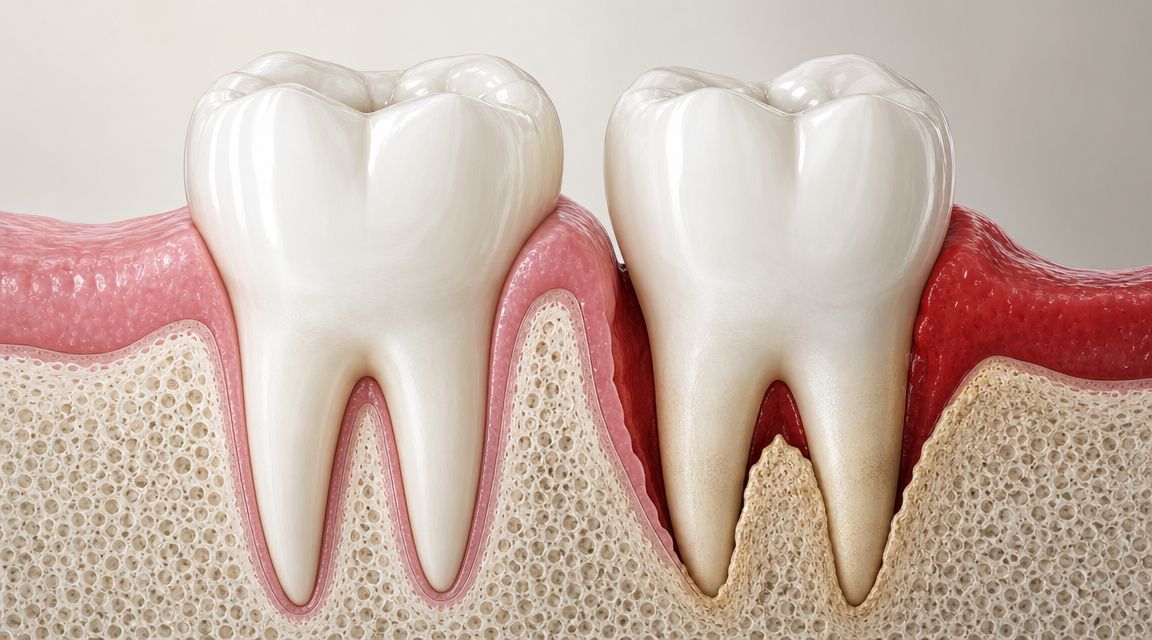
Gum disease starts with inflammation. In its earliest form, that inflammation is called gingivitis. At this stage, the gums may look red, feel puffy, and bleed easily, but the supporting bone around the teeth hasn't been lost. That matters because gingivitis can often be reversed with better plaque control and professional cleanings.
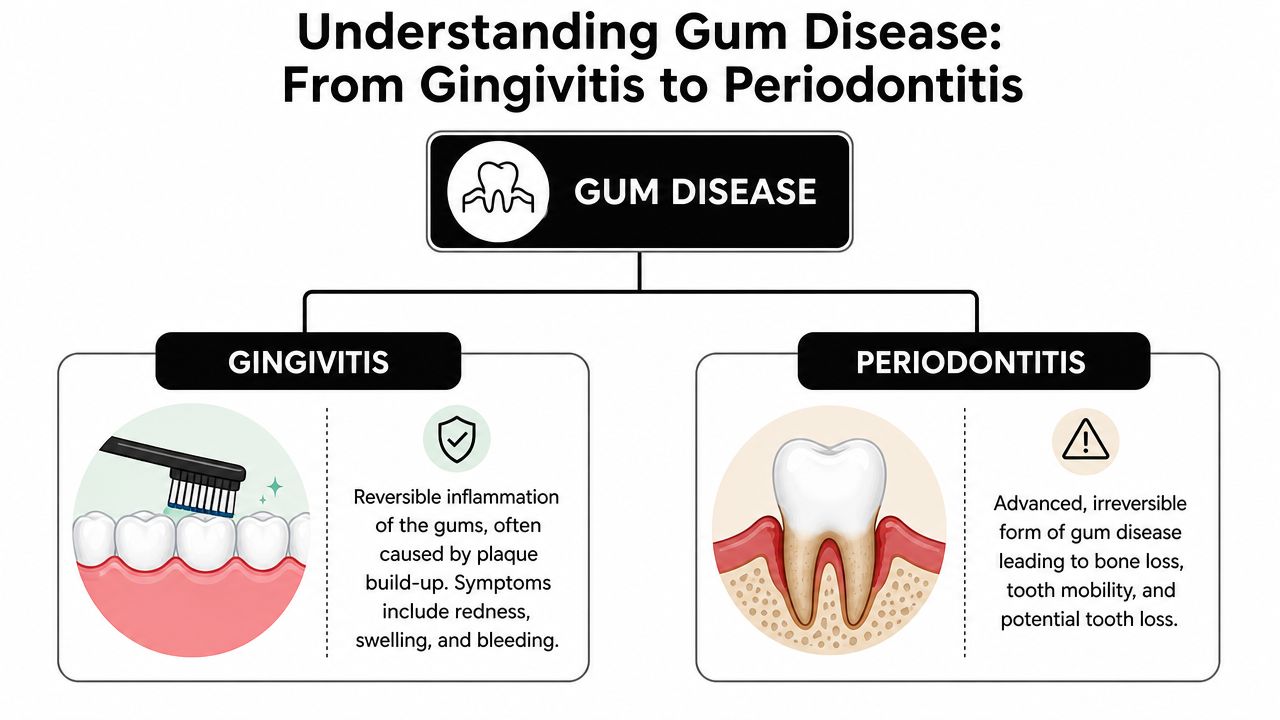
Think of your gums and bone like the foundation around a house. The tooth you see above the gumline is only part of the structure. Underneath, the ligament and bone keep that tooth stable. When plaque stays in place long enough, bacteria irritate the gums first. If that process continues, the infection can move below the gumline and begin damaging the support system.
Gingivitis is the reversible stage
In practical terms, gingivitis means the gums are inflamed, but the damage hasn't yet crossed into bone loss. This is why regular cleanings and home care can make such a difference early on. Patients sometimes think bleeding means they should stop flossing that area. Usually, the opposite is true. The area needs cleaner, healthier conditions, not less attention.
The scope of the problem is larger than many people realize. The CDC reports that about 4 in 10 U.S. adults age 30 or older had some level of periodontitis, and that figure rises to about 60% among adults 65 and older. The same CDC page explains that periodontitis is irreversible once bone loss begins. You can review that summary on the CDC page on gum and periodontal disease.
A short overview can help make the progression easier to picture.
Periodontitis means the support system is being damaged
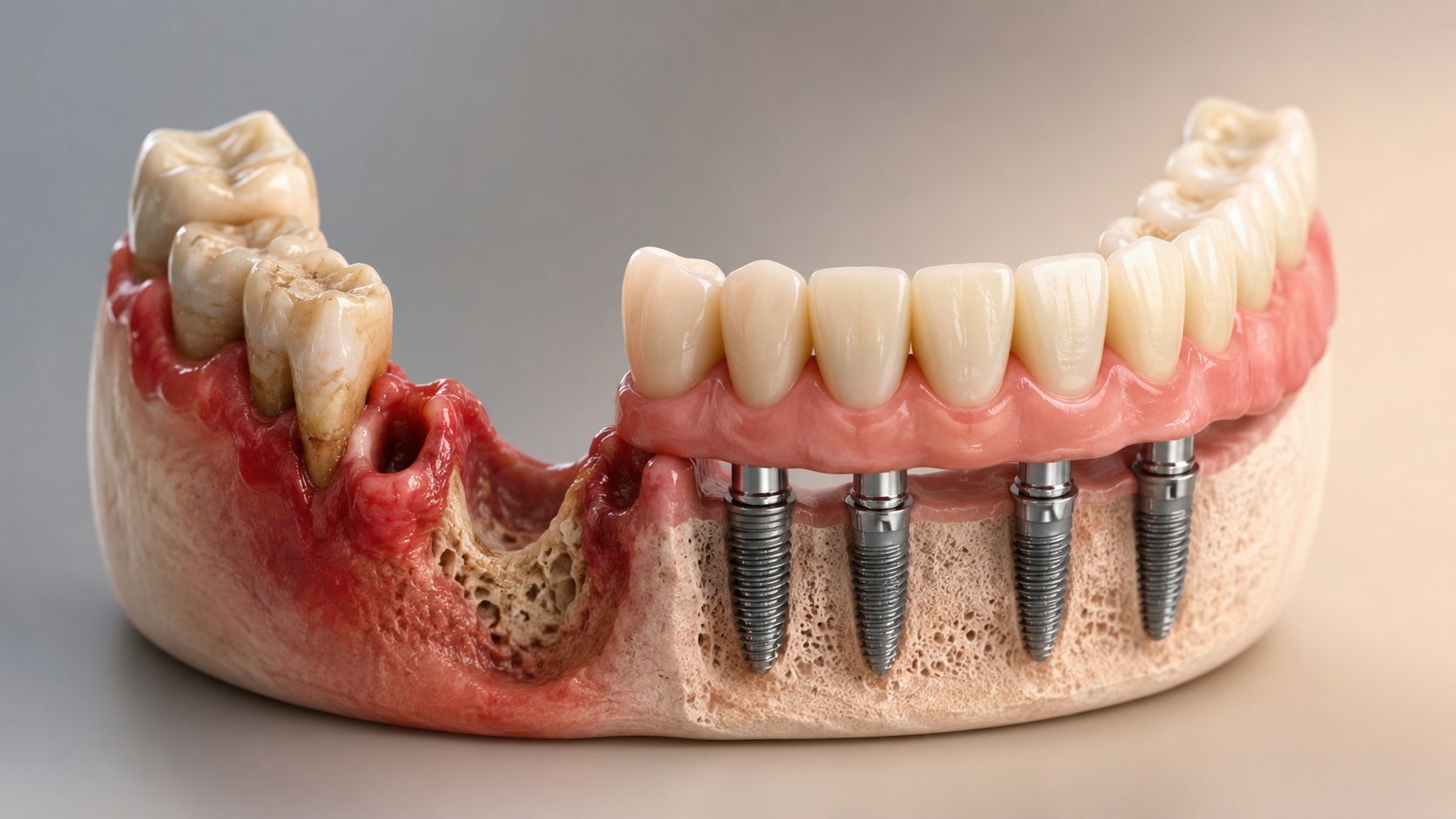
Once bacteria breach the gingival margin and infection extends deeper, periodontitis begins. At that point, the problem isn't limited to surface inflammation. The tissues that attach the tooth to the bone start breaking down, periodontal pockets can form, and the alveolar bone can be destroyed over time.
Gum disease often stays quiet while it progresses. A mouth can look only mildly irritated while deeper damage is already underway.
This is why waiting for severe pain doesn't work well with periodontal disease. Many patients don't feel much discomfort until the condition is already advanced enough to threaten long-term tooth stability.
The Four Main Stages of Gum Disease Progression
Patients usually understand gum disease better when they can picture it as a sequence instead of a label. The stages below describe what tends to happen as inflammation becomes deeper, more destructive, and harder to control without professional treatment.
Stage one gingivitis
This is the earliest stage. The gums are inflamed, but the deeper support around the teeth hasn't been permanently damaged.
Common signs include:
- Bleeding during brushing or flossing Often the first thing people notice.
- Red or puffy gums The tissue looks irritated instead of firm and pink.
- Bad breath Bacteria and inflammation can create a persistent odor.
- Mild tenderness Usually more annoying than painful.
At this point, many people still assume the issue is temporary. Sometimes that's because the symptoms come and go. The risk is that plaque and tartar remain in place long enough for the inflammation to move below the gumline.
Stage two early periodontitis
In early periodontitis, the disease has crossed an important line. Infection is no longer limited to the visible gum tissue. The attachment around the tooth begins to break down, and pockets can start to form.
Patients may notice:
- Bleeding that keeps returning
- Gums pulling away from teeth
- More frequent bad taste or bad breath
- Food trapping in new spaces
This is often where people say, "I thought I just needed a cleaning." Sometimes they do need more than a routine cleaning, because the problem is now happening under the gums where a toothbrush can't reach effectively.
Stage three moderate periodontitis
Moderate disease brings more tissue breakdown and deeper pockets. The gums can recede further, and teeth may start to feel more sensitive because root surfaces become exposed.
Possible signs include:
- Noticeable gum recession
- Sensitivity near the roots
- Chewing discomfort
- A feeling that teeth are shifting or not fitting together the same way
Moderate periodontitis can still be managed, but it requires more than casual home care. This is usually the point where patients benefit from a very structured treatment plan and close maintenance.
Stage four advanced periodontitis
Advanced periodontitis affects the structures that keep teeth anchored. Teeth can loosen, drift, or become painful when biting.
People in this stage may experience:
- Loose teeth
- Visible spaces getting larger
- Difficulty chewing certain foods
- Pus, swelling, or recurrent gum infections
- A tooth that feels at risk
At this stage, the priority is controlling infection, preserving any teeth that can be saved, and creating a realistic long-term plan if a tooth can't be maintained.
| Stage | Common Symptoms | Clinical Signs |
|---|---|---|
| Gingivitis | Bleeding, redness, puffiness, bad breath | Inflamed gums without signs of deeper structural loss |
| Early Periodontitis | Recurrent bleeding, mild recession, food trapping | Early pocketing and breakdown below the gumline |
| Moderate Periodontitis | Recession, sensitivity, chewing discomfort | Deeper pockets and more pronounced support loss |
| Advanced Periodontitis | Loose teeth, swelling, shifting, bite changes | Severe attachment loss and reduced tooth stability |
How We Diagnose Gum Disease with Advanced Digital Imaging
A visual exam alone doesn't tell the full story. Gums can look only mildly inflamed while the supporting bone shows a very different picture. That's why diagnosing gum disease progression properly requires measurement, imaging, and a treatment plan built around both.
What the exam usually includes
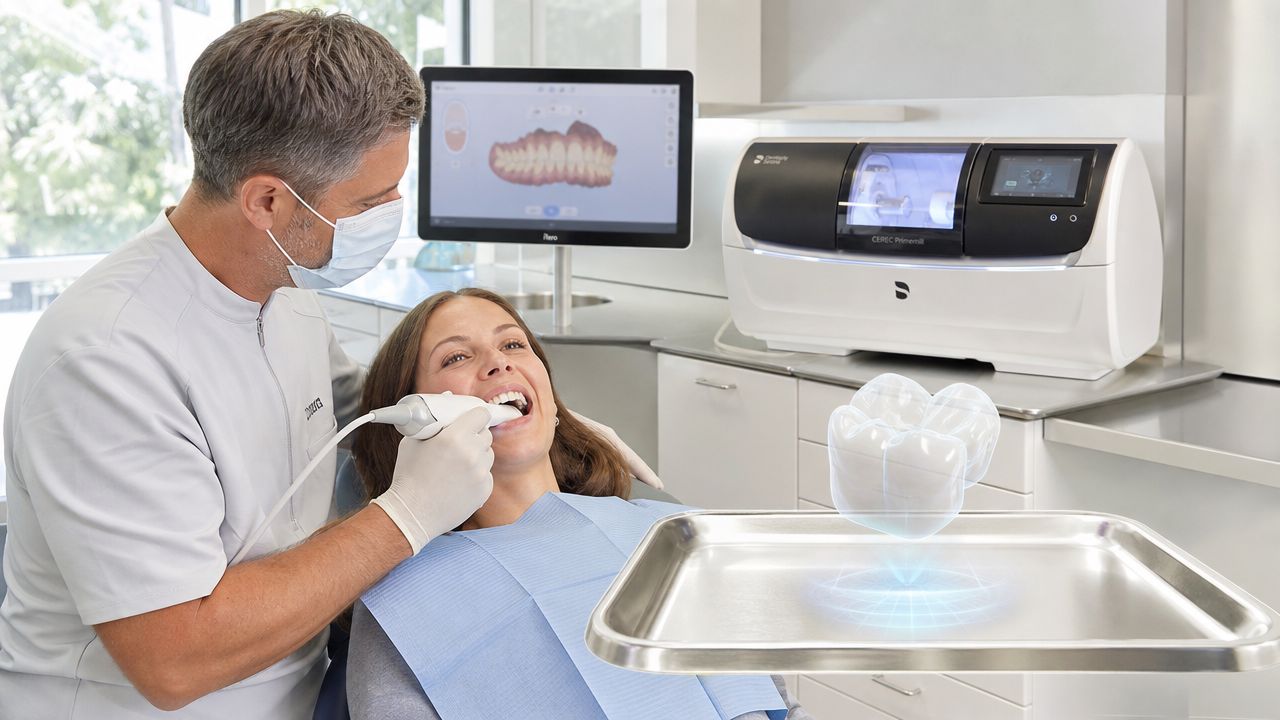
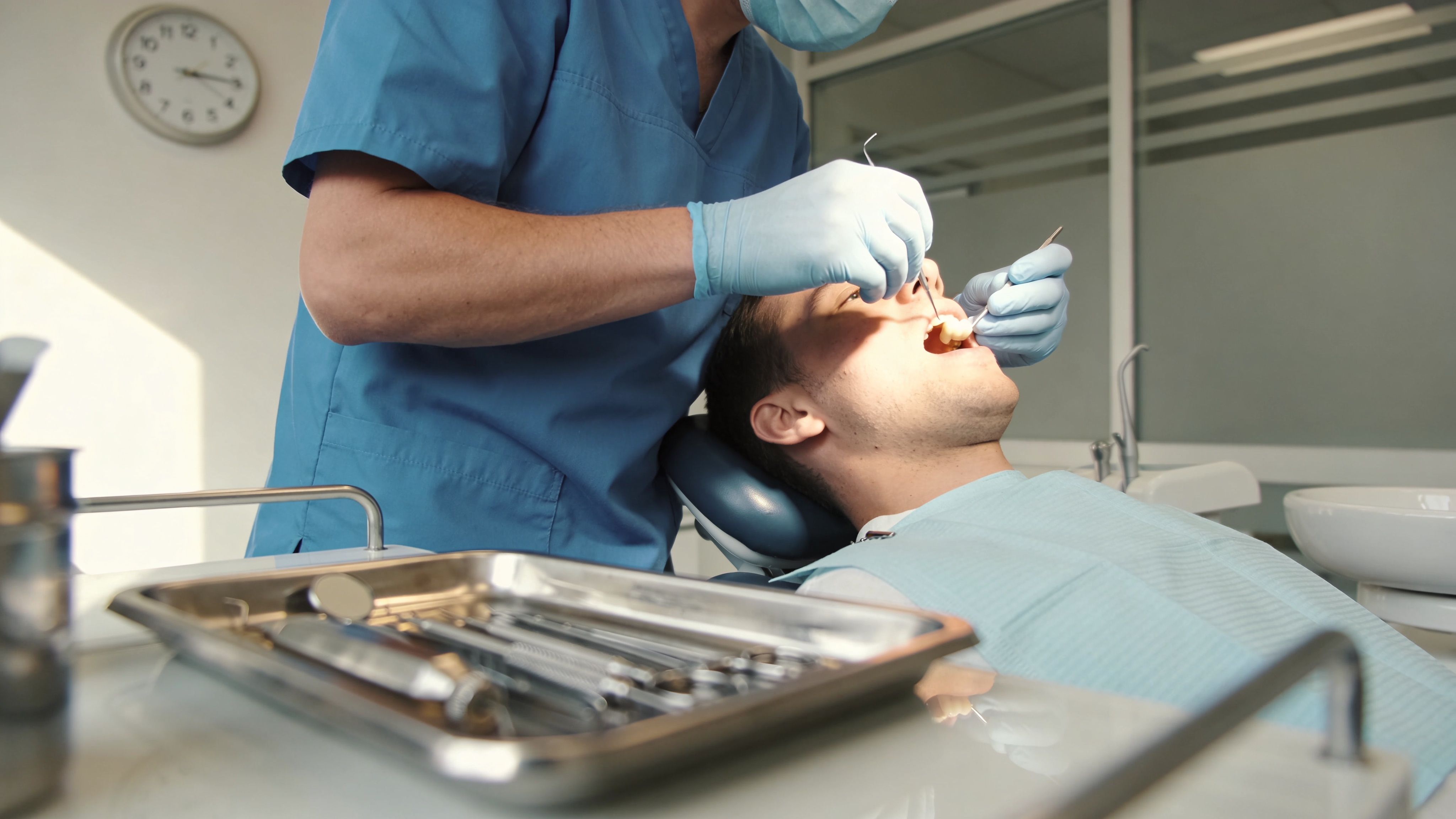
The first step is straightforward. We look at the gum tissue, review symptoms, and measure the spaces between the teeth and gums with periodontal probing. Those measurements help identify pockets, which are areas where bacteria can collect below the gumline.
Patients sometimes worry that this means a long, uncomfortable appointment. In reality, the process is methodical and usually much simpler than expected. The point isn't to make the visit technical. It's to stop guessing.
Why imaging matters so much
Bone loss is one of the clearest markers of periodontitis severity. According to the NCBI overview of periodontitis staging and diagnosis, Stage I periodontitis is limited to the coronal third of the root with 15% or less bone loss, Stage II is more than 15% and under 30%, and Stage III reaches the mid-third of the root with 30% to 60% bone loss. That same clinical summary notes that pocket depth, attachment loss, and radiographic imaging are central to determining severity because symptoms alone can be misleading.
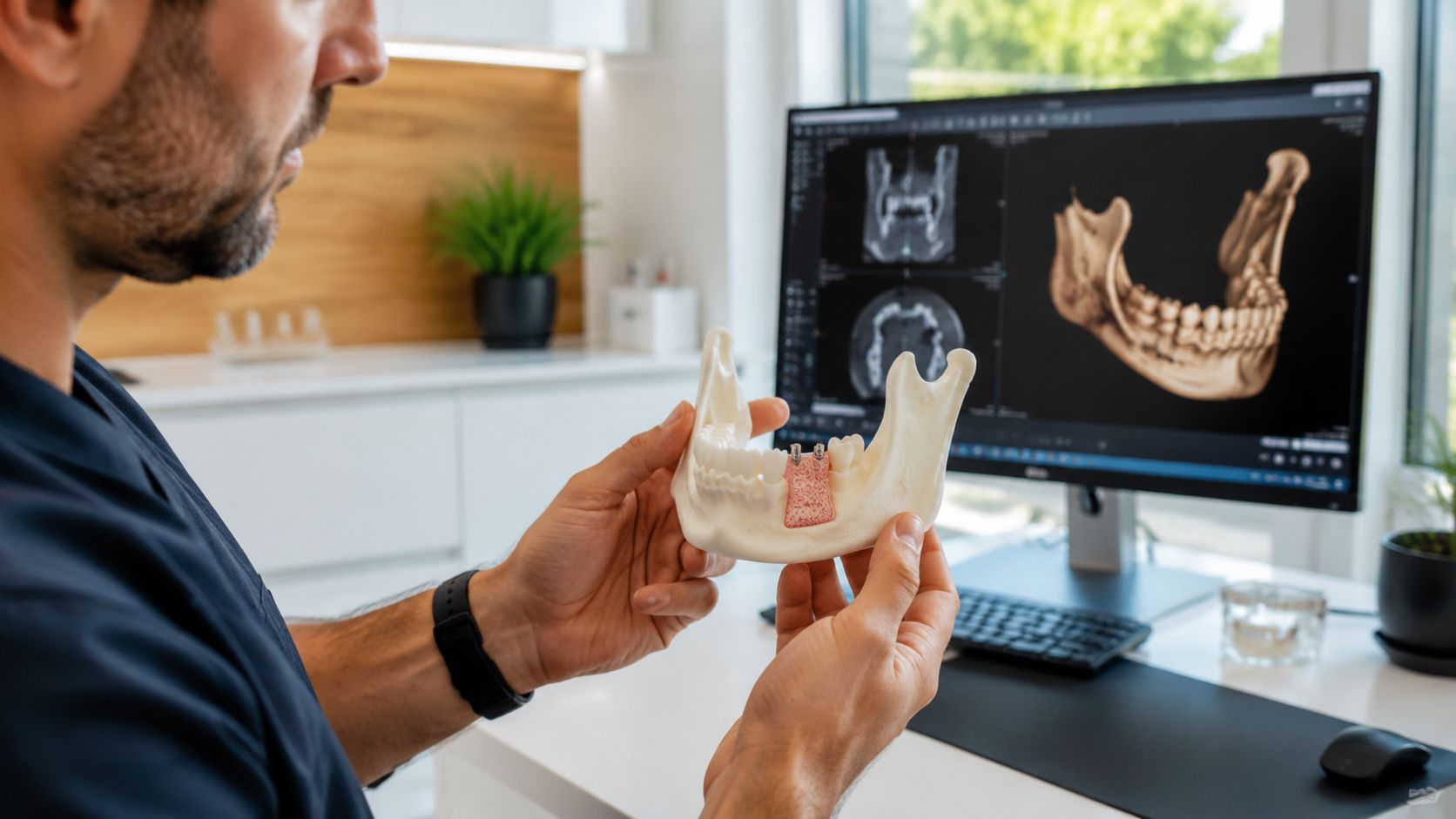
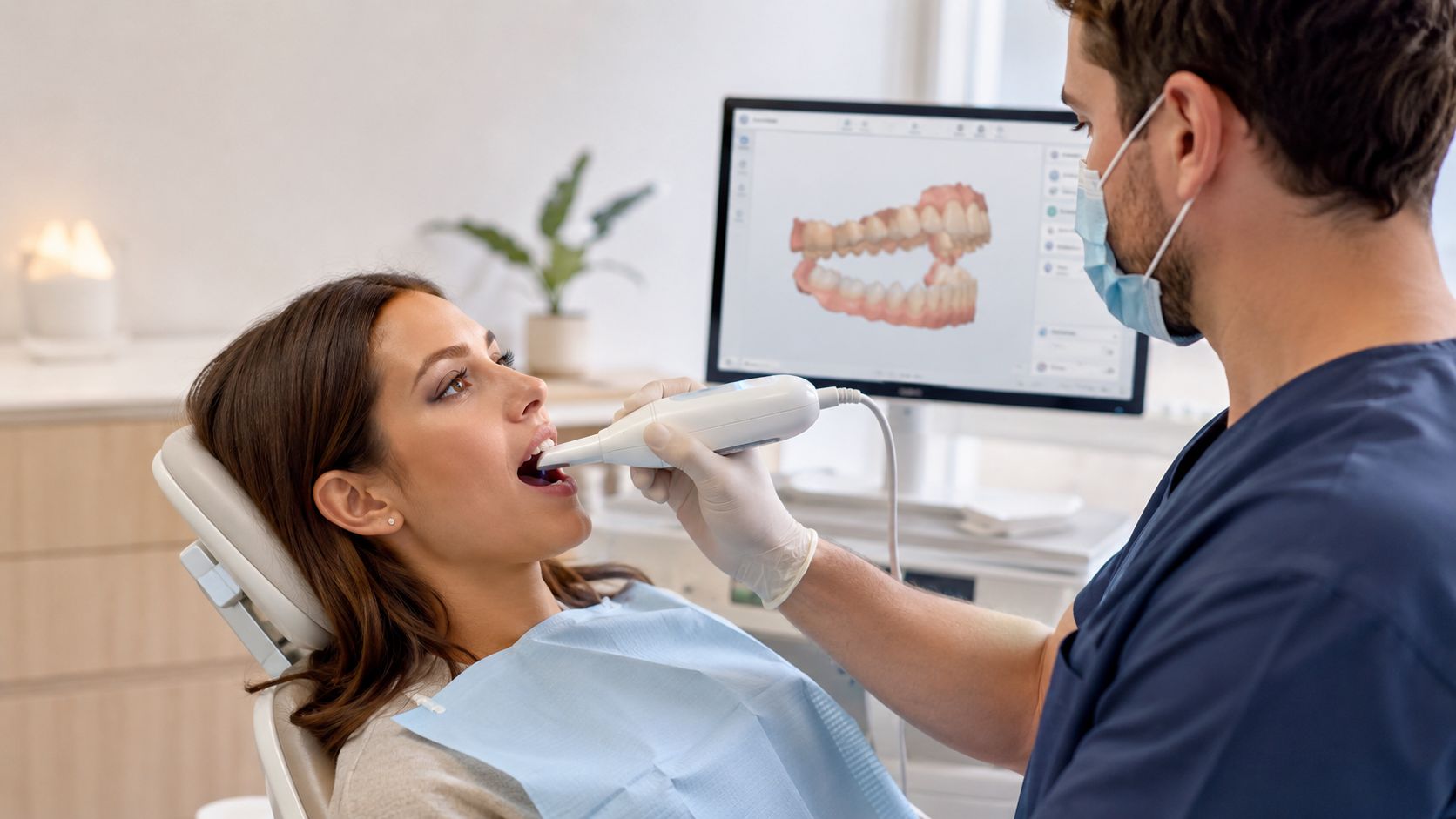
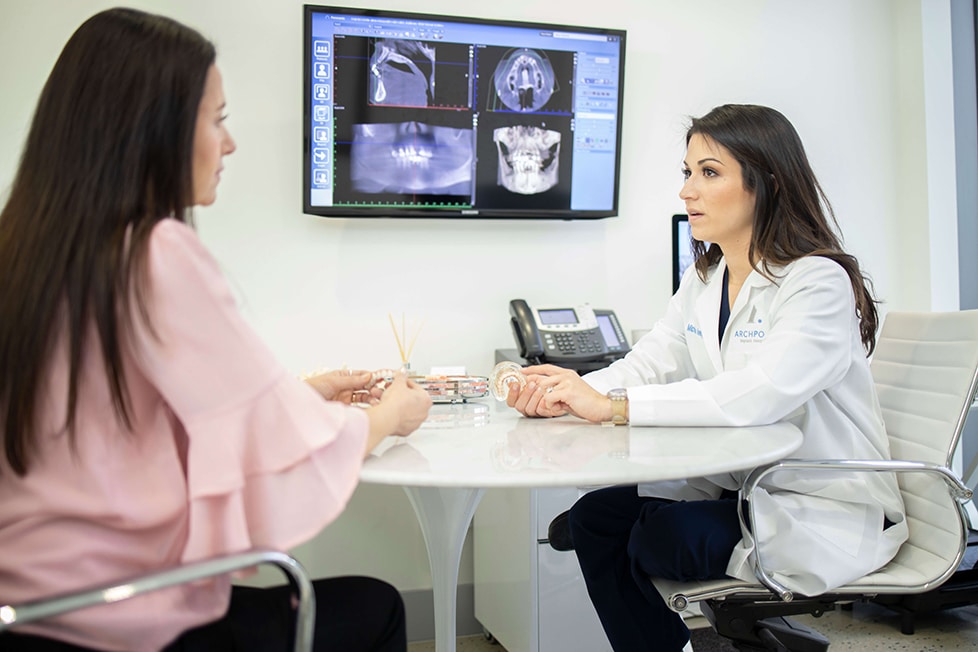
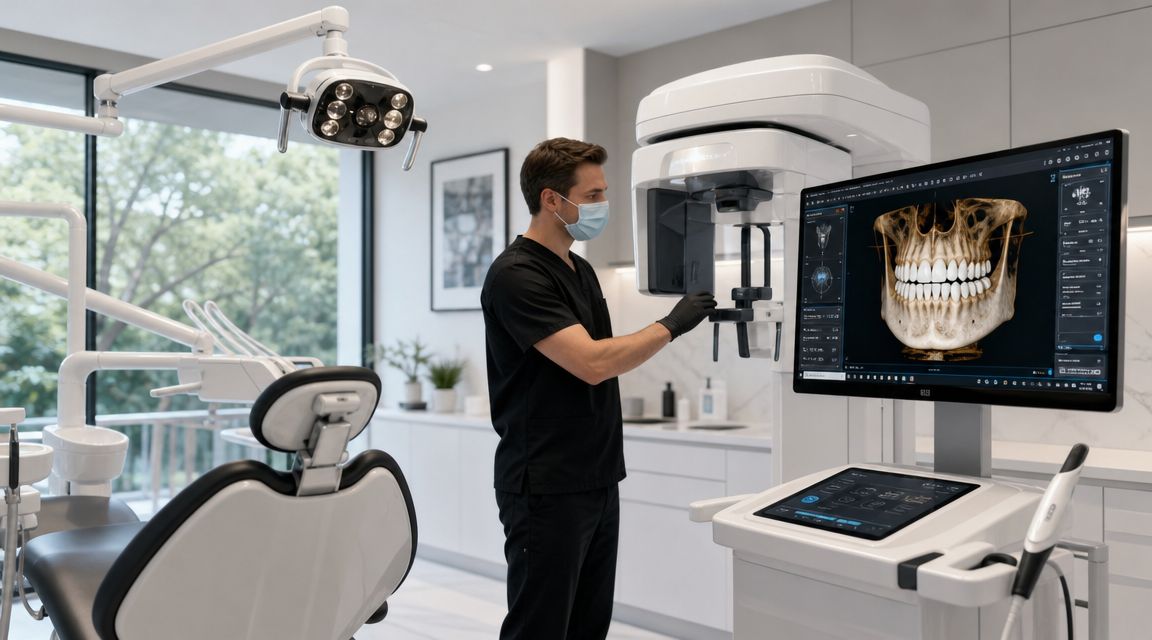
Digital dental X-rays and 3D imaging prove useful. They help show what the naked eye can't. If bone contours are changing, if a specific tooth has lost support, or if treatment planning needs more precision, advanced imaging gives a clearer map.
A patient can have little pain and still have meaningful bone loss. That's why diagnosis should be based on findings, not comfort level.
In Austin and Georgetown, some practices use a combination of probing and standard radiographs. 3D Dental also uses 3D CT imaging and digital scanners as part of its broader diagnostic technology, which can be helpful when bone levels, anatomy, or surgical planning need a closer look.
Treatment Options for Every Stage of Gum Disease
Gum disease isn't an all-or-nothing problem. Treatment should match the stage. The wrong approach can waste time. A routine cleaning won't solve deeper periodontal pockets, and aggressive treatment isn't necessary for every mild case. What works is choosing the least invasive option that can control the disease.
When gingivitis is still reversible
If the condition is limited to gingivitis, treatment usually centers on professional cleaning, improved brushing and flossing technique, and regular follow-up. This is the stage where small habits still have a big effect.
Patients often want a shortcut here, like mouthwash alone or brushing harder. Neither fixes the core issue. The goal is thorough plaque removal at home plus professional removal of tartar that can't be brushed away.
When deeper cleaning is the right next step
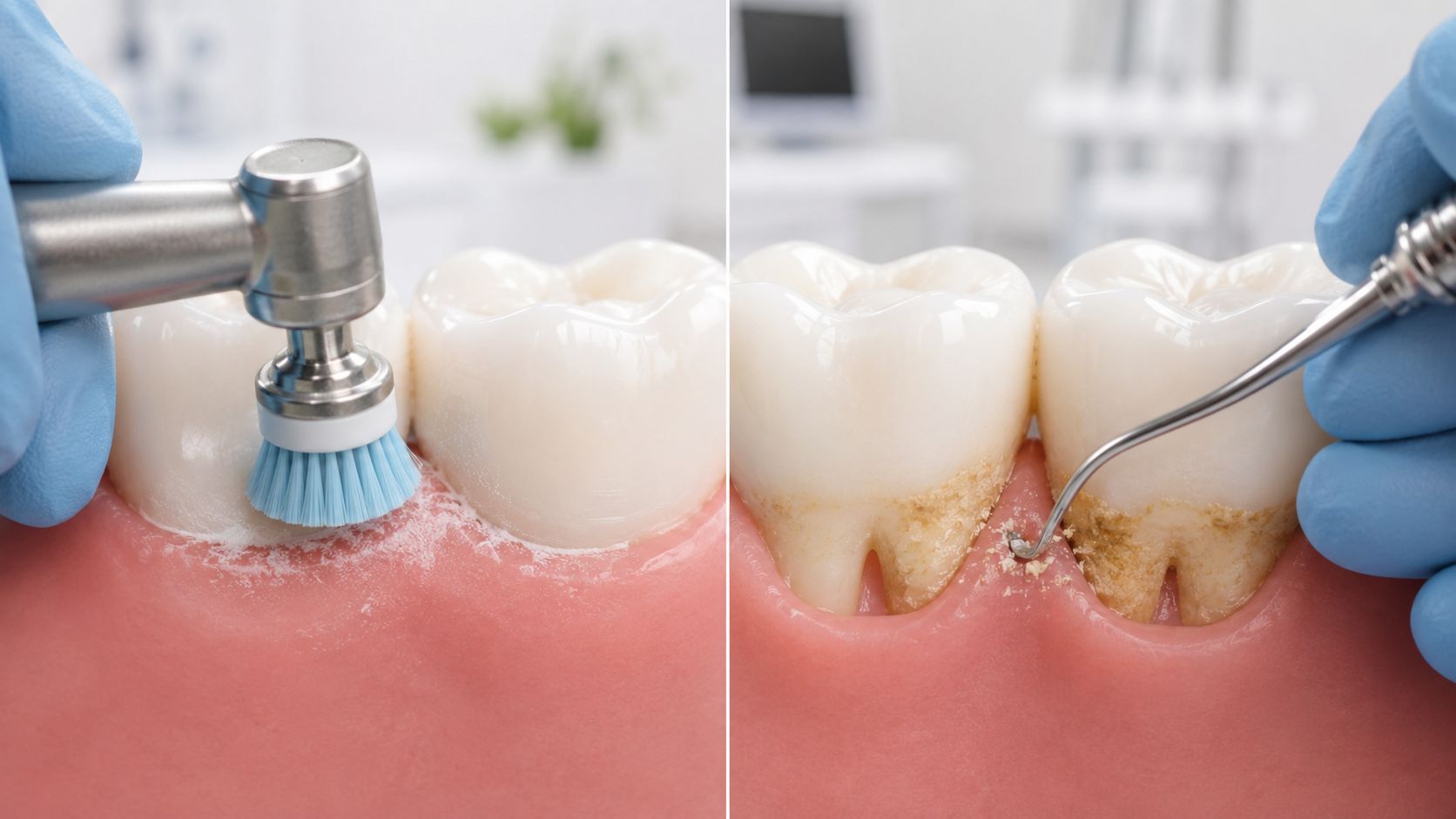
Once periodontitis is present, non-surgical periodontal treatment often becomes the first line of care. That commonly means scaling and root planing, also called a deep cleaning. The purpose is to remove buildup and bacterial deposits below the gumline and smooth root surfaces so the tissue has a better chance to heal.
This works well for many early to moderate cases, but only if the follow-through is good. Home care still matters. Maintenance visits matter. If a patient treats deep cleaning like a one-time reset and then slips back into inconsistent care, the disease can return.
For a closer look at how this kind of care works, 3D Dental's overview of periodontal disease treatment options explains the difference between basic cleaning and therapy aimed at deeper infection.
When surgery or reconstruction becomes necessary
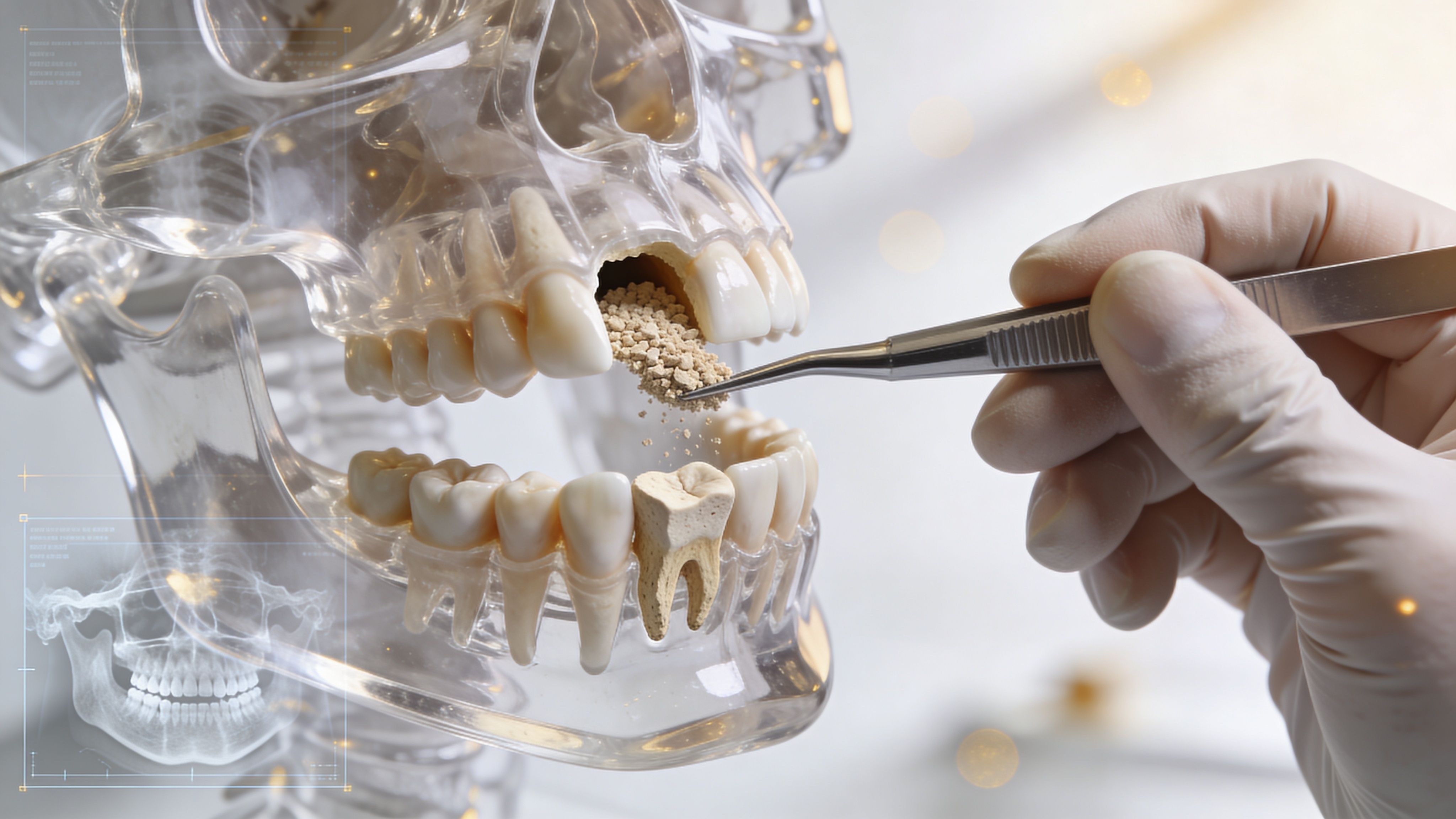
Advanced periodontitis may require surgical care, especially when pockets remain too deep to manage non-surgically or when the gums and bone need support. Depending on the case, treatment can include pocket reduction surgery, soft tissue grafting, bone grafting, or guided tissue procedures.
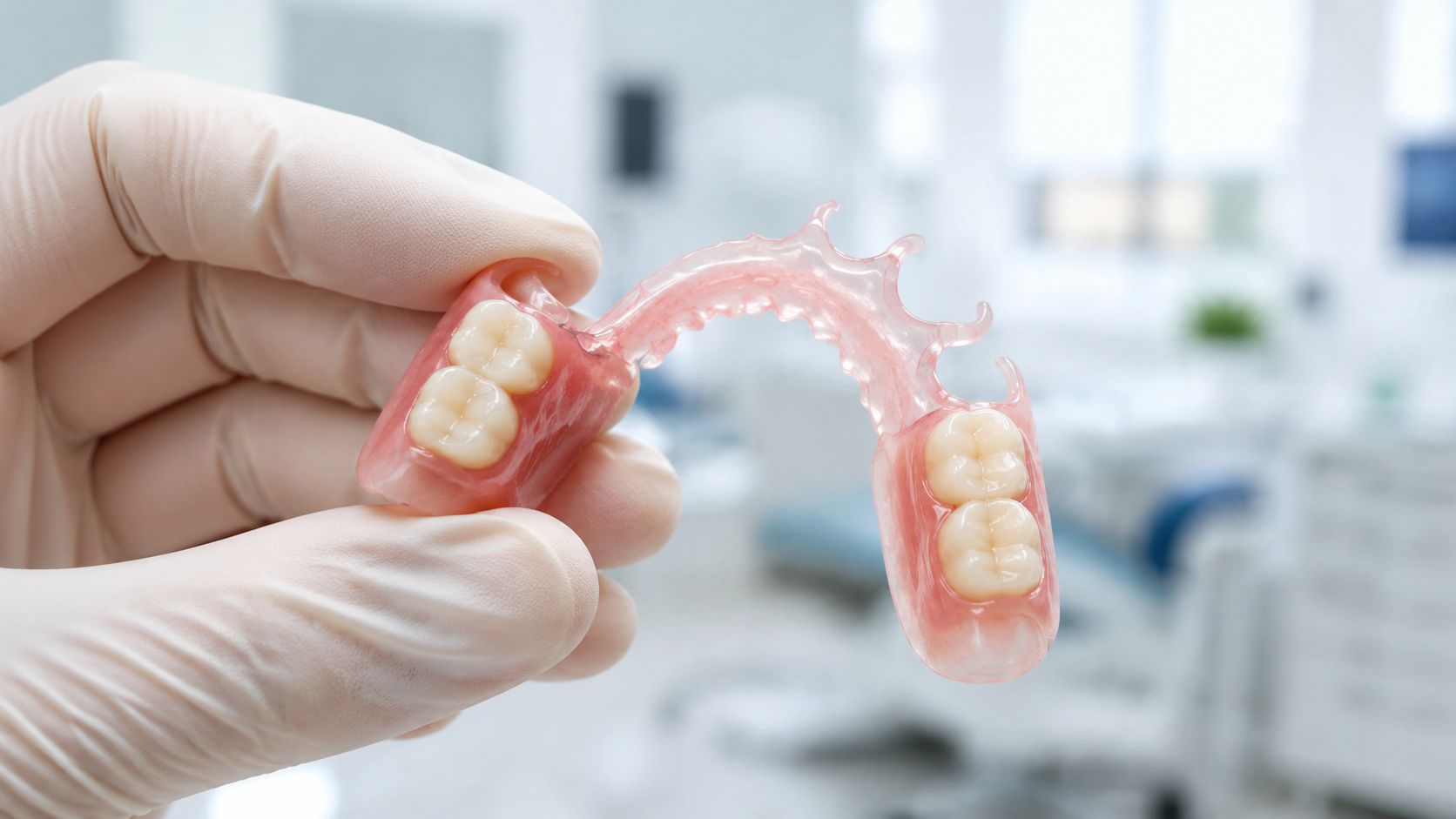
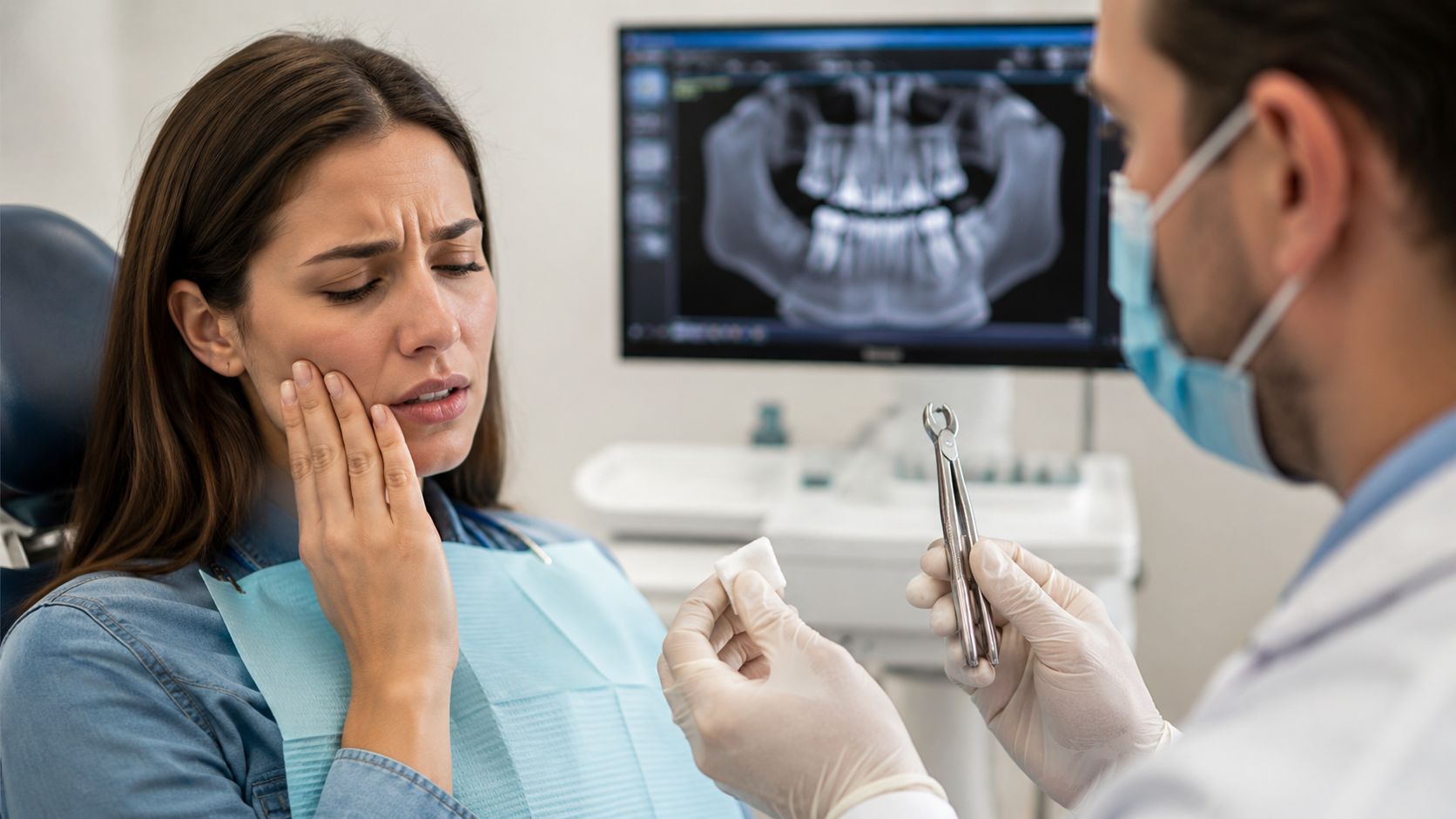
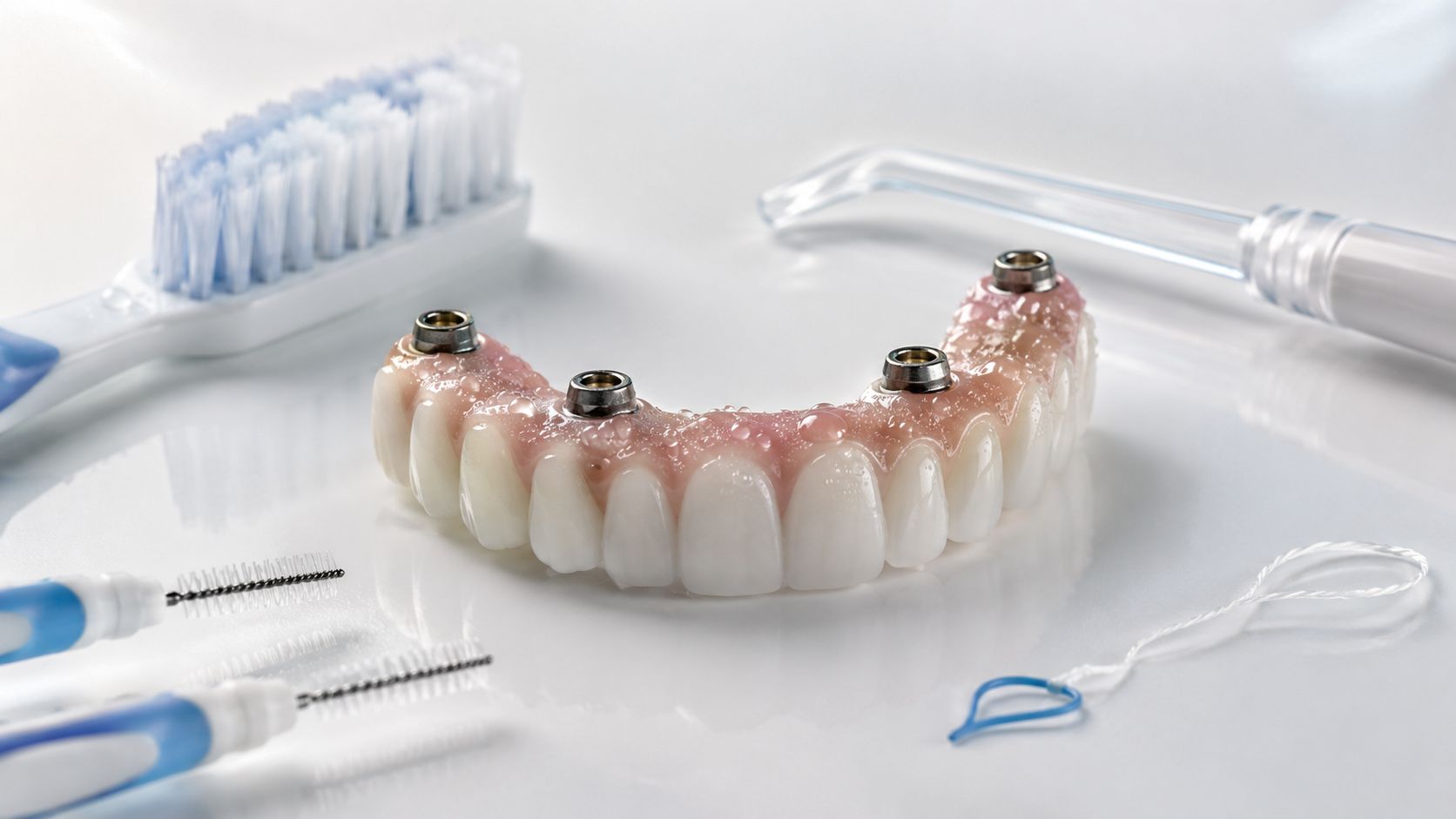
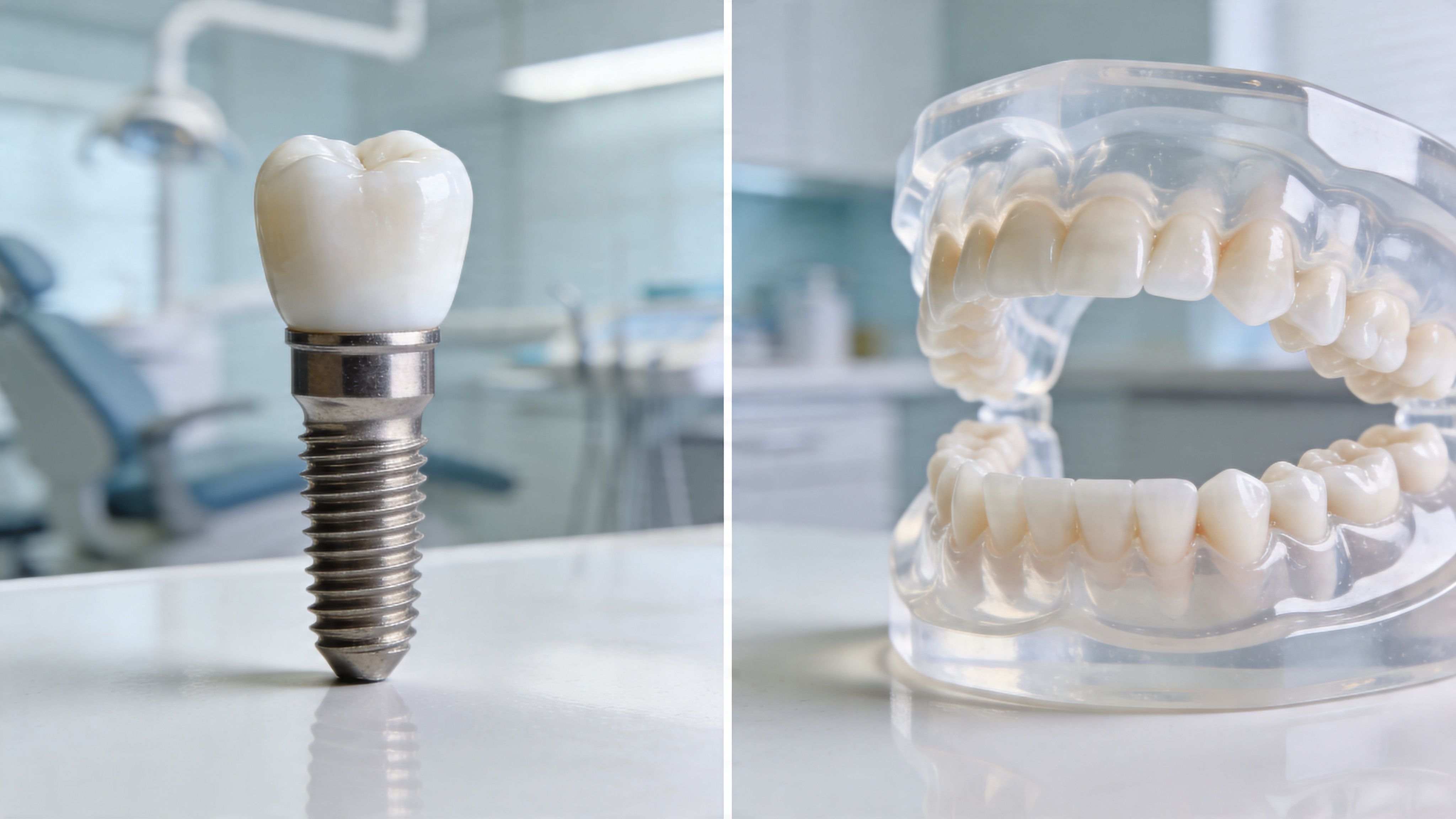
Not every tooth can be saved. That's an important trade-off to discuss. In some situations, removing a severely compromised tooth is the most predictable path to ending infection and rebuilding function. If that happens, restorative options such as dental implants near me, bridges, or other restorative dentistry solutions can help replace what was lost and protect chewing function and appearance.
The best treatment plan isn't the one that sounds simplest. It's the one that gives the tooth, the gums, and the bone the most realistic chance of staying healthy.
Preventing Gum Disease and Protecting Your Oral Health
Prevention works best when it's practical. Patients don't need a complicated routine. They need a consistent one that removes plaque thoroughly and gives the dental team chances to catch changes early.
The habits that actually help
Daily care at home does most of the maintenance. Professional care handles what home tools can't fully remove and what patients can't easily see.
A solid prevention routine usually includes:
- Brushing carefully along the gumline The goal is disruption of plaque, not scrubbing as hard as possible.
- Cleaning between teeth every day Floss or other interdental tools matter because gum disease often starts where a brush doesn't reach well.
- Paying attention to bleeding Recurrent bleeding is feedback, not something to ignore.
- Keeping regular cleaning and exam visits Professional monitoring catches problems earlier than symptoms usually do.
What doesn't work well
People often try to self-manage gum problems with whitening products, stronger mouthwash, or by avoiding the spots that bleed. Those choices can delay care without addressing the cause. Bad breath mints don't treat infection. Whitening strips don't improve gum attachment. Skipping flossing in a tender area usually makes that area worse.
If recession is part of the concern, 3D Dental's article on how to prevent gum recession gives patients a useful overview of how brushing habits and gum health connect.
For families in Round Rock, Cedar Park, Wells Branch, and nearby communities, the pattern is the same. Routine cleaning and exams, dental X-rays when needed, and early new patient exams are usually far easier than treating advanced disease after it has had time to progress.
Schedule Your Gum Health Consultation in North Austin or Georgetown
If your gums bleed, feel sore, look swollen, or your teeth don't feel as stable as they used to, it's worth getting answers now. Gum disease progression can be slow, but it doesn't reverse itself once deeper damage begins. Early diagnosis gives you more conservative options and a clearer path forward.
What to expect at your visit
A gum health consultation is focused and practical. You'll talk through symptoms, have the gums evaluated, and get recommendations based on what the exam shows. If imaging is needed, that helps clarify whether the issue is surface inflammation, deeper periodontal involvement, or another condition that needs attention.
Patients looking for a dentist in Austin, TX, a dentist near me, or an emergency dentist often want the same thing: a clear answer without unnecessary confusion. That's especially true if there's swelling, tenderness, or a tooth that suddenly feels loose.
Care close to home in North Austin and Georgetown
Convenient local care matters when you're trying to stay on top of dental health. Patients from North Austin and Georgetown, as well as Wells Branch, Round Rock, Cedar Park, and Liberty Hill, often want one place for preventive care, gum treatment, restorative dentistry, and follow-up if a more serious issue is found.
That continuity helps. If a case starts with bleeding gums and later needs deeper periodontal therapy, tooth extraction, or replacement planning, it makes life easier when the next steps are already within reach. The same is true for patients who need routine cleanings, cosmetic dentist services, or implant planning after tooth loss.
If you're dealing with symptoms now, don't wait for them to become more obvious. If you're overdue for an exam, this is a good time to reset. A timely appointment can turn uncertainty into a plan.
If you're ready to get clarity on bleeding gums, recession, or possible periodontitis, schedule a consultation with 3D Dental. With offices in North Austin and Georgetown, the team provides exams, digital imaging, periodontal care, restorative treatment, and emergency dental services to help patients protect their oral health and move forward with confidence.
Ready to get started?
Schedule a free, no obligation consultation with our team and see what's possible for your smile!
Georgetown
- Mon-Thurs8:30am-5pm
- Fri8am-3:30pm
- Sat-SunClosed
Austin
- Mon-Tues8am-5pm
- Wed-Thurs9am-6pmFri8am-2pm
- Sat-SunClosed