
New Patient Dental Exam: Your Guide to 3D Dental Austin
Related Posts






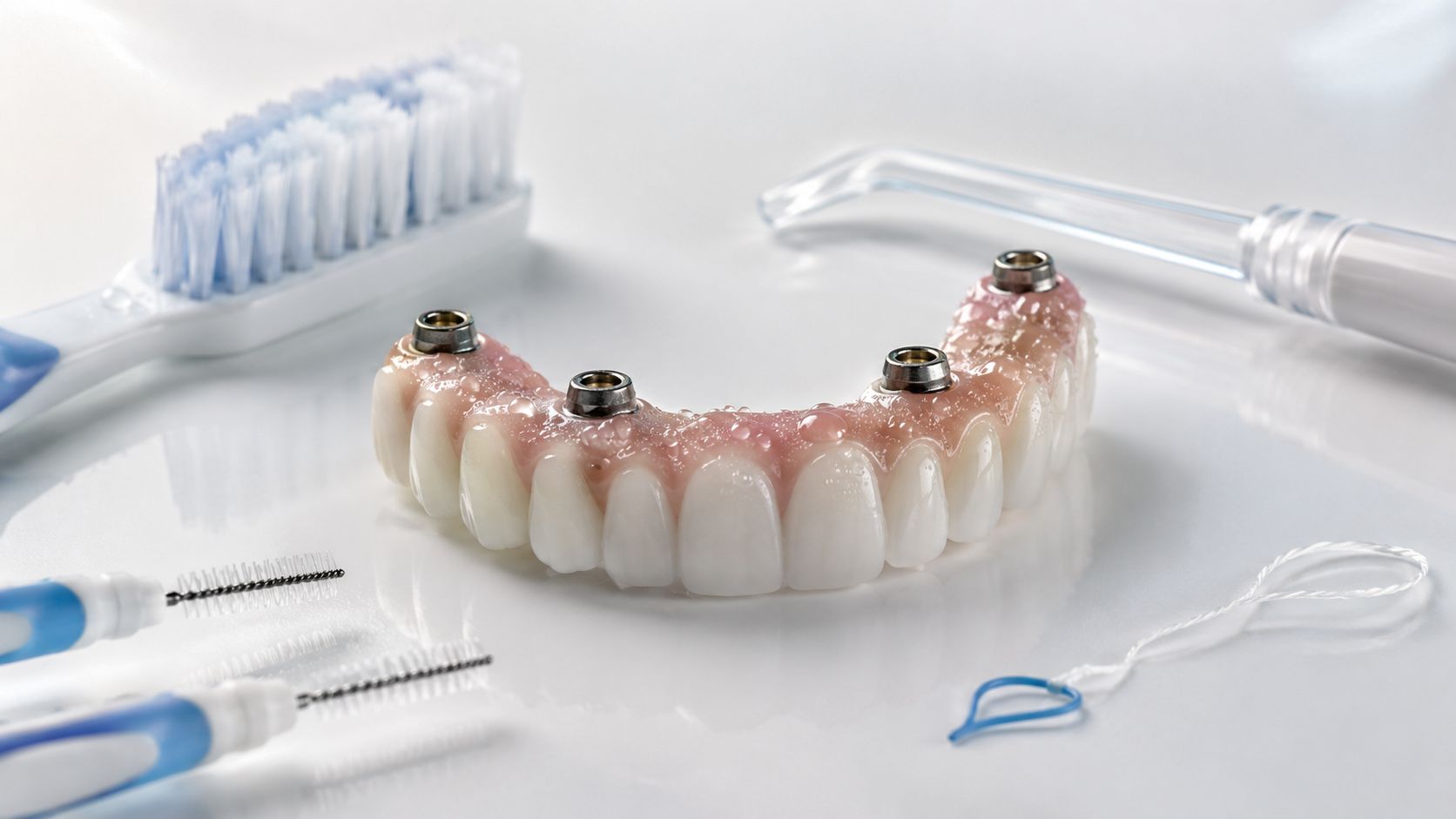
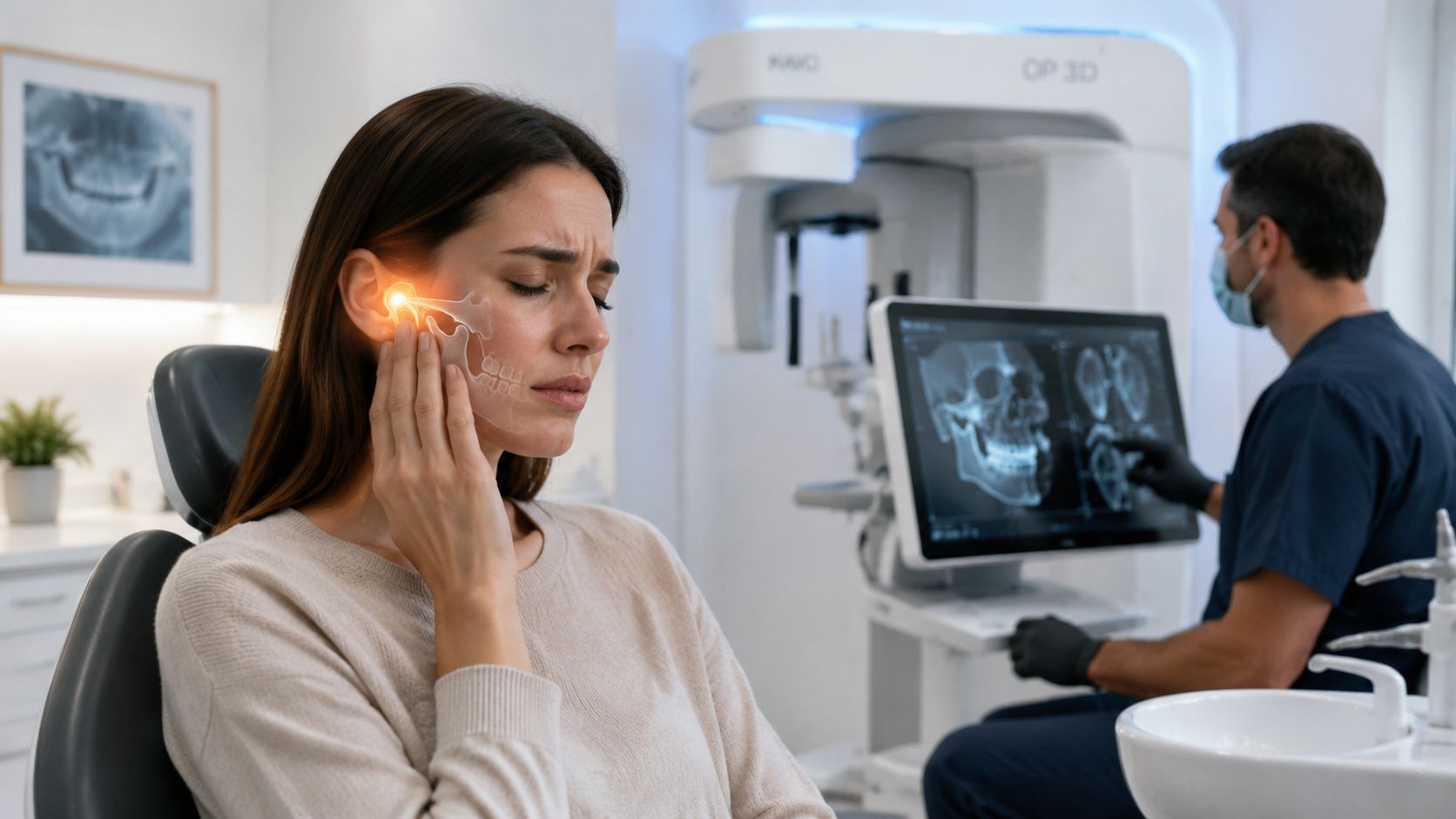
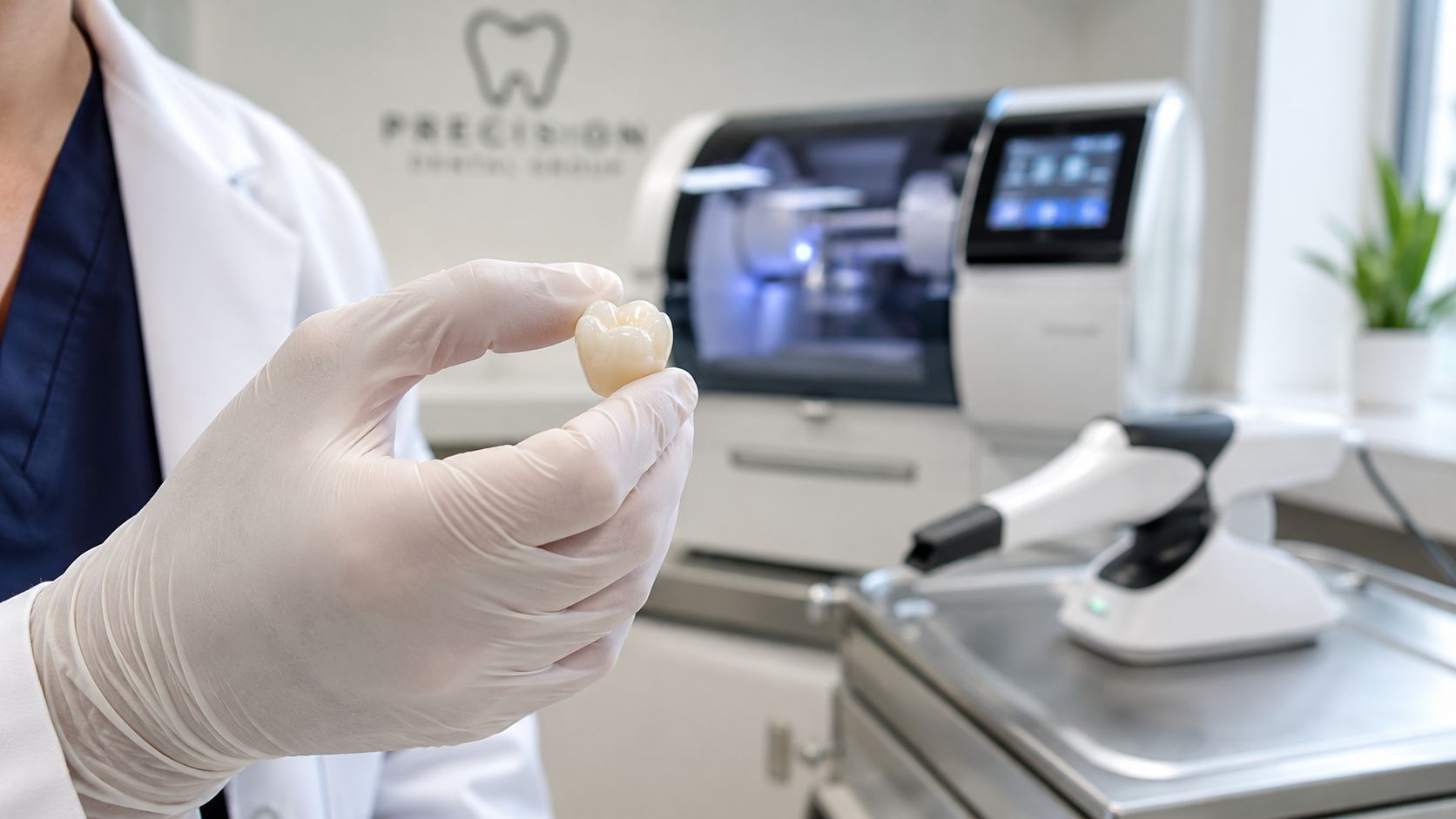

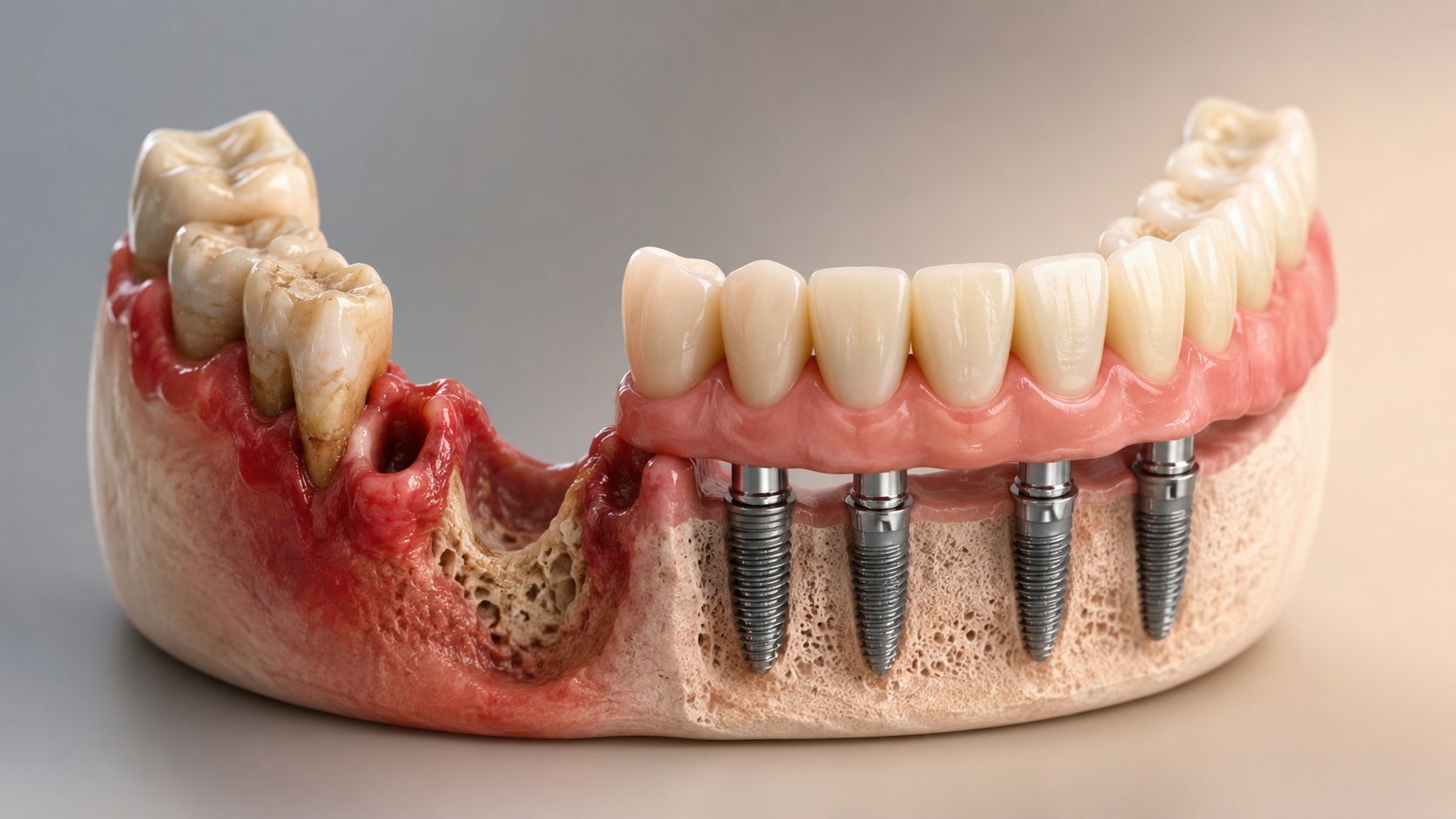





















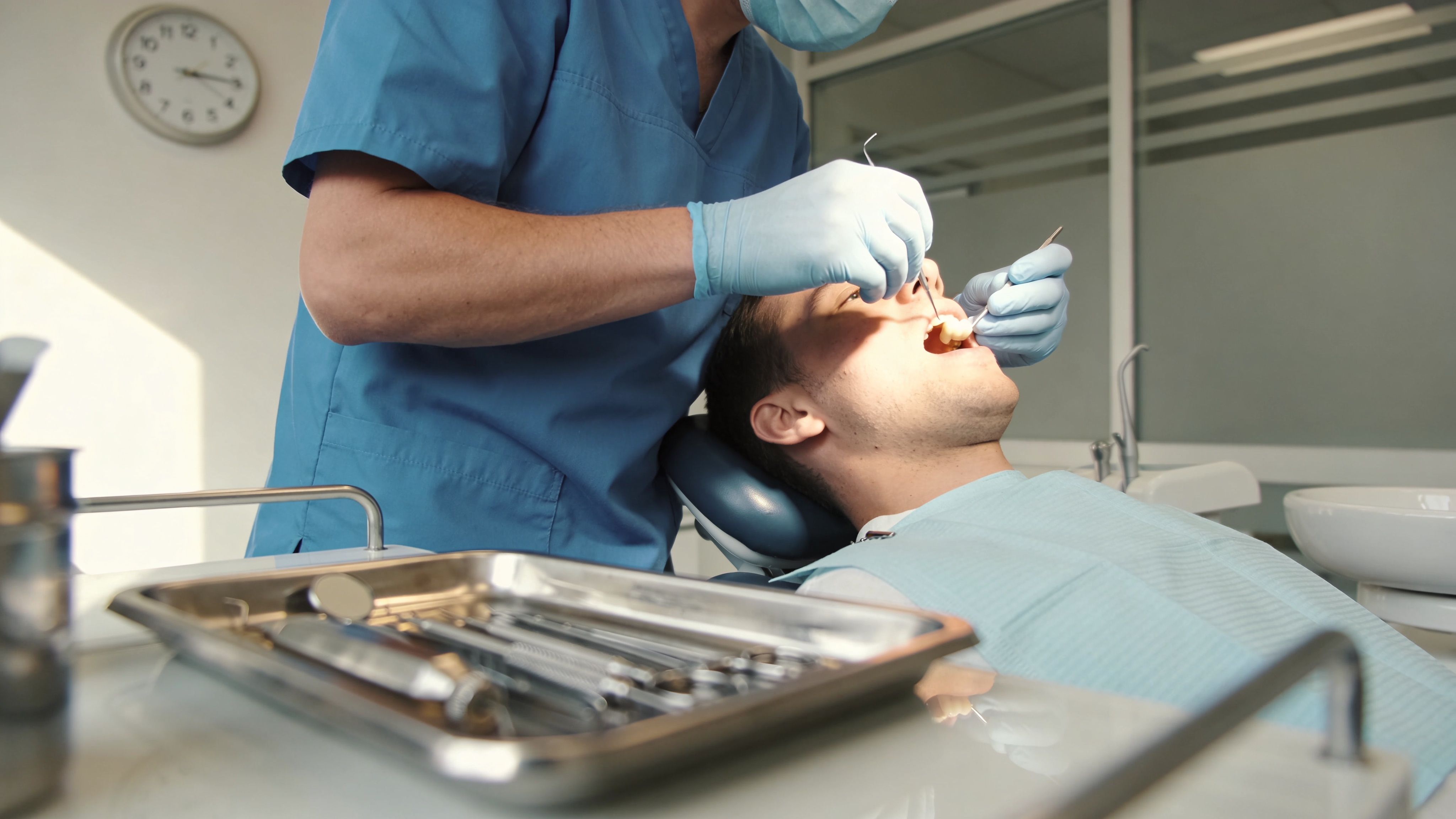

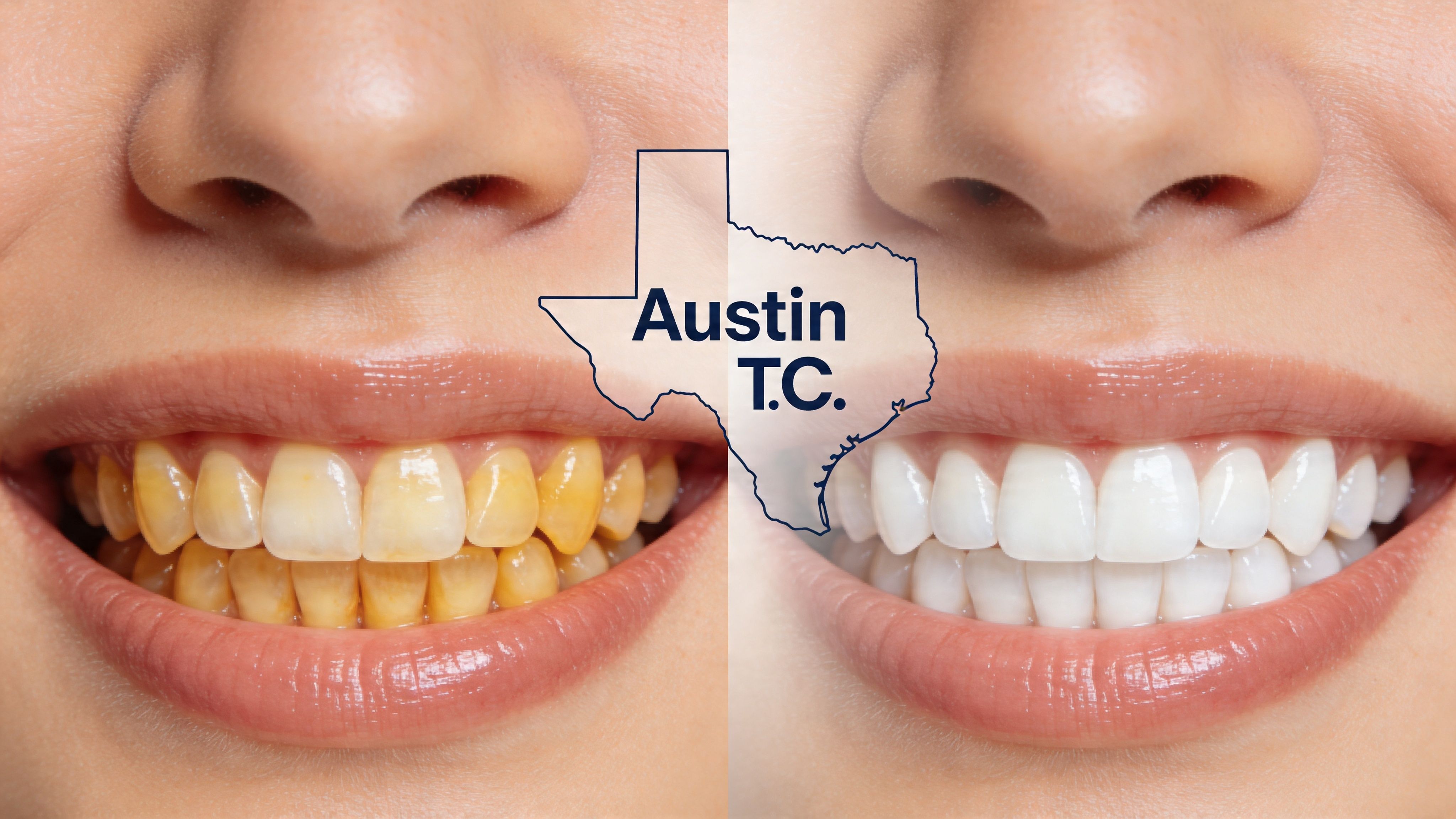
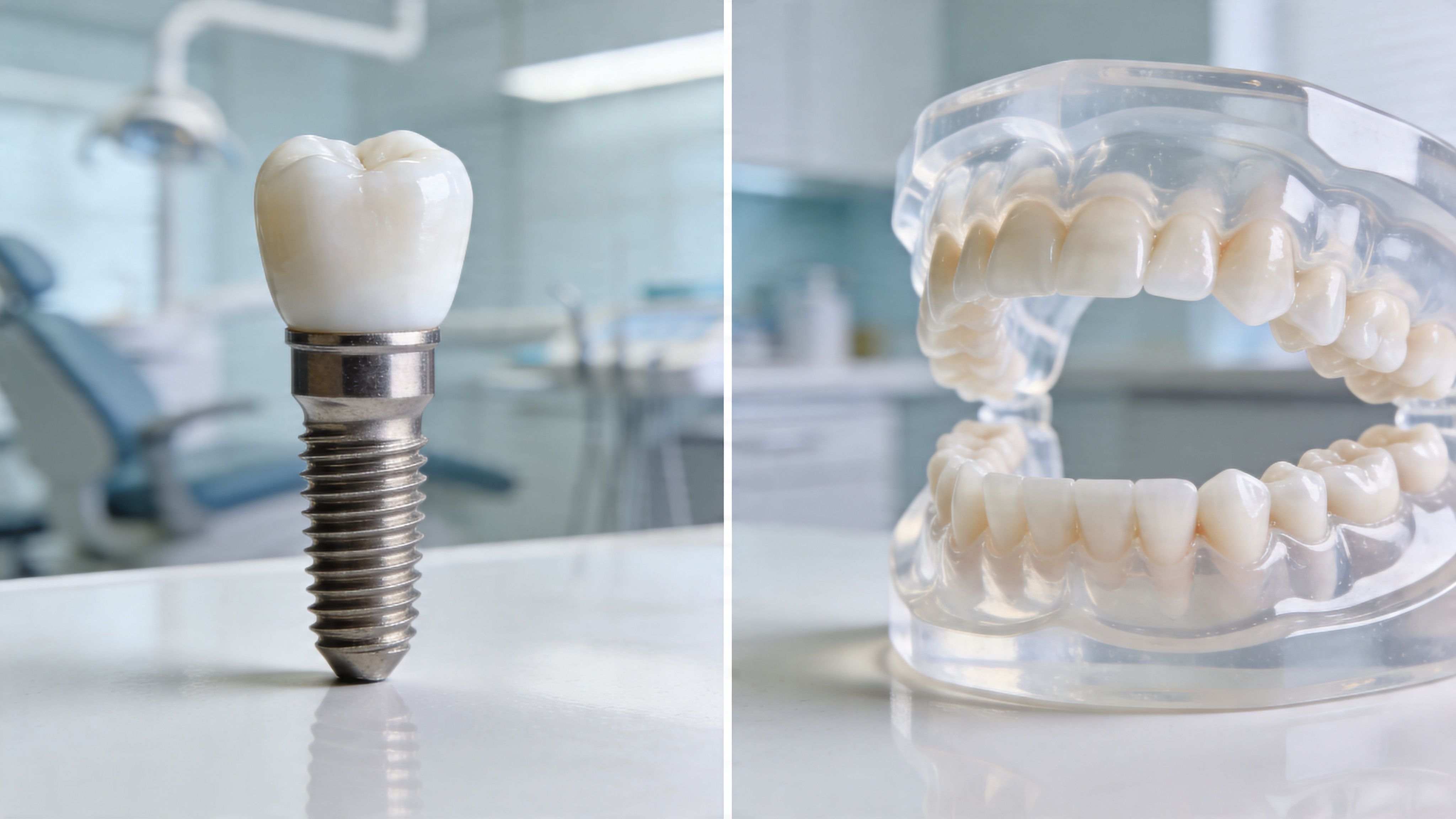
If you're reading this, you may be in one of two very normal situations. You just moved to North Austin or Georgetown and need a dentist you can trust, or it's been a while since your last visit and you're not sure what to expect anymore. Both are common, and neither means you've done anything wrong.
A new patient dental exam is meant to give you clarity. It's the visit where a dentist gets a full picture of your teeth, gums, bite, jaw, and overall oral health before recommending treatment. That first visit matters whether you're looking for a routine checkup, help with tooth pain, cosmetic dentistry, dental implants near me, or an emergency dentist in Austin, TX or Georgetown, TX.
Your First Visit to a Dentist in Austin & Georgetown
A lot of adults delay care for reasons that make perfect sense. Work gets busy. Insurance changes. A move throws off your routine. Some people had a rough dental experience years ago and don't want to repeat it.
That's why the first appointment shouldn't feel like a test. It should feel like getting answers.
The gap in care is larger than many people realize. The CDC reports that 65.5% of U.S. adults age 18 and older had a dental exam or cleaning within the past year as of 2023, which means nearly one-third had not. The same CDC page also notes that more than one-third of adults had gone at least two years without a dental exam in a 2020 ADA Health Policy Institute survey, a reminder that important problems can stay quiet for a long time. You can review that data on the CDC oral and dental health FastStats page.
Why the first exam matters more than a quick checkup
If you haven't been in recently, a new patient visit is different from a standard recall appointment. It's more complete. The goal is to create a starting point, not just glance at a few teeth and send you on your way.
That matters because some issues don't hurt early on. Gum disease can develop gradually. Cracks can hide in the wrong spot. Changes in soft tissue may not be visible to you in the mirror.
A first visit often gives patients relief because uncertainty is usually the hardest part.
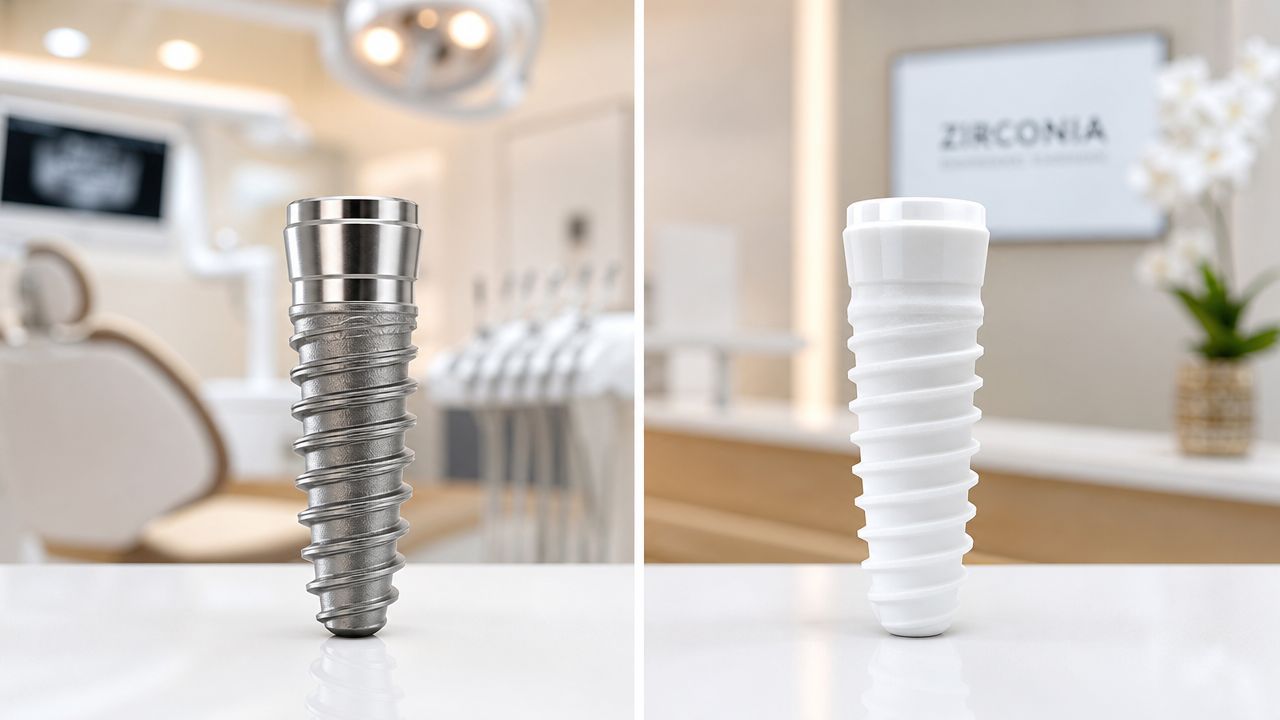
For patients searching dentist near me, dentist in Austin, TX, or dentist in Georgetown, TX, that first exam is often the moment things become more manageable. You find out what needs attention now, what can be monitored, and what your options look like if you're also thinking about restorative dentistry, cosmetic dentist near me searches, or long-term solutions like implants.
A common example
Someone moves to Round Rock or Cedar Park, notices bleeding when brushing, and puts off care because they assume the visit will be uncomfortable or embarrassing. Instead, a proper exam usually starts with a conversation, imaging, and a calm review of findings. No guessing. No pressure to pretend everything is fine.
That's the value of a modern first visit. It turns worry into a plan.
Preparing for Your New Patient Exam
A little preparation makes the appointment smoother and helps you feel more in control before you walk in. You'll likely feel less anxious when you know what to bring and what you want to ask.
What to bring
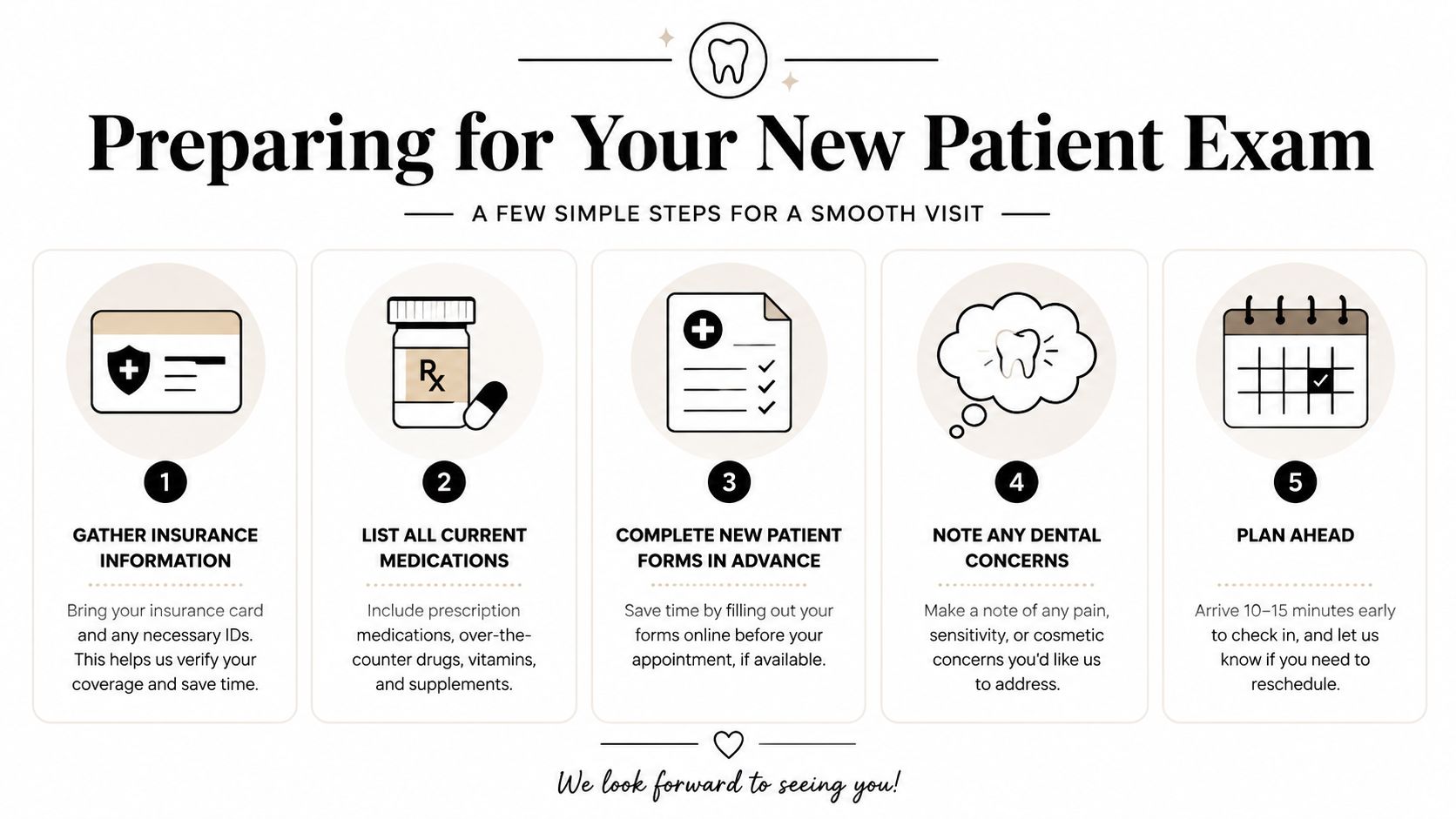
Bring the basics first. That includes your photo ID, dental insurance card if you have one, and a list of medications. If you've had recent dental X-rays at another office, it's helpful to request those records ahead of time when possible.
Then think about the details that are easy to forget once you're sitting in the chair.
- Current concerns. Write down any tooth pain, sensitivity, bleeding gums, jaw clicking, broken fillings, bad breath, or cosmetic concerns.
- Dental history. Note past root canals, crowns, implants, orthodontic treatment, extractions, or gum treatment.
- Medical updates. Include changes in medications, allergies, surgeries, or health conditions.
- Questions about cost. If budget is on your mind, bring those questions with you instead of waiting until the end.
- Anxiety triggers. Let the team know if you get nervous, dislike certain sounds, or need short breaks.
Your Pre-Visit Checklist
| Item | Why It's Important |
|---|---|
| ID and insurance card | Helps the front desk verify your information and benefits accurately |
| Medication list | Gives the dentist context for treatment planning and safety |
| Dental history | Helps connect old work, past symptoms, and current findings |
| Notes about pain or concerns | Makes sure the visit focuses on what matters most to you |
| Questions about fees or financing | Helps you make decisions with fewer surprises |
Questions worth thinking about before you arrive
Some patients come in because something hurts. Others want to ask about teeth whitening, a chipped tooth, clear aligners, or whether they might be a candidate for dental implants. All of that is useful information.
Practical rule: If you've been thinking about it at home, bring it up at the appointment.
You don't need the perfect dental vocabulary. “This side feels different when I chew” is useful. “I don't like how this front tooth looks in photos” is useful too. Good exam visits start with honest details, not polished explanations.
A Step-by-Step Guide to Your Dental Exam
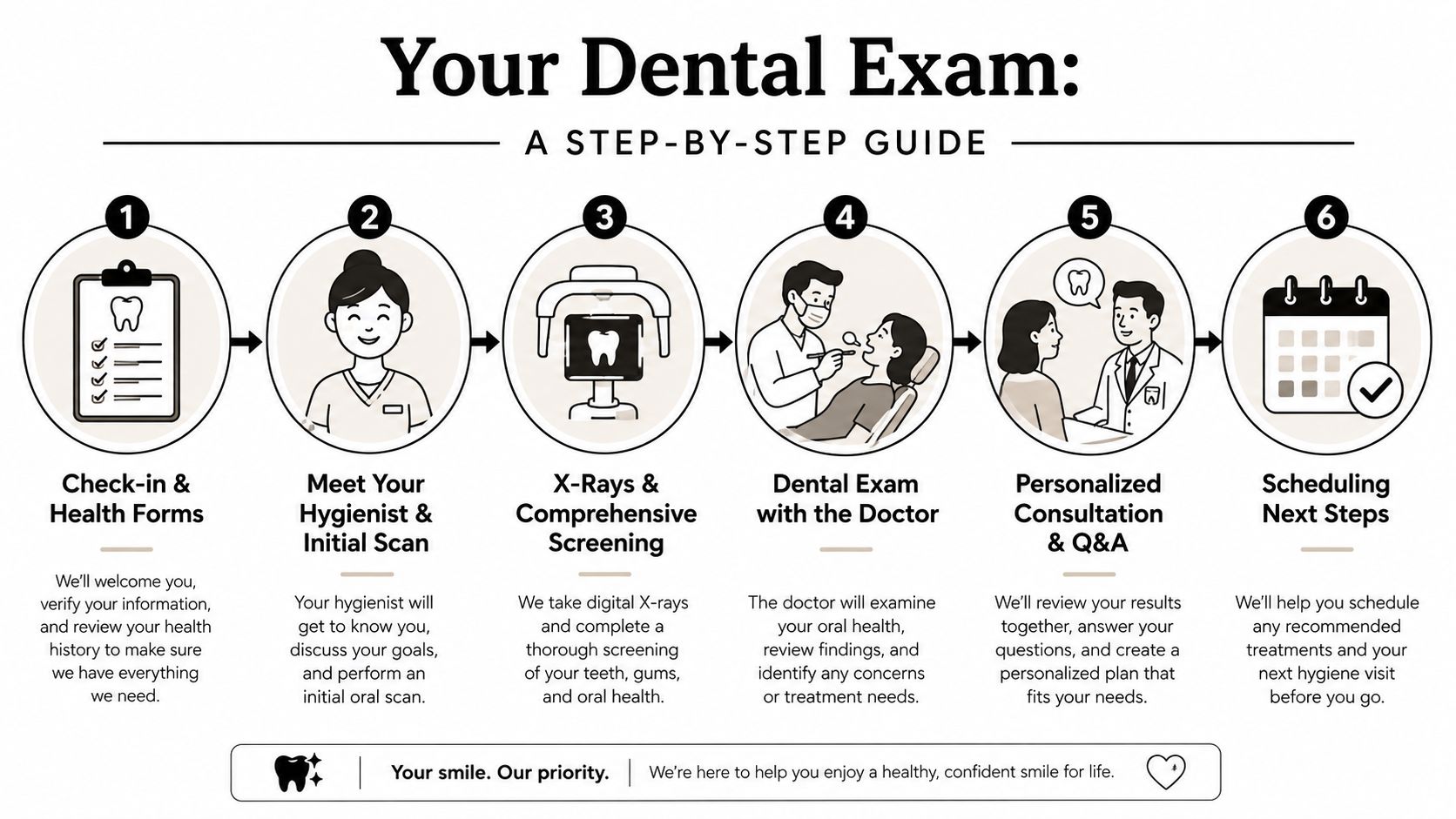
The first thing to know is that this visit is diagnostic and non-invasive. A thorough new-patient dental exam typically takes 60 to 90 minutes and includes a full-mouth assessment of teeth, gums, bite or occlusion, jaw function, and an oral cancer screening to establish a baseline for future treatment, as explained in this overview of what to expect at a new patient dental exam.
Check-in and health review
When you arrive, the team reviews your forms, insurance information, medical history, and any concerns you listed. This part matters more than most patients expect because your symptoms, medications, and past dental work shape what the dentist looks for.
If you're nervous, say so early. That simple comment changes how a good team guides the visit.
Images and records
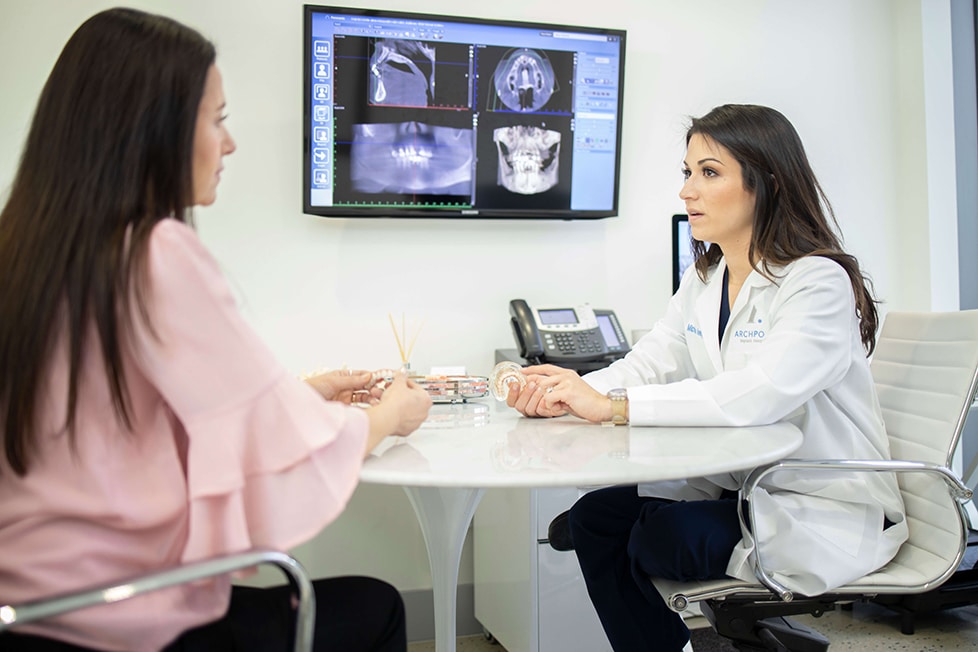
Most new patient exams include diagnostic images. Depending on your history and what the dentist needs to evaluate, that may involve digital X-rays and other records that help show what isn't visible on the surface.
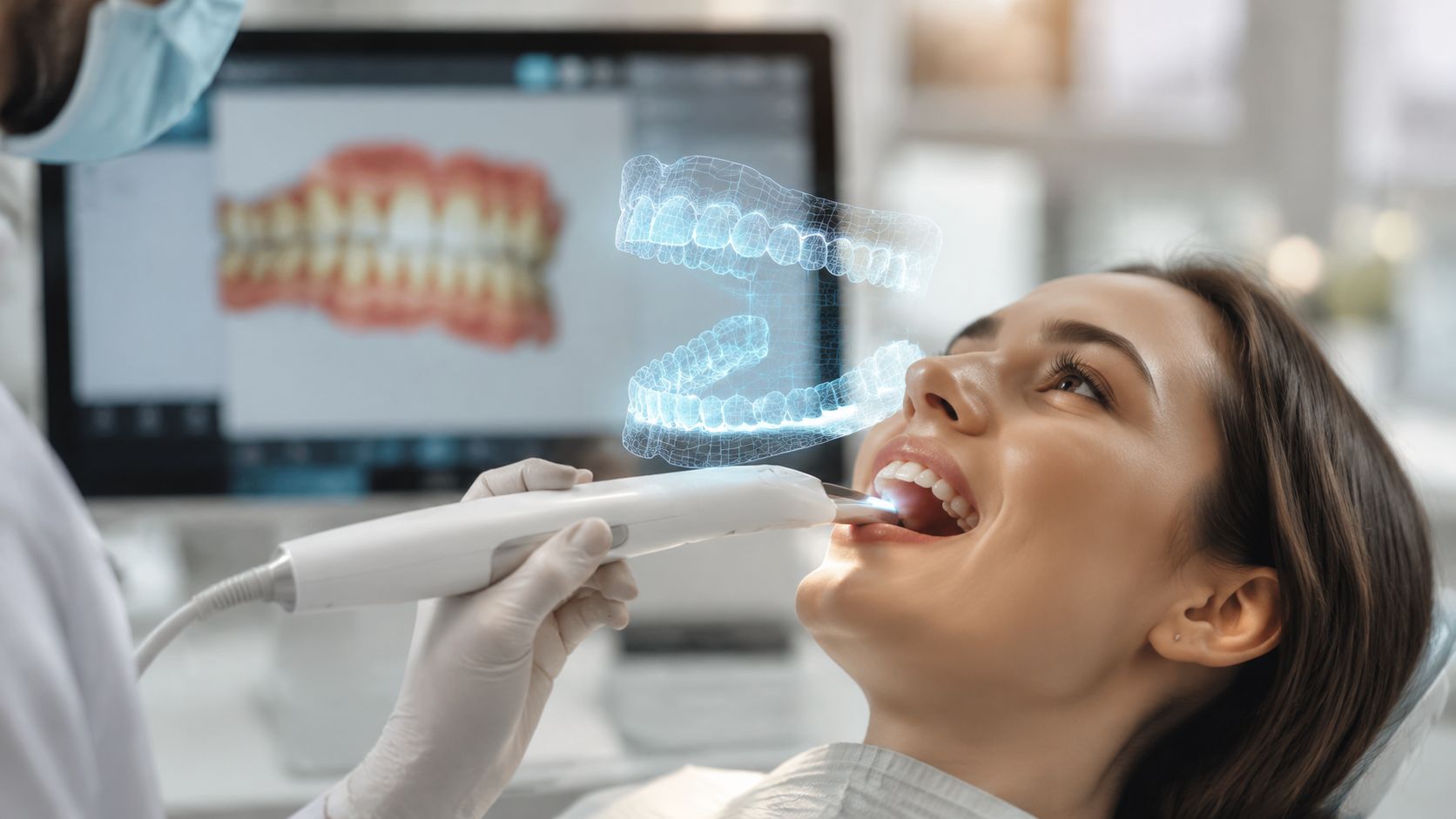
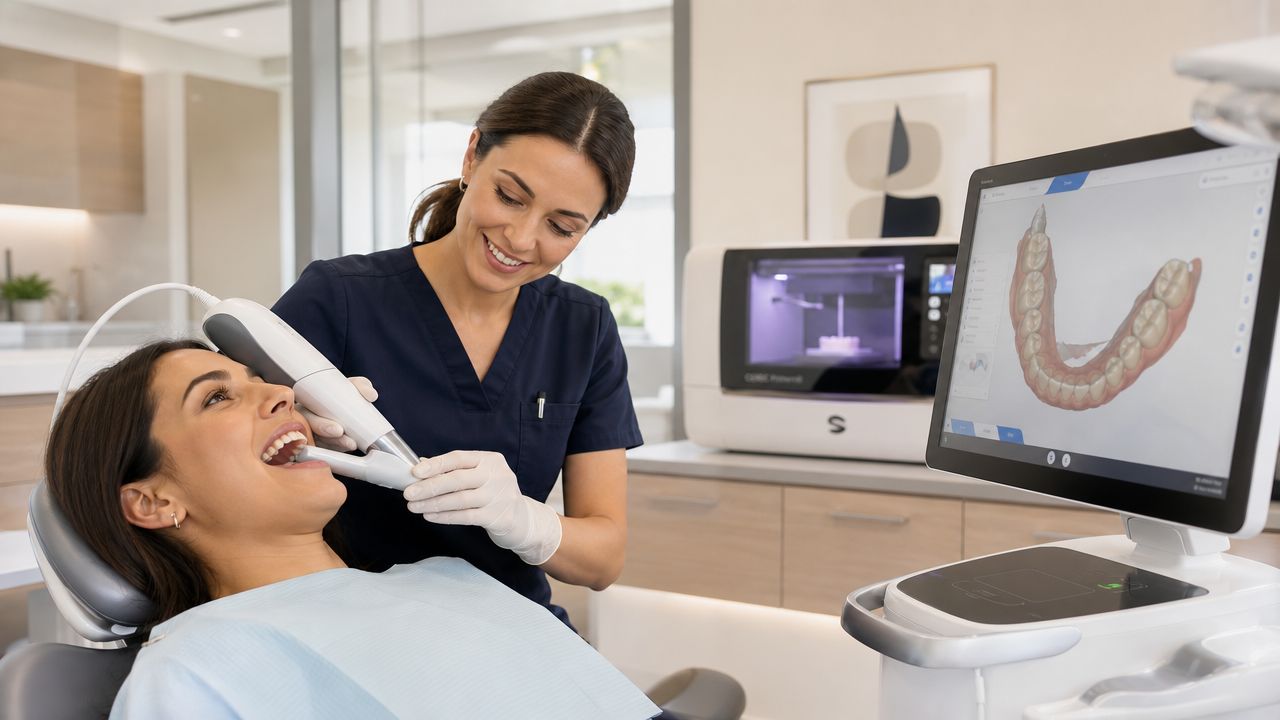
At many practices, this is also where digital scans or photos may be taken to document the current condition of your teeth and bite. If you want a clearer sense of how exam visits fit into ongoing preventive care, this page on dental exams and cleanings gives a helpful overview.
A quick visual walkthrough can also make the process feel more familiar.
The doctor's exam
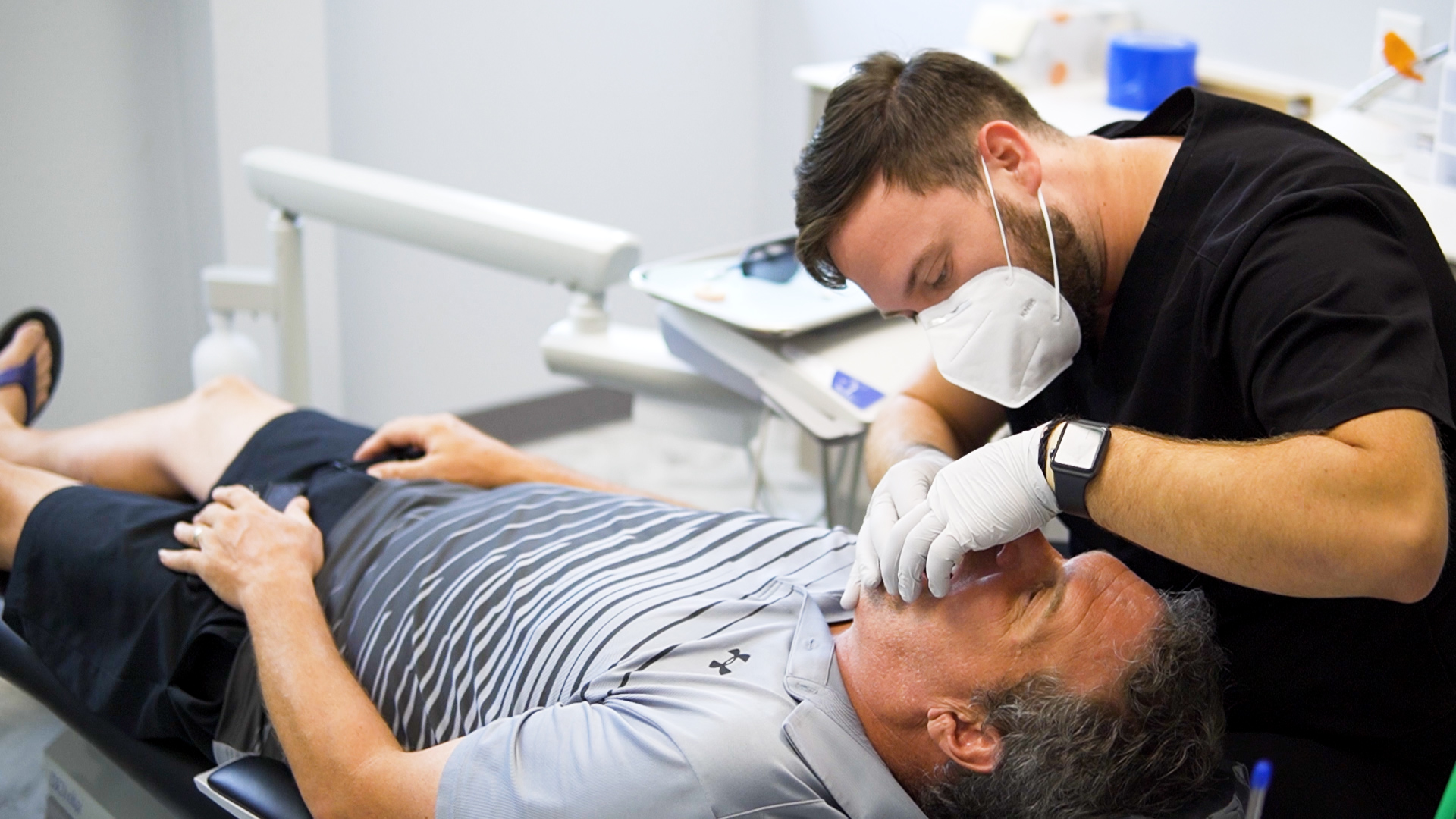
Once records are complete, the dentist performs the thorough evaluation. This is broader than checking for cavities.
The dentist may look at:
- Teeth and existing dental work for wear, cracks, decay, or failing fillings and crowns
- Gum health for inflammation, recession, or signs of periodontal disease
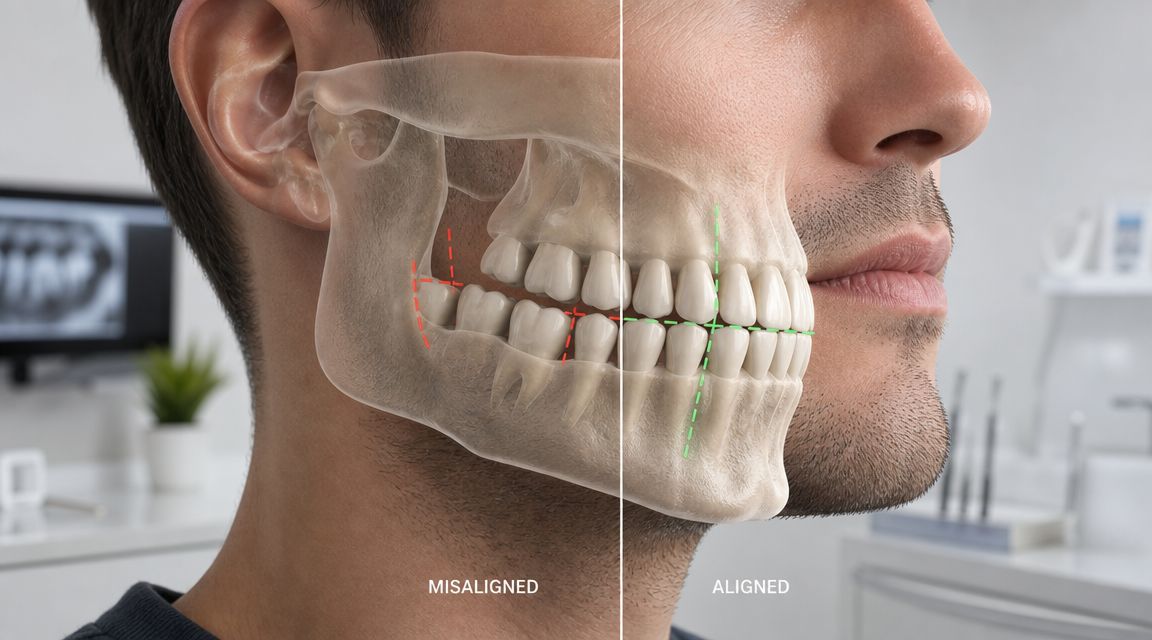
- Bite and jaw function to see how your teeth come together and whether clenching or grinding may be affecting you
- Soft tissues as part of an oral cancer screening
- Areas of concern that you mentioned, such as sensitivity, a loose tooth, or a cosmetic issue
Review and next steps
At the end, the dentist talks through what was found and what it means. Some patients leave hearing that everything looks stable and only routine care is needed. Others learn they need a filling, periodontal treatment, a crown, tooth extraction, orthodontic care, or a larger restorative plan.
The goal of the first exam isn't to rush into treatment. It's to replace uncertainty with a clear map.
That predictability is what helps the visit feel safer. You know what happened, what was seen, and what comes next.
Our Advanced Diagnostic Technology
A thorough exam depends on more than a flashlight and a mirror. Modern diagnostics give the dentist more information and give the patient a clearer explanation of what's going on.
That matters in routine care, and it matters even more when someone is considering crowns, wisdom tooth extraction, implant placement, or full-arch restoration.
What imaging can reveal that eyes alone can't
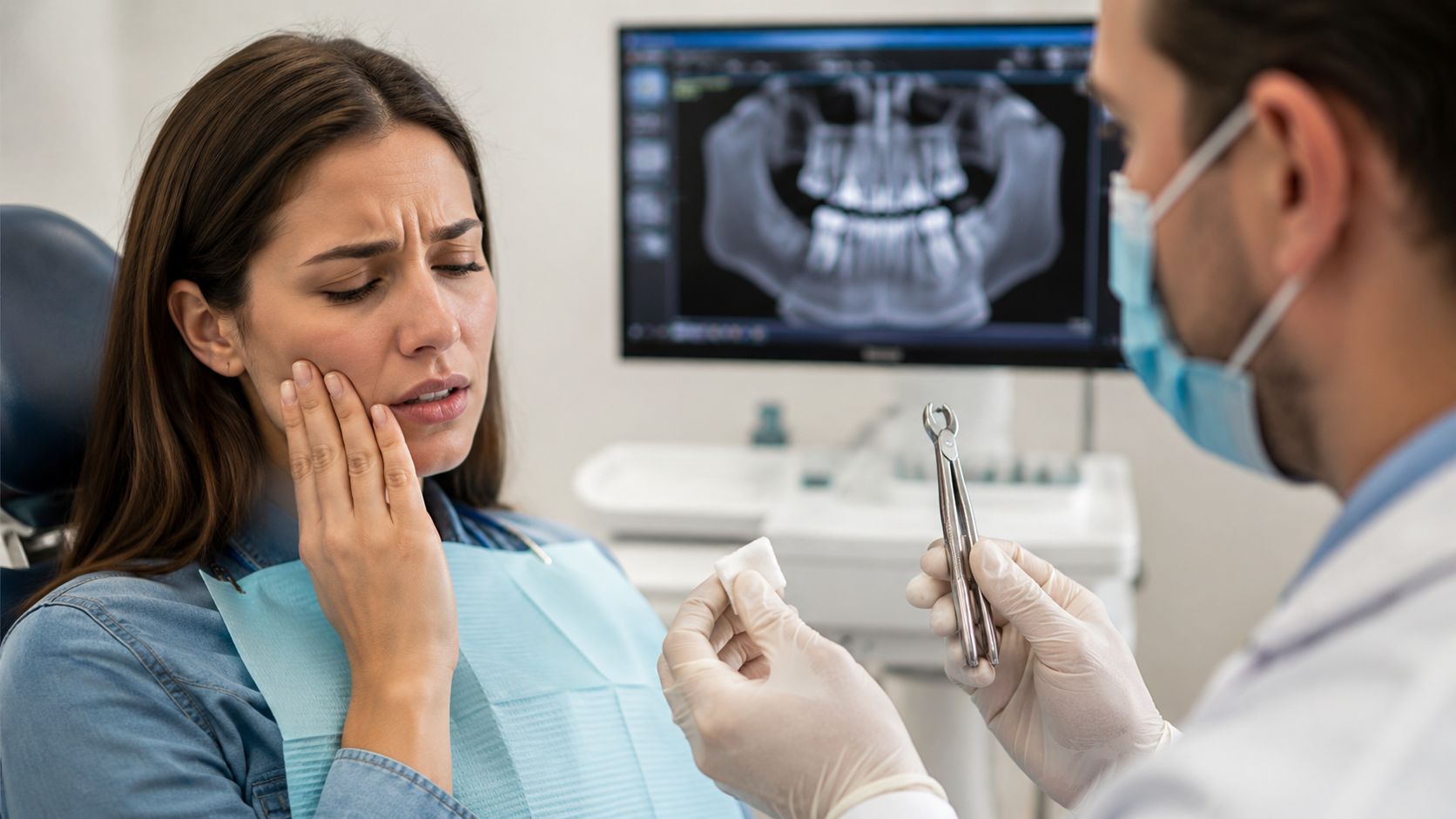
Some problems hide below the gumline, between teeth, or around older dental work. In a technical exam workflow, clinicians may document periodontal pocket depths and use radiographs such as posterior bitewings with panoramic imaging or bitewings plus selected periapicals to detect disease that isn't visible clinically. A full-mouth intraoral series may be preferred when generalized oral disease or extensive prior treatment is suspected, according to this clinical reference on the patient exam workflow.
That's one reason advanced imaging changes the quality of planning. You're not relying on guesswork when a tooth looks fine on top but has a problem underneath.
Why this matters for comfort and outcomes
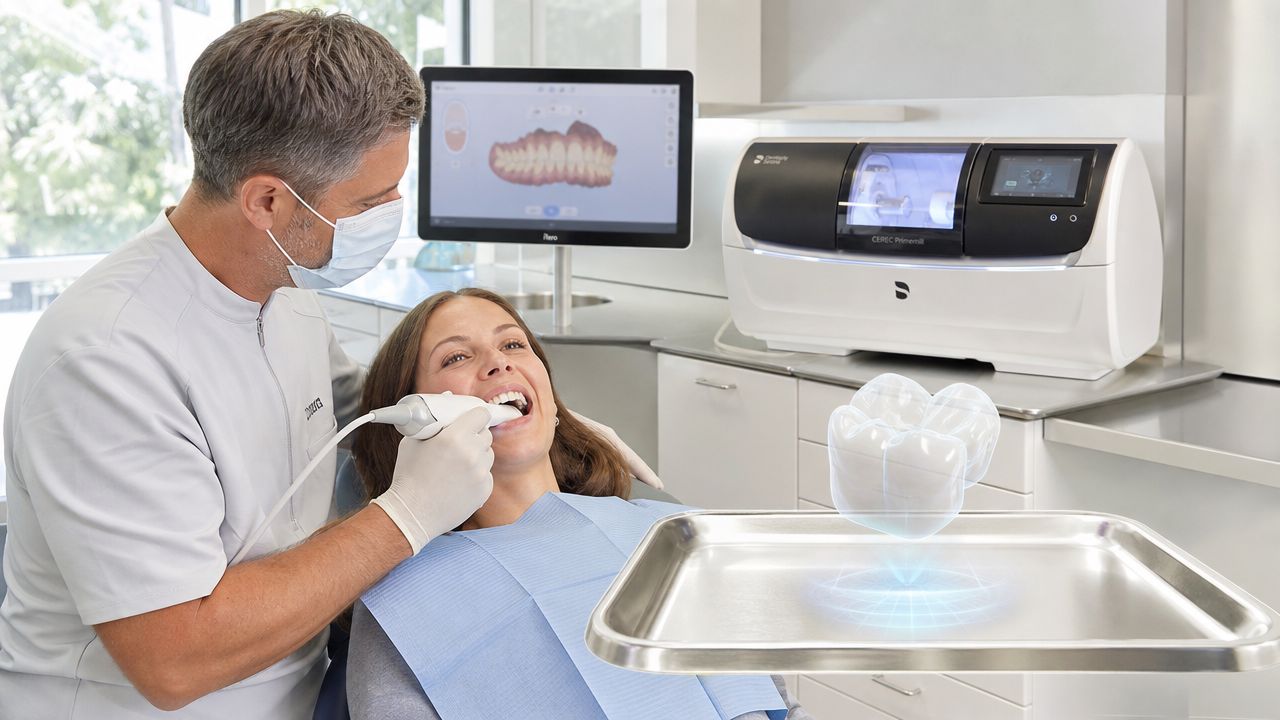
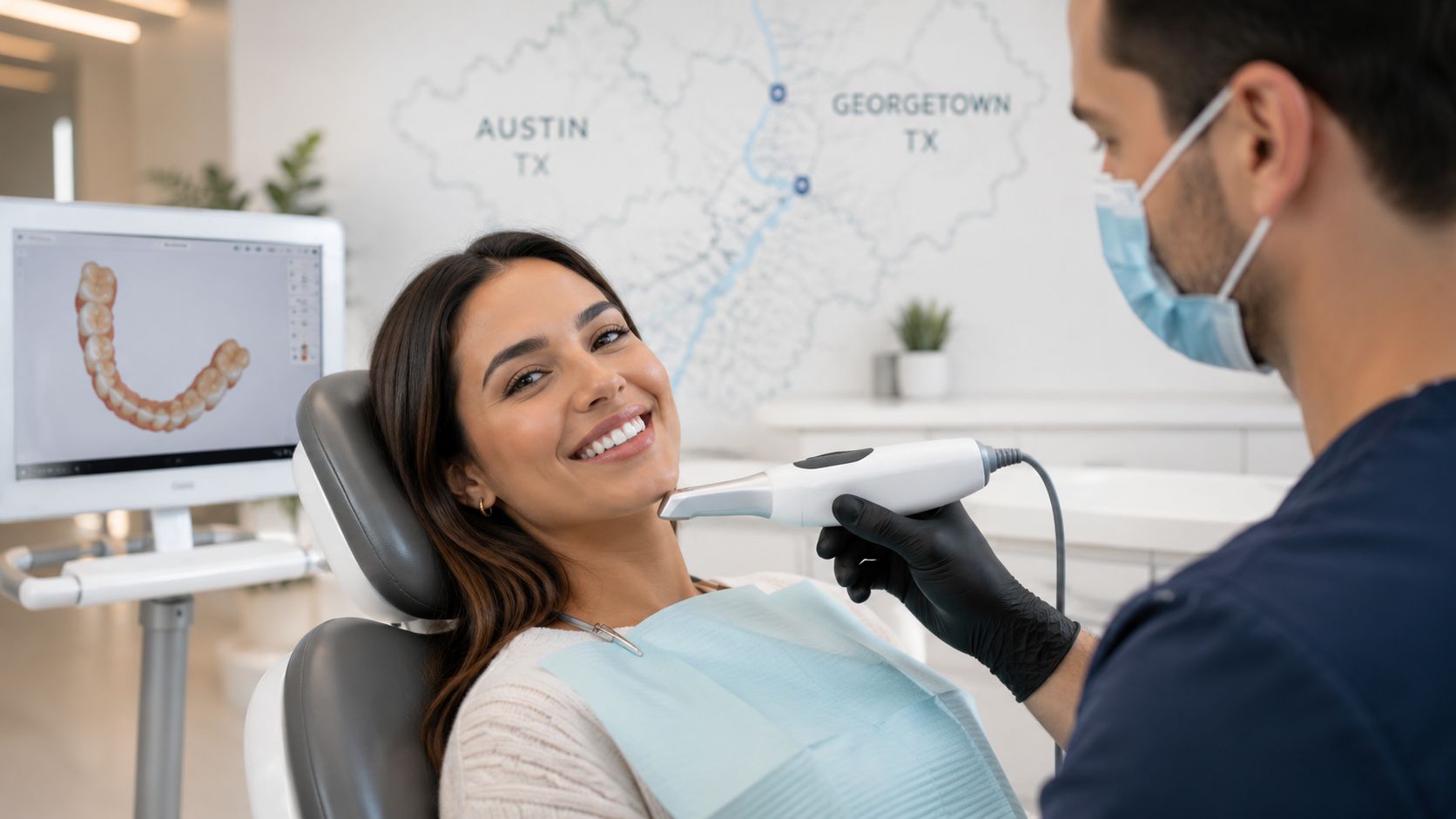
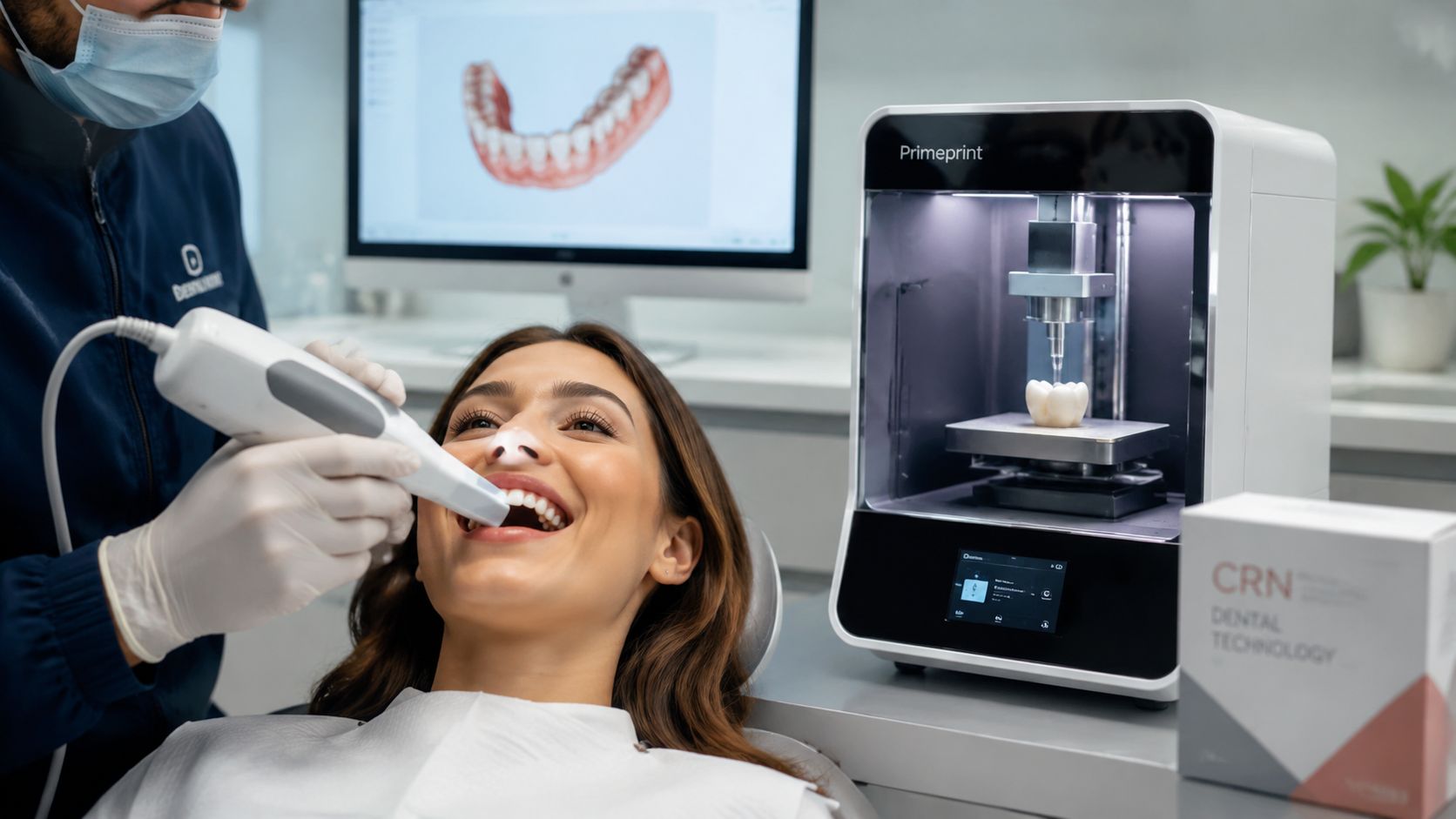
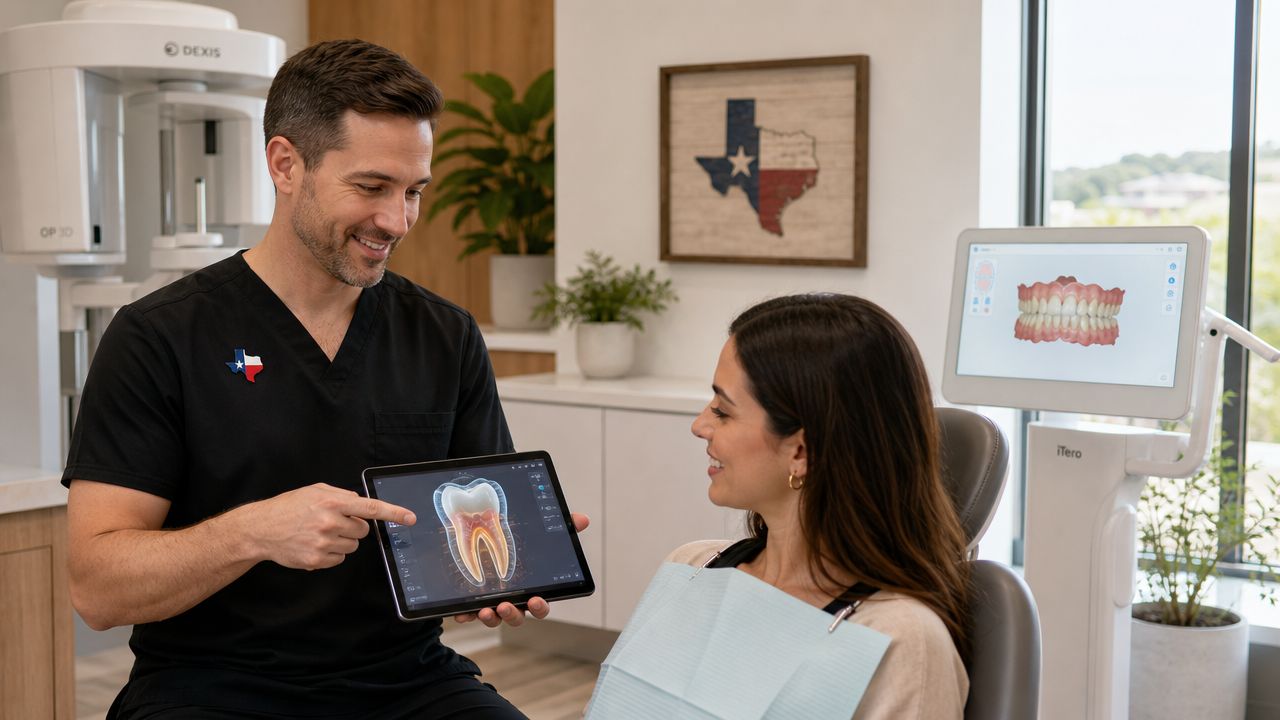
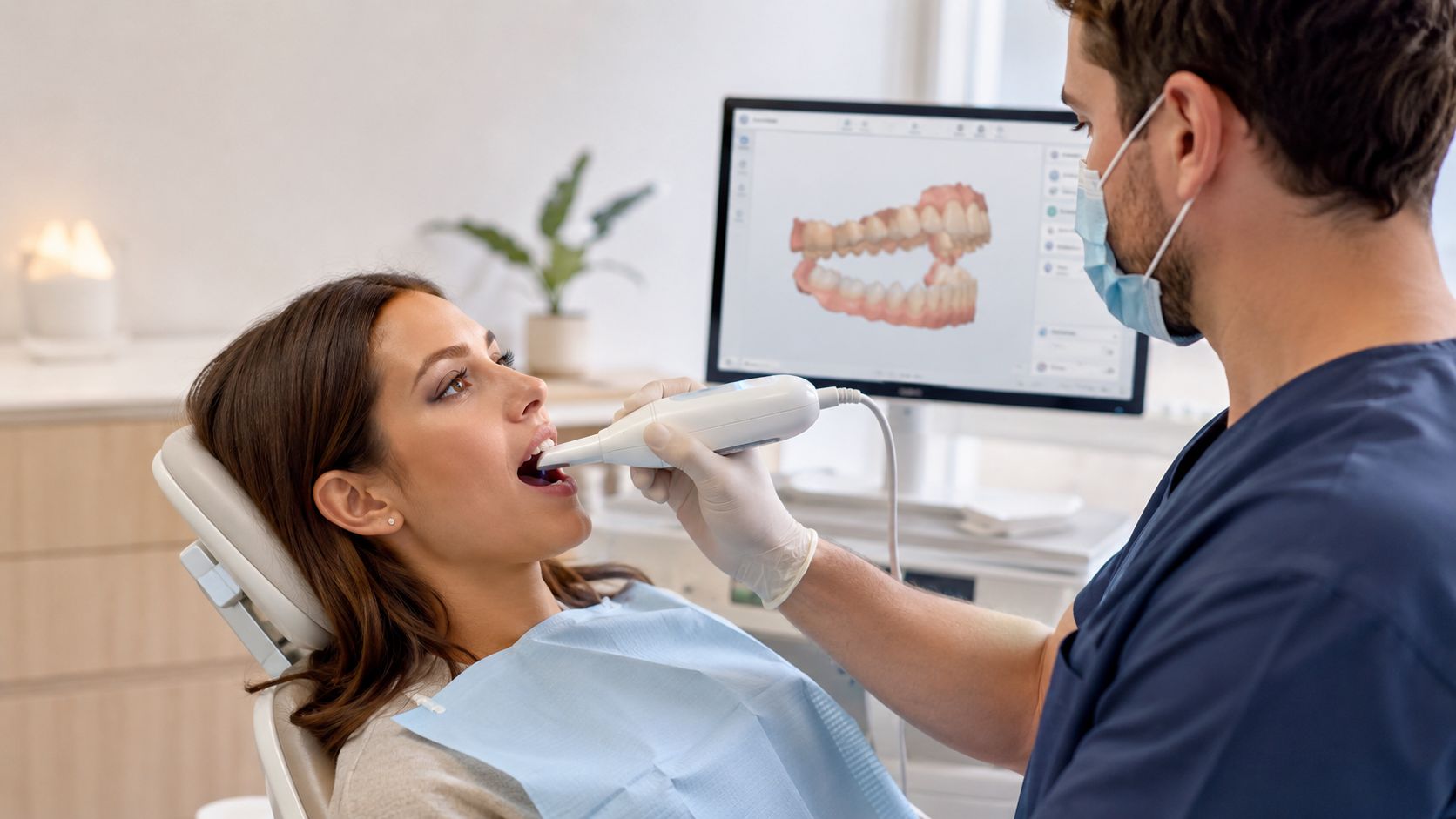
Digital scanners help replace traditional impressions in many situations, which means no messy trays for patients who gag easily. Intraoral photos make it easier for you to see the same crack, worn edge, or failing margin the dentist sees. Digital X-rays appear quickly, so the conversation happens in real time.
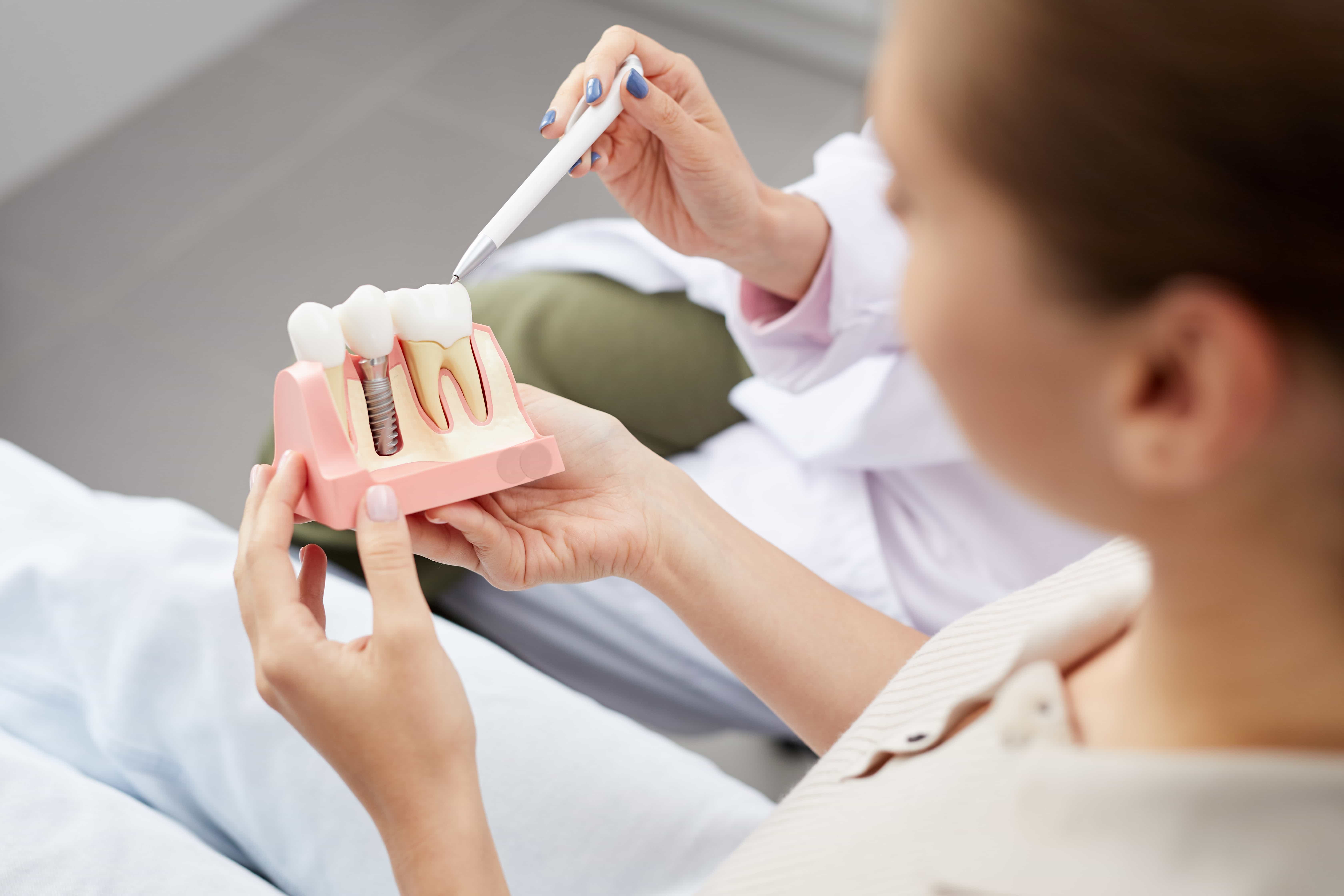
For more complex treatment, detailed imaging supports better sequencing. If someone wants to replace a missing tooth, evaluate bone support, or compare restorative options, precise records make the plan more predictable.
A few examples of how technology helps:
- Digital scanners make records more comfortable and highly detailed.
- Intraoral cameras turn abstract explanations into visible findings.
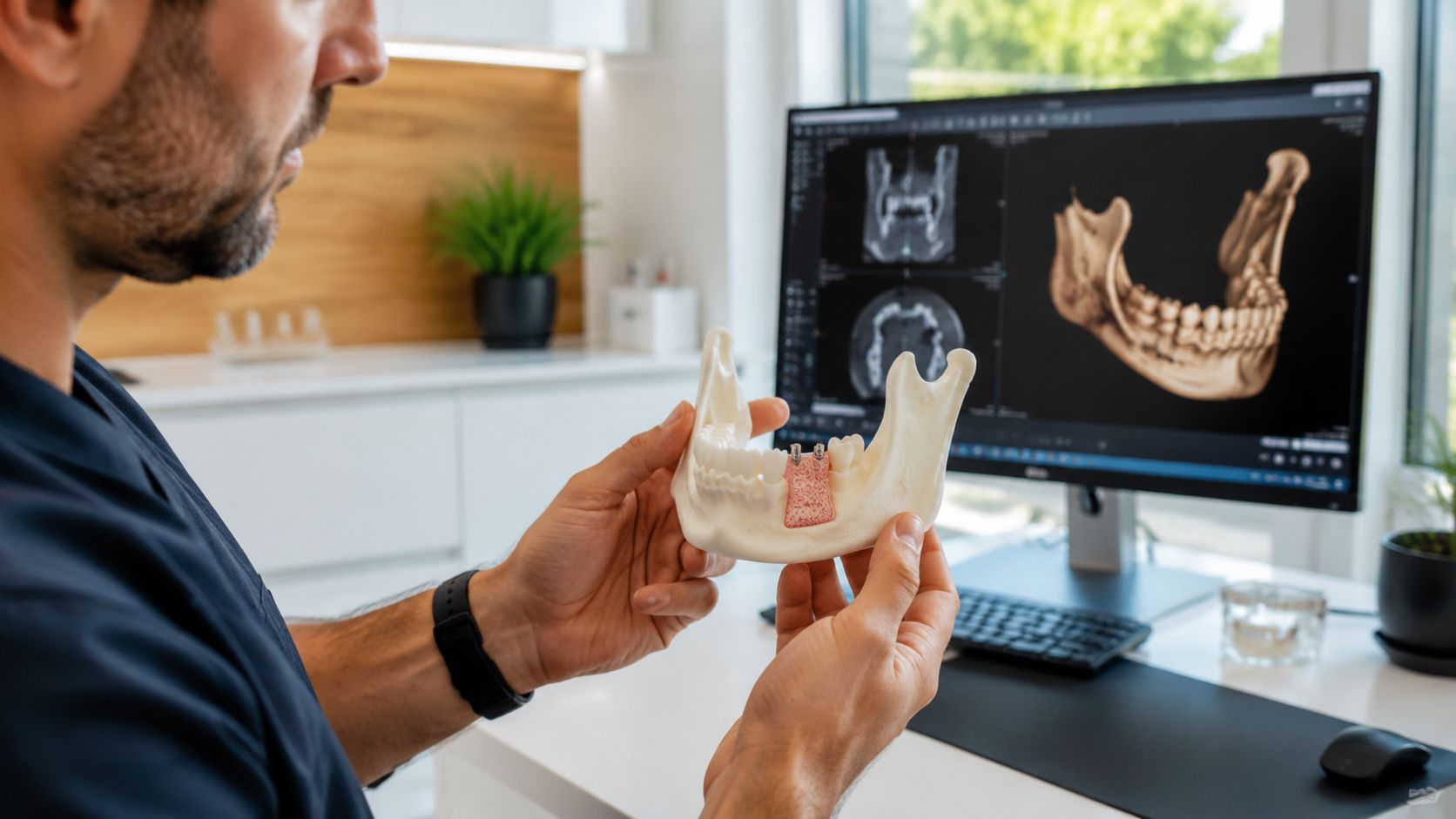
- 3D CT imaging helps with precise planning for implants and other advanced procedures.
- Airway evaluations can add useful context when bite, wear, or sleep-related concerns are part of the picture.
Good technology doesn't replace clinical judgment. It gives the dentist better information and gives the patient better explanations.
That's especially important when you're choosing between monitoring a tooth, restoring it, or replacing it. A strong diagnosis supports the right level of treatment. Not too little, not too much.
Understanding Your Treatment Plan and Costs
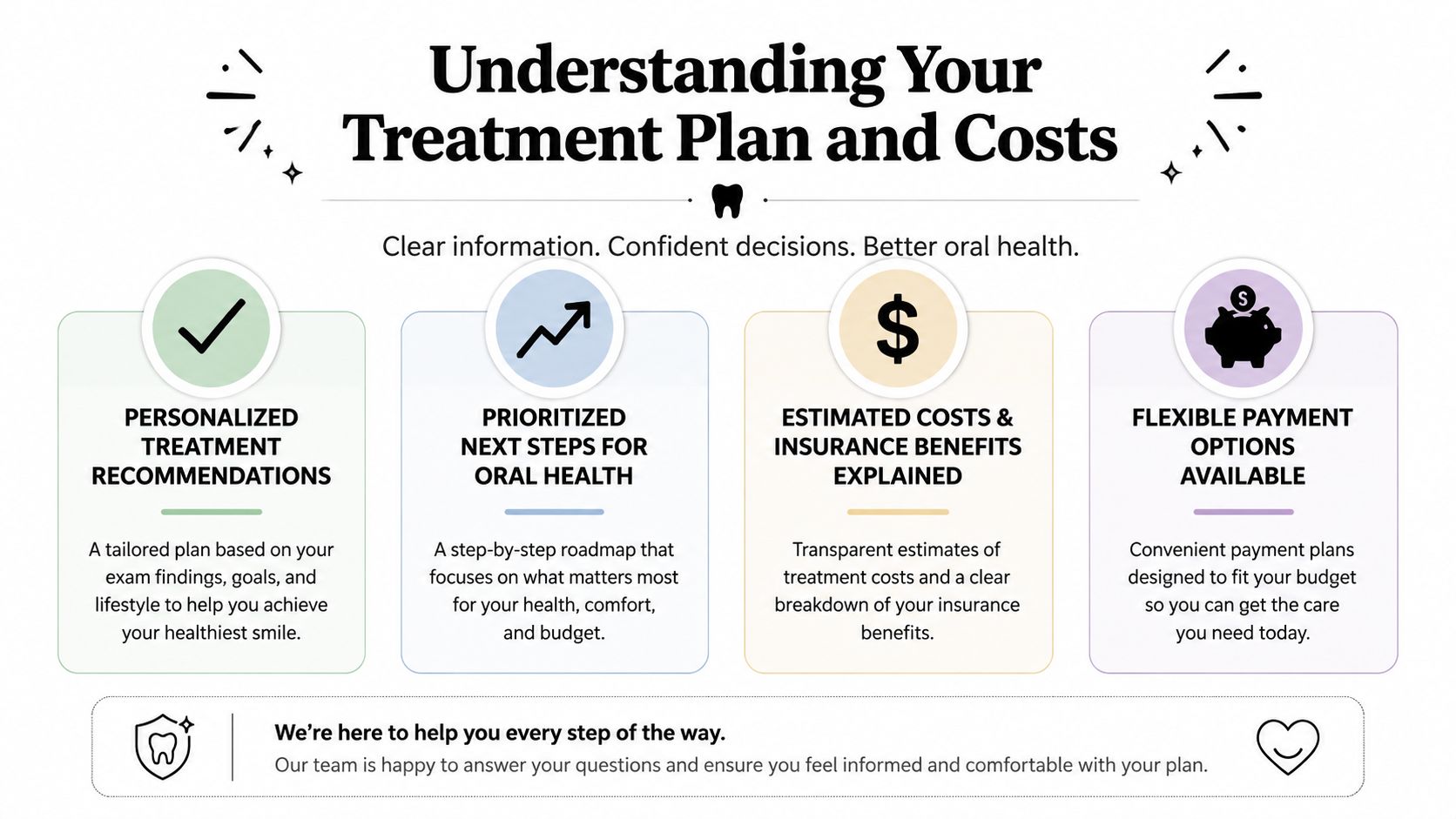
A first exam gives you findings. A treatment plan turns those findings into actionable decisions.
The biggest misunderstanding patients have is thinking the first appointment will solve everything at once. In many cases, it won't. A new patient exam is a diagnostic appointment, not a full fix-it visit, and the first visit often opens planning rather than completing care. That's also why it's smart to ask about fees and payment plans before treatment is scheduled, as explained in this guide to the new patient exam process.
What a useful treatment plan should include
A good plan doesn't just hand you a list of procedures. It organizes care in a way that makes sense.
That usually means separating treatment into categories like:
- Needs attention soon. Active decay, infection, pain, or damaged restorations
- Should be monitored or addressed next. Wear, early changes, or functional issues
- Goal-based options. Whitening, veneers, aligners, implants, or cosmetic upgrades
If you came in with pain, relief becomes the priority. If you came in to ask about your smile, the dentist still needs to confirm that the foundation is healthy enough to support cosmetic work.
How to think about costs without feeling overwhelmed
The most helpful financial conversations are plain and specific. Patients usually want to know what insurance may help with, what can be phased over time, and whether monthly payment options exist for larger cases.
A cost page like this guide to dental exam and cleaning cost can help frame those questions before you commit to treatment.
Ask these questions if money is part of your decision:
| Question | Why it helps |
|---|---|
| What needs to be done first? | Helps you separate urgent care from elective care |
| Can treatment be phased? | Makes larger plans easier to manage |
| What does insurance usually apply to? | Clarifies expected benefits before scheduling |
| Are financing options available? | Helps when treatment is necessary but timing is difficult |
If a plan is clear, patients usually feel less pressure because they can see the sequence, the purpose, and the choices.
That's true whether you need a simple filling or you're exploring restorative dentistry, cosmetic dentistry, or implant treatment after years away from the dentist.
Our Commitment to Your Comfort and Safety
Dental anxiety is real, and it doesn't always come from fear of pain. Sometimes it's the loss of control. Sometimes it's embarrassment. Sometimes it's not knowing whether the visit will turn into something bigger than expected.
A calmer experience starts with predictability. When appointments run on time, the environment feels organized, and the team explains each step before doing it, patients usually settle in faster.
What helps anxious patients most
Comfort often comes from small details done consistently.
- Clear explanations so you know what's happening before it happens
- Modern tools that make diagnostics faster and less awkward
- Time to ask questions without feeling rushed
- Respect for your pace if you need a pause or want options explained again
Many patients in Austin, Georgetown, Wells Branch, Liberty Hill, Cedar Park, and Round Rock don't need someone to “convince” them to relax. They need a dental team that acts in a calm, steady, respectful way from the first phone call onward.
Safety matters too
Patients also want to know the office is careful. That means clean systems, attention to records, thoughtful screening, and a process that supports accurate diagnosis before treatment begins.
You should never feel like you have to guess what's being done or why it's being recommended.
That standard matters for a routine exam just as much as it does for emergency dentistry, tooth extraction, or advanced treatment planning.
New Patient Exam Frequently Asked Questions
Is a cleaning always included at the first visit
Not always. Some patients do receive a cleaning at that visit, but the sequence depends on what the exam shows. If the dentist finds signs of gum disease, infection, or other concerns, the right next step may be different from a routine cleaning.
Will the first appointment be treatment or just evaluation
Usually, it's evaluation first. The visit is designed to diagnose, document, and plan. If you came in with an urgent issue, the team may also discuss whether emergency treatment should be scheduled quickly.
What if I'm looking for more than a checkup
That's common. A first exam can also open the door to discussions about cosmetic dentistry, restorative dentistry, braces, clear aligners, dental implants, or replacing older dental work. The exam helps determine whether your teeth and gums are ready for those next steps.
Do I need a new patient exam if I had dental records elsewhere
Often, yes. Even if previous records are available, a dentist still needs a current baseline and an in-person evaluation before making recommendations. Transferred X-rays and notes can still be helpful and may reduce duplication in some cases.
Does insurance usually help cover the exam
In many cases, yes. Most dental insurance plans in the U.S. cover the new patient exam and required X-rays at 100% as a preventive benefit, often resulting in no out-of-pocket cost for the patient. That expectation is described qualitatively in the earlier appointment overview.
What if I have a dental emergency before my first scheduled visit
Call the office and explain what's happening. If you have swelling, significant pain, trauma, or a broken tooth, say that clearly when you contact the team. Emergency scheduling is handled differently from routine preventive visits.
How often do I need this kind of comprehensive exam
A true new patient style exam is most important when you're establishing care, returning after a long gap, or when your dental health has changed enough to require a fresh baseline. After that, future visits are often based on your needs and what the dentist recommends for ongoing care.
If you're ready to stop wondering and start getting answers, 3D Dental offers appointment scheduling for patients in Austin, Georgetown, and nearby communities. Whether you need a first exam, help with tooth pain, a second opinion, or a conversation about implants, cosmetic dentistry, or emergency care, the next step is simple. Book a visit and get a clear, personalized plan for your smile.
Ready to get started?
Schedule a free, no obligation consultation with our team and see what's possible for your smile!
Georgetown
- Mon-Thurs8:30am-5pm
- Fri8am-3:30pm
- Sat-SunClosed
Austin
- Mon-Tues8am-5pm
- Wed-Thurs9am-6pmFri8am-2pm
- Sat-SunClosed