
Composite vs Amalgam Fillings: What's Right for You?
Related Posts


















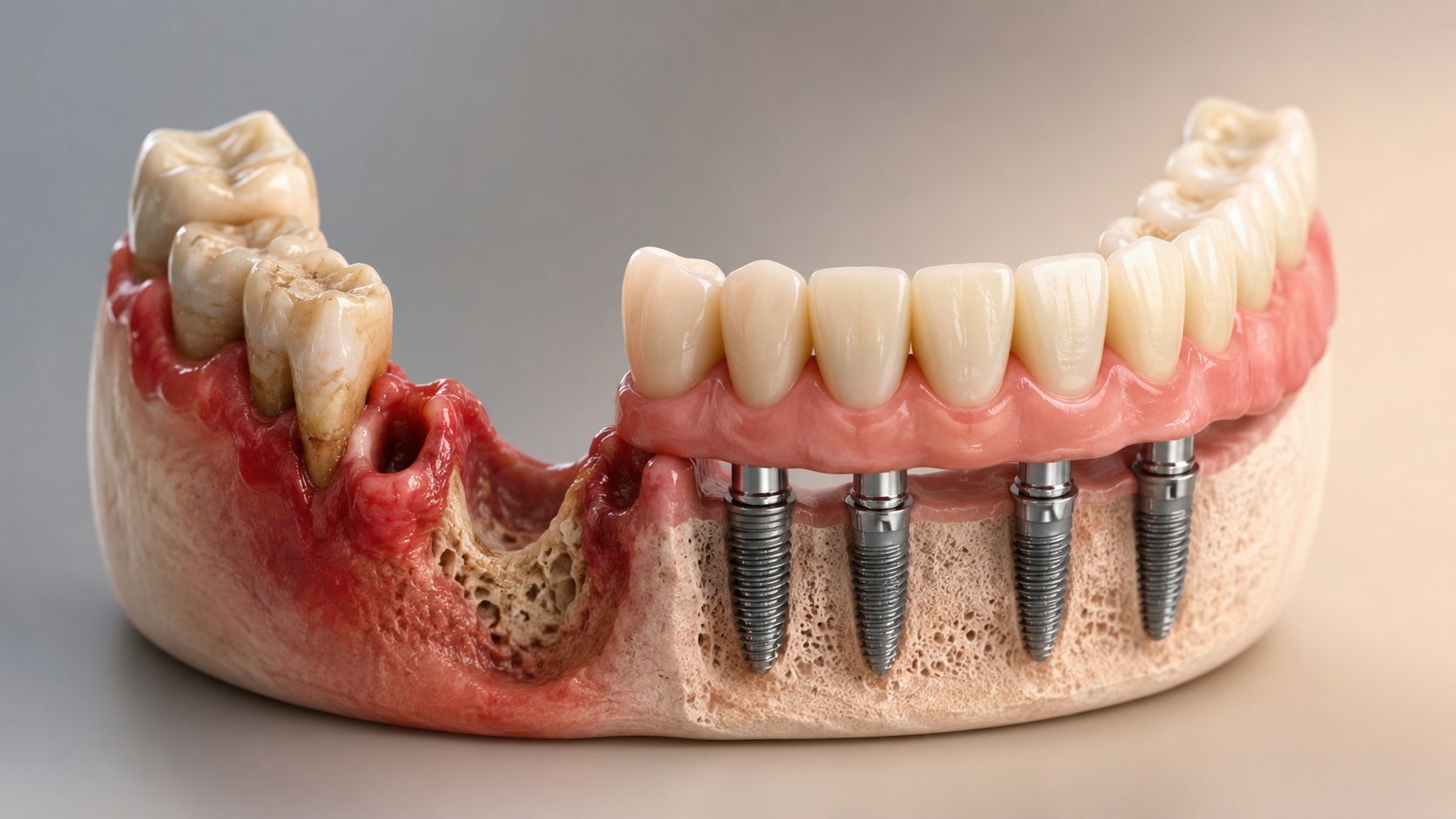





























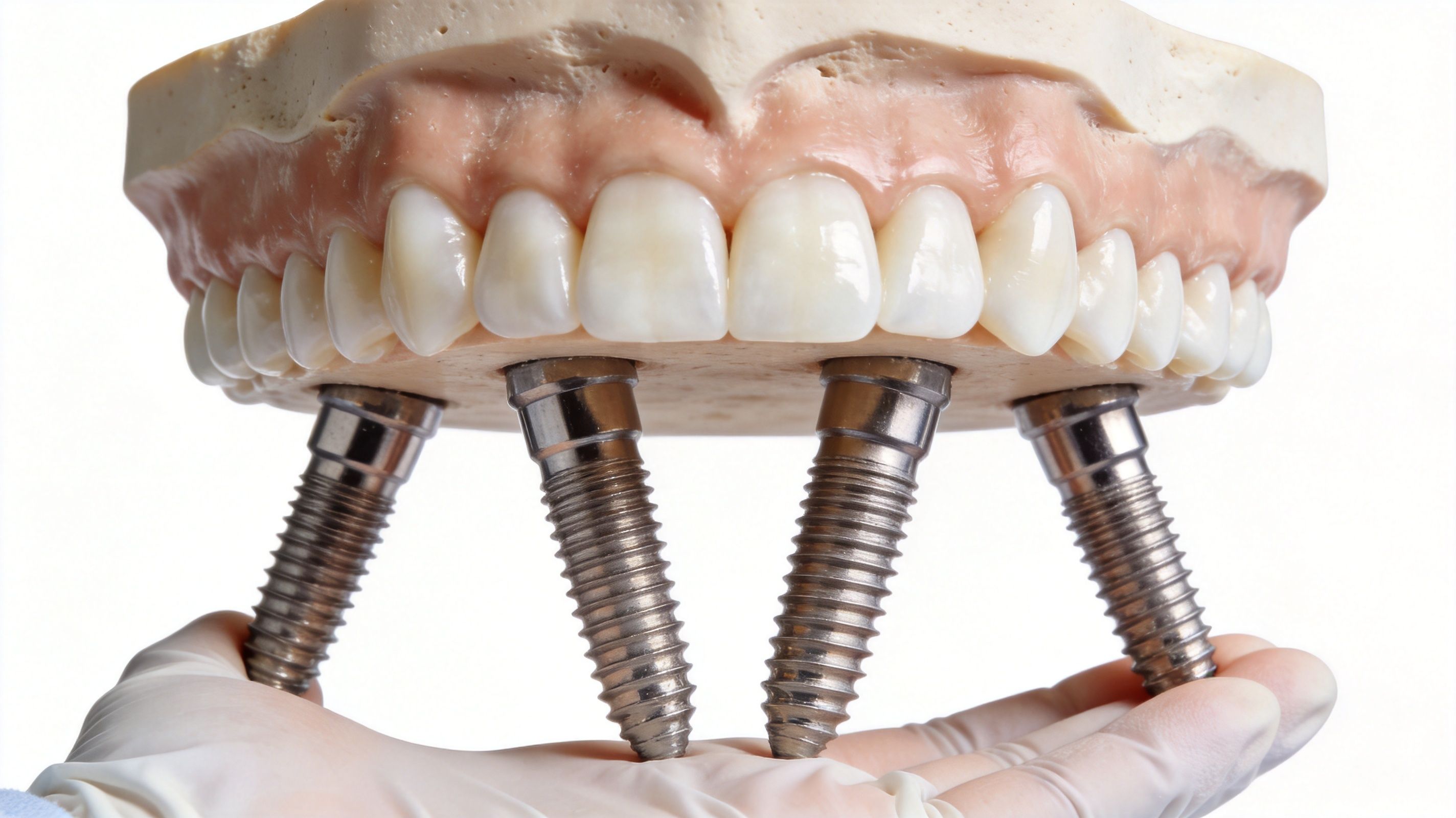









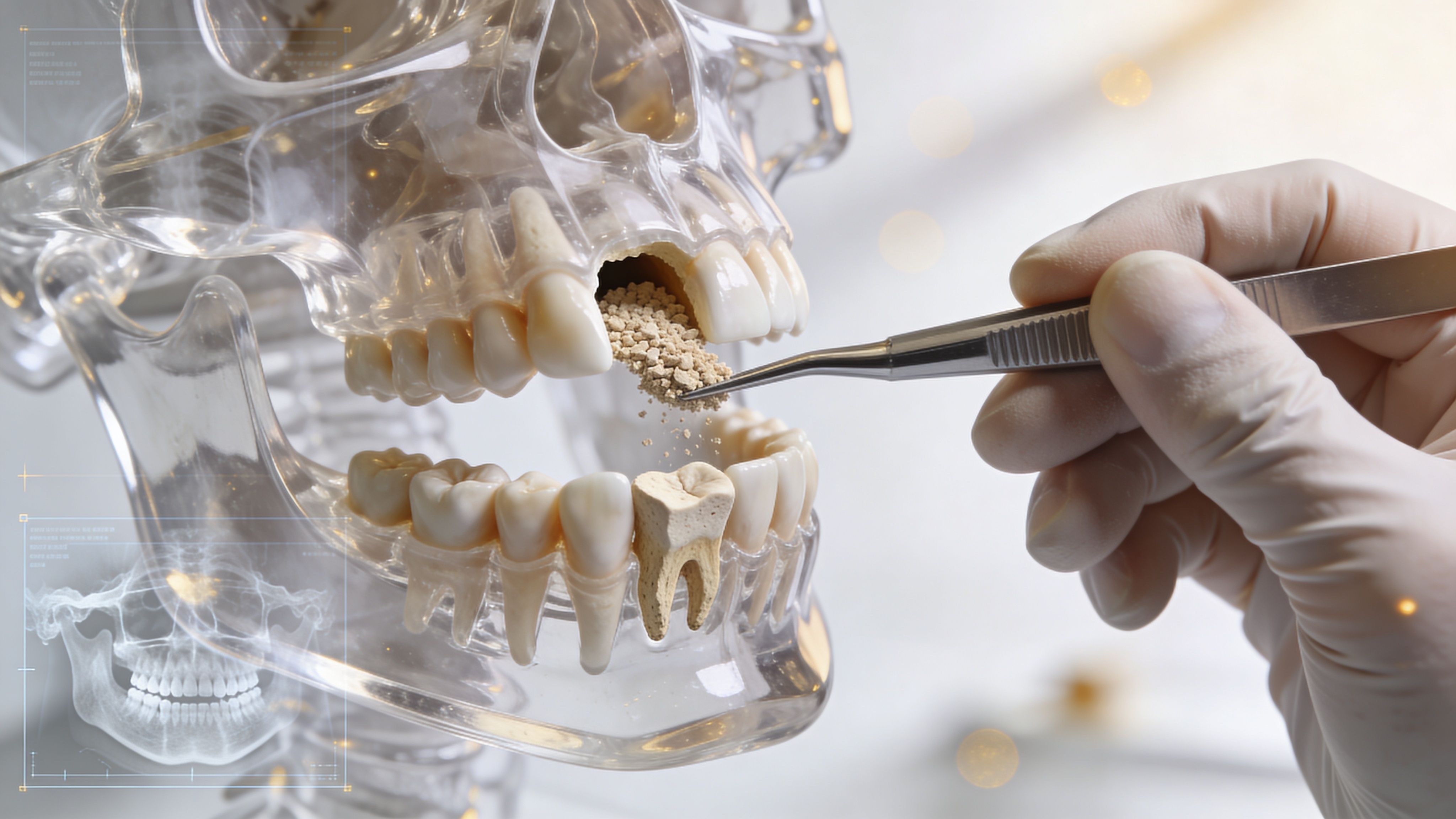






You've just been told you need a filling. For patients in Austin or Georgetown, the initial questions are immediate and practical. Will it show when I smile? How long will it last? Is the silver one safer or stronger? What is insurance going to pay?
Those are the right questions to ask.
When patients search for a dentist near me, a dentist in Austin, TX, or a dentist in Georgetown, TX, they usually aren't looking for a lecture on dental materials. They want a clear answer they can trust. They want to know which filling makes sense for their tooth, their budget, and their schedule. That's especially true if they're also comparing other care needs like emergency dentist visits, tooth extraction, cleaning and exams, dental x-rays, or even long-term work such as dental implants near me and cosmetic dentist near me options.
This guide is built around the patient experience. Not just what composite and amalgam are made of, but how they look, how they hold up, how long you'll be in the chair, and what out-of-pocket costs often surprise people in North Austin and Georgetown.
Your Trusted Dentist for Fillings in Austin and Georgetown
A common situation goes like this. A patient comes in for a new patient exam because a tooth feels sensitive when drinking something cold. Sometimes it's a small cavity found during routine dental care. Other times it's a cracked old filling that shows up on dental x-rays. Either way, the next question is almost always the same: “Do I need the white filling or the silver filling?”
That choice can feel bigger than it sounds.
For many adults in North Austin, Wells Branch, Round Rock, Cedar Park, Georgetown, and Liberty Hill, a filling isn't only about stopping decay. It's about balancing appearance, durability, time, and cost. A front tooth that shows when you smile raises one set of concerns. A large cavity on a back molar that handles heavy chewing raises another.
At 3D Dental, filling decisions are handled the way they should be handled. Start with the tooth, the bite, the location, and the patient's priorities. Some people care most about a natural look. Others want the material that's most proven for chewing strength in back teeth. Some need the option that works better with their insurance benefits and daily schedule.
What matters most to most patients
- Appearance: Will the filling blend in or be visible?
- Longevity: Is this a small repair or a restoration that needs to tolerate strong bite pressure?
- Time: How long will the appointment take?
- Budget: What will insurance cover, and what will you owe yourself?
A good filling choice isn't based on trends. It's based on where the cavity is, how much force that tooth handles, and what matters most to you.
That's the kind of conversation patients deserve from a local restorative dentist. It's also why many people looking for restorative dentistry, cosmetic dentistry, or an emergency dentist in Austin and Georgetown want more than a quick yes-or-no answer. They want honest guidance that fits real life.
What Is a Dental Filling and Why Do I Need One
A dental filling repairs a tooth after decay has damaged part of its structure. When bacteria and acids wear through enamel, a cavity forms. If that damaged area isn't cleaned out and sealed, the decay keeps moving deeper into the tooth.
That's when simple sensitivity can turn into pain, food trapping, or a larger fracture. Left alone long enough, a cavity may progress to the nerve and lead to treatment that's far more involved than a filling.
What a filling actually does
A filling has three jobs:
- Remove the decayed part of the tooth
- Seal the area so bacteria can't keep collecting there
- Restore normal shape and chewing function
If a cavity is caught early, a filling is often the most conservative way to save the tooth. It helps you keep more natural tooth structure and avoid more extensive restorative treatment later.
For patients who wonder whether they need a filling or something more advanced, this explanation of the difference between a root canal and a filling can help clarify where each treatment fits.
The two main filling choices
The two common options discussed most often are composite and amalgam.
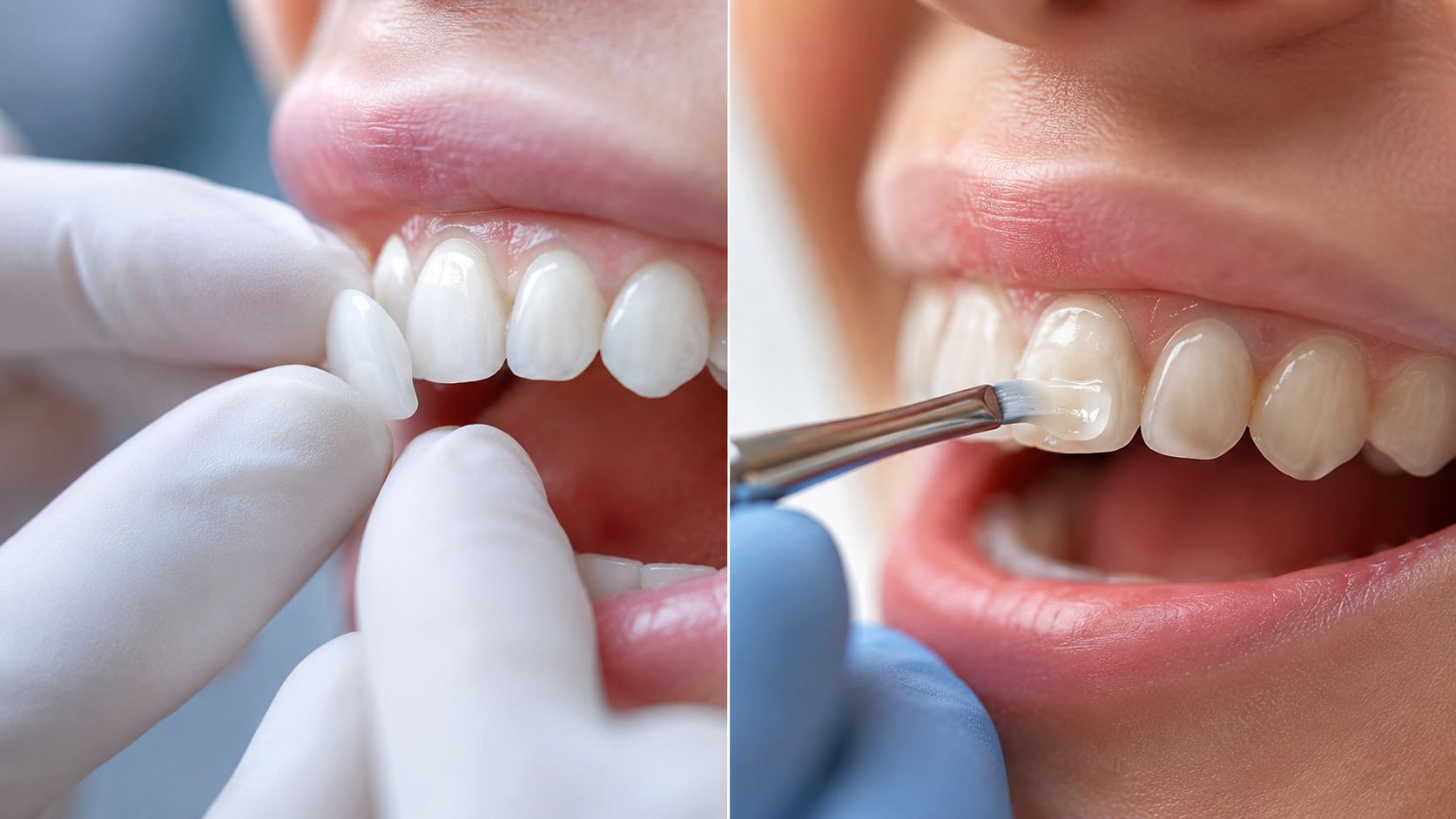
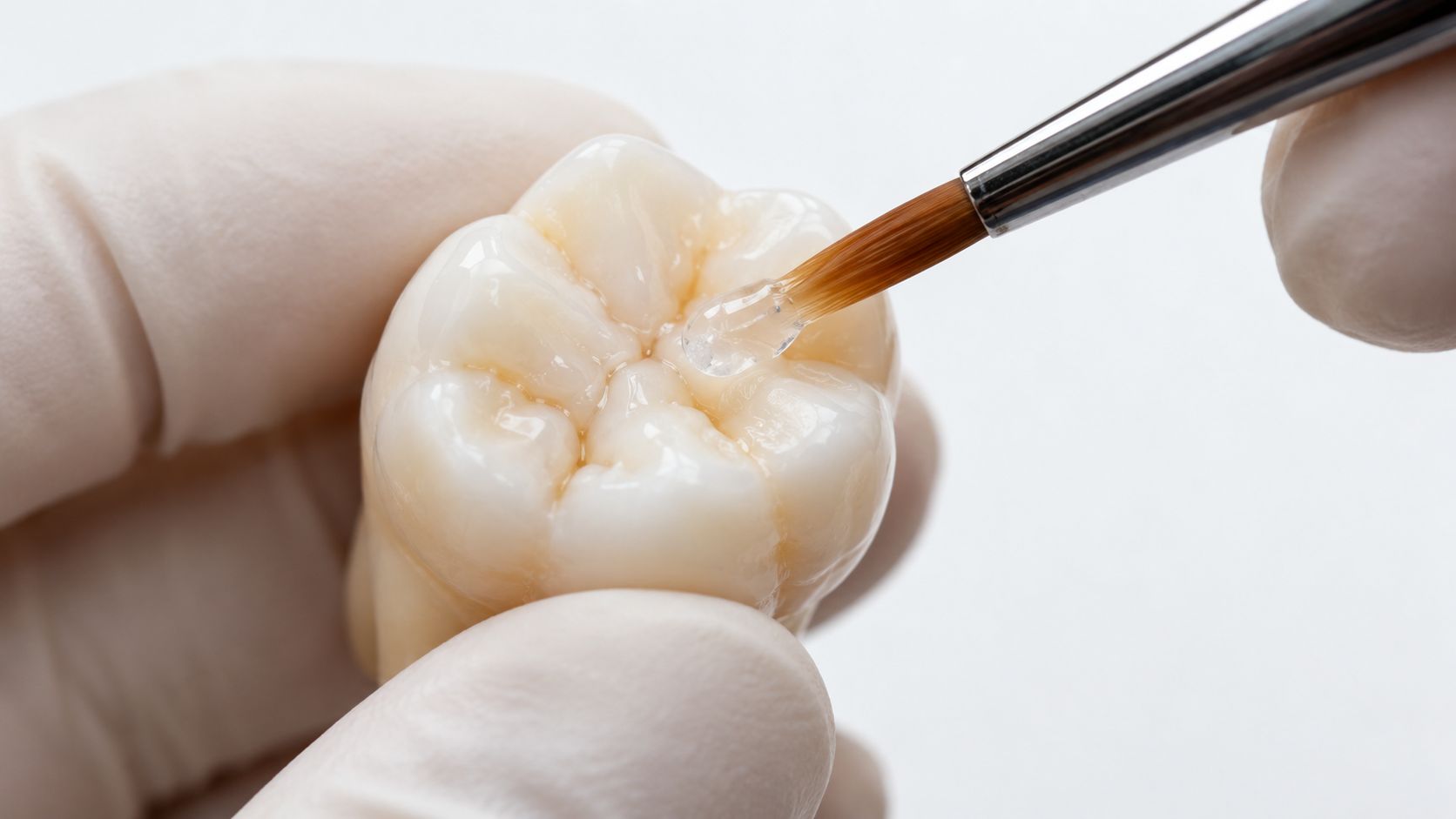
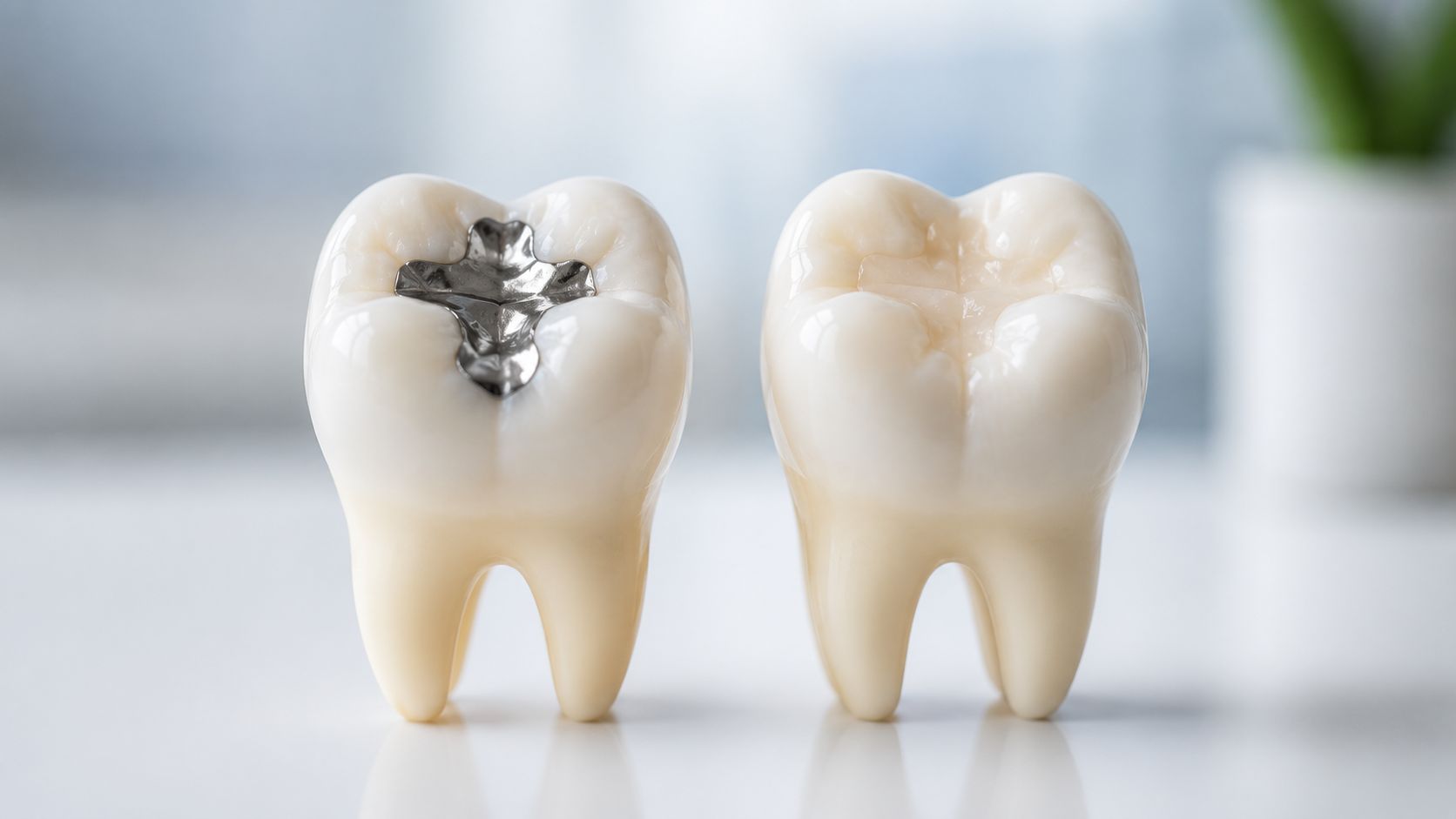
Composite fillings are tooth-colored. They're selected often when appearance matters or when a dentist wants a bonded restoration that blends with the natural tooth.
Amalgam fillings are silver in color and have a long record of use in dentistry. Amalgam has been a staple in dentistry for over 150 years, with millions of restorations placed annually worldwide, and major health organizations including the ADA and FDA have concluded that amalgam fillings are safe for the majority of the population, as summarized in this amalgam safety and longevity overview.
Fillings don't just “patch a hole.” They stop active damage and help a tooth function normally again.
Why timing matters
Small cavities are easier to treat than large ones. Once decay spreads, the tooth may need a crown, root canal, or extraction instead. That's why routine cleaning and exams, new patient exams, and regular imaging matter. The earlier a cavity is found, the more options you usually have.
A Detailed Comparison of Filling Materials
Before getting into the details, here's a quick side-by-side view.
| Feature | Composite (Tooth-Colored) | Amalgam (Silver) |
|---|---|---|
| Appearance | Blends with natural tooth shade | Noticeable silver or gray color |
| Best visual use | Visible teeth and smile areas | Back teeth where appearance matters less |
| Durability in heavy chewing areas | Can work well in selected cases, but less favorable for large high-stress posterior restorations | Strong track record in high-pressure molar areas |
| Typical longevity | Often discussed as shorter than amalgam in many settings | Often discussed as longer-lasting in back teeth |
| Placement process | Bonded, layered technique, more technique-sensitive | More straightforward placement in many cases |
| Chair time | Often longer | Often shorter |
| Insurance reality | May be covered only up to the cost of amalgam on some plans | More commonly the baseline covered option |
| Material preference | Chosen by patients who want mercury-free, tooth-colored restorations | Chosen when strength, longevity, or lower cost is the priority |
Appearance and aesthetics
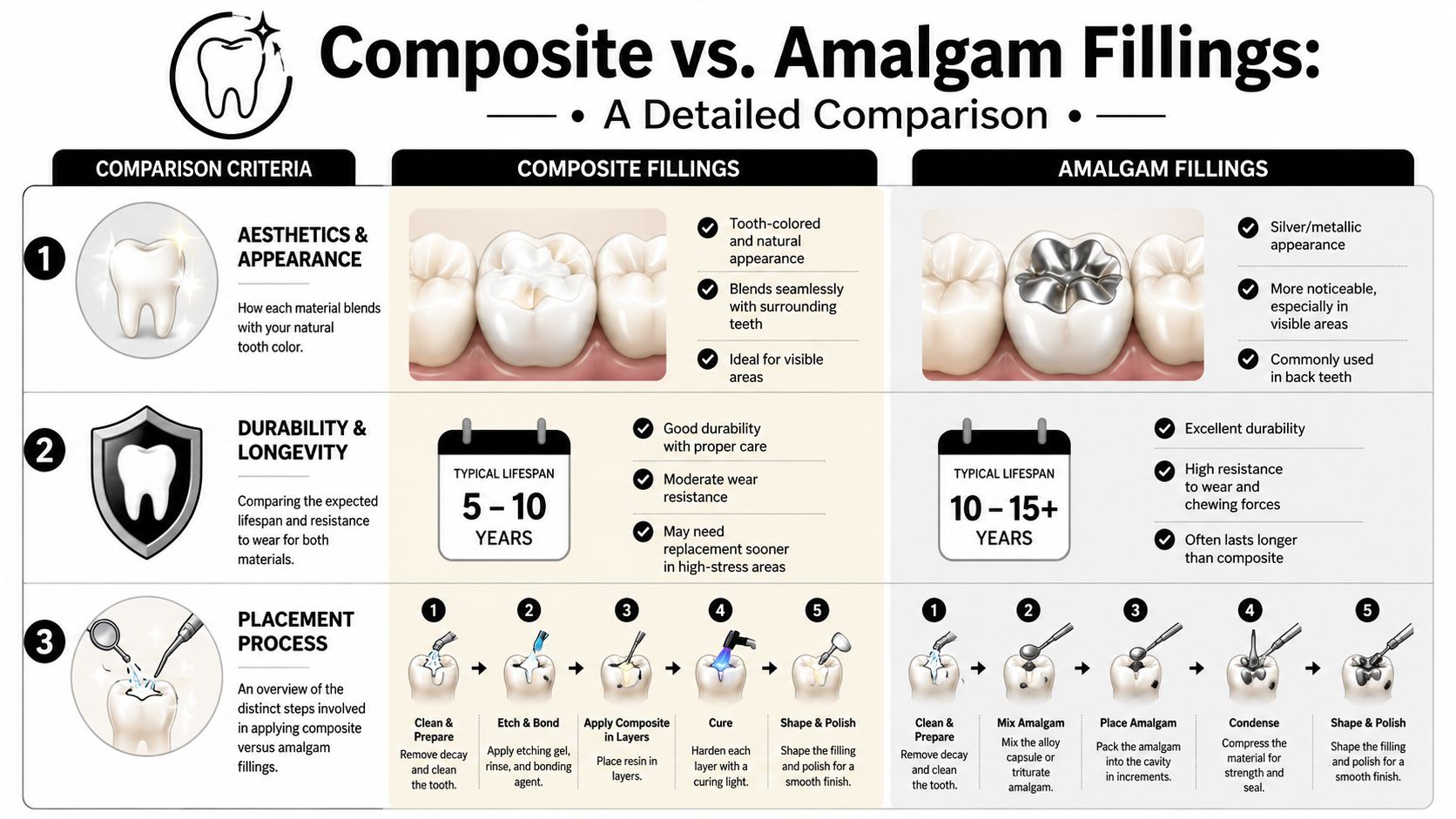
This is the easiest difference to understand. Composite is tooth-colored and can be matched closely to surrounding enamel. If the cavity is on a front tooth or a visible premolar, that matters.
Amalgam is functional, but it doesn't blend in. In a back molar, many patients don't mind that. In a tooth that shows when talking or smiling, many do.
If your main priority is a natural look, composite usually wins that category clearly.
Durability and longevity
The conversation now becomes more specific.
A 2021 randomized controlled trial analysis found that composite resin fillings in permanent posterior teeth had an almost double risk of failure compared with amalgam, with a risk ratio of 1.89 and a 95% confidence interval of 1.52 to 2.35. The same analysis found a higher risk of secondary caries for composite, with a risk ratio of 2.14 and 95% confidence interval of 1.67 to 2.74, according to this clinical evidence review on posterior restorations.
Durability takeaway: In high-stress back teeth, the main problem with composite isn't that it breaks more. The evidence points more toward recurrent decay and loss of seal over time.
That matters most in large restorations on molars. In a small visible area, the trade-off may still favor composite. In a heavy-biting back tooth, durability often becomes the deciding factor.
Placement process
Composite usually takes more precision to place. The tooth must be kept dry, the material is bonded in layers, and each layer is cured before finishing and polishing. That technique helps preserve a natural look and a conservative preparation, but it also makes the appointment more involved.
Amalgam placement is generally more straightforward. For some posterior restorations, that simpler workflow can be an advantage when efficiency and durability matter most.
Safety and material composition
Some patients choose composite because they want a mercury-free option. That preference is understandable and important to discuss openly.
Amalgam contains mercury as part of the material mixture. At the same time, as noted earlier, major health organizations have reviewed extensive research and concluded that amalgam is safe for the majority of the population. For many patients, the decision isn't about panic or fear. It's about personal preference, appearance, and clinical fit.
Practical pros and cons
- Choose composite when: appearance matters, the restoration is visible, or preserving a more natural look is your top priority.
- Choose amalgam when: the cavity is in a large back tooth, chewing force is high, or longevity and cost matter more than appearance.
- Pause and discuss further when: the filling is large, the bite is heavy, or you strongly prefer one material for personal reasons.
The best material for a front tooth isn't always the best material for a molar. Teeth do different jobs, and restorations should match that reality.
Understanding the Cost of Dental Fillings and Insurance
For many patients in Austin, Cedar Park, Round Rock, and Georgetown, cost is where the decision becomes real. Not because one material is always “better,” but because the invoice, insurance estimate, and time commitment can change the choice.
If you want a broader overview of pricing factors, this guide on how much a cavity filling costs is a useful starting point.
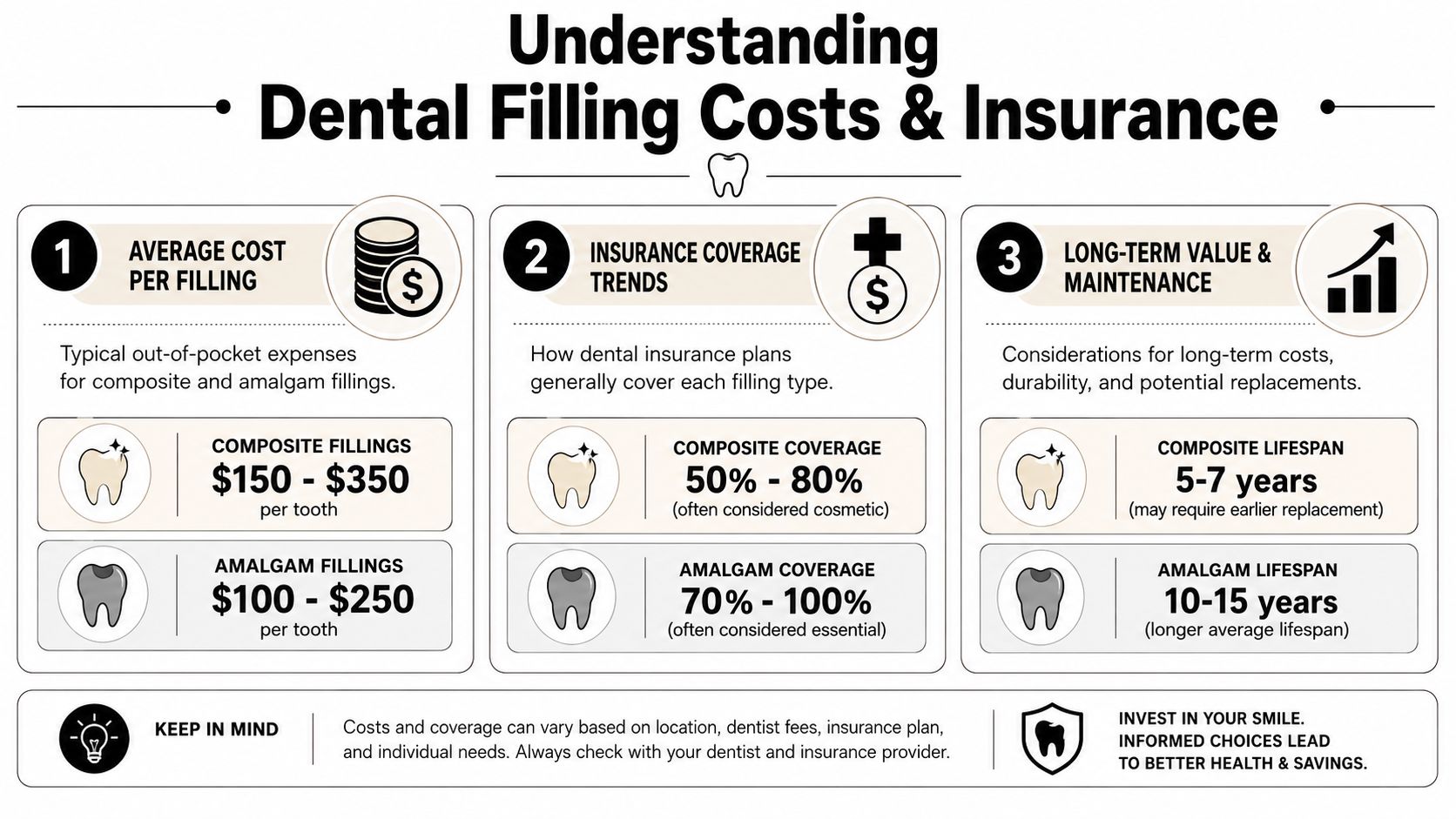
The direct price difference
Composite fillings typically cost more than amalgam. One reviewed dental comparison notes composite fillings often cost 50% to 100% more, with example ranges of $90–$250 for composite versus $50–$150 for amalgam, as outlined in this composite vs amalgam cost comparison.
That price difference usually reflects two things. The material itself costs more, and the placement technique takes more time and precision.
The hidden insurance gap
This is the part many patients don't hear until they're at the front desk.
Patients often find that insurance only covers composite fillings up to the price of an amalgam, leaving them to pay the $100–$150 difference out of pocket. The same source notes that composite placement can take up to 20 minutes longer per tooth, which affects both convenience and scheduling, according to this dental filling insurance and chair-time discussion.
That means a composite filling can cost more in two ways. You may pay more financially, and you may spend more time in the chair.
What that means for your total experience
A filling choice isn't only about the fee on paper. It can affect:
- Your appointment length: Composite often requires a longer visit.
- Your insurance estimate: The plan may treat amalgam as the covered baseline.
- Your day: A longer appointment can matter if you're fitting dental work around school pickup, work meetings, or a busy commute between North Austin and Georgetown.
Practical rule: Ask two questions before you schedule. “What will insurance pay?” and “How much time should I expect in the chair?”
Long-term value depends on the tooth
Cost should never be looked at by itself. A lower upfront fee may make sense for a heavily used back tooth if durability is the top concern. A higher upfront fee may be worth it for a visible tooth if a natural appearance matters every time you smile.
This is also where broader care planning matters. Patients comparing a filling today may also be planning cosmetic dentistry, teeth whitening, a crown, or future restorative dentistry. The right answer depends on how that one tooth fits into the rest of your oral health.
Which Filling Is the Right Choice for You

The best choice usually becomes clearer when you stop asking which material is “best” in general and start asking which one is best for this tooth.
For visible front teeth
If the cavity is on a front tooth or a tooth that shows when you talk and smile, composite is often the better fit. It blends with natural enamel and supports a more cosmetic result.
That's especially important for patients who are already thinking about cosmetic dentistry, veneers, or teeth whitening and want dental work that doesn't stand out.
For large back molars
If the cavity is on a molar and the tooth handles heavy chewing, amalgam often has the stronger practical case. A systematic review found low-certainty evidence that composite restorations have nearly double the failure risk compared with amalgam restorations, with a risk ratio of 1.89, making composite potentially less ideal for large restorations in high-stress posterior areas, according to this systematic review on posterior composite and amalgam outcomes.
That doesn't mean every back-tooth composite is the wrong choice. It means the margin for error is smaller when the restoration is large and the bite force is high.
When budget leads the decision
If keeping costs lower is the main concern, amalgam may make more sense, especially when the tooth is far back and appearance isn't a priority. That can be a very reasonable decision.
Some patients would rather use the more affordable option for a molar and save cosmetic spending for visible teeth later.
When personal preference matters most
Some patients want a mercury-free restoration. Others don't want silver showing when they laugh. Those are valid preferences.
A filling decision should account for:
- Tooth location
- Cavity size
- Bite pressure
- Smile visibility
- Insurance coverage
- Material preference
One practical option for patients comparing treatment choices is 3D Dental's cavity filling cost guidance, which discusses common use cases for silver and white fillings as part of treatment planning. The right decision still comes down to the clinical exam and your priorities.
If a filling is small and visible, appearance often leads. If it's large and on a heavily used molar, function usually leads.
Your Filling Procedure at 3D Dental
A filling appointment is usually much easier than patients expect, especially when the tooth is diagnosed early and the treatment plan is clear.

What the visit usually looks like
The appointment starts with an exam and, when needed, digital x-rays to confirm the size and depth of the cavity. If the tooth is hurting, the team also checks whether the problem is a simple filling or whether it's moving toward a crown, root canal, or another type of restorative dentistry.
Once the plan is confirmed, the area is numbed so the procedure stays comfortable. The decayed portion of the tooth is cleaned out, the space is prepared, and the chosen material is placed carefully to restore shape and bite.
For patients who are nervous, it helps to know that a straightforward filling visit is one of the most routine procedures in general dentistry. It's also one of the most effective ways to stop a small problem from becoming a bigger one.
How comfort and precision fit together
Modern filling care isn't just about drilling and patching. It depends on accurate diagnosis, clear communication, and a restoration that fits your bite properly. A filling that feels high when you chew can be frustrating. A filling that doesn't match the treatment goal can be even more frustrating.
That's why the process should include time for questions, material discussion, and final bite adjustment.
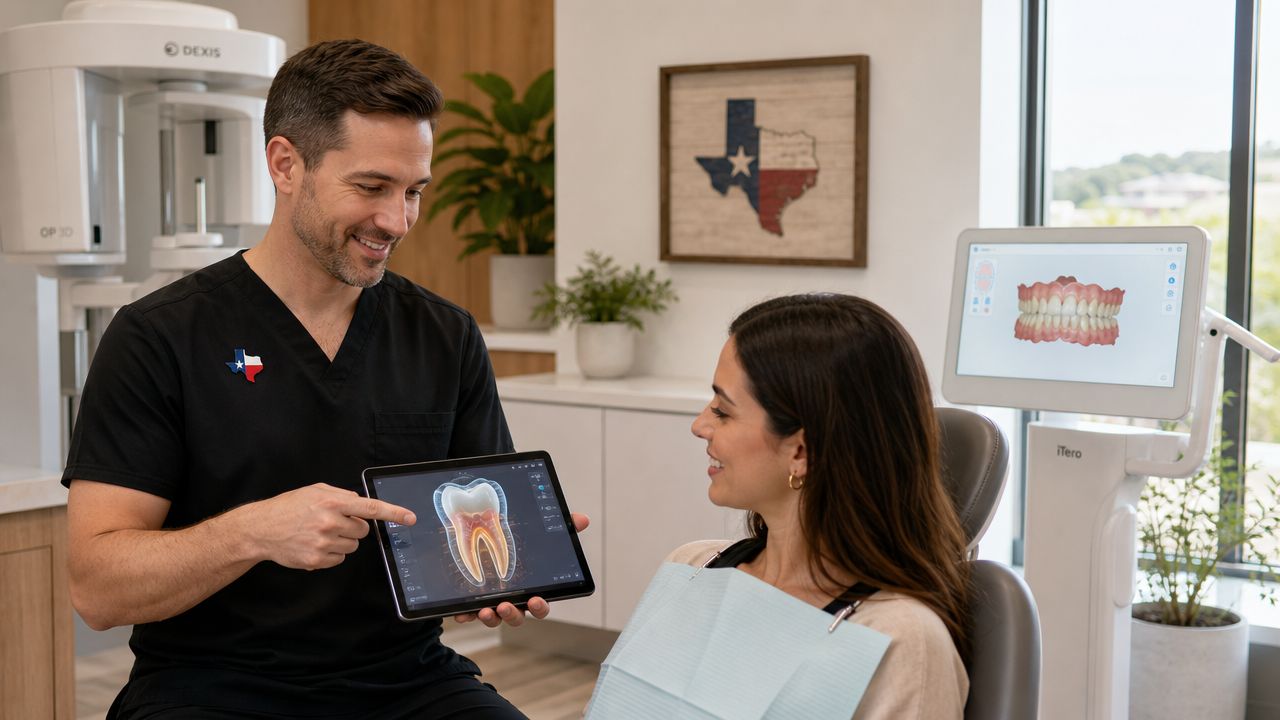
Here's a short look at the kind of patient-centered dental experience many people want before booking:
If your needs go beyond a filling
Sometimes a visit that starts with cavity pain reveals something more advanced. That can lead to a recommendation for a crown, tooth extraction, emergency dental services, or replacement options like dental implants near me if a tooth can't be saved. In other cases, a filling is all that's needed and treatment can be completed efficiently in one visit.
A calm appointment usually starts long before the anesthetic. It starts when the patient knows what's happening, why it's needed, and what to expect next.
Common Questions About Dental Fillings
How long should I wait to eat after a filling
That depends on the material used and how numb your mouth still feels. Many patients can return to eating once the numbness has worn off enough to avoid biting the cheek or tongue. It's smart to start with something softer and avoid chewing directly on the treated side until things feel normal.
If the bite feels off when you start eating, call the office. A filling that's a little too high is usually a simple adjustment.
What are signs a filling may need to be replaced
A filling may need attention if you notice new sensitivity, pain when biting, food catching around the tooth, a rough edge, or a visible crack. Sometimes an older filling loosens. Sometimes the problem is new decay forming around it.
Regular cleaning and exams help catch those issues before they turn into bigger restorative problems.
Are there alternatives to fillings for very small cavities
Sometimes the answer is yes, but only if the area is very early and hasn't developed into a cavity that needs a physical restoration. In those situations, a dentist may recommend monitoring, improved home care, or preventive treatment rather than placing a filling right away.
Once decay has created a true structural defect in the tooth, a filling is often the more reliable way to stop the damage.
Will a filling appointment hurt
Most patients do well with local anesthetic and feel pressure more than pain. Mild soreness or sensitivity afterward can happen, especially when the cavity was deeper, but it usually improves quickly.
If pain increases instead of decreases after treatment, that deserves a follow-up evaluation.
Can I choose a white filling for any tooth
You can ask, and that conversation is worth having. But the final recommendation should depend on tooth location, cavity size, bite force, appearance goals, and cost. A material that looks great in one part of the mouth may not be the smartest long-term choice in another.
What if I need more than a filling
That's not unusual. Some patients come in looking for a dentist in Austin, TX or dentist in Georgetown, TX because they think they need a simple filling and discover they also need a crown, emergency dentist care, or a longer-term plan involving implants or cosmetic work. The important thing is getting a clear diagnosis first.
If you're unsure whether you need a filling, crown, or something more, the exam matters more than guessing from symptoms alone.
If you're dealing with tooth sensitivity, a suspected cavity, or an older filling that may need attention, 3D Dental provides filling evaluations and restorative dental care for patients in Austin and Georgetown, TX. Schedule an appointment to get a clear diagnosis, discuss composite vs amalgam fillings in the context of your specific tooth, and move forward with treatment that fits your health, budget, and goals.
Ready to get started?
Schedule a free, no obligation consultation with our team and see what's possible for your smile!
Georgetown
- Mon-Thurs8:30am-5pm
- Fri8am-3:30pm
- Sat-SunClosed
Austin
- Mon-Tues8am-5pm
- Wed-Thurs9am-6pmFri8am-2pm
- Sat-SunClosed