
Wisdom Tooth Extraction Austin: Expert Care & Recovery
Related Posts







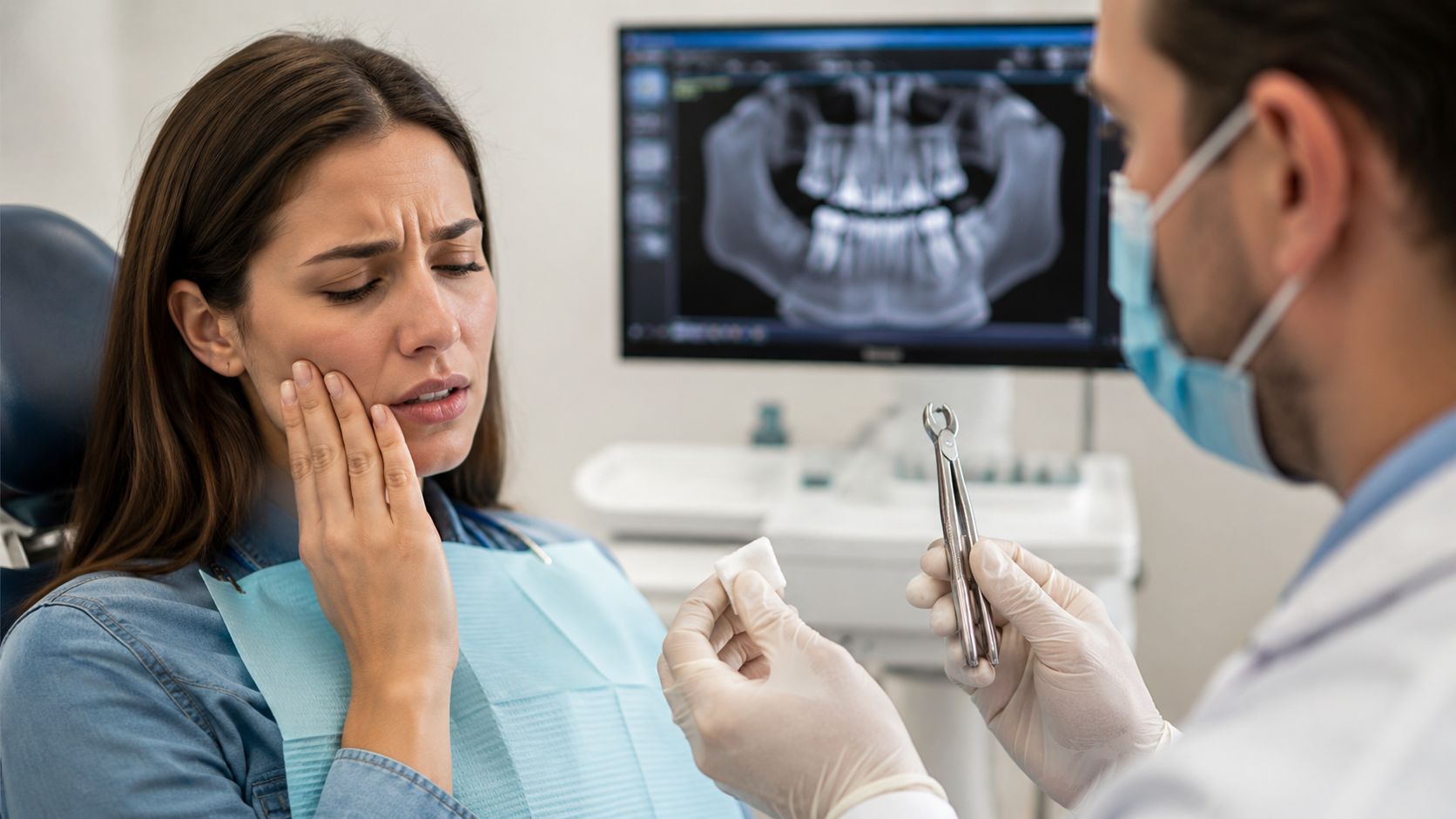


















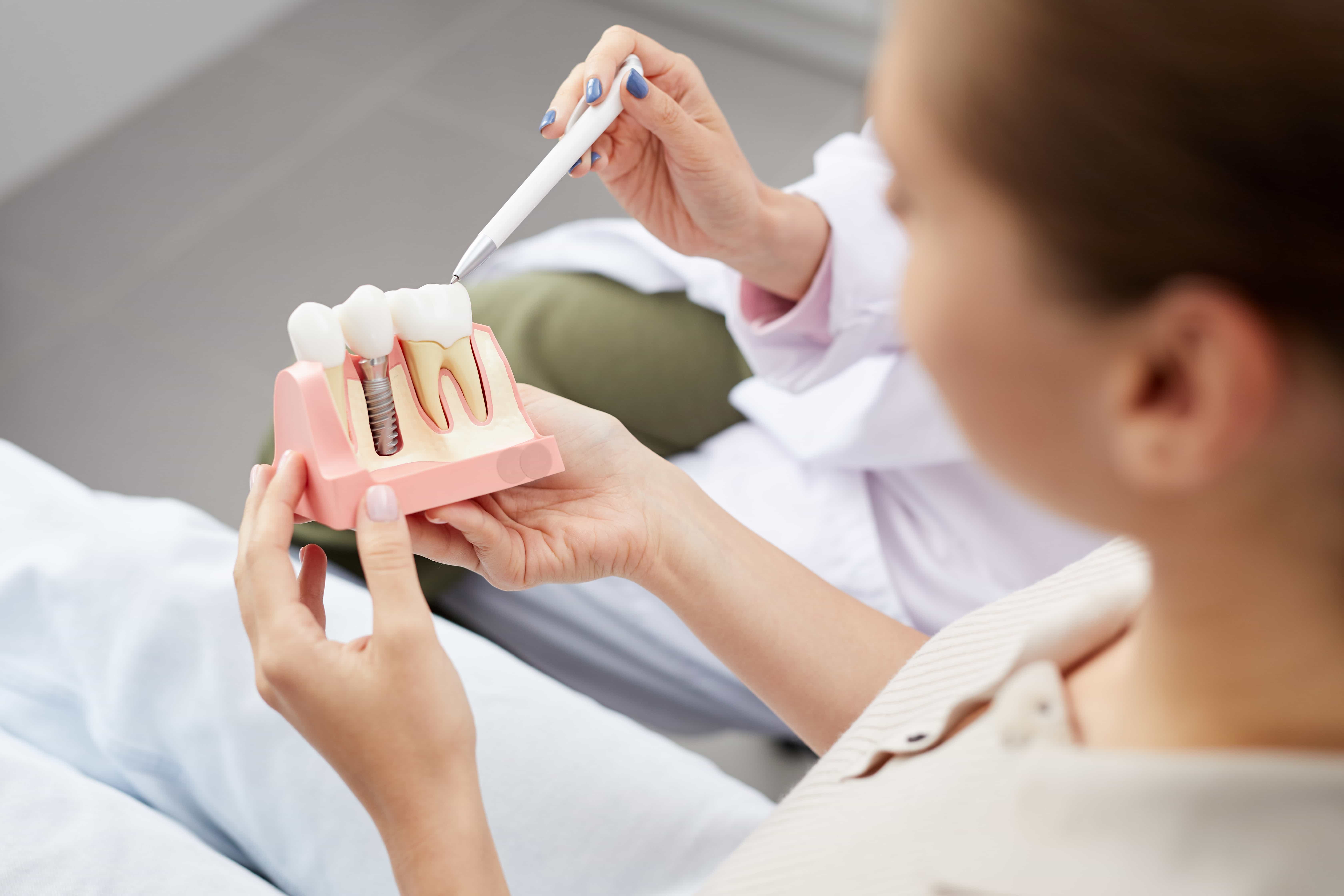
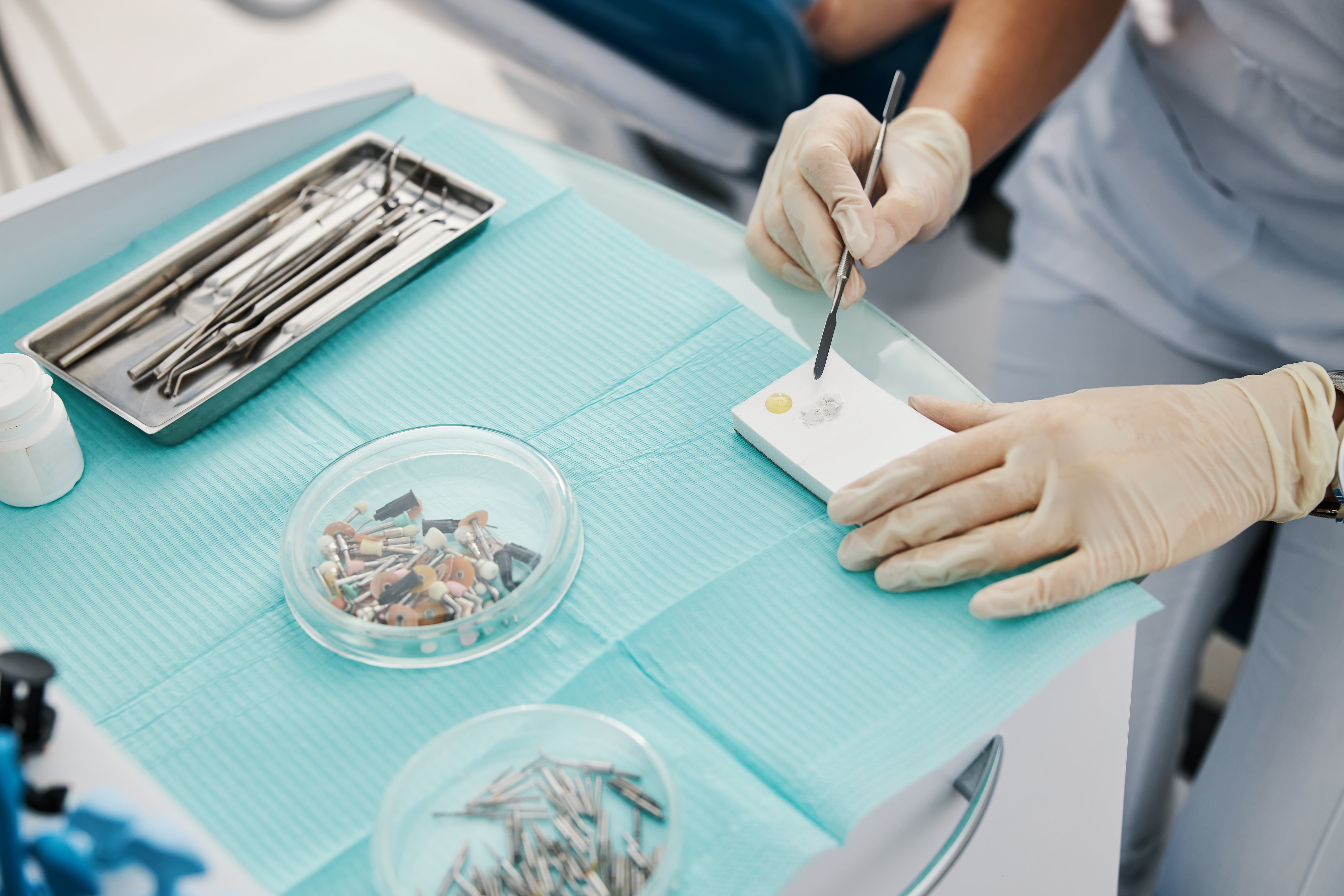
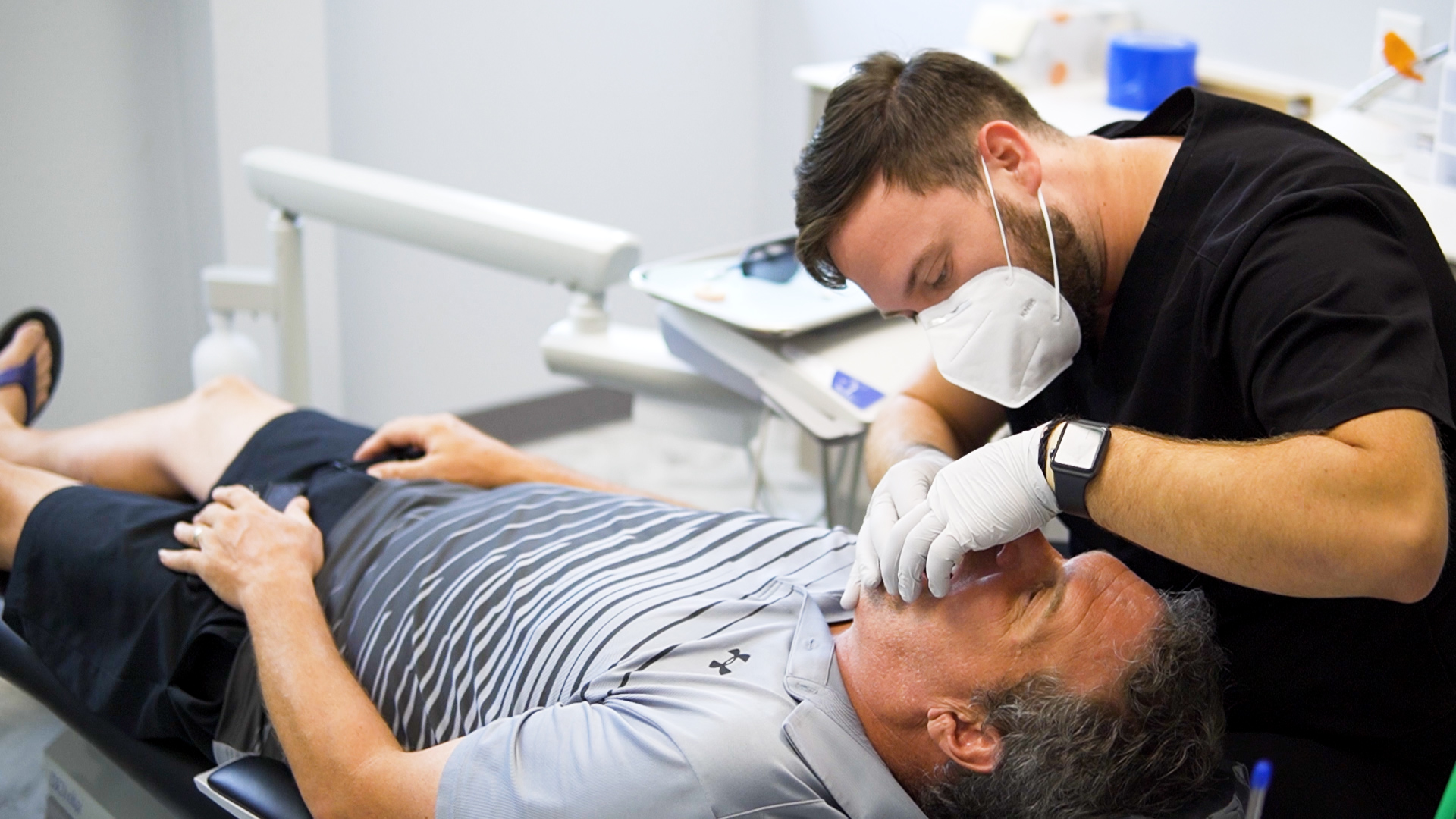

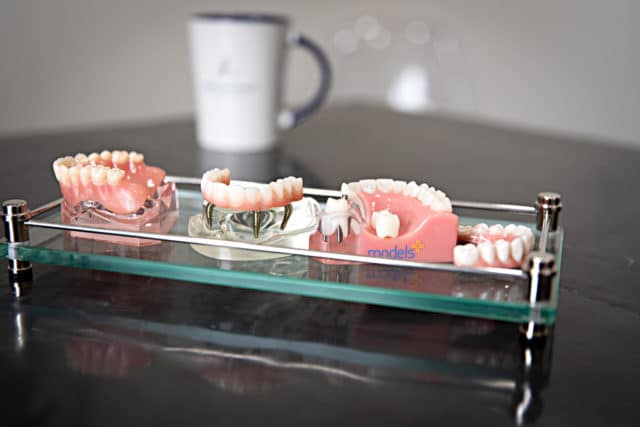





















If you're searching for wisdom tooth extraction in Austin, there's a good chance you're dealing with one of two things right now. Your mouth hurts and you want relief fast. Or your dentist told you your wisdom teeth should come out, but they don't hurt, and now you're wondering whether this is really necessary.
Both reactions are normal. So is the anxiety that tends to follow. A lot of patients are less worried about the tooth itself than the unknowns around it. Will it be painful? Do I really need sedation? How long will I be out of work? What will it cost?
At a practical level, wisdom tooth removal is very routine. A widely cited benchmark is that about 5 million Americans undergo wisdom tooth extraction each year, and the American Association of Oral and Maxillofacial Surgeons is also cited as estimating that about 85% of third molars will eventually need removal, which helps explain why this is such a common procedure in busy markets like Austin (wisdom tooth extraction benchmark and AAOMS estimate). That doesn't mean your concerns are small. It means this is a procedure dentists plan for carefully, perform often, and know how to make much easier on patients than individuals expect.
For patients in Austin, Georgetown, Round Rock, Cedar Park, Wells Branch, and Liberty Hill, the most helpful guidance usually comes down to two questions. Do I need this if it doesn't hurt? And which sedation option is worth the cost for my case? Those are the questions that matter most, and they deserve clear answers.
Your Trusted Local Guide to Wisdom Tooth Extraction
Some patients call because they have swelling in the back of the mouth and can't chew comfortably. Others come in because a routine exam showed a wisdom tooth growing sideways. Many are somewhere in between. They've had occasional pressure, food getting trapped in the back, or a flare-up that went away, but they know something doesn't feel right.
That uncertainty is often the hardest part. Pain gives people a reason to act. No pain creates doubt. Anxiety adds another layer because the words “oral surgery” can sound much bigger than the experience itself.
Why this procedure feels bigger than it is
Wisdom teeth are your third molars, located at the very back of the mouth. They typically emerge in the late teens to early twenties, which is also when problems like crowding, impaction, infection, and cleaning difficulty tend to become obvious. For many adults, the issue isn't just whether the tooth erupts. It's whether it erupts in a healthy position that you can maintain long term.
That's why wisdom tooth extraction in Austin is usually less about reacting to a crisis and more about preventing one.
Most people don't need a lecture about wisdom teeth. They need a clear explanation of risk, comfort options, and recovery in plain language.
What patients usually want to know first
Before anyone agrees to treatment, they usually want answers to a few practical concerns:
- Whether removal is really necessary when symptoms are mild or inconsistent
- How difficult the extraction looks based on the tooth position
- What sedation or anesthesia makes sense for their anxiety level and procedure complexity
- How long recovery will affect work, school, driving, and meals
For local families and adults looking for a dentist in Austin, TX or Georgetown, TX, those details matter more than marketing language. Wisdom tooth removal should feel organized, predictable, and well planned. When patients understand the reason behind the recommendation and what the day will look like, fear usually drops fast.
Understanding Why Wisdom Tooth Removal Is Recommended
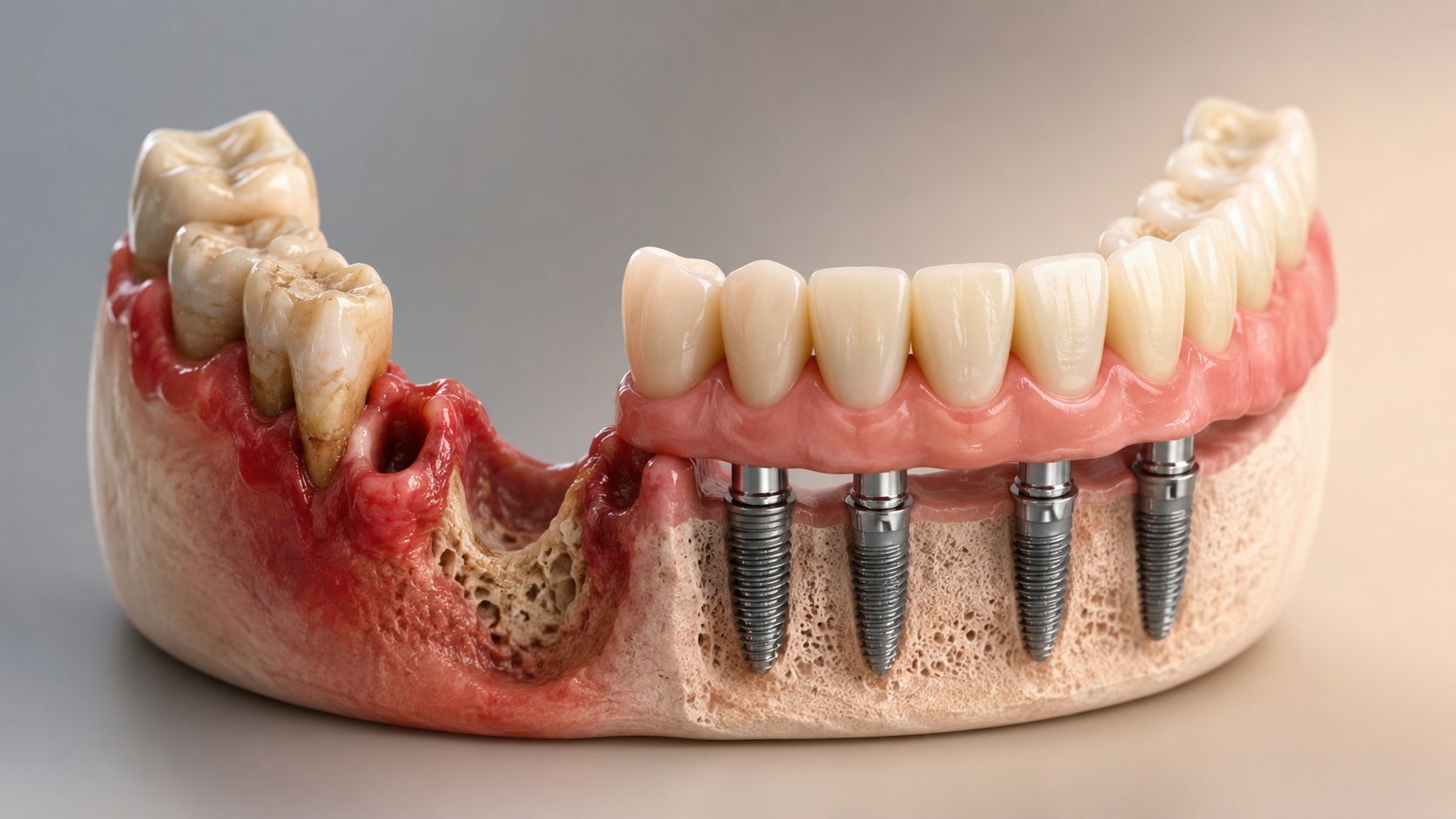
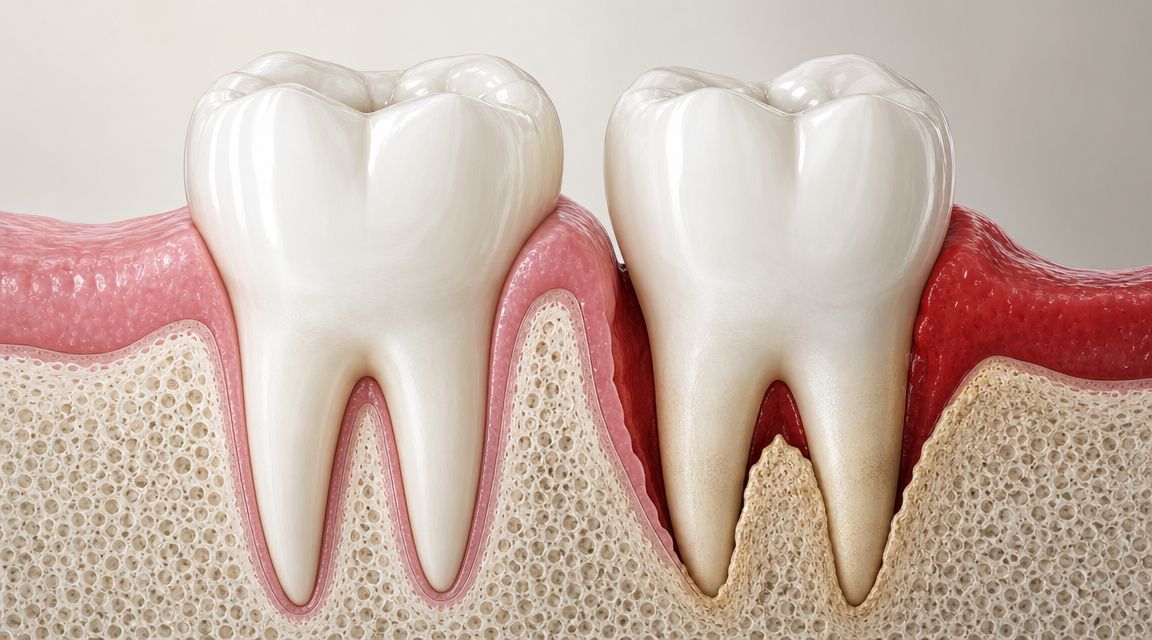
Wisdom teeth often become a problem because they're the last molars to arrive, and many jaws don't have enough room for them. When a third molar can't come in normally, it may stay trapped under the gums, come in only partway, or angle into the tooth beside it. That can create pressure, make the area difficult to clean, and raise the chance of future dental trouble.
The question patients ask most often is simple: If it doesn't hurt, why remove it?
Pain is only one part of the decision
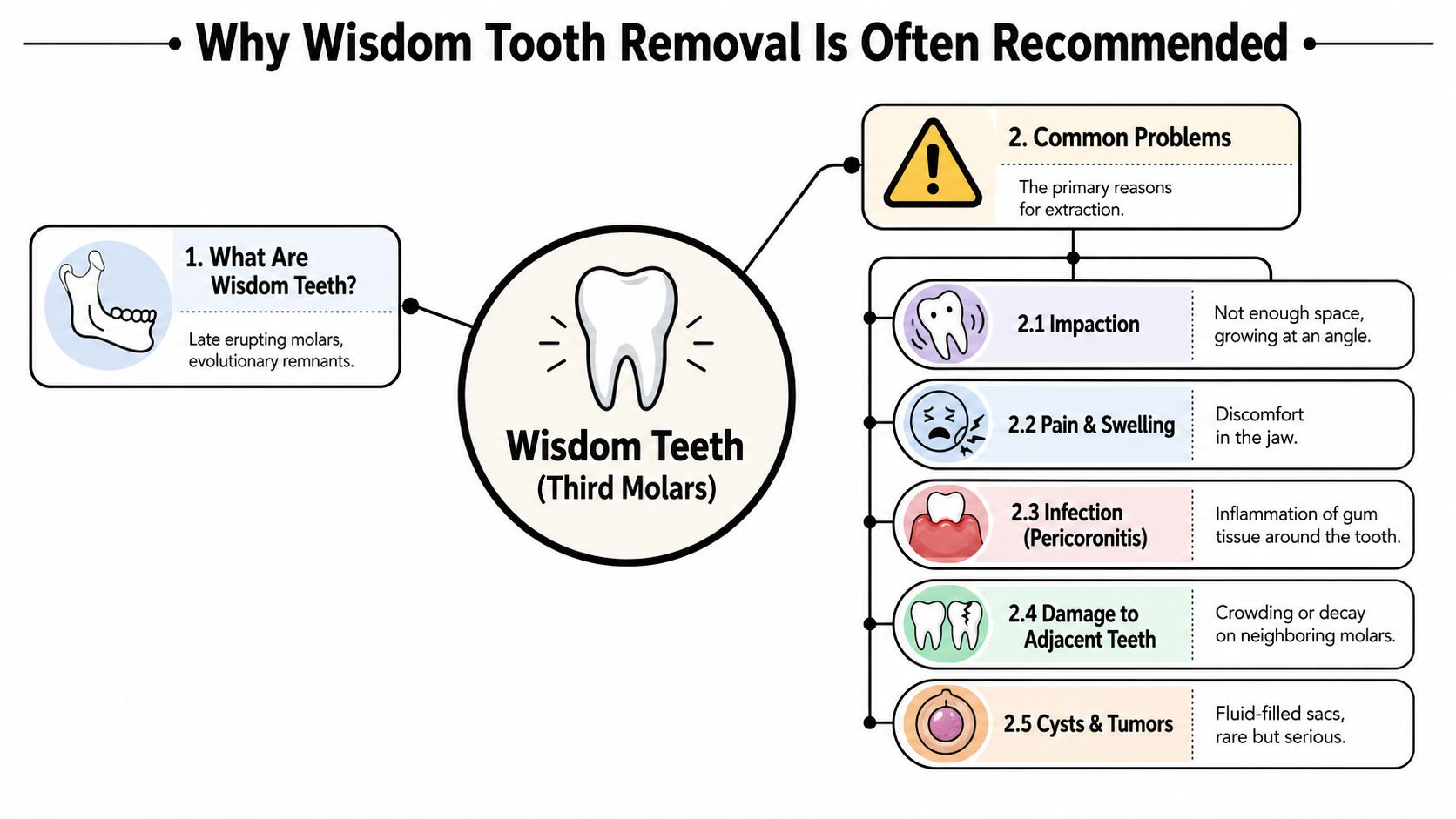
A wisdom tooth can be unhealthy long before it becomes painful. The American Association of Oral and Maxillofacial Surgeons advises that impacted wisdom teeth are often removed to prevent future problems such as infection, damage to adjacent teeth, cysts, and crowding, and that the decision should be based on individualized risk assessment from X-rays, not pain alone (AAOMS guidance summarized in this Austin wisdom teeth FAQ).
That matters because many patients assume no pain means no issue. In reality, some of the most common reasons for removal involve what the imaging shows, not what you feel day to day.
Common reasons removal is recommended
- Impaction: The tooth is stuck under the gums or bone, or it's erupting at an angle.
- Partial eruption: Part of the tooth is visible, but the area is hard to keep clean and prone to inflammation.
- Pressure on nearby teeth: A poorly positioned third molar may affect the tooth in front of it.
- Hygiene barriers: Even fully erupted wisdom teeth can be so far back that brushing and flossing them well is unrealistic.
- Future risk: A quiet tooth today may still create a larger, harder-to-treat problem later.
Practical rule: A painless wisdom tooth isn't automatically a healthy wisdom tooth.
When watchful waiting can make sense
Not every wisdom tooth needs to come out immediately. If a tooth is fully erupted, in a healthy position, and easy to clean, monitoring may be reasonable. The key is that the decision should be based on actual findings, not guesswork.
A careful exam looks at things like eruption pattern, gum access, the position of the roots, and whether the tooth is creating a trap for bacteria or pressure against the next molar. If those risk factors aren't present, observation may be appropriate. If they are present, waiting can make a later extraction more involved.
For many adults, the best question isn't “Does it hurt?” It's “Does this tooth have a realistic path to staying healthy?”
What to Expect During Your Consultation in Austin
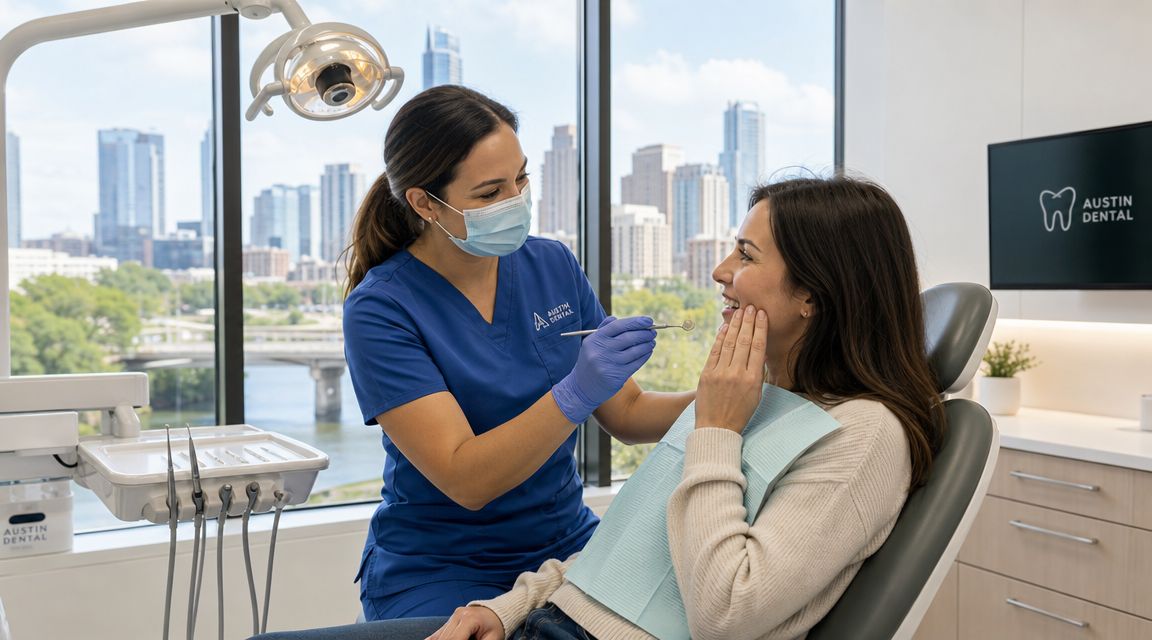
A wisdom tooth consultation should answer questions, not create new ones. The first visit usually starts with conversation before treatment. Symptoms, past dental experiences, medical history, and anxiety level all matter because they shape the plan as much as the X-ray does.
Then comes the clinical part. The mouth is examined for swelling, gum irritation, partial eruption, trapped food, signs of infection, and how much room the tooth appears to have. That visible exam helps, but the primary planning value usually comes from imaging.
Why 3D imaging changes the conversation
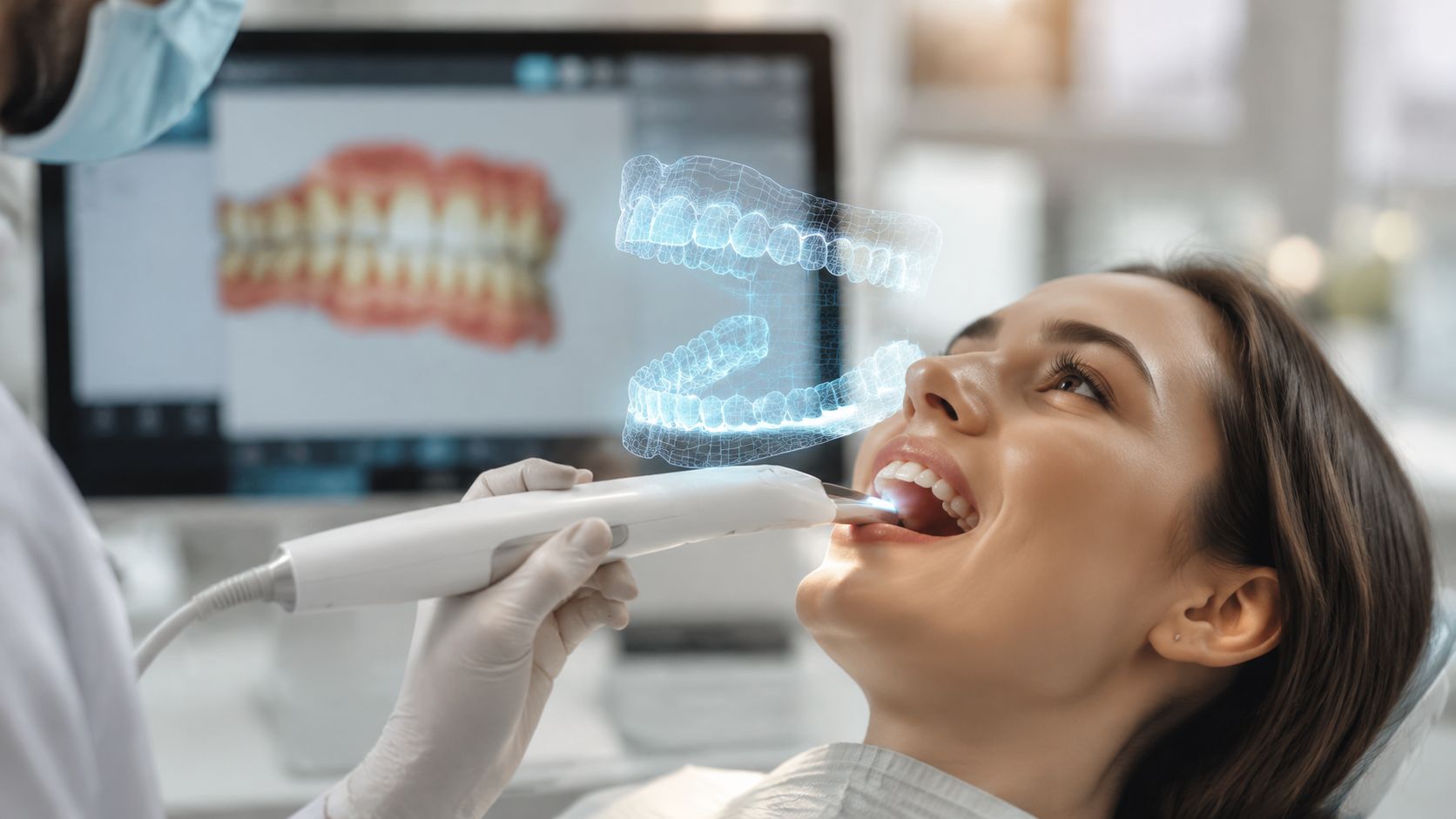
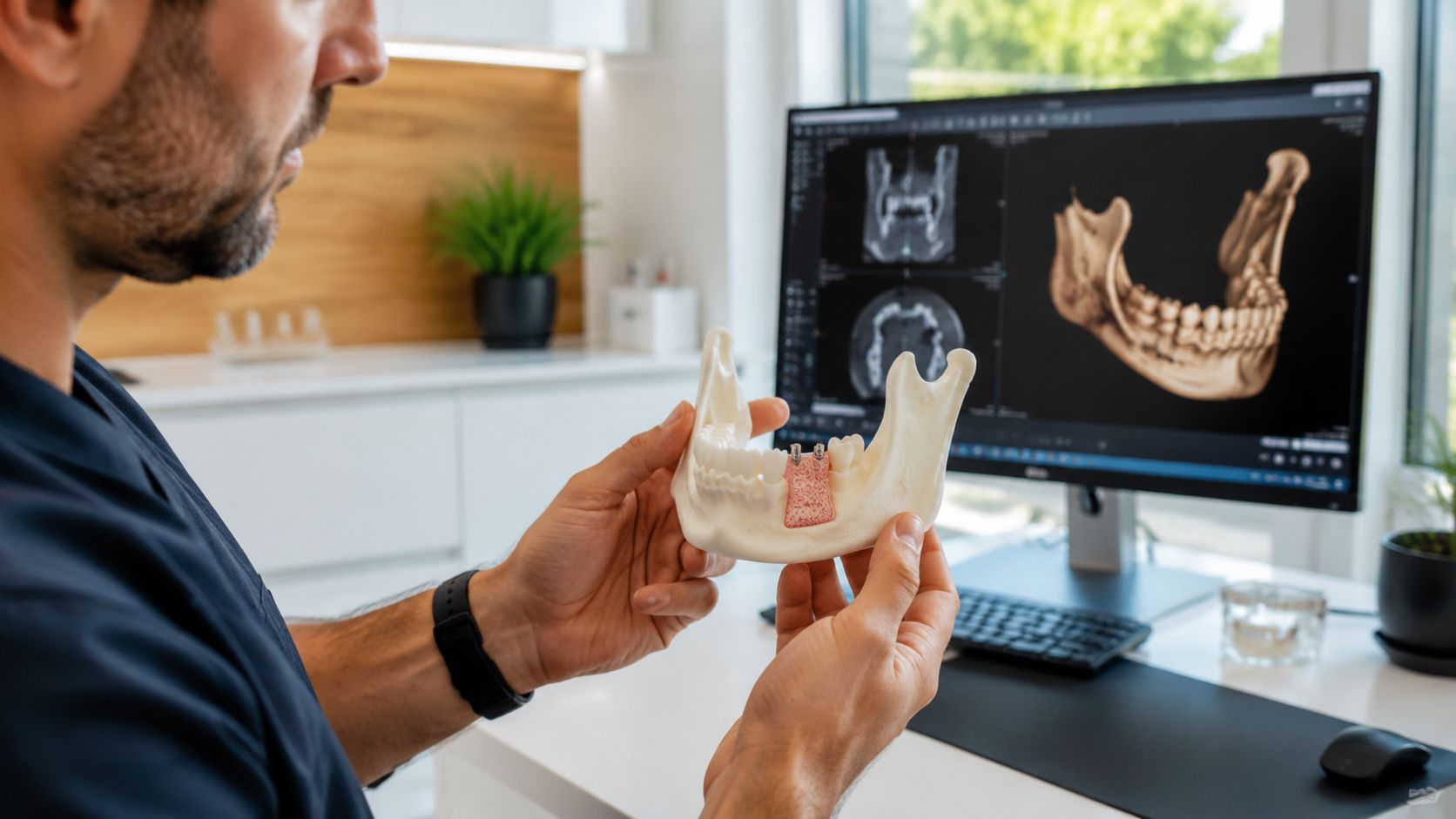
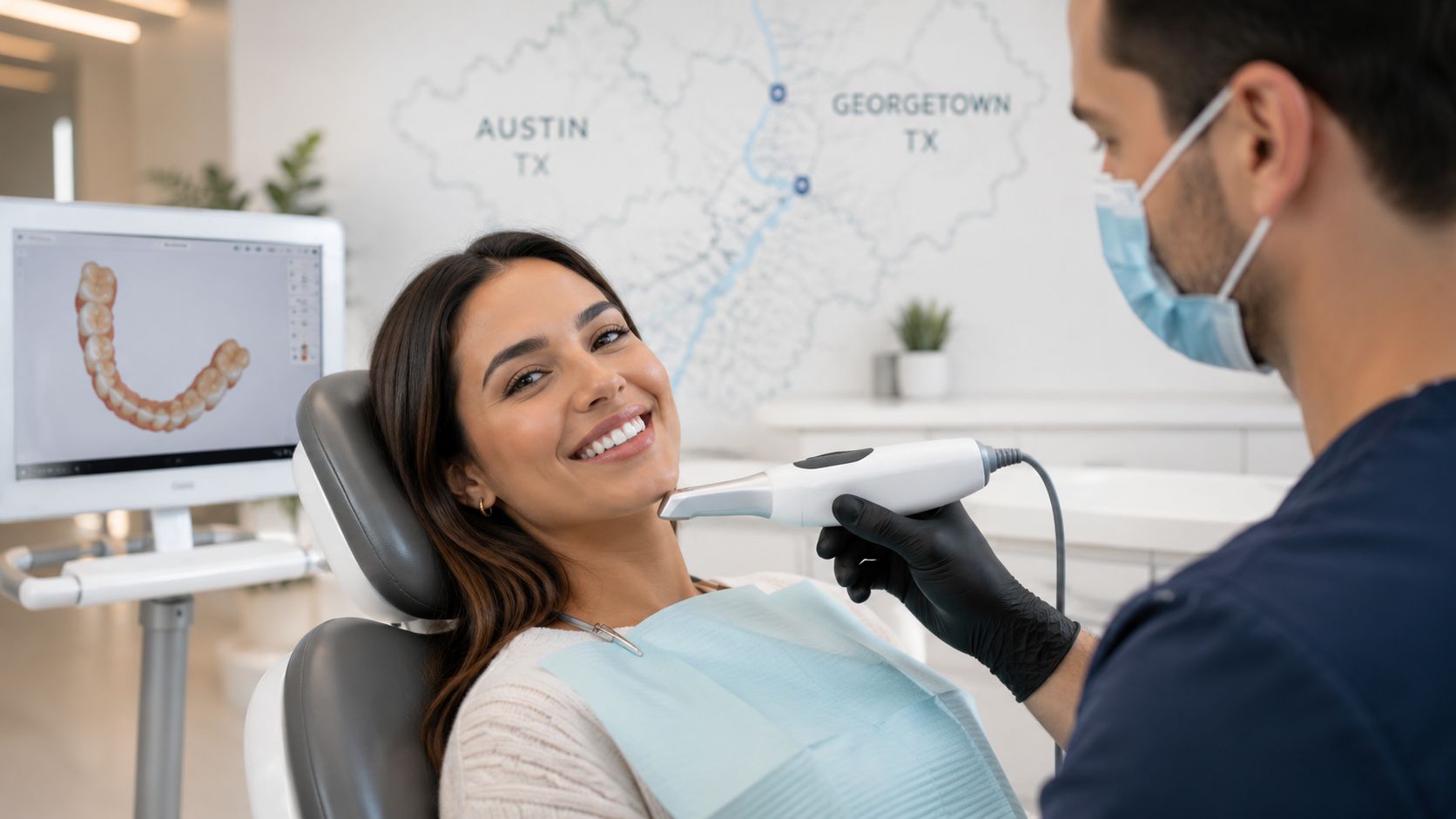
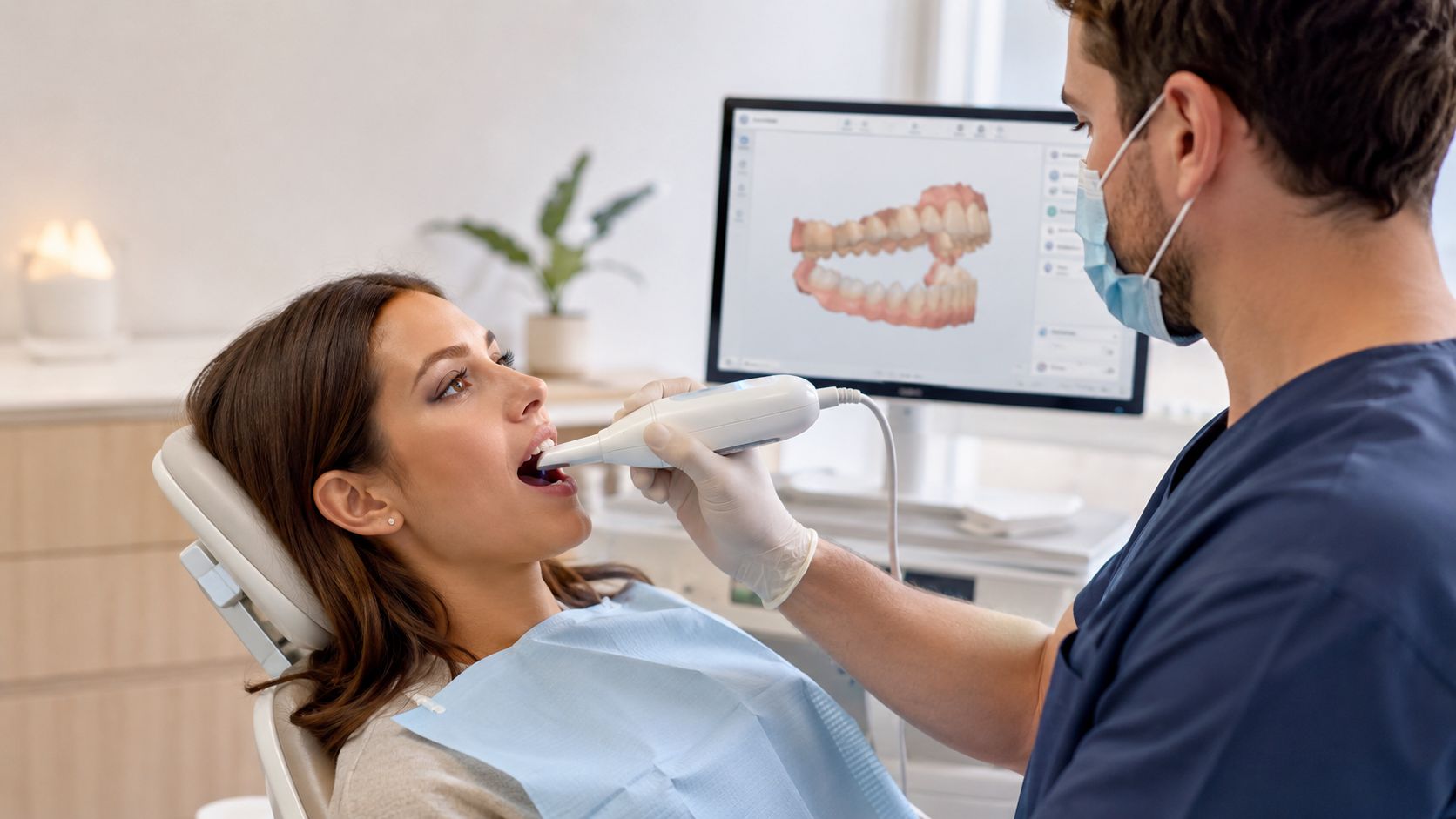
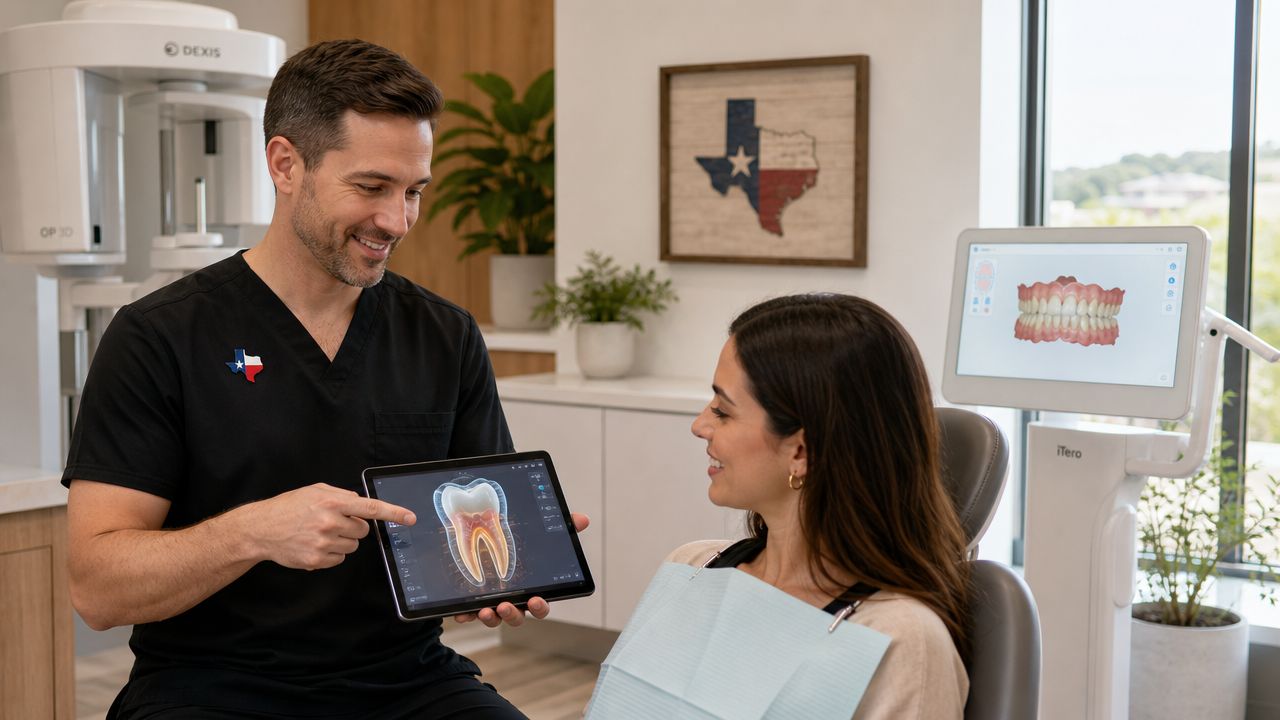
For wisdom tooth extraction, CBCT or 3D cone-beam imaging is used to evaluate the tooth's relationship to the mandibular nerve in three dimensions before surgery. Austin oral surgery guidance notes that this improves planning and helps reduce the risk of nerve injury compared with relying on traditional 2D radiographs alone (CBCT planning for wisdom teeth removal).
That difference is important. A flat X-ray can suggest where a root is. A 3D scan gives a more complete view of the tooth, the surrounding bone, and nearby anatomy. When a tooth sits close to a nerve, that information affects how the extraction is approached and how risks are explained.
What a useful consultation should include
A good consult isn't just “yes, remove them” or “no, leave them.” It should give you a plan you understand.
- A clear diagnosis: Are the teeth impacted, partially erupted, crowded, or difficult to maintain?
- A discussion of timing: Is this something that should be handled promptly, or can it be monitored?
- A comfort plan: Local anesthesia, nitrous, oral sedation, or IV sedation should be discussed in relation to your case.
- Recovery expectations: You should leave knowing the likely downtime, eating limits, and activity restrictions.
For patients who want to feel prepared before treatment day, this guide on how to prepare for wisdom tooth extraction covers the basics in a straightforward way.
If a consultation leaves you confused about why a tooth should come out, you don't have enough information yet.
The goal of the first visit
The best consults lower anxiety because they replace vague fear with specifics. You should know what the imaging shows, why removal is or isn't recommended, and what level of treatment fits your situation. That's the point where a decision starts to feel manageable.
Sedation and Anesthesia for a Comfortable Procedure
For many patients, the hardest part of planning wisdom tooth extraction in Austin isn't the extraction. It's deciding how awake they want to be for it, and whether a more expensive sedation option is necessary.
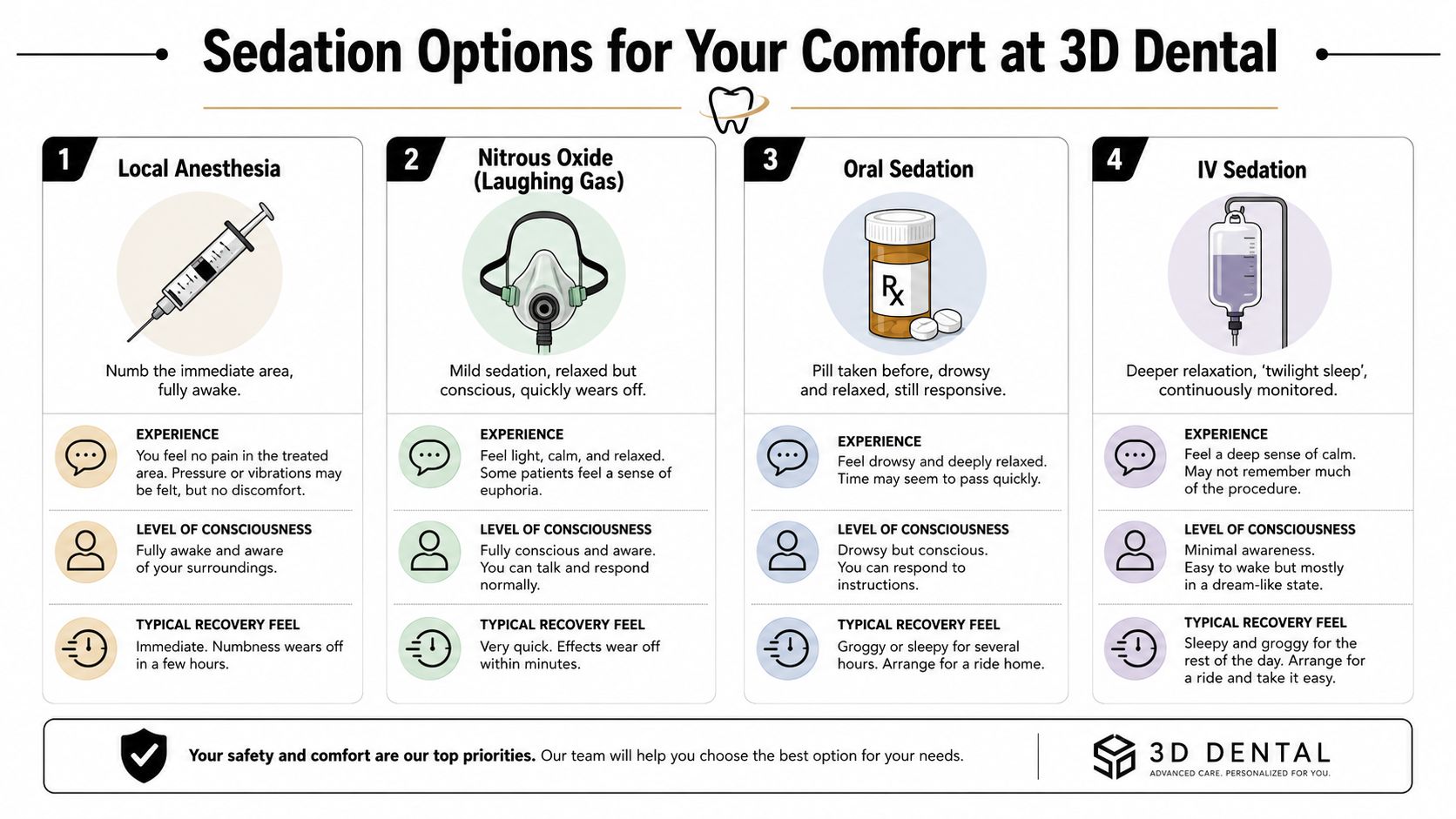
The right answer depends less on preference alone and more on three practical factors: anxiety level, the number of impacted teeth, and surgical difficulty. That's the framework patients can use to think clearly about comfort, cost, and medical need (how anesthesia choices are shaped by anxiety and case difficulty).
A simple comparison of common options
| Option | What you feel | Best fit | Cost impact |
|---|---|---|---|
| Local anesthesia | You're awake, but the area is numb | Simple cases, lower anxiety, limited surgical difficulty | Usually the lowest-cost choice |
| Nitrous oxide | Relaxed and calmer, but still conscious | Mild to moderate anxiety, shorter or less complex treatment | Adds cost, but less than deeper sedation |
| Oral sedation | Drowsy and more detached, still responsive | Patients who want more relaxation without IV sedation | Cost varies by plan and case |
| IV sedation | Deep relaxation or twilight-like experience | High anxiety, multiple impacted teeth, more involved surgery | Typically the highest-cost option |
When local anesthesia is enough
Some extractions don't require deep sedation at all. If the tooth position is straightforward and you're comfortable with dental treatment, local anesthesia may be all you need. It numbs the area thoroughly, and many adults do well with it.
Realistic expectations are important. Local anesthesia controls pain, but it doesn't erase awareness of pressure or movement. For calm patients in simpler cases, that's often fine. For anxious patients, it may feel stressful even if it isn't painful.
When paying more for sedation makes sense
Nitrous or deeper sedation can be worth it when fear would make the visit harder than the procedure itself. It can also make sense when several teeth are being removed, when impaction is more involved, or when staying still and relaxed will help the process go more smoothly.
3D Dental offers patients a range of treatment and payment pathways, which is useful when comparing comfort options against budget constraints. The right choice isn't always the most sedated one. It's the option that matches the actual difficulty of the surgery and your ability to tolerate the experience well.
Sedation should solve a real problem. It shouldn't be chosen automatically, and it shouldn't be avoided out of pride.
A practical way to decide
Ask these questions at your consult:
- How complex does this extraction look on imaging?
- Will I be comfortable with local anesthesia alone, or do you expect significant pressure and time in the chair?
- Am I choosing sedation for true surgical need, anxiety management, or both?
- If I want to keep costs lower, what's the least intensive option that still makes sense for me?
That conversation is often what turns a nervous patient into a prepared one.
The Day of Your Extraction at 3D Dental
Most patients feel the most nervous before the appointment starts. Once they arrive, check in, and talk through the plan one more time, the day usually feels much more manageable.
If sedation is part of your treatment, you'll be given instructions ahead of time about eating, drinking, medications, and arranging a driver. Following those directions matters. It's one of the simplest ways to keep your visit safe and smooth.
What happens when you arrive
The team reviews your medical information, confirms the teeth being treated, and goes over any last questions. If you're anxious, this is the time to say so plainly. Dental teams hear that every day, and it helps them tailor how they guide you through the visit.
Once you're settled, the comfort plan begins. That may mean local anesthetic, nitrous, oral sedation, or IV sedation depending on what was chosen during the consultation. The priority is straightforward: make sure you're numb, calm, and ready before anything starts.
What the extraction feels like
Patients often expect pain. What they usually notice instead is pressure. That's a very different experience. Numbing medication blocks pain, while the dentist carefully removes the tooth or, if needed, sections it into smaller parts to protect nearby structures and make removal more controlled.
For erupted teeth, the process can be relatively direct. For impacted teeth, the steps are more involved, but the goal is the same. Remove the tooth carefully, protect the surrounding tissue, and keep the procedure as gentle as the anatomy allows.
The procedure tends to feel shorter to patients than it did in their imagination.
Before you head home
After the extraction, gauze is placed, post-operative instructions are reviewed, and you're monitored until it's appropriate for discharge. If sedation was used, your driver will take you home.
You should leave with a clear plan for pain control, swelling management, food choices, and what to avoid during the first part of healing. Knowing those details before you get home makes recovery much less stressful.
Your Recovery Timeline and Aftercare Tips
You get home, the numbness starts to wear off, and the first question usually hits fast. How rough is this going to be tomorrow?
Recovery after wisdom tooth removal is usually very manageable, but it is not identical for every patient. Simpler erupted teeth often heal faster than severely impacted teeth. Age matters too. The American Association of Oral and Maxillofacial Surgeons notes that many patients return to school, work, or routine activities within a few days, while complete healing of the extraction sites takes longer (AAOMS guidance on wisdom teeth removal and recovery).
That difference matters because patients often judge recovery by pain alone. Pain is only one part of healing. Swelling, jaw stiffness, and how carefully you protect the clot during the first several days often have more effect on how smooth recovery feels.
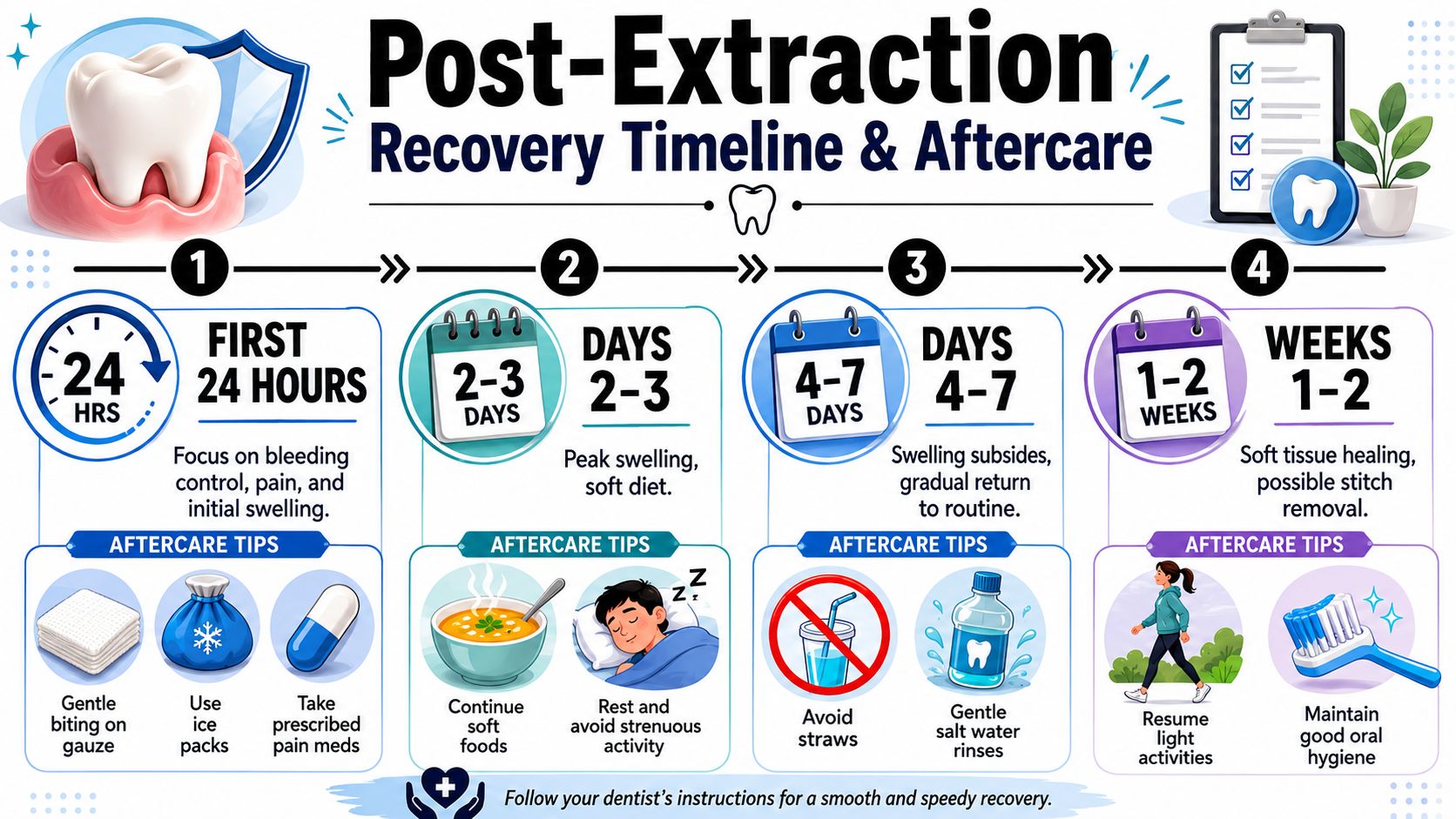
The first day
The main job on day one is simple. Protect the blood clot and keep inflammation under control.
- Bite on gauze as directed: Steady pressure helps bleeding slow down.
- Use ice packs on the outside of the face: Short intervals help limit early swelling.
- Take pain medication on schedule if it was prescribed or recommended: It is easier to prevent pain from building than to chase it later.
- Rest with your head slightly raised: That can reduce throbbing and help bleeding settle.
If a patient asks me which aftercare mistake causes the most trouble, the answer is usually disturbing the clot too soon. Spitting hard, rinsing aggressively, smoking, vaping, or using a straw can all increase the chance of a dry socket.
Days two through five
This is often the most annoying stretch, even when healing is going well. Swelling may peak before it improves. Limited jaw opening can show up here too, especially after lower wisdom teeth are removed.
Food choices make a real difference.
- Choose soft foods that are easy to swallow and chew: Yogurt, applesauce, mashed potatoes, eggs, smoothies without a straw, and soup once it is warm rather than hot.
- Keep the mouth clean gently: Many patients are asked to start a light saltwater rinse after the first day.
- Avoid strenuous exercise: Heavy activity can restart bleeding and increase swelling.
- Stay hydrated: A dry mouth is less comfortable and can make recovery feel slower.
This short recovery tips guide for wisdom teeth removal is helpful if you want a simple checklist at home.
Here's a video many patients find reassuring during recovery.
The rest of the first week
By this point, many patients feel clearly better, even if they are not fully back to normal. Eating gets easier. Swelling usually starts trending down. Soreness often becomes more intermittent than constant.
This is also the stage where people overestimate how healed they are. If discomfort is improving, that is a good sign. The sockets still need time, and pushing back into crunchy foods, tobacco, or intense workouts too early can set recovery back.
A smooth recovery usually comes from protecting the site consistently and following the small instructions that seem easy to ignore.
When to call the office
Mild bleeding, swelling, soreness, and temporary jaw stiffness can all be expected. A call is appropriate if bleeding stays heavy, swelling keeps getting worse after the first few days, pain sharply increases instead of easing, or you notice fever, a bad taste, or anything that feels out of step with the instructions from your dentist.
Patients should not have to guess during recovery. At 3D Dental, clear aftercare instructions and a direct path to the office are part of making the procedure feel safe from start to finish.
Wisdom Tooth Extraction Cost and Financial Options
A lot of patients ask two fair questions at this stage: Do I need to pay for removal if the tooth is not hurting, and which level of sedation is worth the extra cost? Those questions matter because the bill is shaped less by the tooth itself and more by how difficult it is to remove safely.
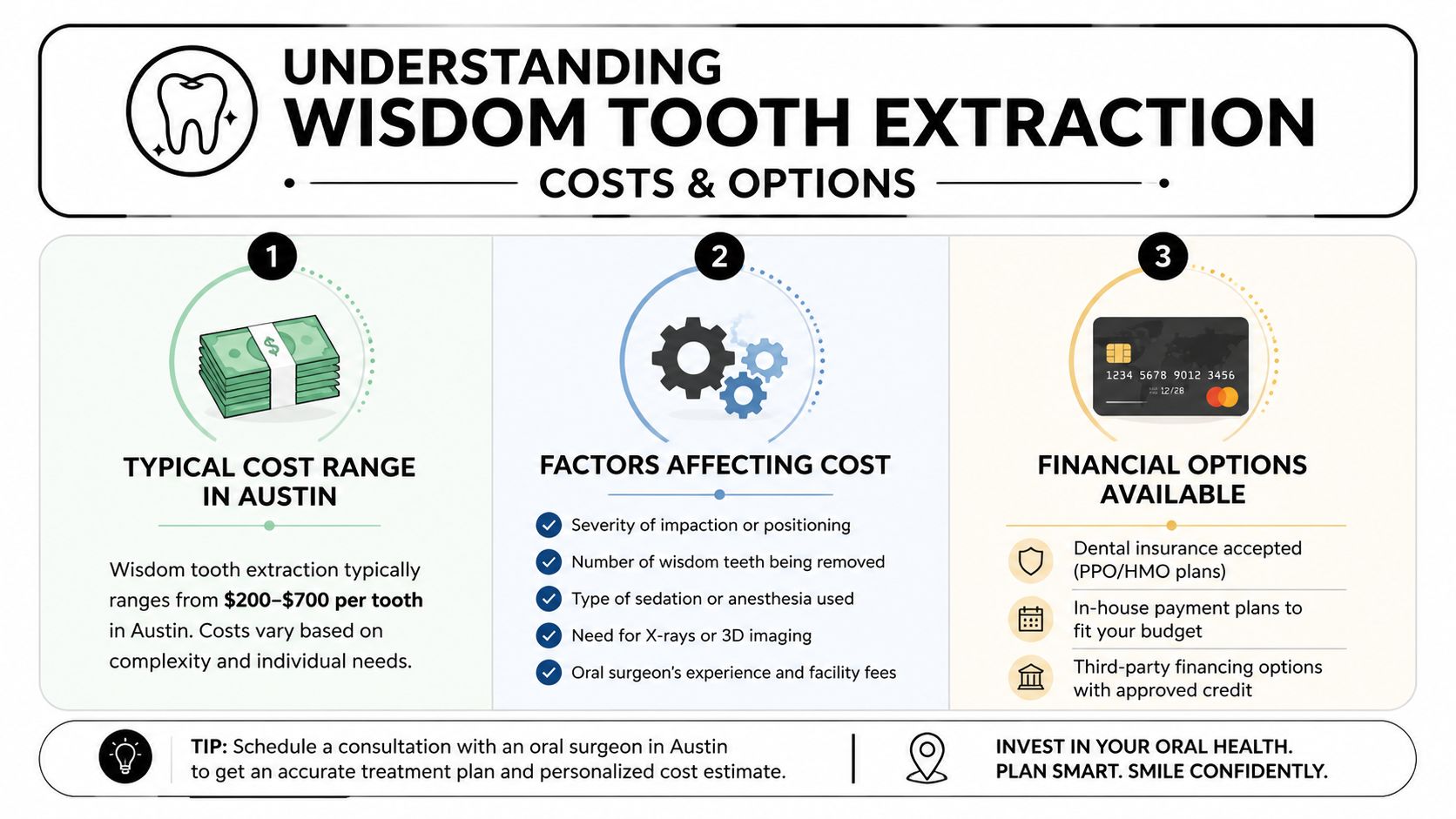
Fees in Austin vary. Practices commonly price a simple extraction lower than a partially or fully impacted wisdom tooth, and sedation changes the total as well. The American Dental Association's consumer guide explains that surgical difficulty, anesthesia, imaging, and insurance all affect what you pay for oral surgery care (ADA MouthHealthy on oral surgery costs and insurance factors).
What tends to affect the total most
A useful quote should explain the drivers behind it.
- Impaction severity: Teeth trapped under gum or bone usually take more time, a more surgical approach, and more careful protection of nearby structures.
- Number of teeth being removed: Removing several teeth in one visit can increase surgical time, supplies, and recovery planning.
- Sedation choice: Local anesthesia costs less than deeper sedation, but the lowest price is not always the best value for a nervous patient or a longer procedure.
- Imaging and planning needs: A tooth close to the sinus or the lower nerve may require more detailed imaging before treatment.
How to think about value, not just price
If a wisdom tooth is quiet today but likely to damage the neighboring tooth, collect bacteria under the gums, or become harder to remove later, delaying treatment can create a bigger expense. If the tooth is fully erupted, easy to clean, and not affecting anything around it, observation may be reasonable. That decision should come from the exam and imaging, not from pain alone.
Sedation deserves the same kind of honest review. Local anesthesia is often enough for a simple, straightforward removal. Nitrous oxide can help if the main issue is mild anxiety. Oral or IV sedation may be worth the added fee for patients with strong dental fear, a sensitive gag reflex, multiple extractions, or impacted teeth expected to take longer. In those cases, comfort can improve safety because patients are better able to stay relaxed and still.
Payment pathways that can make treatment easier
3D Dental accepts insurance, offers in-house payment options, and provides financing through Cherry and Sunbit. That gives patients a few practical ways to handle treatment instead of postponing it because the full amount is due at once.
The best next step is a consultation with imaging and a written treatment plan. That lets you compare the cost of removing the tooth now versus watching it, and it helps you choose a sedation option that fits the difficulty of the case and your comfort level.
If you're ready to get clarity on your wisdom teeth, schedule a consultation with 3D Dental. Patients in Austin, Georgetown, Wells Branch, Cedar Park, Round Rock, and Liberty Hill can get a clear exam, a comfort plan that fits the case, and straightforward guidance on recovery, insurance, and financing before committing to treatment.
Ready to get started?
Schedule a free, no obligation consultation with our team and see what's possible for your smile!
Georgetown
- Mon-Thurs8:30am-5pm
- Fri8am-3:30pm
- Sat-SunClosed
Austin
- Mon-Tues8am-5pm
- Wed-Thurs9am-6pmFri8am-2pm
- Sat-SunClosed