
Emergency Wisdom Tooth Extraction in Austin & Georgetown TX
Related Posts


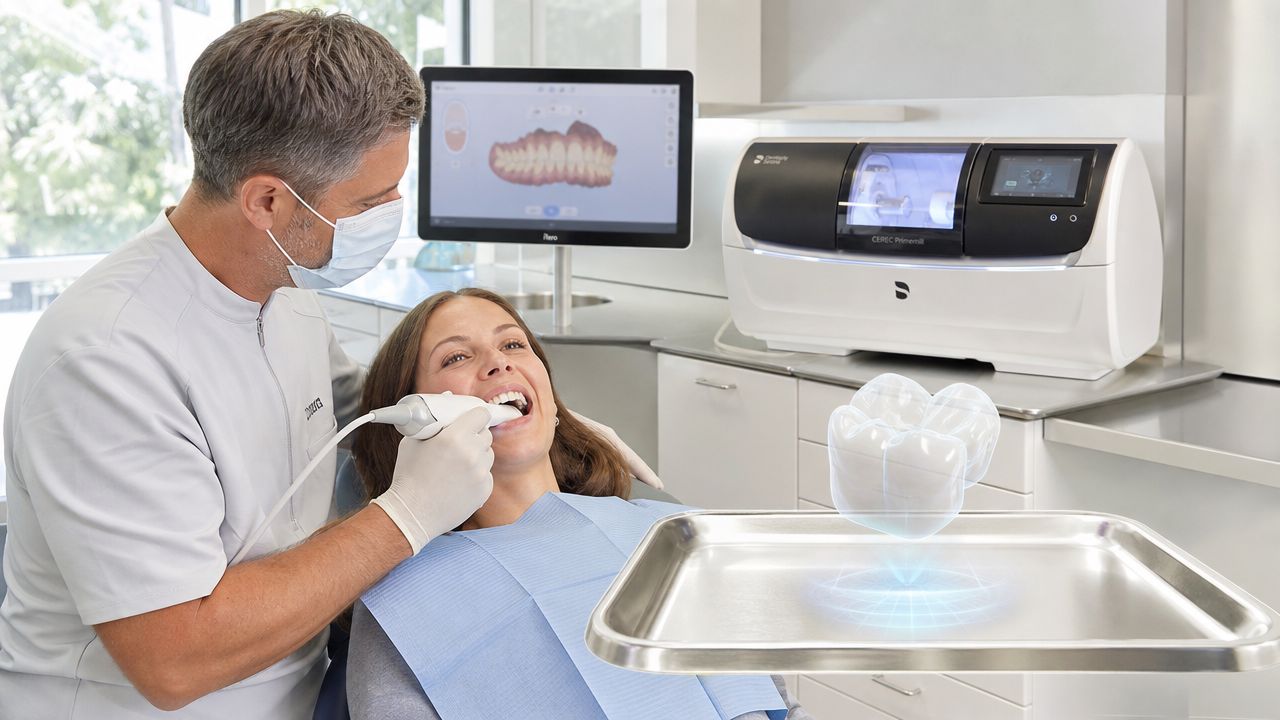





















































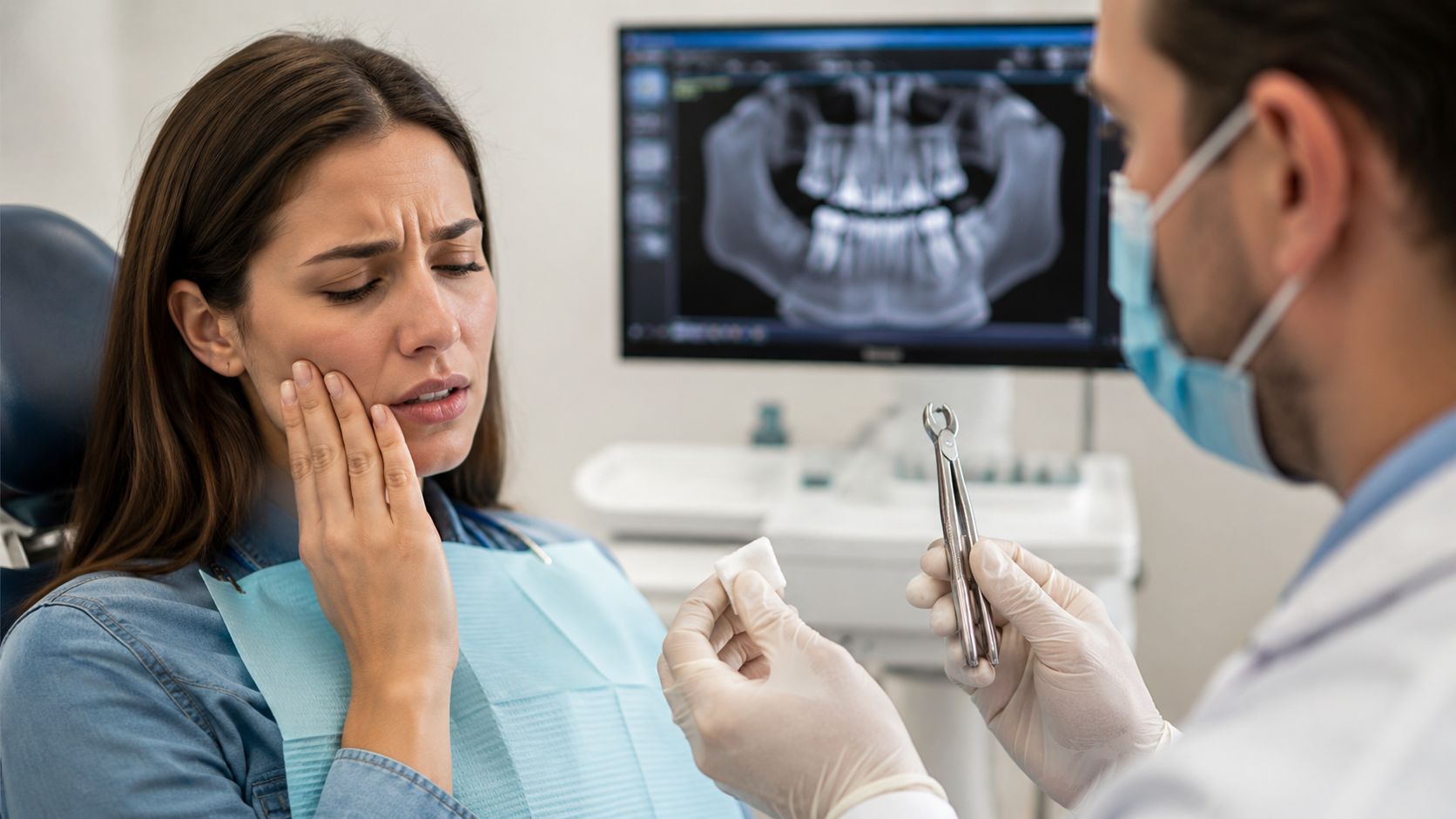
You wake up with pressure deep in the back of your jaw. By lunchtime, it has turned into throbbing pain. Your cheek feels puffy, it hurts to chew, and you're starting to wonder whether this is something you can “wait out” or whether you need an emergency dentist near you right now.
That's a common moment for patients in Austin and Georgetown. Wisdom tooth pain often develops gradually, then becomes hard to ignore once swelling, infection, or limited jaw movement sets in. When that happens, the priority is simple. Get the tooth evaluated quickly, control the pain safely, and decide whether an emergency wisdom tooth extraction is the right next step.
At our Austin and Georgetown offices, we treat urgent dental problems with a calm, practical approach. If your symptoms are coming from a wisdom tooth, the goal isn't to overwhelm you with jargon. It's to relieve pain, explain what's happening, and move you toward treatment that protects both your immediate health and your long-term dental options.
When Wisdom Tooth Pain Becomes an Emergency
A lot of people try to push through wisdom tooth pain for a day or two. That makes sense. Not every sore tooth means surgery. But when pain becomes sharp, swelling starts spreading, or you can't bite comfortably on one side, the situation has usually moved beyond simple irritation.

Why wisdom teeth cause urgent problems
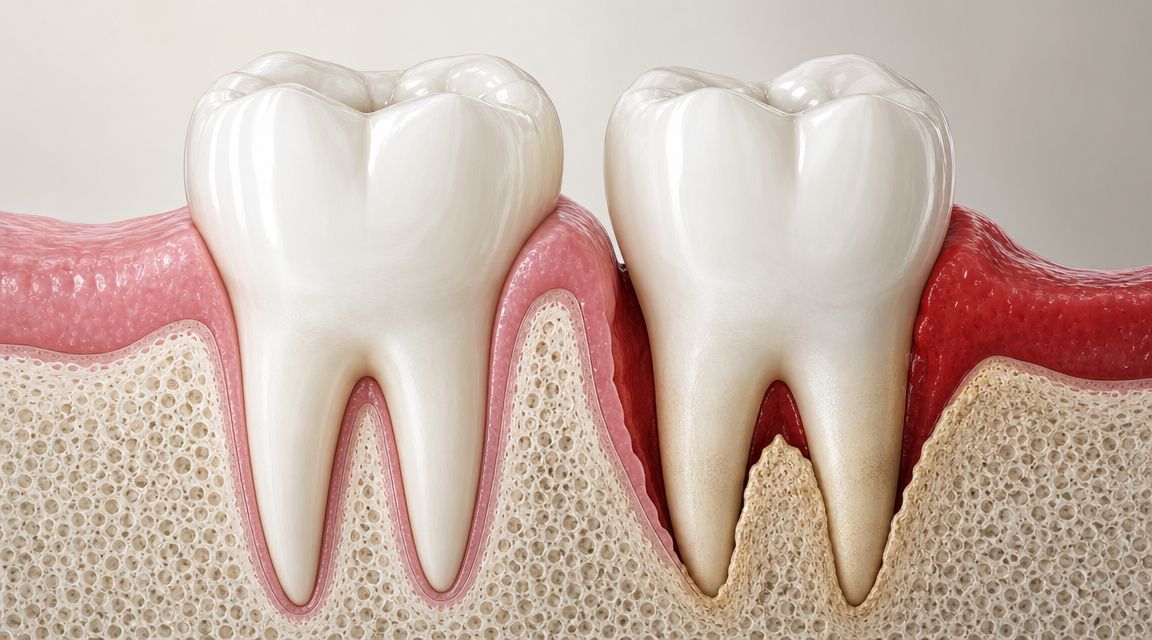
Wisdom teeth are often the last teeth to erupt, and they commonly run out of room. According to Frontiers in Dental Medicine's review of third molar extraction patterns, about 50% of people have at least one third molar extracted by age 25, and wisdom teeth typically erupt between ages 17 and 25. When they don't have enough space, impaction, pain, and infection become much more likely.
That matters because many dental emergencies involving wisdom teeth aren't random. They're delayed presentations of a very common problem. A tooth that has been trapped under gum tissue or partially erupted for months can suddenly become inflamed, infected, or painful enough to need same-day attention.
What it feels like in real life
Patients usually don't describe this as “my third molar is impacted.” They say things like:
- “My jaw hurts when I open wide.”
- “There's swelling behind my back tooth.”
- “The pain shoots into my ear.”
- “I taste something bad near the gum.”
- “I can't sleep because it keeps throbbing.”
Those details matter. A routine wisdom tooth consult feels very different from an emergency extraction visit. The urgent version often involves active swelling, infected tissue around a partially erupted tooth, or pressure from a tooth that's pushing against the one in front of it.
Practical rule: If pain is escalating instead of settling down, it's time for an exam. Waiting rarely makes an acutely inflamed wisdom tooth simpler.
For patients searching for a dentist in Austin, TX, dentist in Georgetown, TX, or an emergency dentist in nearby areas like Wells Branch, Cedar Park, Round Rock, or Liberty Hill, the first step is getting a clear diagnosis. Once we know whether the tooth is infected, impacted, or damaging nearby structures, we can decide whether extraction should happen urgently or whether another short-term step makes more sense.
Is It an Emergency? Red Flags and At-Home First Aid
Some wisdom teeth are annoying. Others need prompt care. The difference usually comes down to severity, swelling, drainage, and how much the problem is affecting normal function.
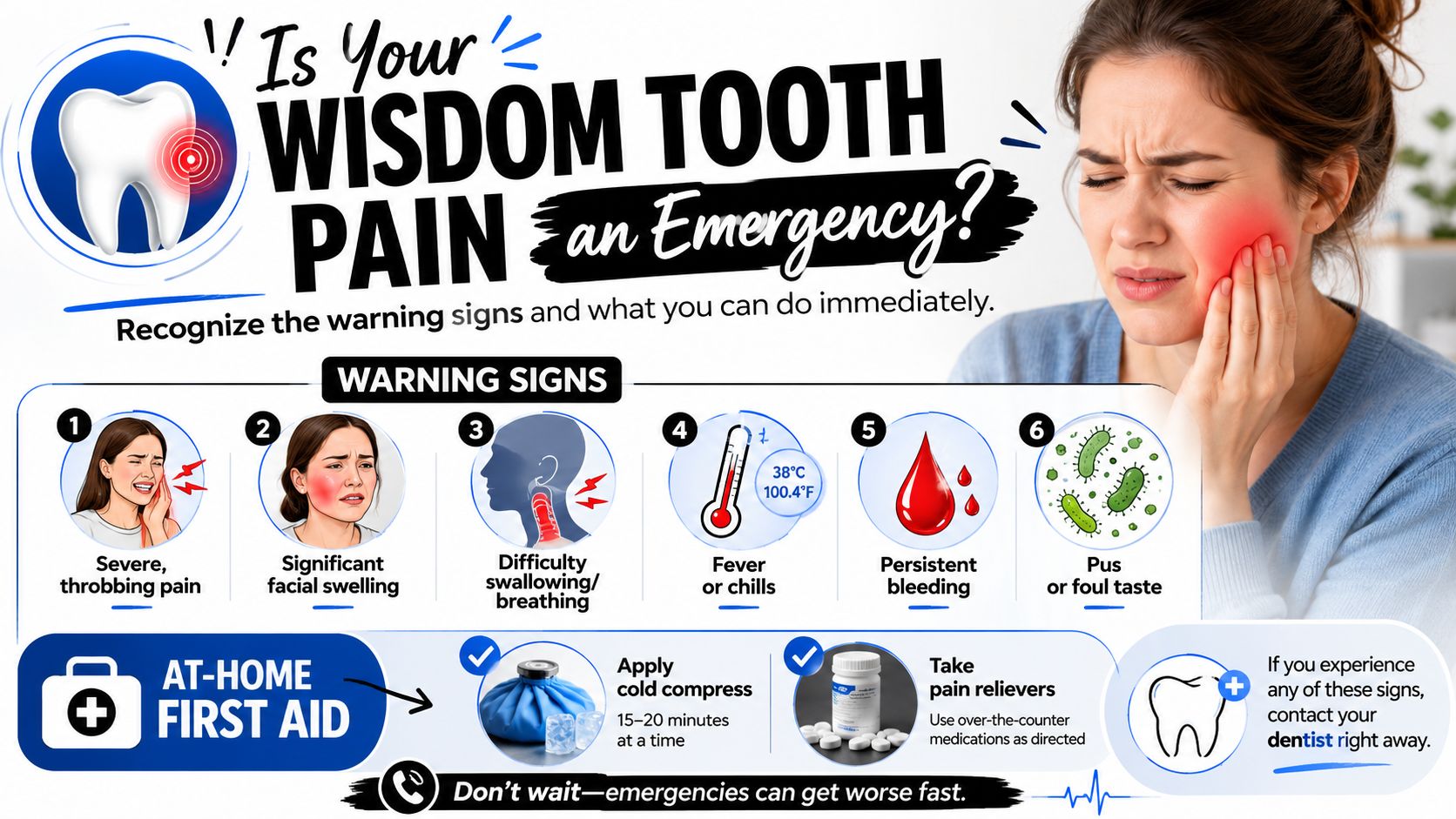
Red flags that need urgent evaluation
Call for urgent dental care if you have any of the following:
- Severe throbbing pain that isn't calming down and keeps returning.
- Visible facial swelling around the cheek or jaw.
- Trouble opening your mouth fully because the area feels tight or inflamed.
- A foul taste, drainage, or pus near the back gum.
- Bleeding that doesn't settle.
- Fever or chills along with wisdom tooth pain.
- Difficulty swallowing or breathing. This is the most serious warning sign and needs immediate attention.
Not every patient with these symptoms needs the exact same treatment. Some need extraction right away. Some need the infection controlled first and then the tooth removed. The key is that worsening symptoms shouldn't be managed with guesswork.
What you can do at home right now
Home care won't fix an impacted or infected wisdom tooth, but it can reduce irritation while you arrange treatment.
- Rinse gently with warm salt water. This can help flush debris from around a partially erupted tooth.
- Use a cold compress on the outside of the cheek. Cold helps limit swelling and can dull pain.
- Take pain relievers only as directed on the label or by your clinician. Don't place aspirin directly on the gum.
- Keep the area clean without aggressive brushing. Gentle brushing around the site is better than scrubbing.
- Choose soft foods. Chewing on a swollen wisdom tooth area usually makes pain worse.
- Avoid smoking, straws, and poking the area. Suction and irritation can aggravate inflamed tissue.
Don't use home remedies as a substitute for an exam if swelling, drainage, or jaw stiffness is increasing.
What does not work well
People often try to “baby” the area for several days and hope the flare-up passes. Sometimes symptoms briefly improve, then return worse because the underlying issue is still there. A partially erupted wisdom tooth can trap bacteria and food under the gum flap. If that's the source, rinsing helps temporarily but won't remove the structural problem.
A simple way to think about it is this:
| Situation | Best next move |
|---|---|
| Mild soreness, no swelling, no drainage | Schedule a prompt exam |
| Increasing pain with gum irritation in back of mouth | Urgent dental evaluation |
| Swelling, foul taste, fever, trouble opening jaw | Same-day emergency dental care |
| Trouble swallowing or breathing | Immediate emergency medical help |
If you're searching for tooth extraction, emergency dentist, or dentist near me in Austin or Georgetown, this is the point where a same-day call matters.
How to Get Immediate Care at 3D Dental No Referral Needed
One reason people delay urgent treatment isn't pain tolerance. It's uncertainty. They're not sure whether they need a referral, whether insurance will treat the visit as emergency care, or whether they should wait for another office to send records first.

You can seek care directly
For many patients, that's the biggest relief. You don't need to sit in limbo waiting for another doctor to refer you before your wisdom tooth is examined. The faster route is usually to contact an office that handles emergency dental visits and explain your symptoms clearly.
That matters because confusion itself delays care. A national survey cited in this discussion of urgent dental access and referral concerns found that 45% of adults postponed necessary care because they were worried about insurance coverage and referral requirements.
If you need a practical overview of what urgent access looks like, this guide to getting emergency dental care is a useful starting point.
What to say when you call
When you contact an office for emergency wisdom tooth extraction, be direct. The scheduler needs a clear picture of urgency. Helpful details include:
- Where the pain is. Upper right, lower left, or “very back tooth.”
- Whether swelling is present. Mention if the cheek or gum looks larger.
- Whether there's drainage or a bad taste.
- Whether you can open normally or your jaw feels tight.
- Whether you have fever, chills, or trouble swallowing.
That information helps the team judge how quickly you should be seen and whether you may need immediate medical escalation.
Insurance and coding questions patients ask most
Patients often worry that the word “emergency” automatically means surprise costs. The process is not as straightforward. Coverage depends on your plan, the procedure performed, and how the visit is documented. What helps most is getting a diagnosis first, then reviewing benefits based on the actual treatment needed.
Common questions include:
- Do I need a referral first? In many emergency dental situations, no.
- Will insurance cover the exam and X-rays? That depends on the plan and the clinical findings.
- If extraction is needed, is a surgical removal handled differently than a routine one? Often yes, because complexity matters.
- Can the office review benefits before treatment begins? In many cases, yes, or at least give you a realistic explanation of what is known and what depends on your insurer.
Here's a short video that helps patients understand the emergency dental visit process a bit better.
For families in Austin, TX, Georgetown, TX, Round Rock, Cedar Park, Wells Branch, and Liberty Hill, the most effective move is simple. Don't wait for the pain to become easier to justify. If the symptoms are urgent, call and get the tooth evaluated.
Your Emergency Extraction at Our Austin & Georgetown Offices
Once you're in the chair, the process should feel organized and calm. Emergency wisdom tooth extraction is still a surgical procedure, but it isn't chaotic when it's planned properly.
The first step is imaging and diagnosis
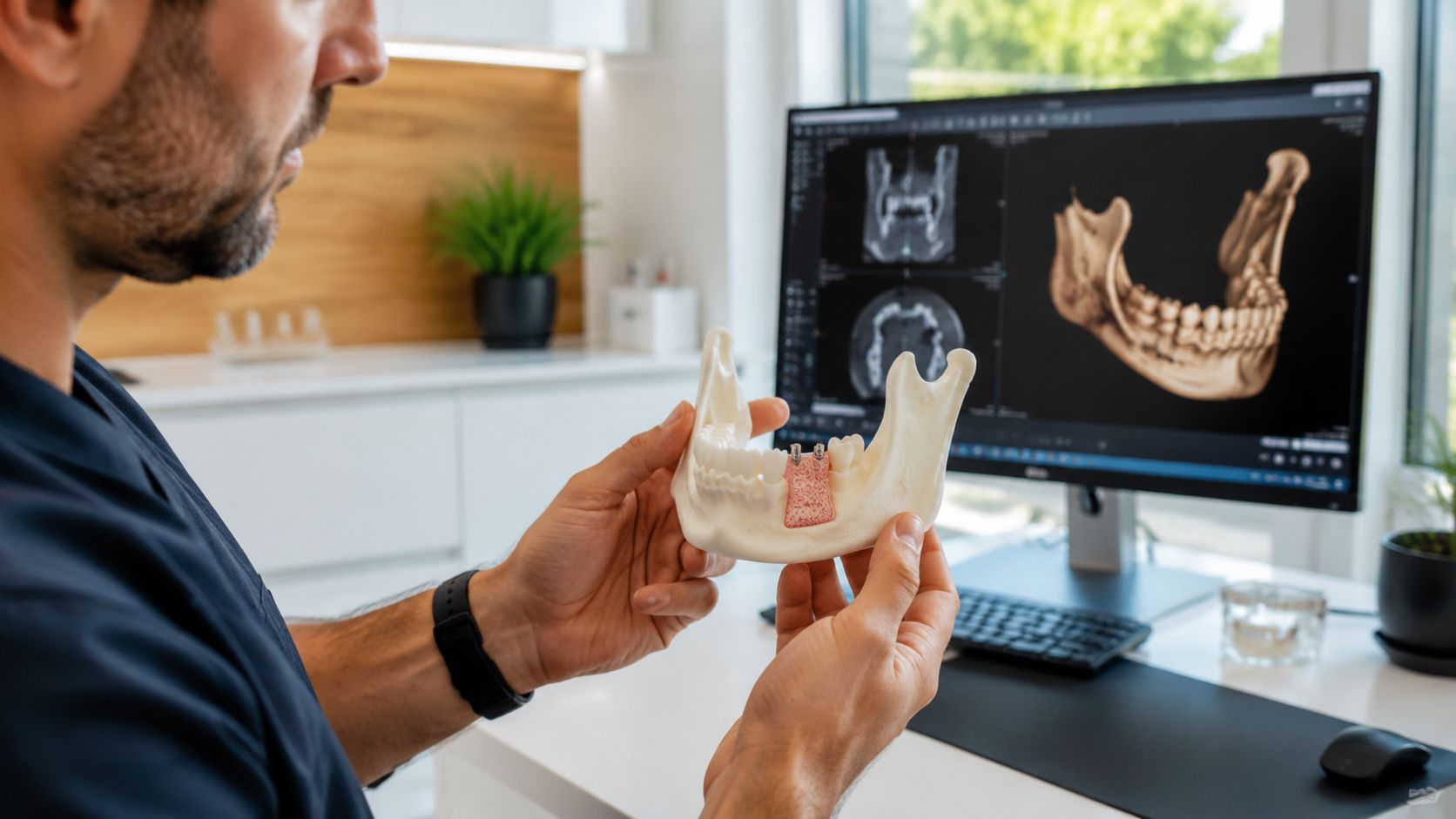
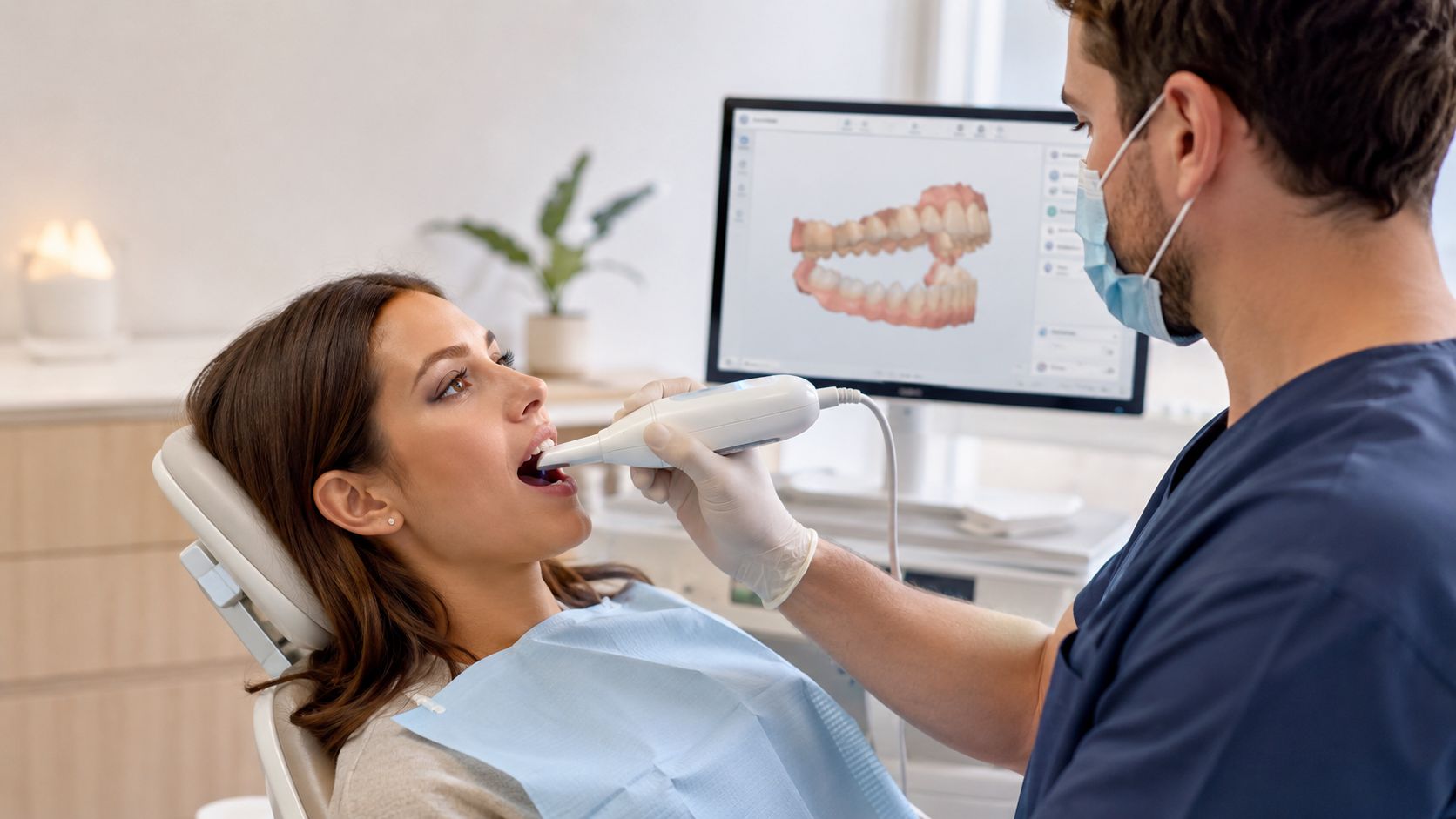
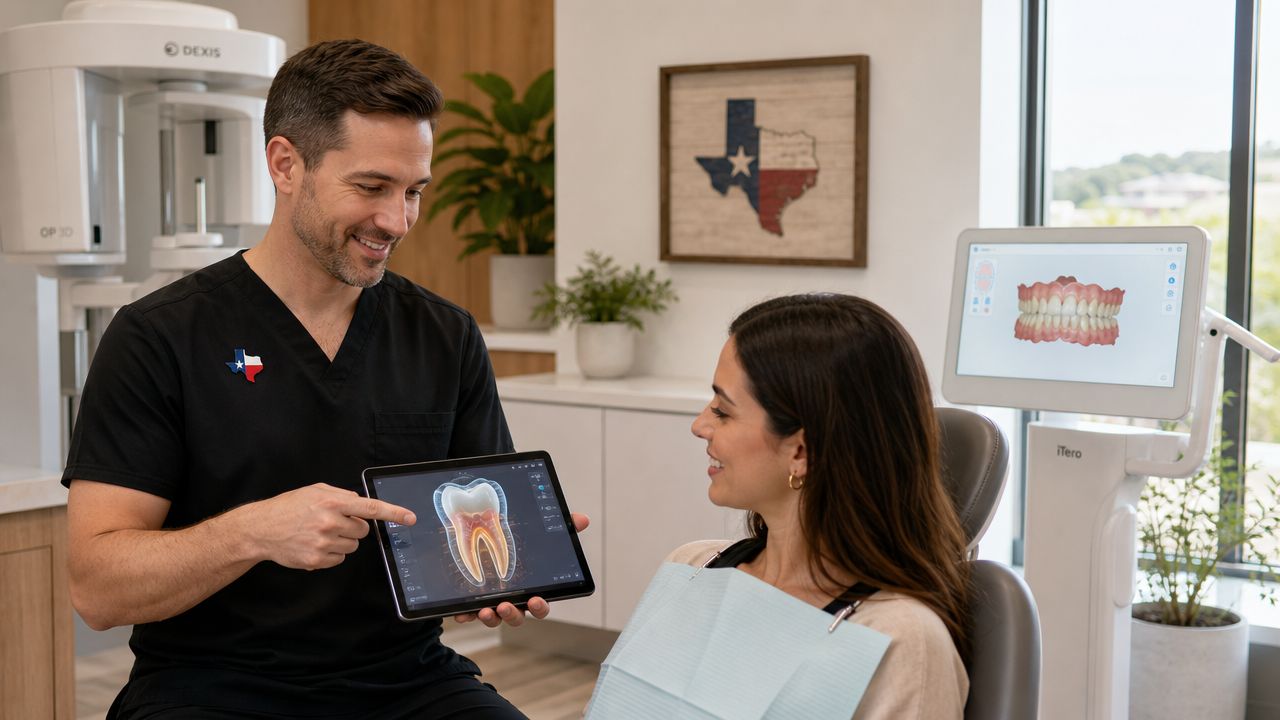
The visit begins with an exam and imaging so the dentist can see the tooth's position, the surrounding bone, and nearby structures. Merely looking in the mouth isn't enough when a wisdom tooth is impacted or partly covered by gum tissue. Imaging tells us whether the tooth is erupting normally, pressing against the neighboring molar, or sitting in a way that makes removal more involved.
At 3D Dental, this planning can include 3D CT imaging, along with digital X-rays and scanners, to map the tooth more precisely before treatment. That's especially helpful when the tooth is buried deeper, angled awkwardly, or close to important anatomy.
A rushed extraction plan creates unnecessary risk. Good imaging makes the appointment safer and more predictable.
Comfort matters before anything starts
Patients often assume the hardest part will be the extraction itself. In practice, anxiety can be just as difficult as the tooth. That's why we explain the plan first, discuss numbness and sedation options when appropriate, and make sure you know what sensations to expect.
You should feel pressure during a removal, but not sharp pain. If you're already arriving with active inflammation, the team also accounts for that when planning anesthesia and timing.
What the procedure usually involves
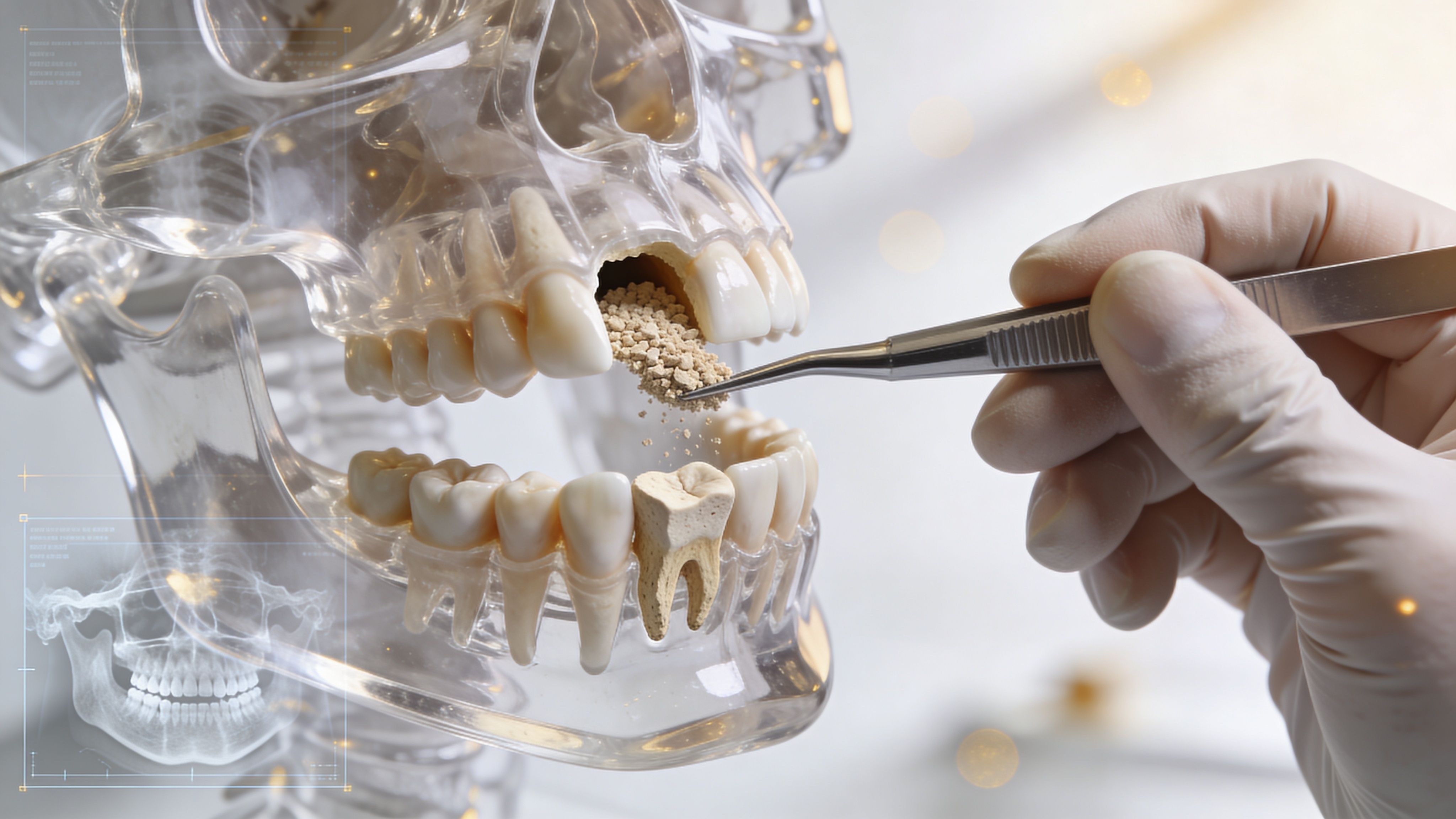
An emergency extraction can be straightforward if the wisdom tooth is fully erupted and accessible. Impacted teeth are different. According to Mayo Clinic's overview of wisdom tooth removal, the procedure often involves cutting gum tissue, removing some bone that blocks access to the root, and sometimes sectioning the tooth into smaller pieces for safer removal.
That sounds intimidating until it's explained in plain terms. Sectioning a tooth is often the gentlest way to remove it because it avoids forcing a larger tooth through a smaller space. Instead of applying more pressure than necessary, the tooth is carefully divided and removed in a controlled way.
What happens before you leave
After the tooth is removed, the site is cleaned thoroughly. If needed, sutures are placed, and gauze is positioned to help bleeding slow and a clot form. You'll get instructions about eating, hygiene, activity, and what symptoms are normal during the first part of recovery.
Before you go home, make sure you understand:
- Which medications to take
- How long to keep pressure on the gauze
- What foods are safest
- How to clean your mouth without disturbing the site
- What warning signs mean you should call back
For patients searching online for tooth extraction, dentist near me, or an emergency dentist in Austin, TX or Georgetown, TX, what usually reduces fear the most is knowing the appointment has a sequence. Diagnose carefully. Numb thoroughly. Remove the tooth with control. Protect the site. Support healing.
Post-Extraction Care and Healing
Good healing starts with protecting the blood clot. Most complications after wisdom tooth removal happen when the early healing site gets irritated, dislodged, or contaminated.
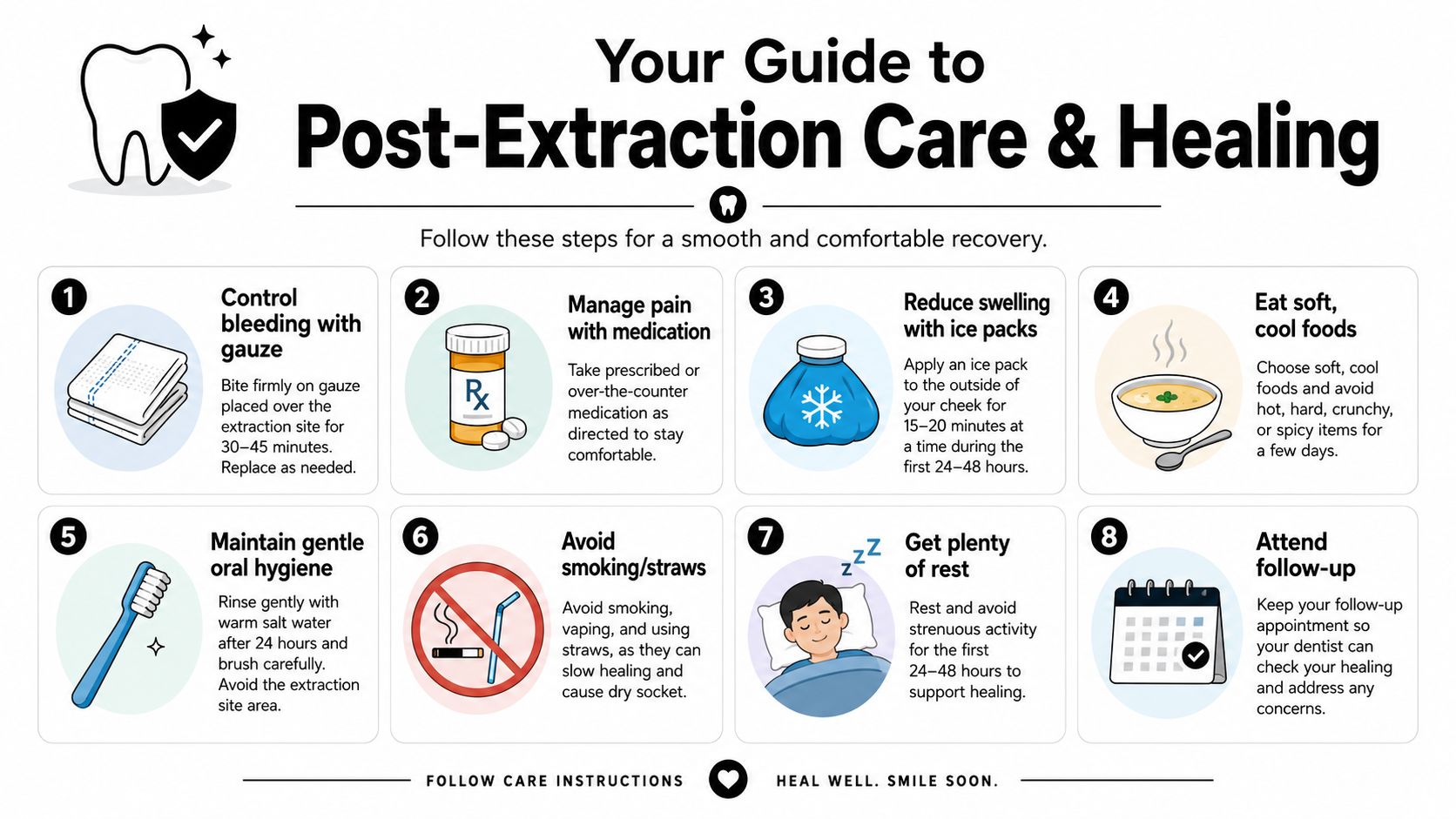
The first 24 hours
The priority on day one is bleeding control and clot protection. According to Merck Manual's emergency tooth extraction guidance, you should bite with firm, continuous pressure on a rolled gauze pad for 3 to 4 hours after extraction.
Use that time to rest. Keep your head raised when possible, eat soft foods once you're ready, and avoid anything that creates suction or friction at the site.
Do
- Keep steady pressure on gauze for the time recommended.
- Use ice packs on the outside of the face in short intervals if swelling starts.
- Stick to cool or soft foods such as yogurt, smoothies eaten with a spoon, mashed foods, or soup that isn't hot.
- Take medication exactly as directed.
Don't
- Spit forcefully
- Use a straw
- Smoke or vape
- Rinse aggressively
- Poke the area with your tongue or fingers
The clot is your body's natural bandage. Protecting it is more important than trying to “clean out” the socket on day one.
For more detailed day-by-day guidance, this wisdom teeth removal recovery guide covers the basics patients ask about most.
The first week
By this stage, discomfort should gradually become easier to manage. You can usually begin gentle mouth care, but the key word is gentle. Brush the rest of your teeth normally and keep the extraction area clean without scrubbing directly over it.
A few practical habits help:
- Choose softer meals until chewing feels comfortable.
- Drink plenty of water.
- Sleep a little more upright if swelling is still noticeable.
- Return to routine carefully instead of jumping back into strenuous activity immediately.
Some stiffness, mild swelling, and soreness can be normal. What matters is the direction. Healing should trend better, not worse.
When to call us
Call the office if bleeding stays heavy, swelling increases instead of tapering, or pain becomes stronger after an initial improvement. A foul taste, drainage, fever, or pain that feels deep and exposed can also signal a problem.
A short checklist helps:
| What you notice | What it may mean |
|---|---|
| Mild soreness that slowly improves | Typical healing |
| Ongoing oozing that settles with gauze | Often normal early on |
| Increasing swelling, drainage, or fever | Needs evaluation |
| Worsening pain after initial improvement | Possible complication |
If something doesn't feel right, trust that instinct. Follow-up care is part of treatment, not a bother.
Understanding Costs and Planning for the Future
When patients ask about cost, they usually mean two things. What will this visit involve financially right now, and what happens if I put it off?
What affects the cost of emergency wisdom tooth extraction
The total cost depends on the complexity of the removal, whether the tooth is fully erupted or impacted, what imaging is required, and whether sedation is part of the plan. Insurance may help with parts of the visit, but the exact coverage depends on your specific policy and how the procedure is classified.
Practically, the best path is transparency before treatment begins. A good emergency dental office will explain what's known, what depends on insurance processing, and what payment options are available if care needs to happen quickly. Many patients also ask about financing because urgent dental treatment rarely arrives at a convenient time.
Why acting now can save trouble later
There's also a long-term side to this decision. Delaying an infected or problematic wisdom tooth isn't only about enduring more pain. It can affect the condition of the bone and neighboring teeth that future restorative treatment depends on.
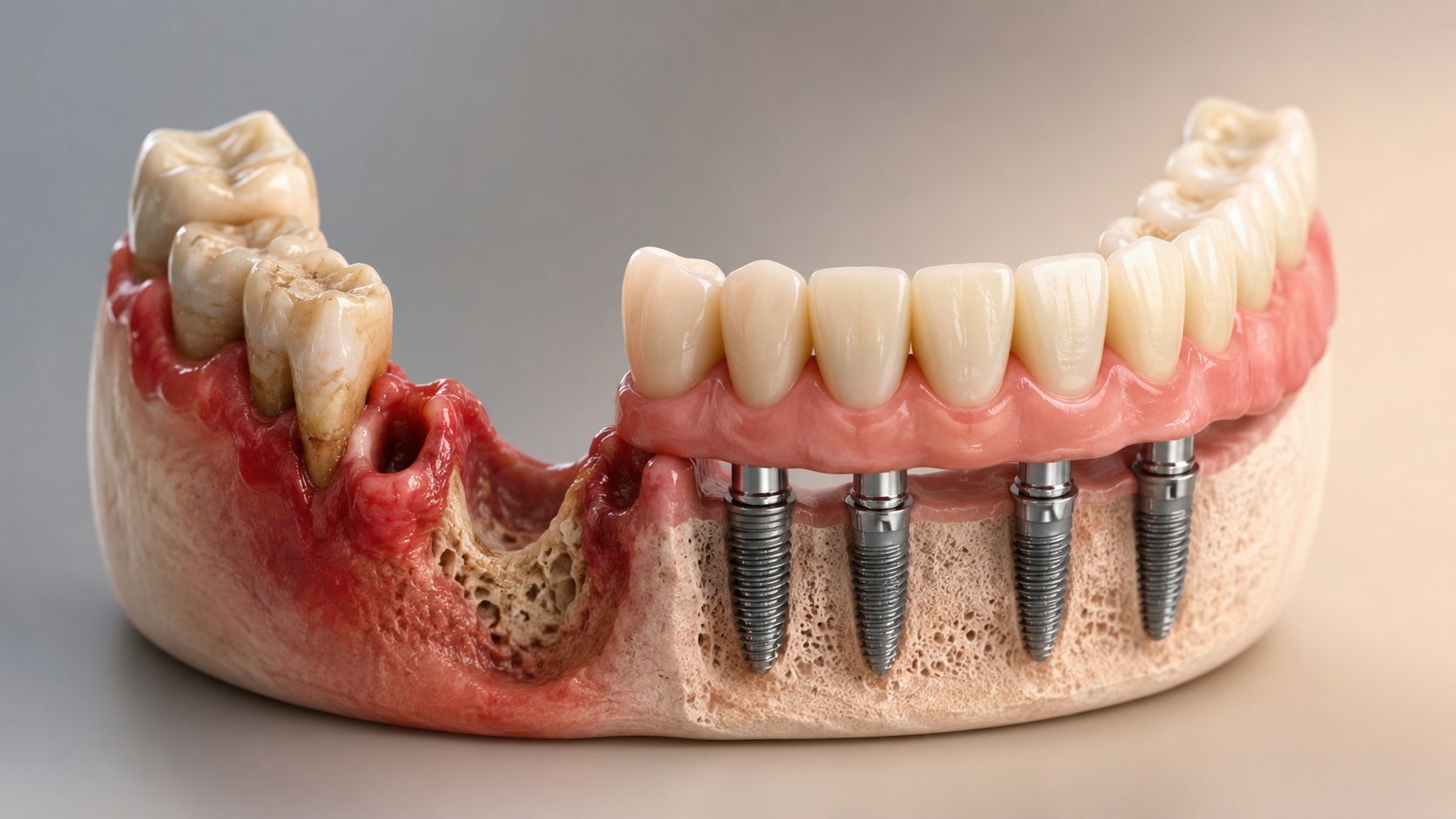
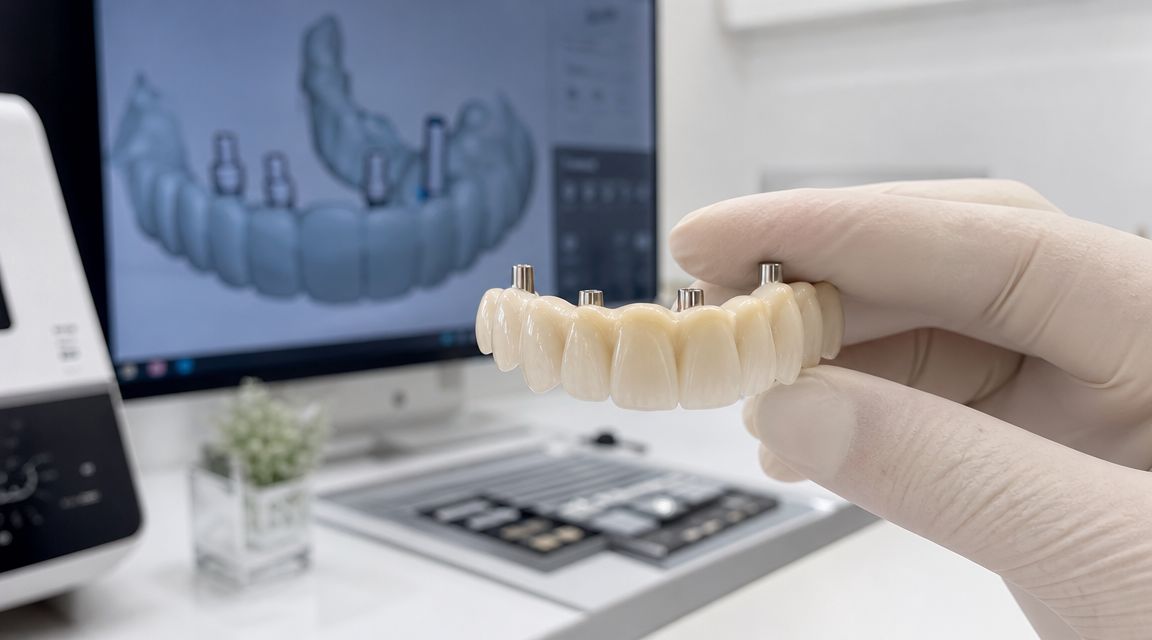
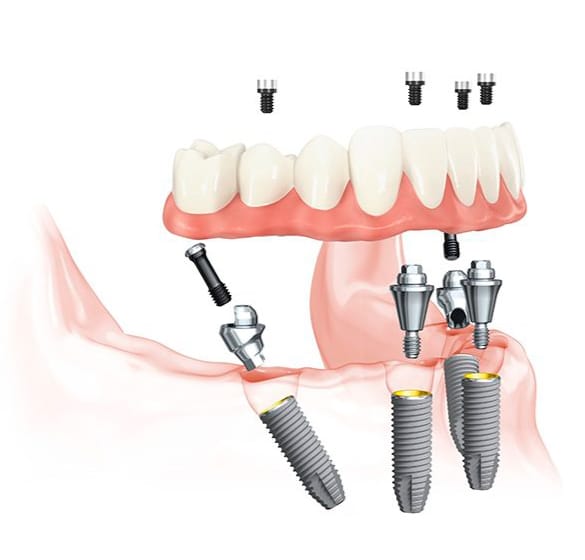
As discussed in this article on emergency wisdom tooth extraction and future implant planning, delaying extraction can contribute to bone loss, tooth shifting, and complications that make later restorative care more involved. That matters if you ever need treatment such as a dental implant near me, a bridge, or full-arch solutions like All-on-4.
Prompt extraction can be more than pain relief. It can preserve the foundation future dentistry may rely on.
For adults in Austin and Georgetown who are already thinking ahead about restorative dentistry, that connection matters. A painful wisdom tooth may feel like an isolated emergency today, but timely treatment can help preserve healthier conditions for tomorrow's crowns, implants, or larger reconstruction.
If you're dealing with swelling, pressure, or persistent pain in the back of your mouth, the next step is straightforward. Get it examined before the situation becomes harder, more uncomfortable, and more expensive to manage.
If you need fast relief from wisdom tooth pain, contact 3D Dental to request an emergency visit in Austin or Georgetown, TX. We help patients with urgent tooth extraction, digital imaging, restorative planning, and follow-up care so you can address the immediate problem and protect your long-term oral health.
Ready to get started?
Schedule a free, no obligation consultation with our team and see what's possible for your smile!
Georgetown
- Mon-Thurs8:30am-5pm
- Fri8am-3:30pm
- Sat-SunClosed
Austin
- Mon-Tues8am-5pm
- Wed-Thurs9am-6pmFri8am-2pm
- Sat-SunClosed