
All on 4 Dental Implants Gum Disease
Related Posts


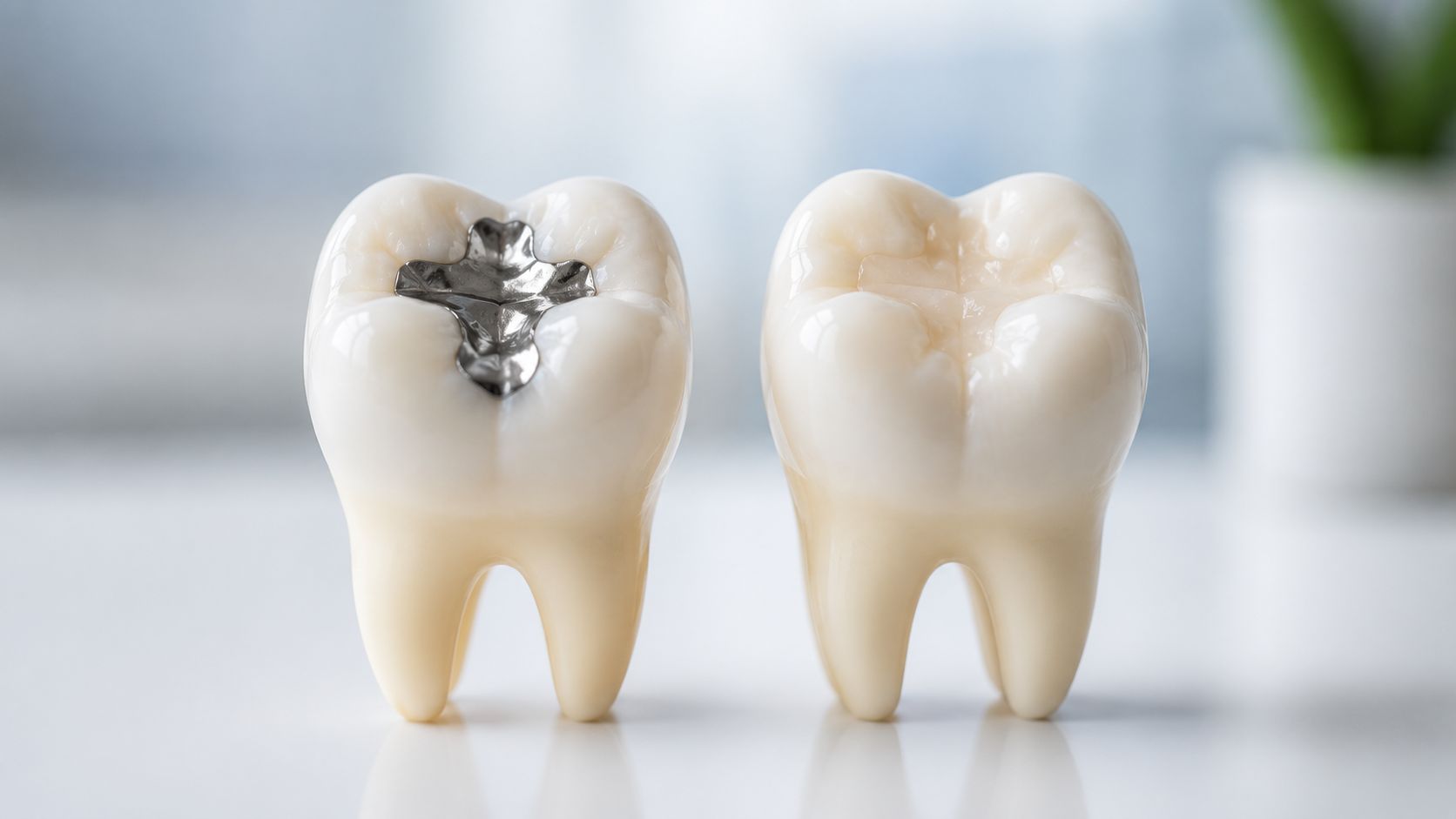



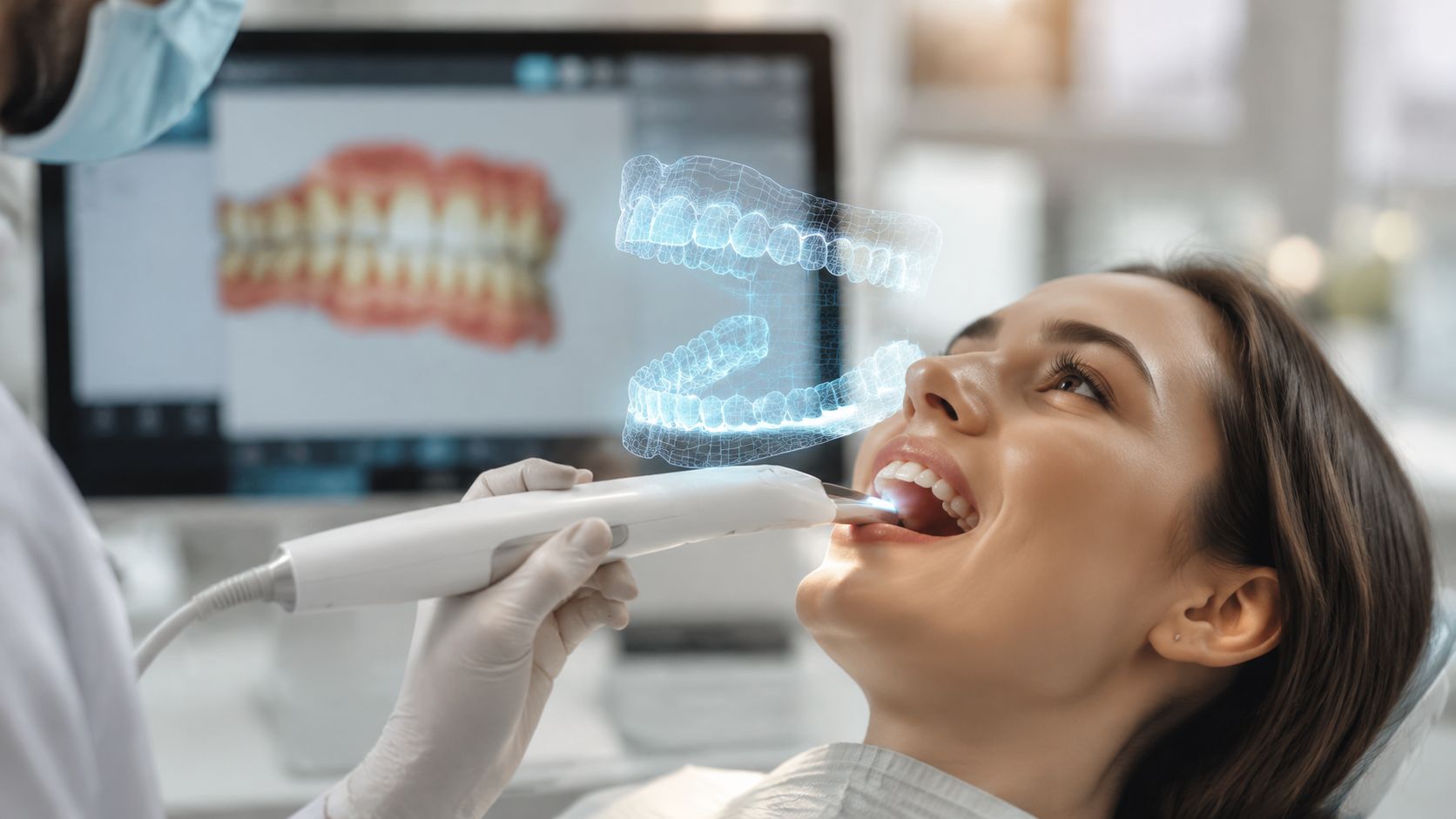
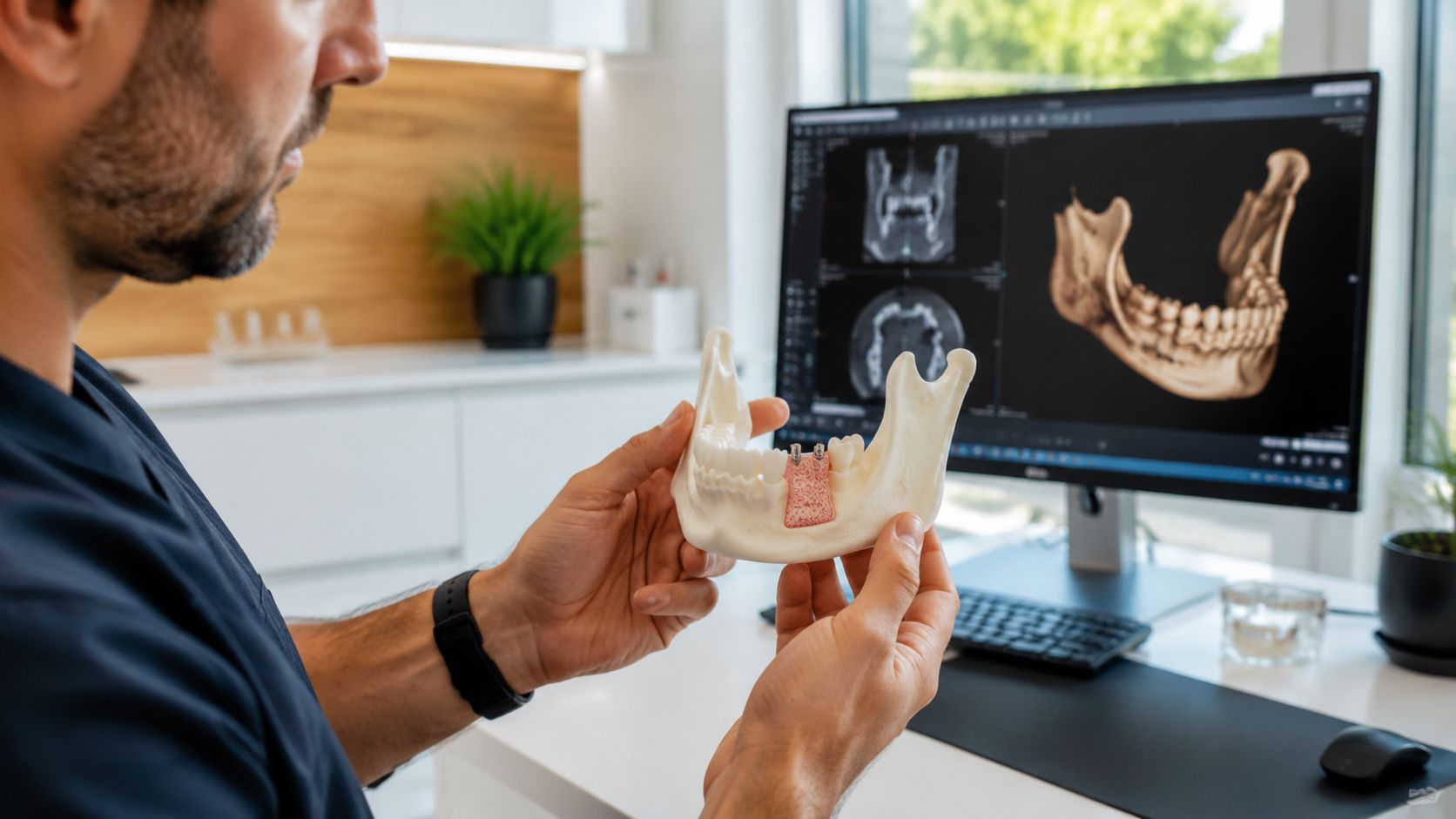
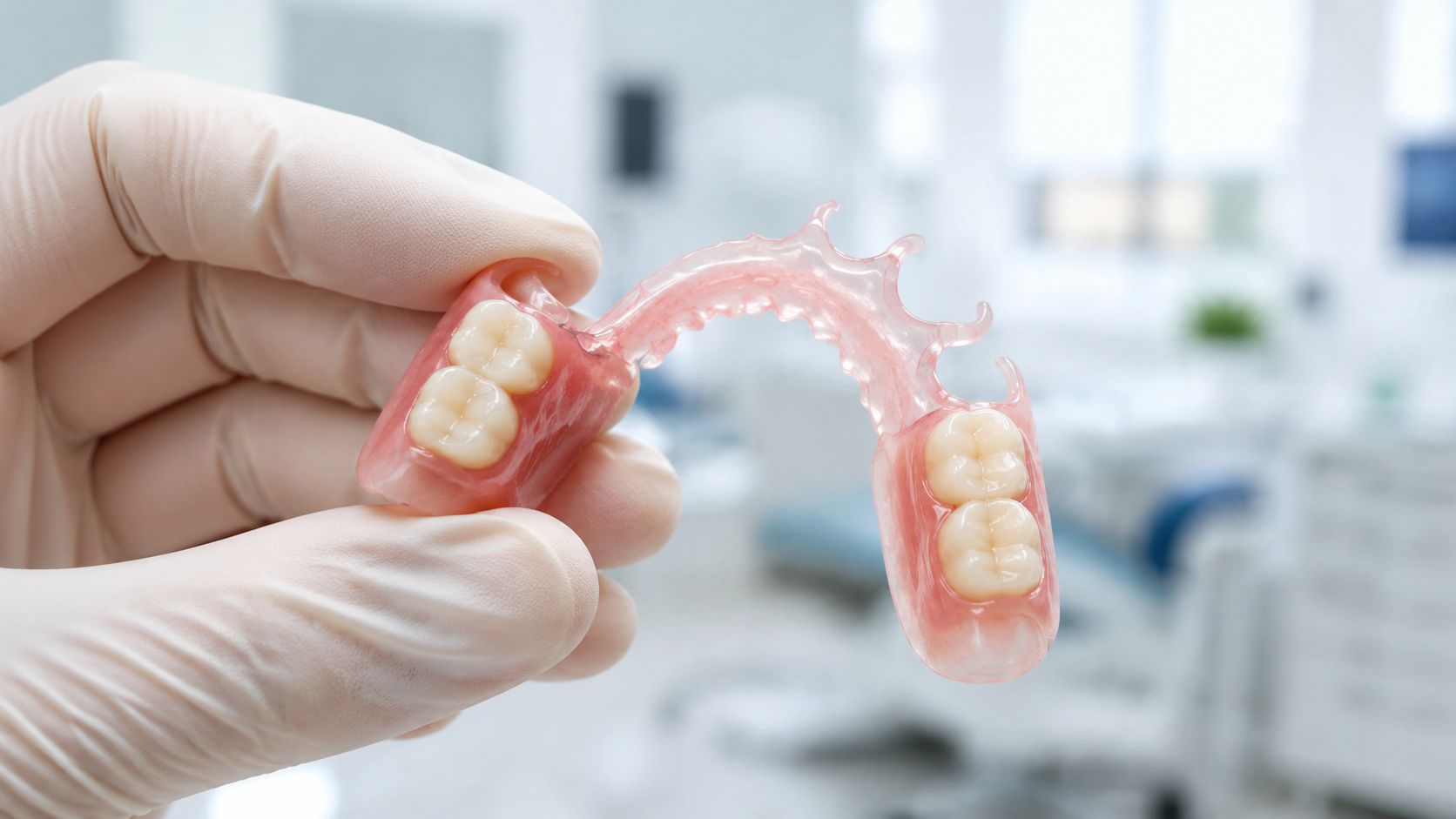
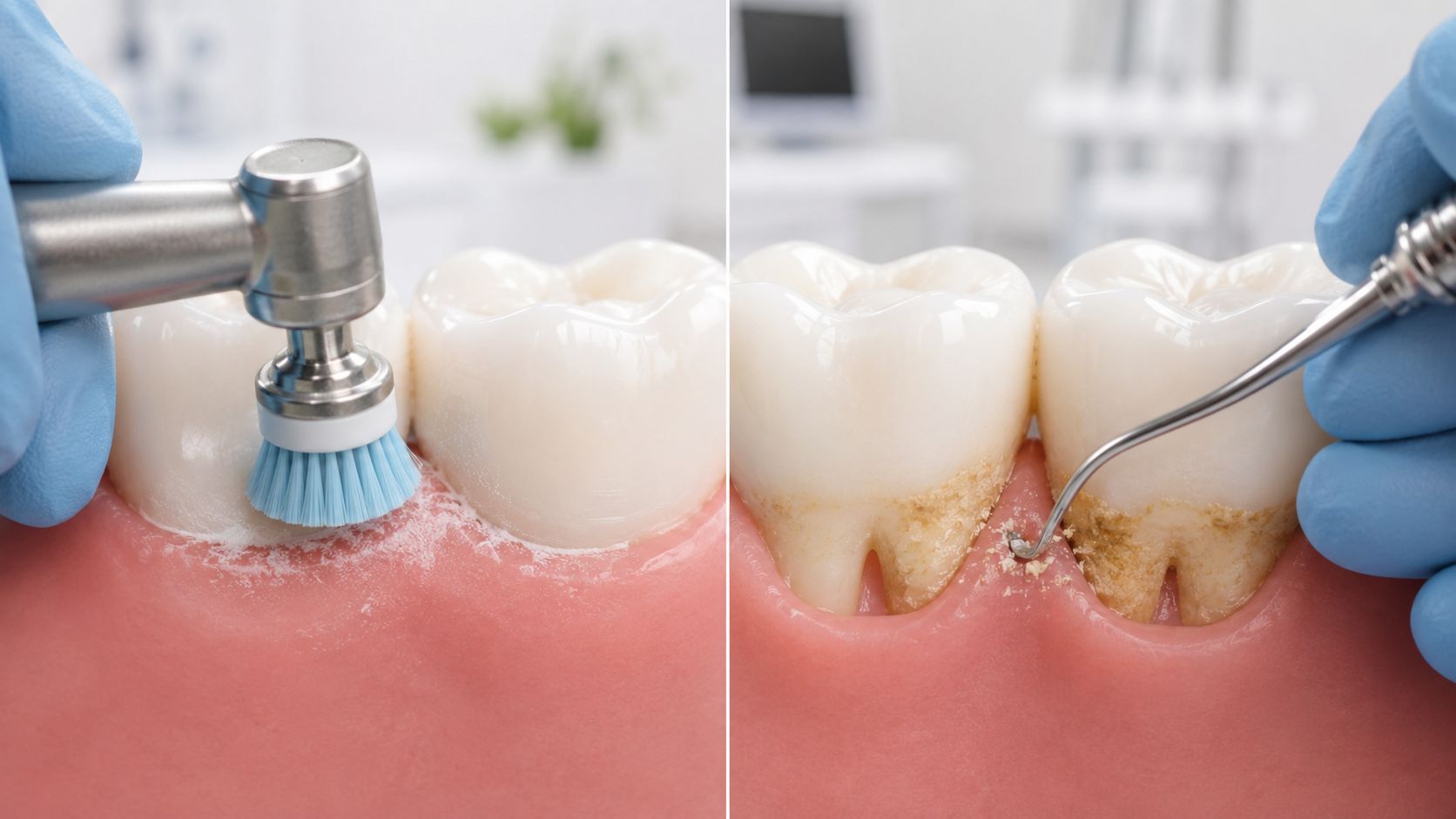
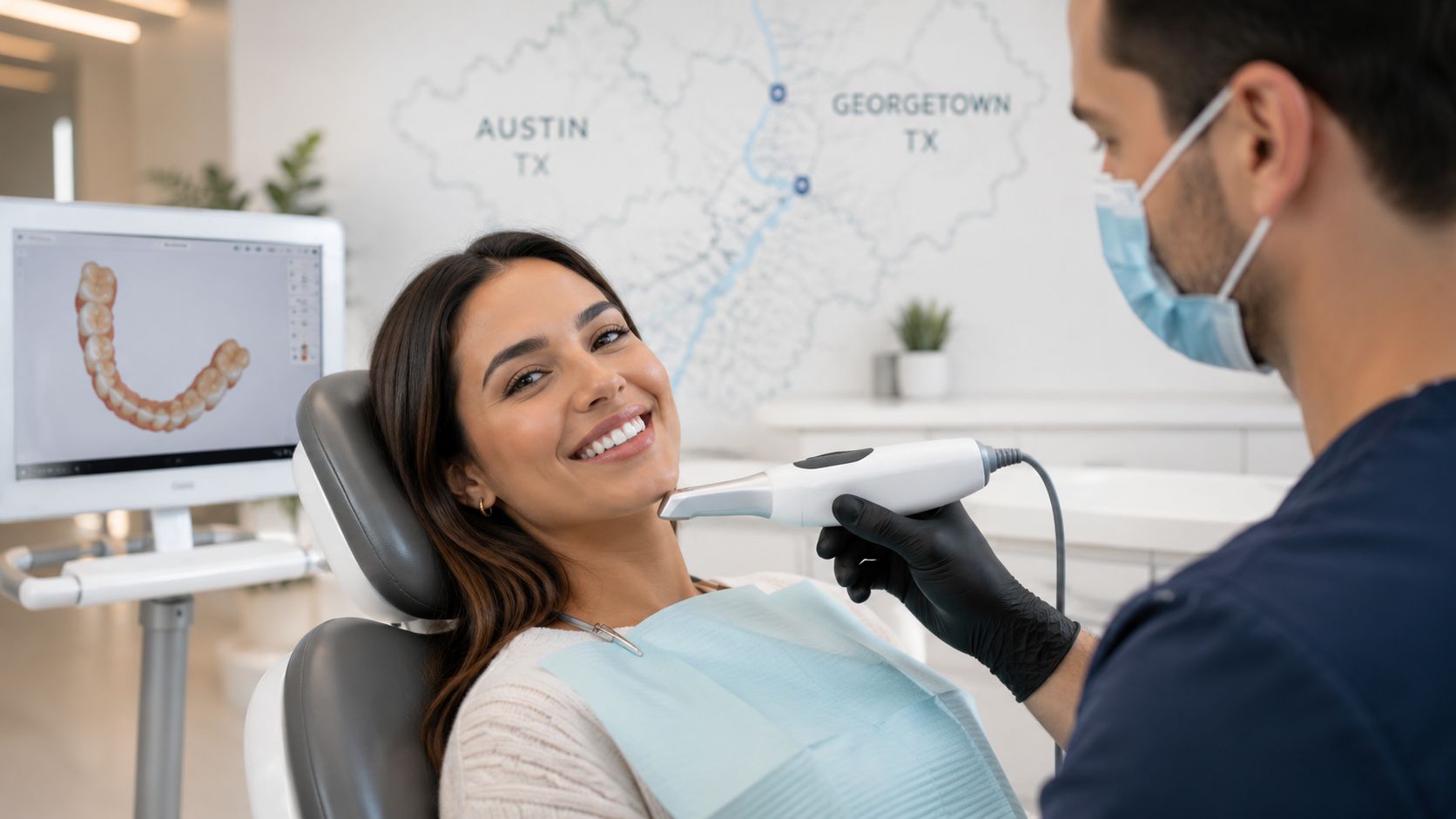
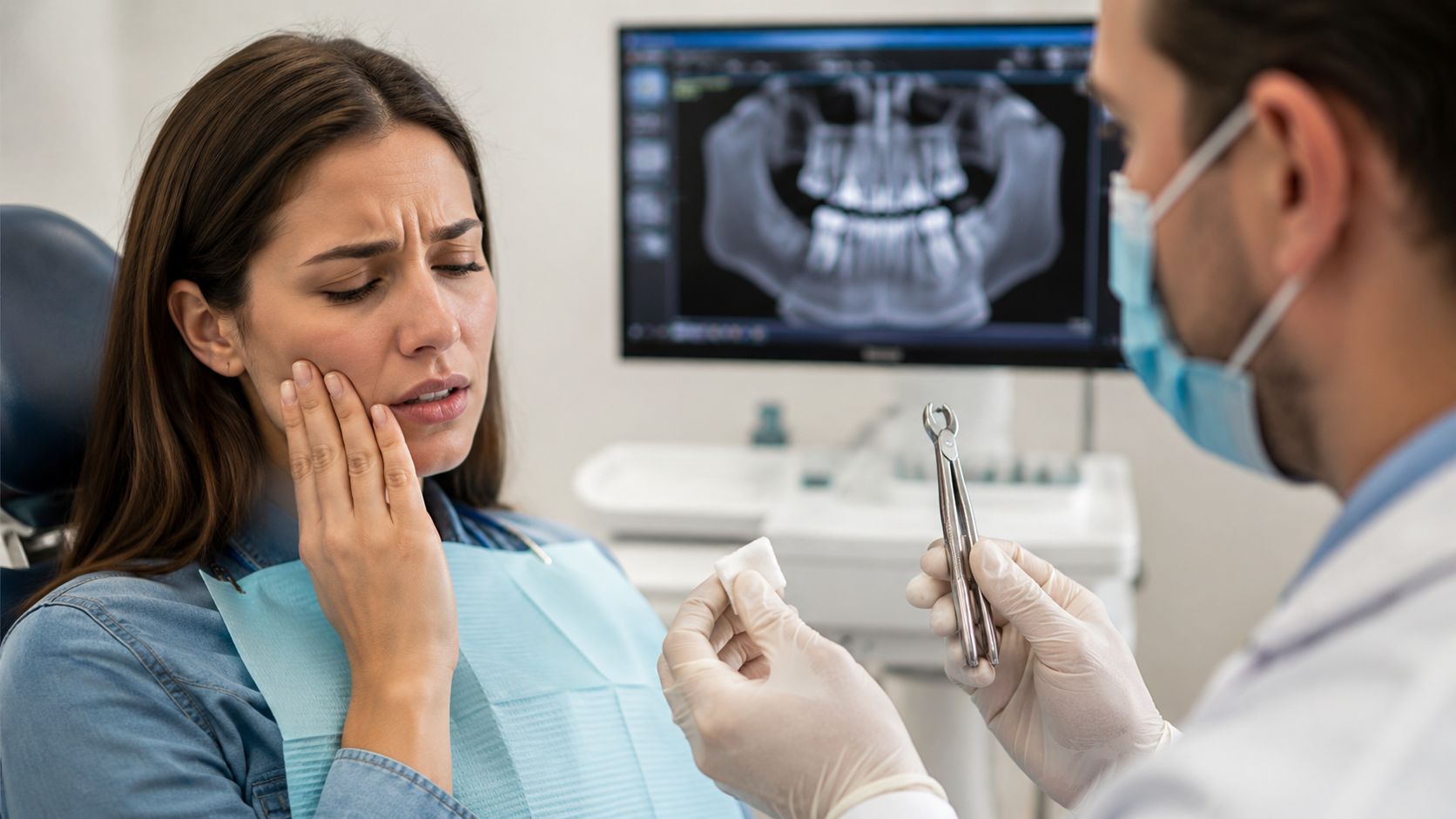





















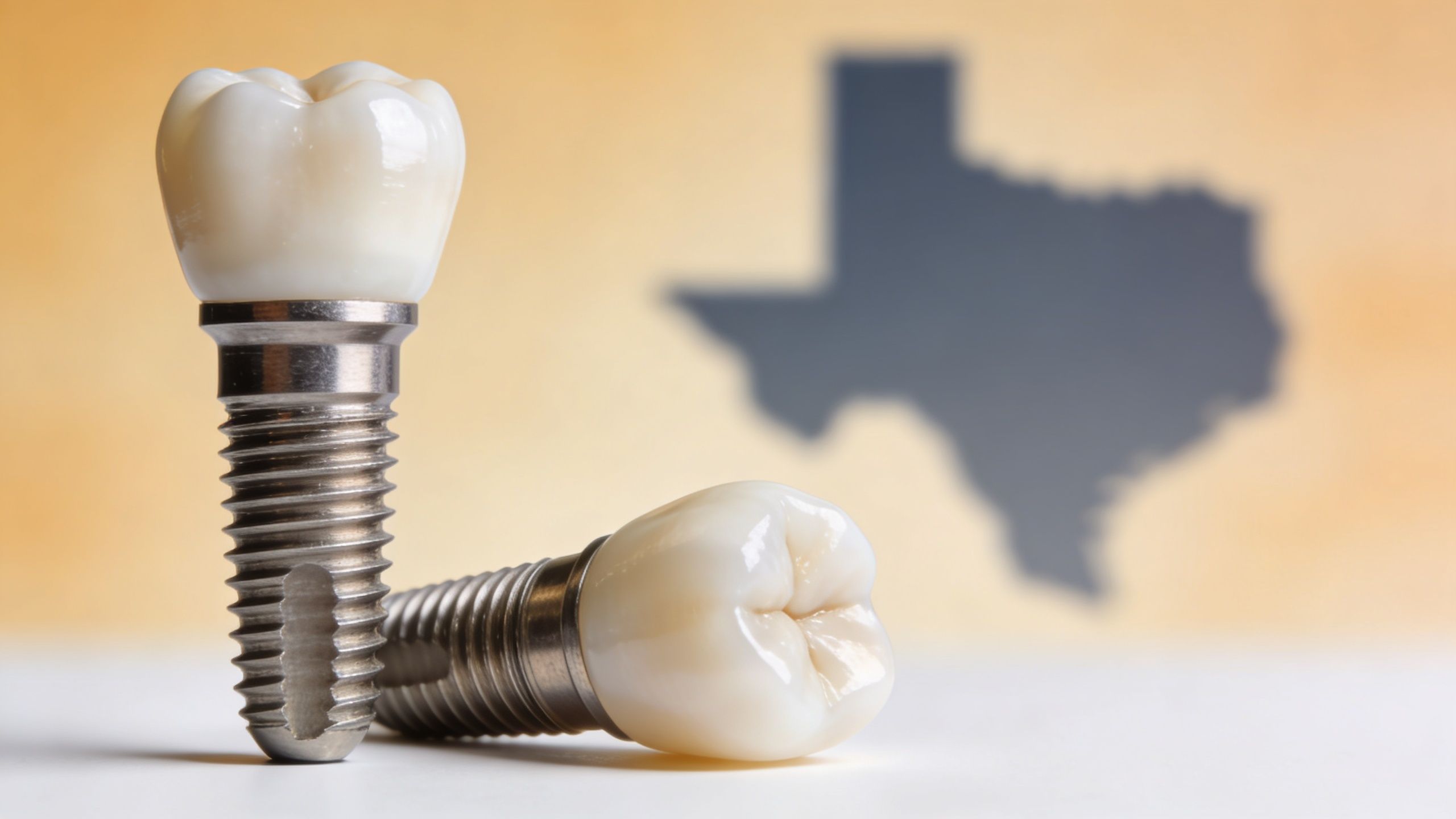
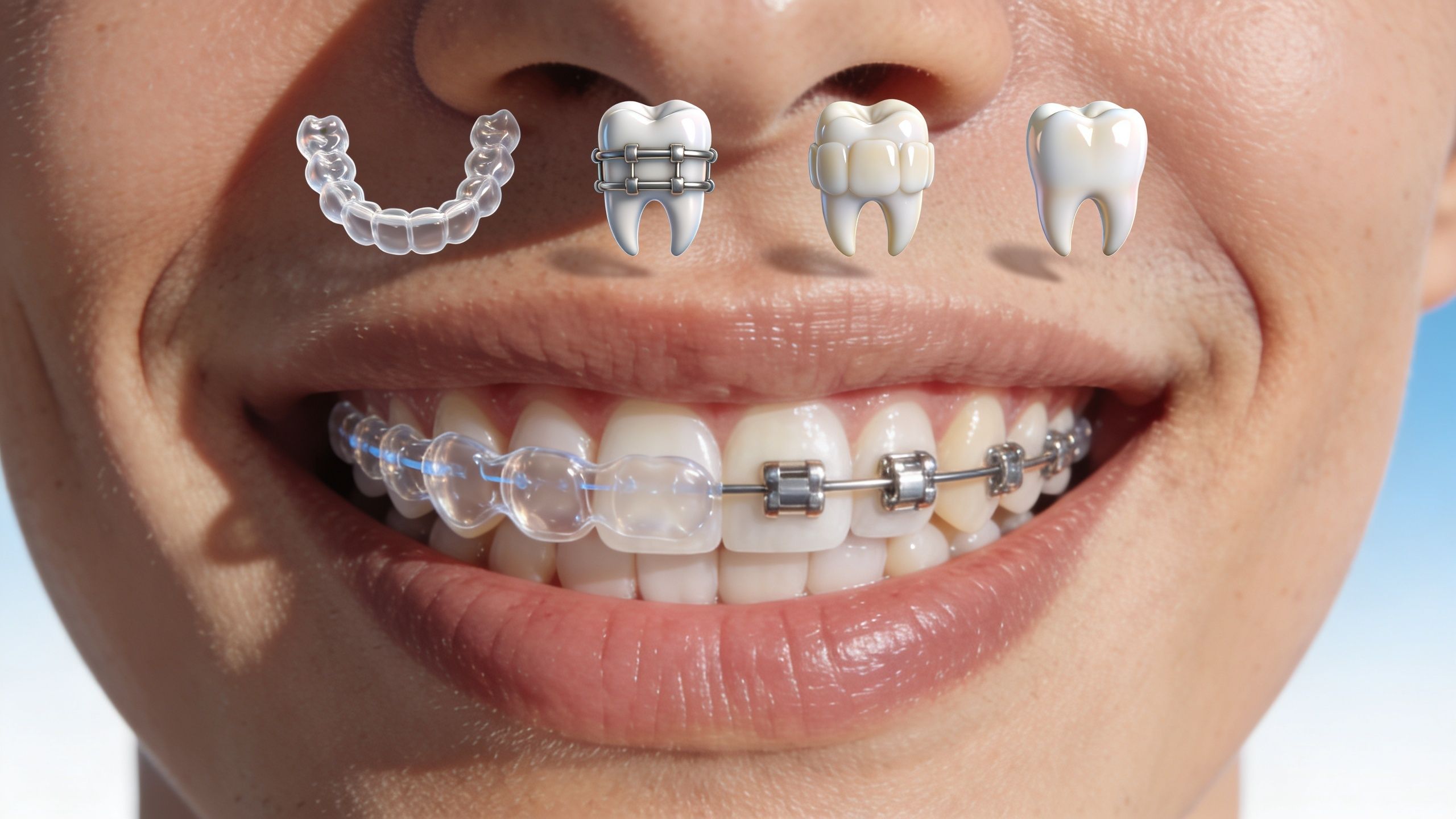






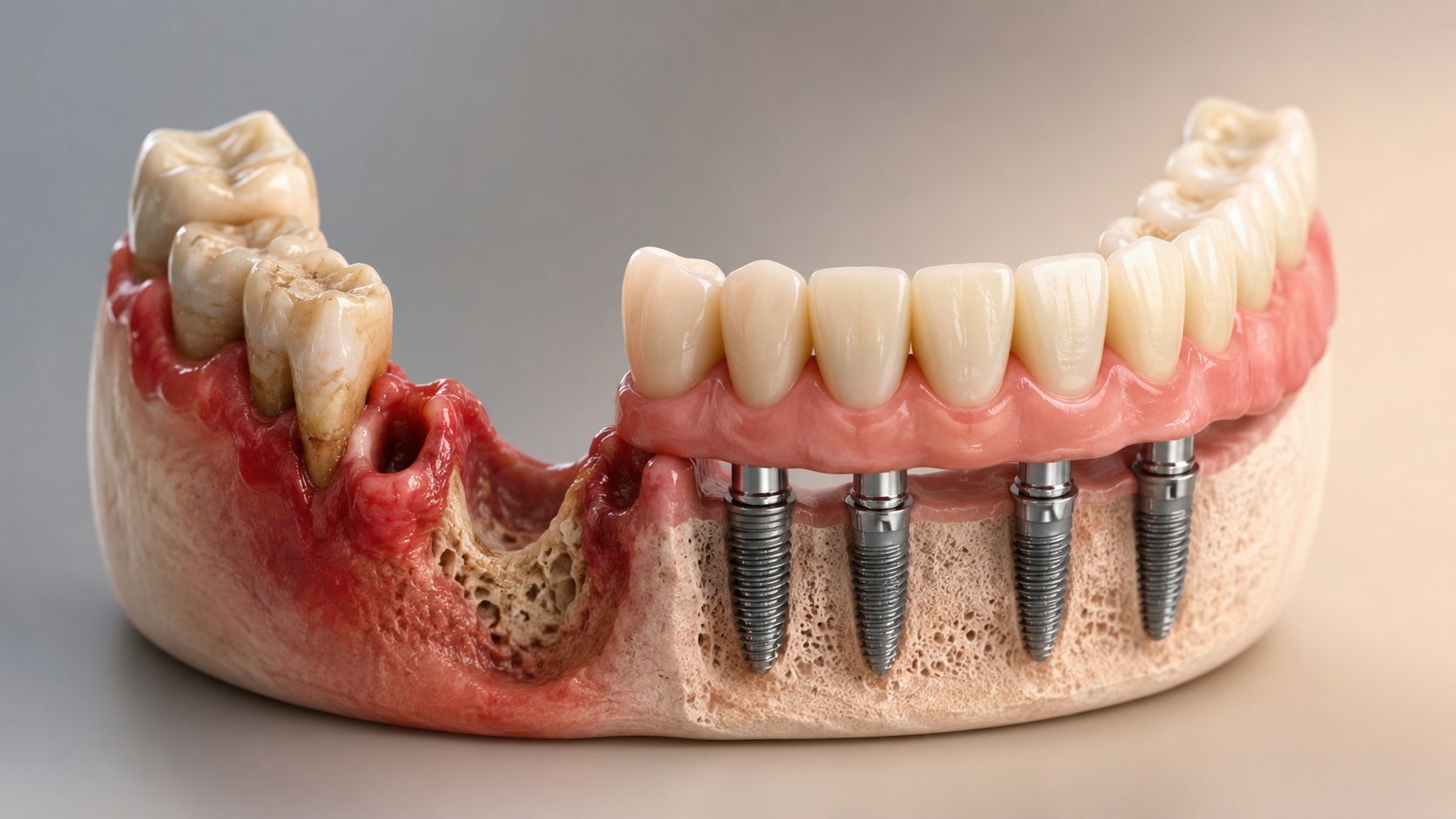
If you're dealing with loose teeth, bleeding gums, bad breath that won't go away, or a smile that's starting to feel unreliable, you're probably also carrying a bigger worry. You may be wondering whether gum disease has already taken implants off the table.
That fear is common in Austin, Georgetown, Round Rock, Cedar Park, Wells Branch, and Liberty Hill. Many people wait to ask about treatment because they assume severe dental problems mean they'll be told they have no good options left. In reality, All-on-4 can still be possible for many patients with a history of gum disease, but the path has to be planned carefully.
At a local implant practice, this isn't just about replacing teeth. It's about controlling infection, checking bone support, rebuilding function, and putting a long-term maintenance plan in place so your new smile has a real chance to last.
Your Local Austin Dentist for All on 4 Implants
A lot of patients who ask about All-on-4 dental implants and gum disease arrive at this point after years of trying to manage one problem tooth at a time. A deep cleaning here. An extraction there. Another crown on a tooth that still doesn't feel strong. Eventually the pattern becomes hard to ignore. Teeth shift, chewing gets harder, and smiling starts to feel like something you manage instead of enjoy.
That situation is emotional as much as it is clinical. People in Austin and Georgetown often tell us they feel embarrassed by loose teeth, frustrated by repeated dental work, and tired of wondering what will fail next. Some are also searching for a dentist near me, dental implants near me, or an emergency dentist because the problem has reached a point where they need a real plan, not another short-term patch.
Why full-arch treatment is getting more attention
Implants are no longer seen as an unusual option for only a small group of patients. A major U.S. longitudinal study found that implant prevalence among adults missing at least one tooth rose from 0.7% in 1999–2000 to 5.7% in 2015–2016, with an average covariate-adjusted increase of 14% per year, and projected that prevalence could reach 17% to 23% by 2026 if growth continued, according to this NIH-published implant prevalence study.
That matters because it reflects a shift in what patients expect. Full-arch implant treatment has become a mainstream way to rebuild a smile, restore bite strength, and move on from failing teeth.
Patients with complex dental histories often feel like they're arriving too late. In many cases, they're not too late. They just need the right sequence of care.
What local patients usually need most
For someone in North Austin or Georgetown, the first priority usually isn't choosing a shade of final teeth or talking about cosmetic details. It's getting clear answers:
- Is the infection active
- How much bone support is left
- Can the remaining teeth be saved, or is full-arch treatment the safer choice
- What has to happen before implants are placed
Those questions shape everything that follows. When they're answered with good imaging, a realistic exam, and a treatment plan built around your actual mouth, the conversation changes. You stop thinking only about what's wrong today and start seeing the route back to comfort, function, and confidence.
What Is Gum Disease and How It Affects Your Jaw
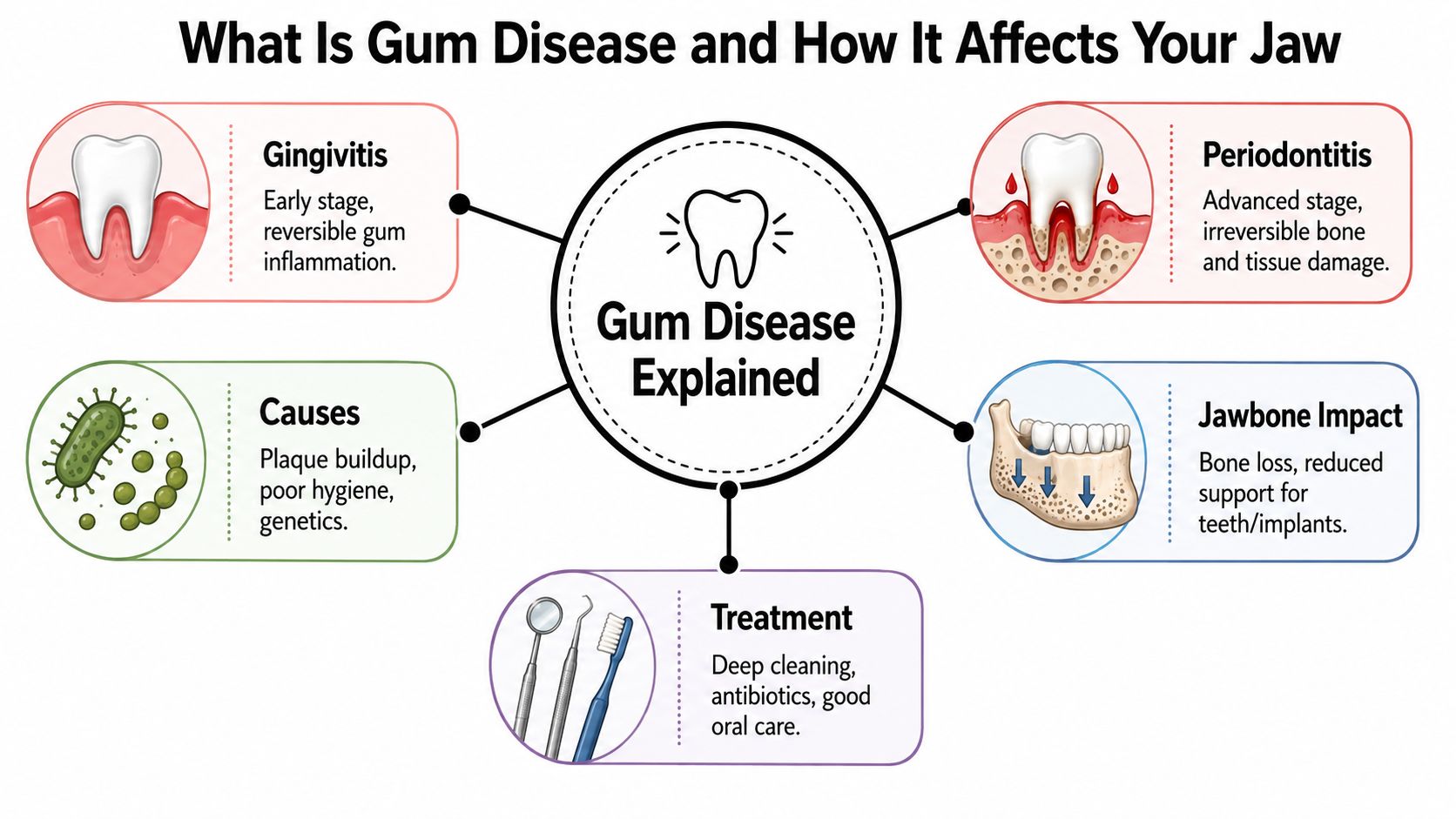
Gum disease starts as inflammation around the teeth, but it doesn't stay small if it's left alone. The early form is gingivitis, which usually shows up as redness, puffiness, or bleeding when you brush. At that stage, the damage is still limited to the gum tissue.
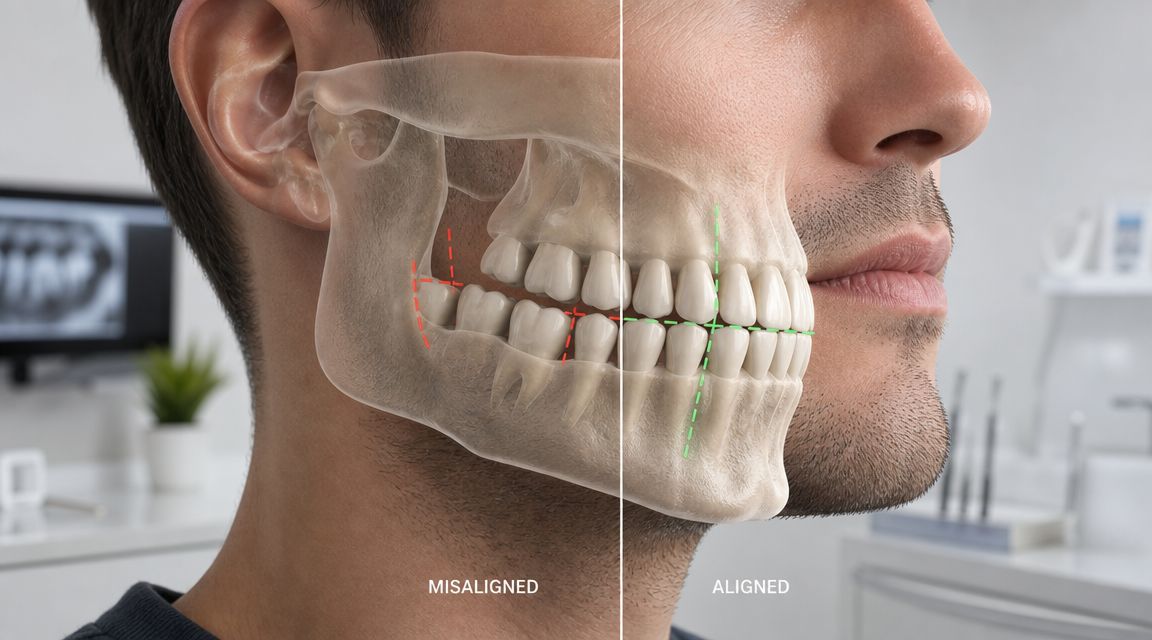
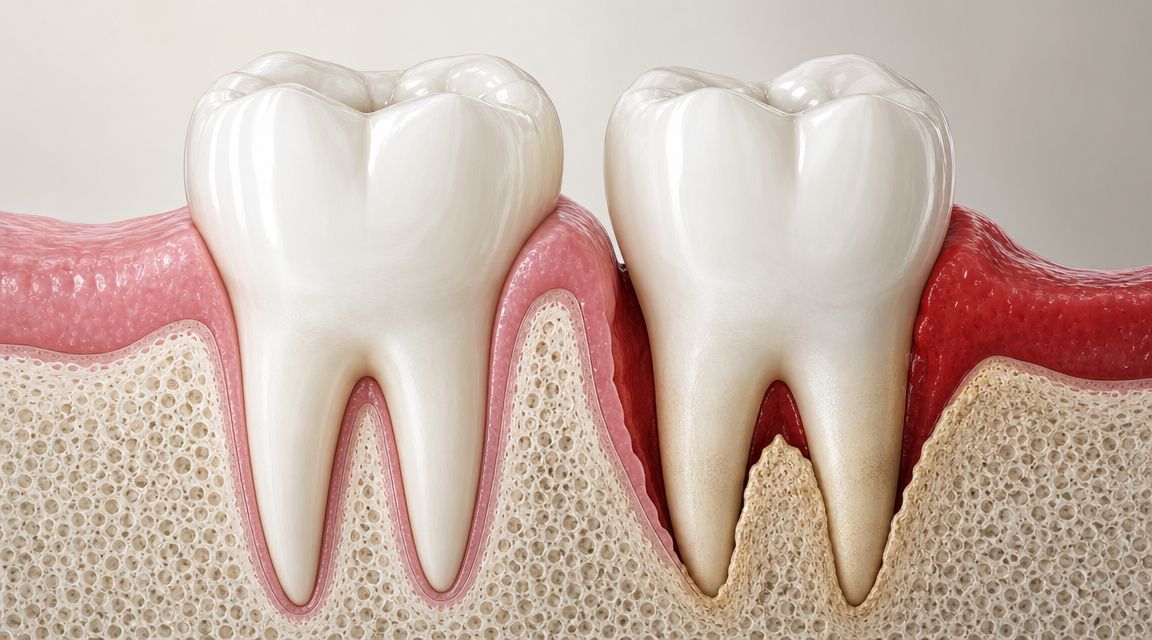
The more serious form is periodontitis. That's when infection and inflammation move deeper and begin to affect the structures that hold teeth in place. The attachment around the teeth breaks down, gums can recede, and the jawbone can start to shrink.
Think of the jaw like a foundation
A natural tooth sits in bone and is supported by surrounding gum and connective tissue. If gum disease destroys that support, the tooth may loosen even if the visible part still looks usable.
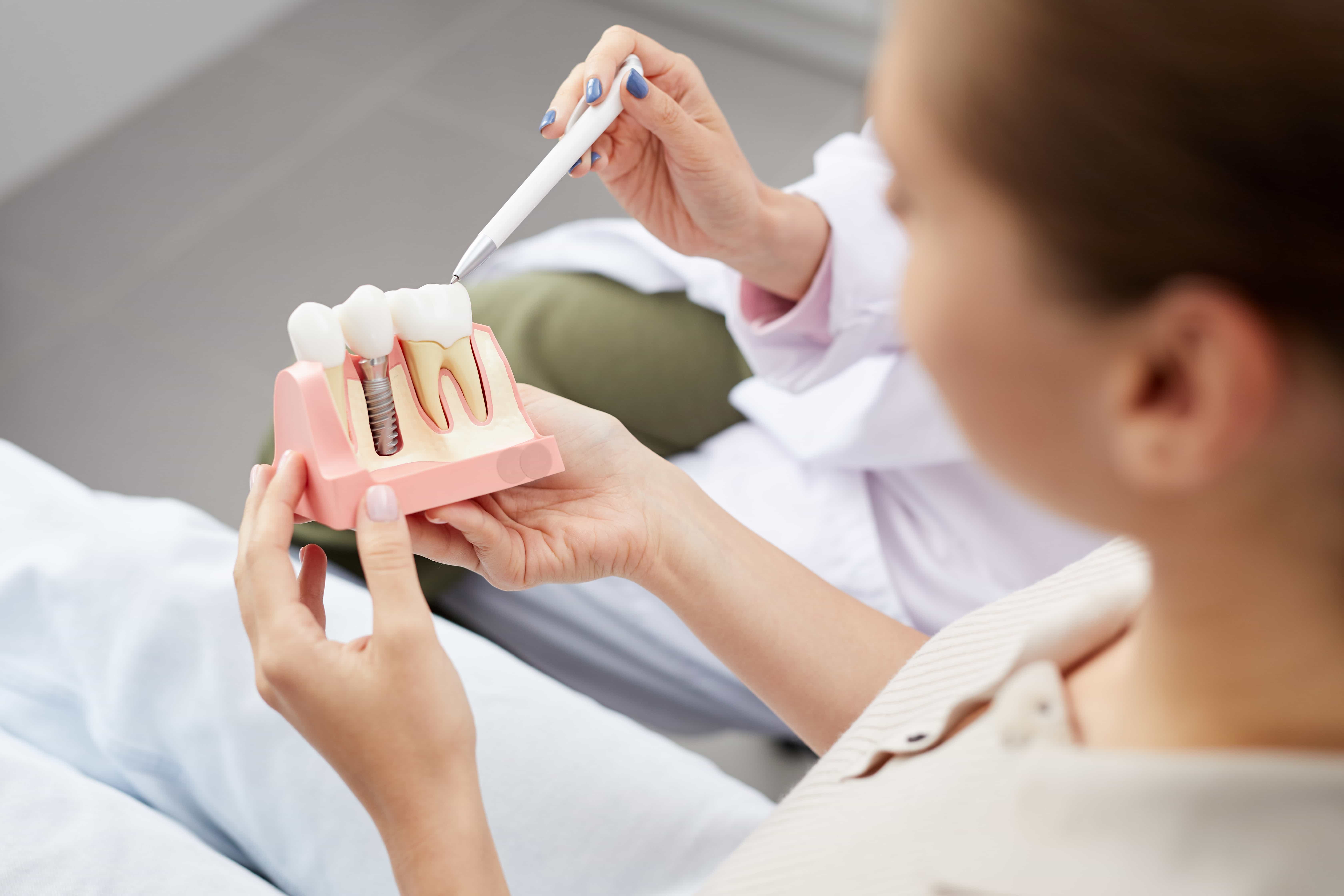
Implants need support too. They don't get cavities, but they still depend on healthy tissue and stable bone. If periodontitis has already caused significant bone loss, that changes implant planning because there may be less structure available to anchor the implants safely.
A simple way to think about it is this:
| Condition | What happens | Why it matters for implants |
|---|---|---|
| Gingivitis | Surface-level gum inflammation | Usually points to a hygiene and inflammation problem that must be controlled |
| Periodontitis | Deeper infection with attachment and bone loss | Can reduce the support needed for implant stability |
Why bone loss becomes the key issue
Many patients focus on bleeding gums because that's what they notice first. Clinically, the bigger concern is often what they can't see. Once bone has been lost, the jaw may no longer offer the same support it once did.
The American Academy of Periodontology states that implant candidates should have healthy gum tissues free of periodontal disease and adequate jawbone volume, and also notes that periodontal maintenance is still required after placement to prevent peri-implant disease, as outlined in the Academy's dental implant procedures guidance for patients.
Practical rule: Bleeding gums don't just signal irritation. They can be a warning that the support system under the teeth is changing.
Common signs patients shouldn't ignore
Some people with advancing gum disease don't have much pain, which is why it often goes untreated longer than expected. These are the signs that usually deserve a full evaluation:
- Bleeding when brushing or flossing
- Gums pulling away from the teeth
- Persistent bad breath
- Loose or shifting teeth
- Trouble chewing on one side
- Spaces opening where teeth used to fit tightly
If you're seeing those changes, the issue isn't only your gums. It's the entire support system for your teeth and any future implant work.
Can You Get All on 4 Implants with Gum Disease
Yes, you can still be a candidate for All-on-4 if you have a history of gum disease, but active disease has to be controlled first. That's the part many people miss. A history of periodontitis doesn't automatically disqualify you. Untreated infection is the problem.
Successful implant planning starts with determining whether the gums are currently healthy enough and whether the bone can support the treatment safely. That isn't guesswork. It's a clinical decision based on exam findings, imaging, and the condition of the remaining teeth.
What candidacy really depends on
The answer usually comes down to a few practical questions:
- Is there active infection around the remaining teeth or gums
- Has bone loss changed where implants can be placed
- Are any teeth still maintainable, or are they too compromised
- Would a standard All-on-4 approach work, or does the plan need to be adjusted
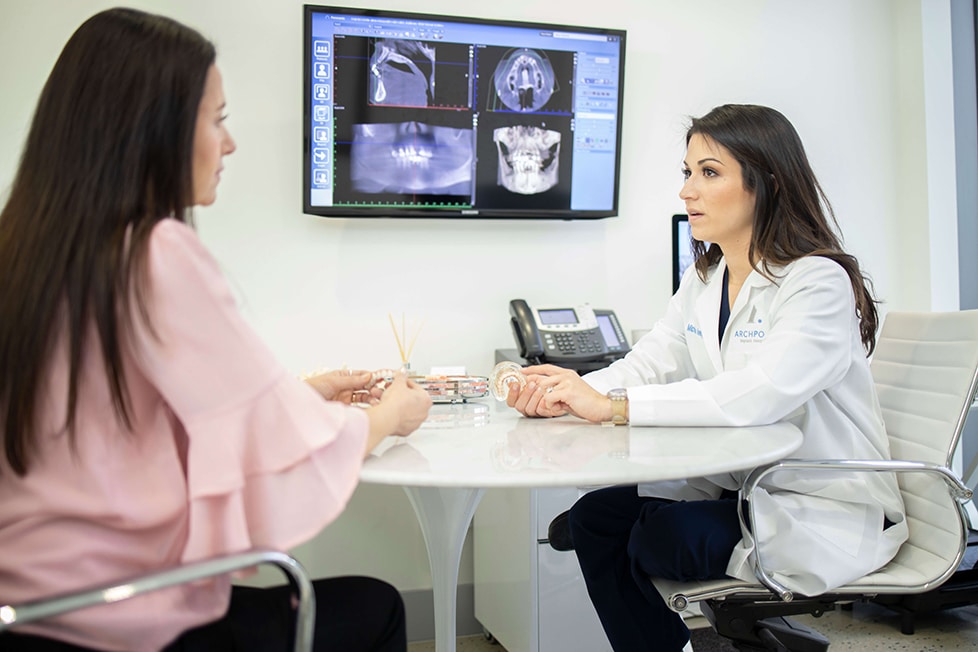
For patients searching for a dentist in Austin, TX or dental implants near me, advanced diagnostics are paramount. A full-mouth evaluation with digital imaging and a 3D CT scan helps measure available bone, identify hidden areas of infection, and map the safest implant positions before anything is scheduled.
Why the consultation matters so much
A good consultation should never feel rushed, especially in a gum-disease case. If someone has been told in the past that they have bone loss, loose teeth, or failing dental work, they need more than a quick yes-or-no answer.
At this stage, personalized planning matters more than broad promises. Some patients can move toward implant treatment after periodontal stabilization. Others need extra steps before surgery. In some cases, the treatment design itself changes because the jaw can support a different full-arch solution more predictably than a standard plan.
The most reliable implant treatment starts with a realistic diagnosis, not optimism alone.
What patients in Austin and Georgetown should expect
When you're evaluated for full-arch implant treatment locally, the process should include a careful review of symptoms, imaging, bite forces, remaining teeth, and gum health. That kind of exam protects you from being pushed into a plan your mouth isn't ready for.
For many patients, hearing that treatment must happen in phases is reassuring. It means the case is being managed for long-term success, not speed alone. If you've been putting off care because of fear that gum disease makes implants impossible, the better question is whether your condition can be stabilized and whether your jaw can support the right version of treatment.
Periodontal Therapy Before Your Implant Surgery
Before implant surgery, the gums and surrounding tissues have to be brought under control. That phase isn't a delay. It's part of the treatment.
When infection is present, placing implants too soon increases risk. The goal of pre-implant periodontal therapy is to reduce harmful bacteria, calm inflammation, and create a cleaner environment for healing.
What treatment may include
For many patients, this starts with scaling and root planing, often called a deep cleaning. That means removing plaque and hardened buildup from below the gumline and smoothing the root surfaces so the gums can heal more effectively.
Depending on the condition of your mouth, the pre-surgical phase can also involve:
- Deep cleaning below the gums to reduce bacterial load
- Re-evaluating loose teeth to decide what can be saved and what can't
- Removing teeth with poor long-term prognosis if they would compromise the implant plan
- Monitoring healing before any surgical date is finalized
If you'd like a clearer overview of this stage, 3D Dental has a patient-friendly guide on periodontal disease treatment.
What doesn't work well
Patients sometimes hope they can manage advanced gum disease with better brushing alone or by waiting until the teeth become unbearable. That usually doesn't improve the foundation enough for implant therapy.
What also tends to fail is trying to save every remaining tooth when several are already structurally or periodontally compromised. In full-arch cases, holding onto badly damaged teeth can prolong infection and delay a more stable solution.
If a tooth has little support left and continues to harbor infection, keeping it may cost you better treatment options later.
Why this phase improves the final result
This part of care is where the long-term mindset begins. Gum therapy reduces the biological stress around future implants and helps clarify the true condition of the jaw after inflammation settles down.
It also gives the clinical team a better read on healing response, hygiene habits, and whether the mouth is ready for surgery. For patients in Austin, Georgetown, and nearby communities, that means the implant plan is being built on tissue health, not hope. That's the difference between moving fast and moving wisely.
The All on 4 Procedure for Patients with Bone Loss
A common Austin consult starts like this. A patient has spent years dealing with loose teeth, infection, and progressive bone loss from gum disease, and now wants to know whether a fixed full-arch solution is still realistic. In many cases, it is, but the procedure has to be planned around the bone that remains, not the bone we wish were there.
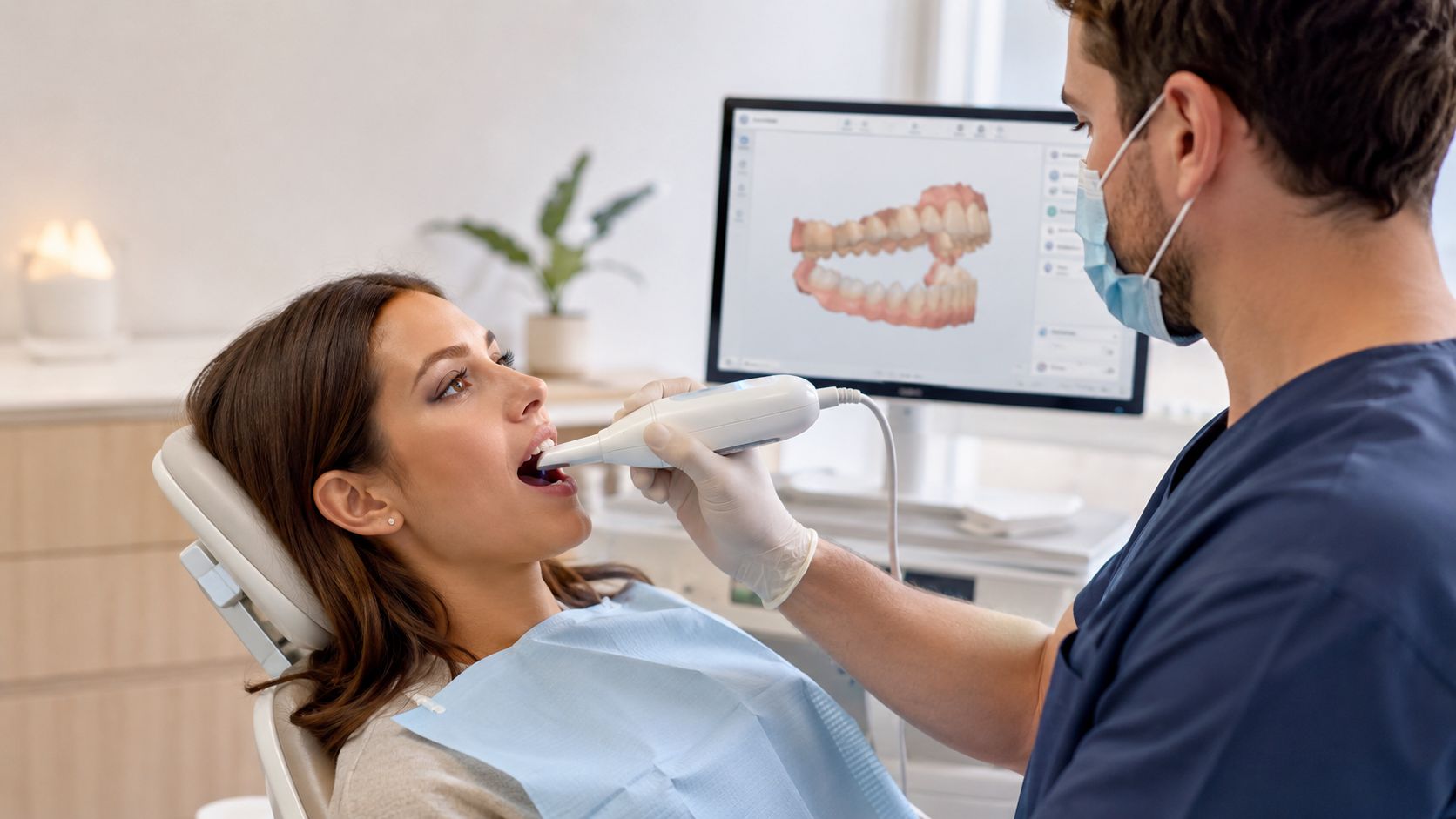
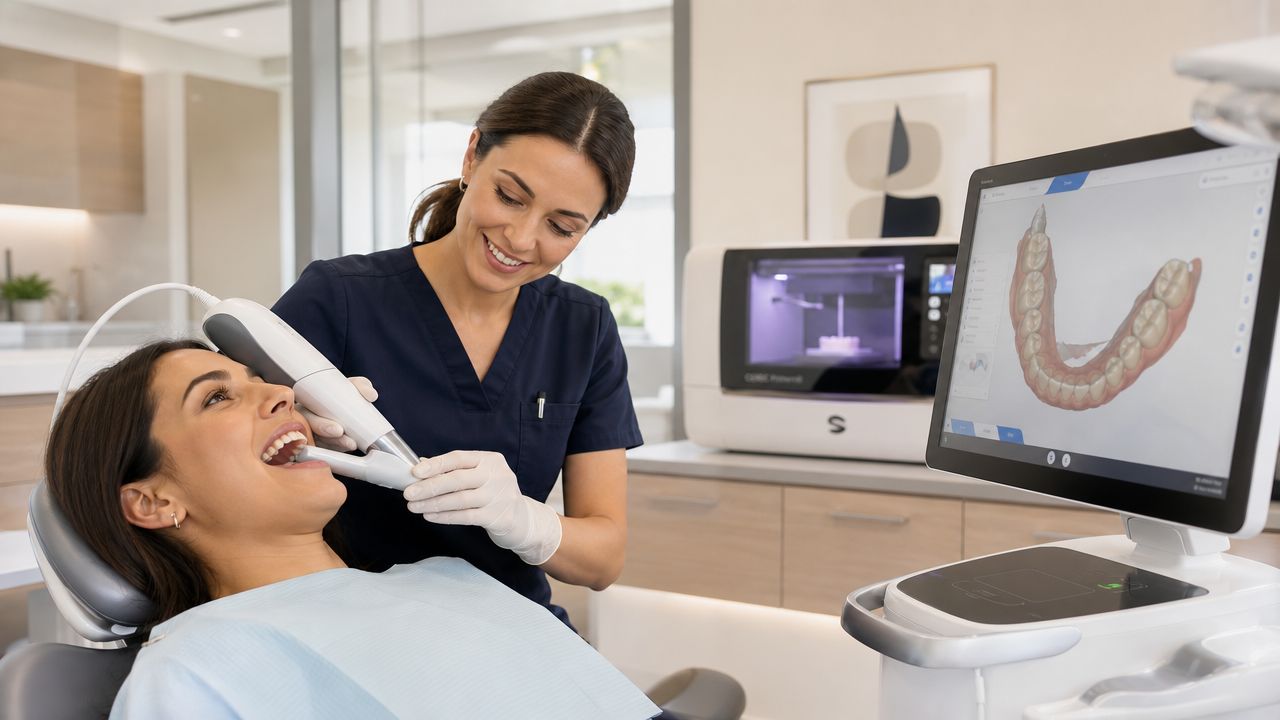
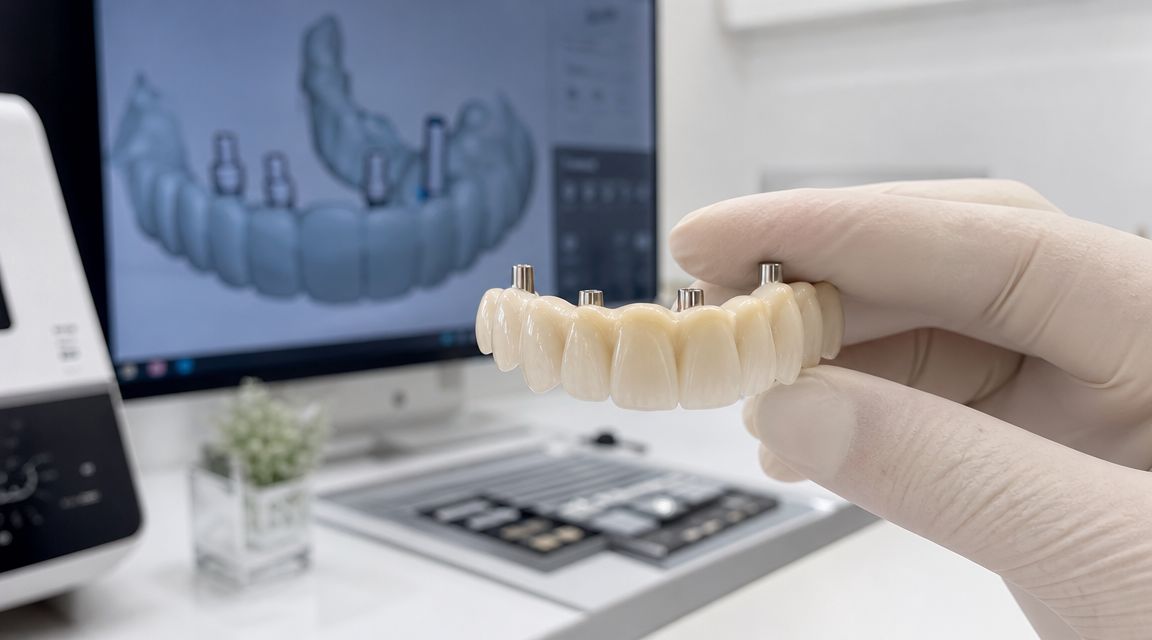
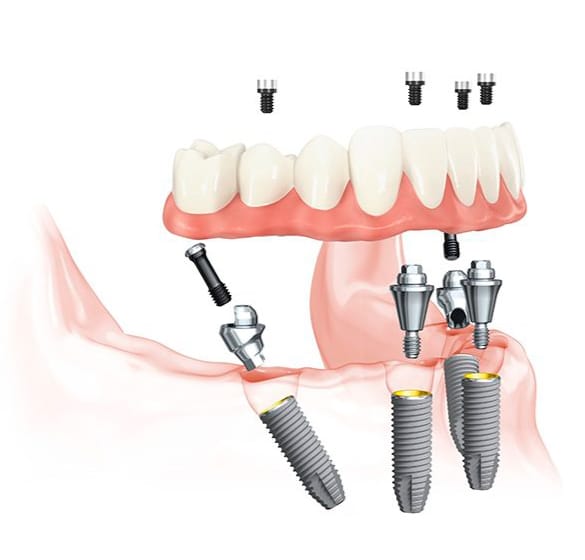
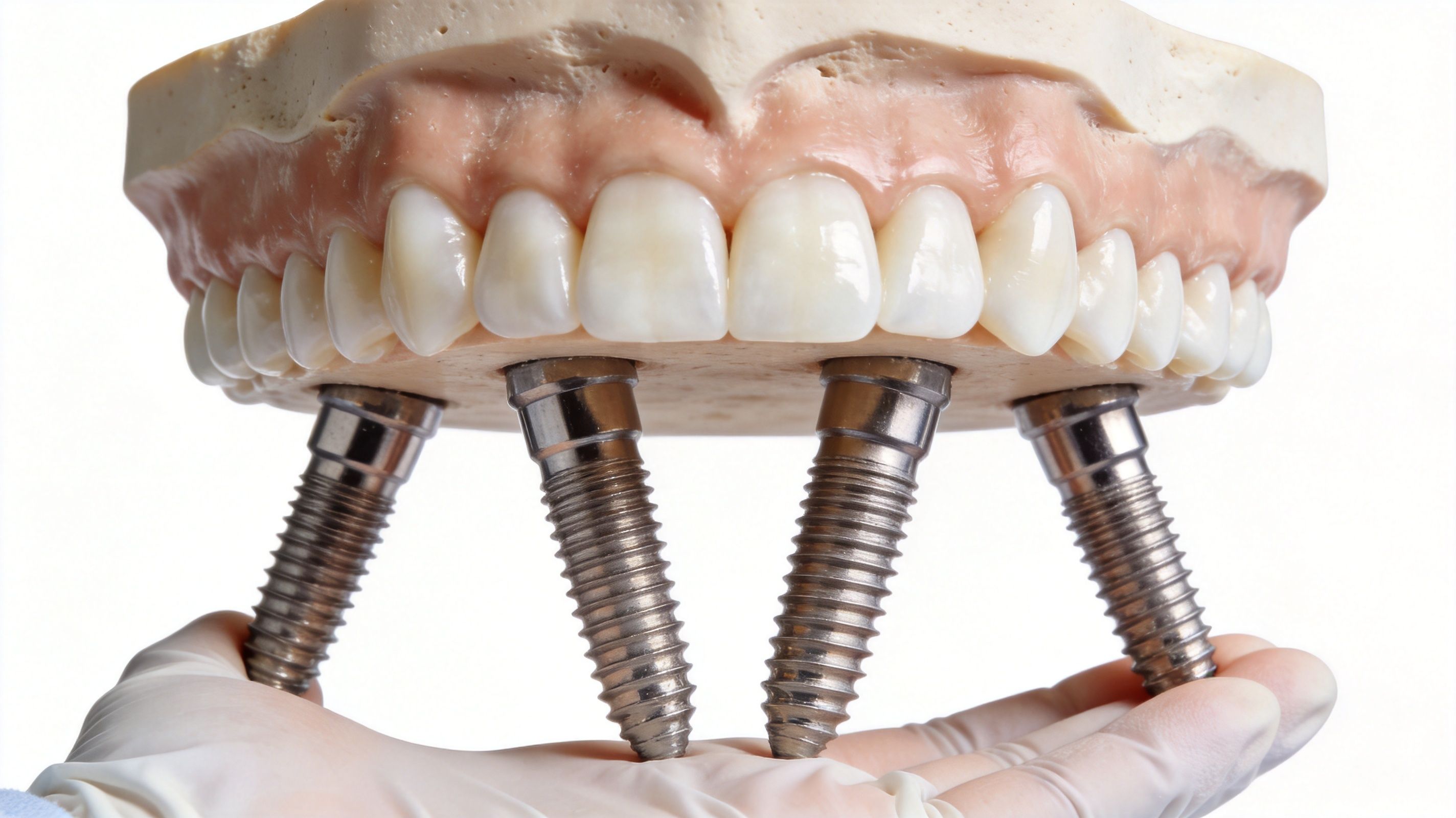
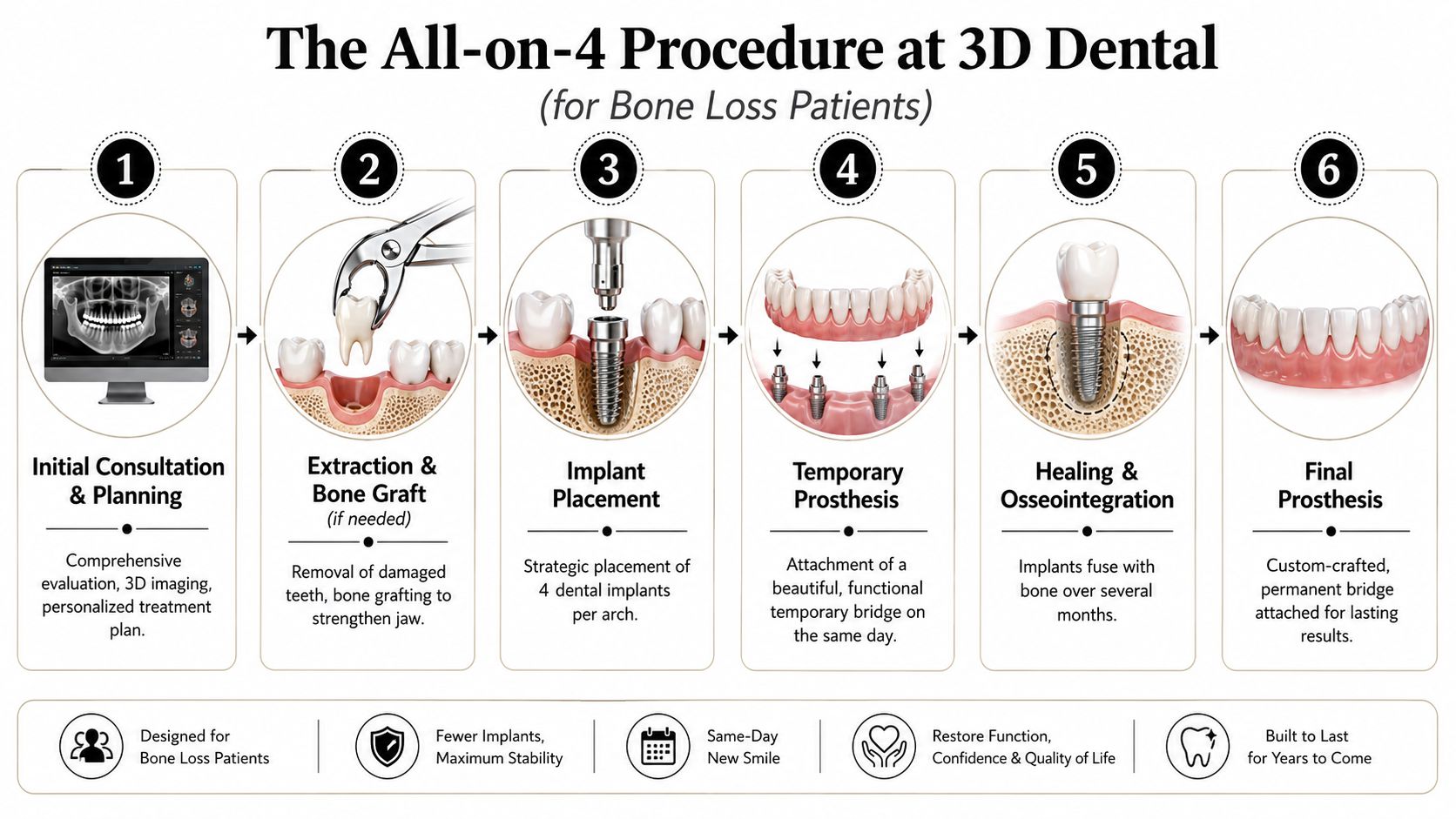
All-on-4 works by placing implants in positions that make the best use of available jaw support. For patients with periodontal damage, that planning step matters as much as the surgery itself. At 3D Dental, we use 3D CT imaging, digital scans, and coordinated surgical-prosthetic planning to map where implants can achieve stability and where the plan needs to be adjusted.
What surgery day can look like
For patients with failing teeth related to periodontitis, surgery often starts with removing teeth that are too damaged, infected, or unstable to support long-term health. Inflamed or diseased tissue is addressed first. Then the implant sites are prepared and four implants are placed according to the digital plan.
The posterior implants are often angled to engage stronger areas of bone and avoid anatomy that limits placement. This approach can make fixed full-arch treatment possible even when gum disease has reduced bone in parts of the jaw.
In the right case, a temporary fixed arch is attached the same day or shortly after. That gives patients back function and appearance during healing, while the implants integrate and the tissues settle.
When the plan has to change
Some patients with severe periodontal destruction are still candidates for standard All-on-4. Others need a modified approach.
As described in this discussion of All-on-4 and gum disease planning, CT-based evaluation helps determine whether the remaining jaw can support implants predictably or whether a different fixed option, staged treatment, or grafting should come first. That decision is not a setback. It is how we lower risk and build a restoration that has a better chance of lasting.
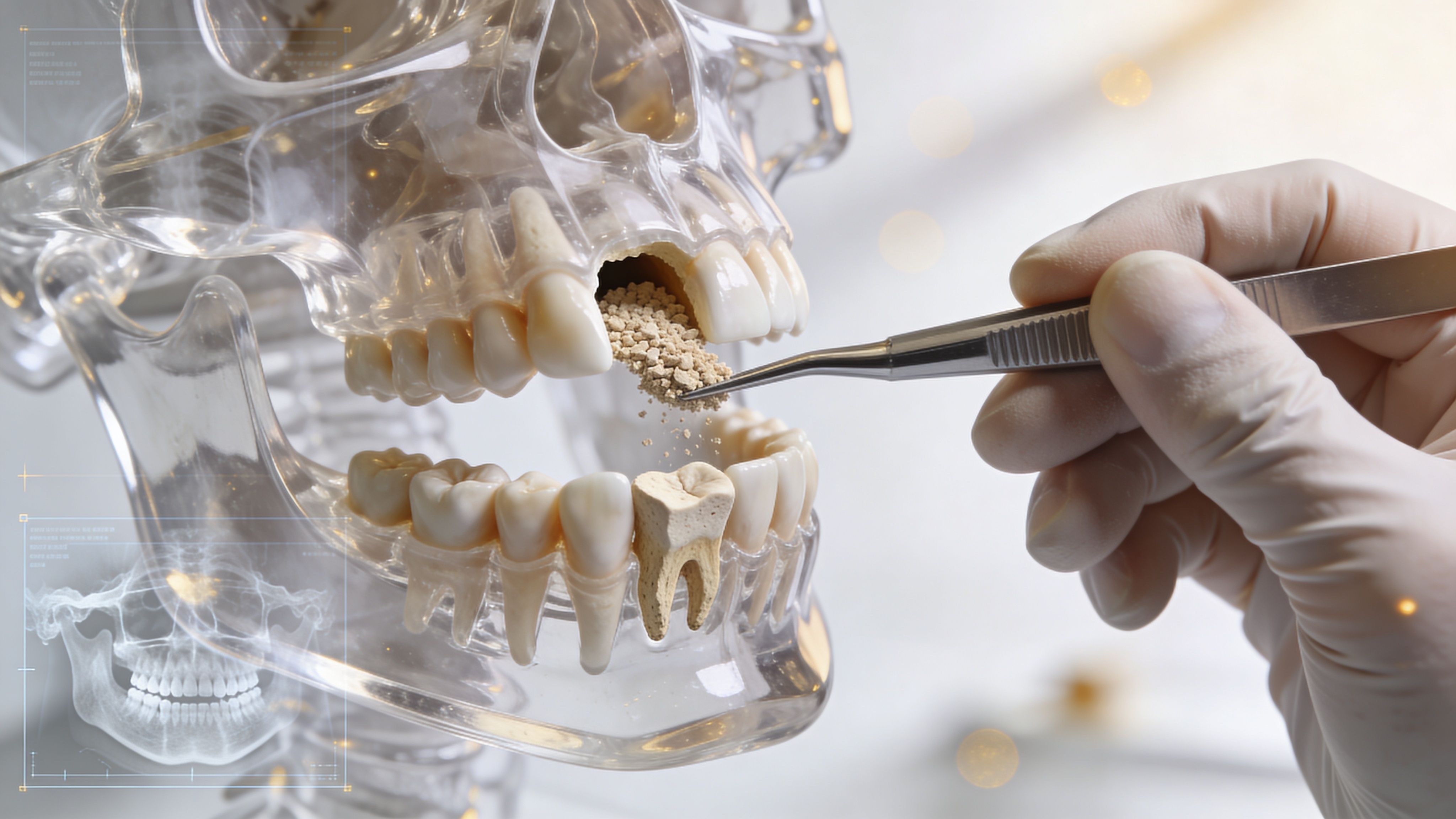
If grafting becomes part of the treatment sequence, this overview of how dental bone grafting works explains what that step is meant to accomplish.
Here's a helpful visual overview of the procedure:
The immediate change patients notice
The first major milestone is often walking out with a fixed temporary smile instead of failing teeth or a removable solution that feels insecure. For many patients, that day changes how they eat, speak, and interact with other people.
The final result still takes time. Bone has to heal around the implants, the bite has to remain controlled during integration, and the final prosthesis is made after we confirm that the foundation is stable. For patients with a history of gum disease, that timeline is part of the journey. We are not only replacing teeth. We are managing periodontal risk, protecting the bone that remains, and restoring the full arch with a plan individualized for your mouth.
Preventing Implant Failure and Peri-Implantitis
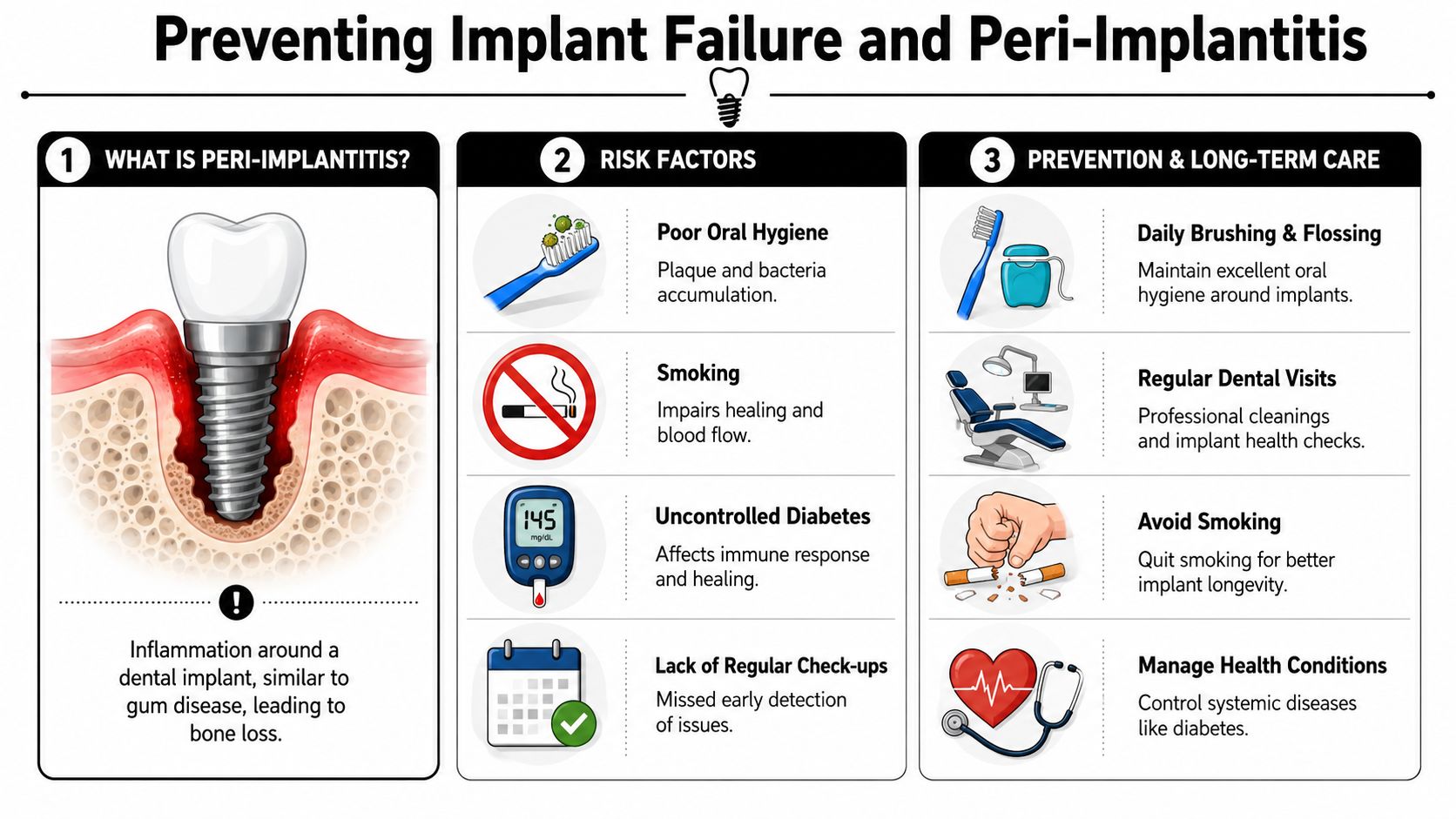
The biggest long-term concern for patients with a history of periodontitis isn't the surgery alone. It's what happens after healing. The main technical failure pattern in these cases is often peri-implantitis, an inflammatory condition around implants where harmful biofilm re-enters through the peri-implant sulcus and drives late bone loss.
That risk doesn't mean implants are a bad option. It means maintenance has to be taken seriously from the start.
What the research tells us about risk
In patients with a history of chronic periodontitis, the American Academy of Periodontology reported a study showing overall implant survival of 90%, with 100% survival through 5 years and then a 10.08% failure rate in years 6–10. In the same source, implants in patients with treated chronic periodontitis failed at a rate 10 times higher than natural teeth over the study period, according to this AAP report on implants in treated chronic periodontitis patients.
That sounds intimidating, but the same body of evidence also points to what helps. An NIH case report in periodontitis-susceptible patients found that with strict 3-month maintenance, plaque and bleeding scores improved and peri-implant pocket depths stayed around 4.2 to 4.7 mm over 5 years with no implant loss, as summarized in this discussion of All-on-4 problems and complications.
What actually protects implants over time
The patients who do best usually treat maintenance as part of the treatment, not an optional extra. That includes both home care and professional follow-up.
- Professional maintenance every 3 months if your clinical history supports that schedule
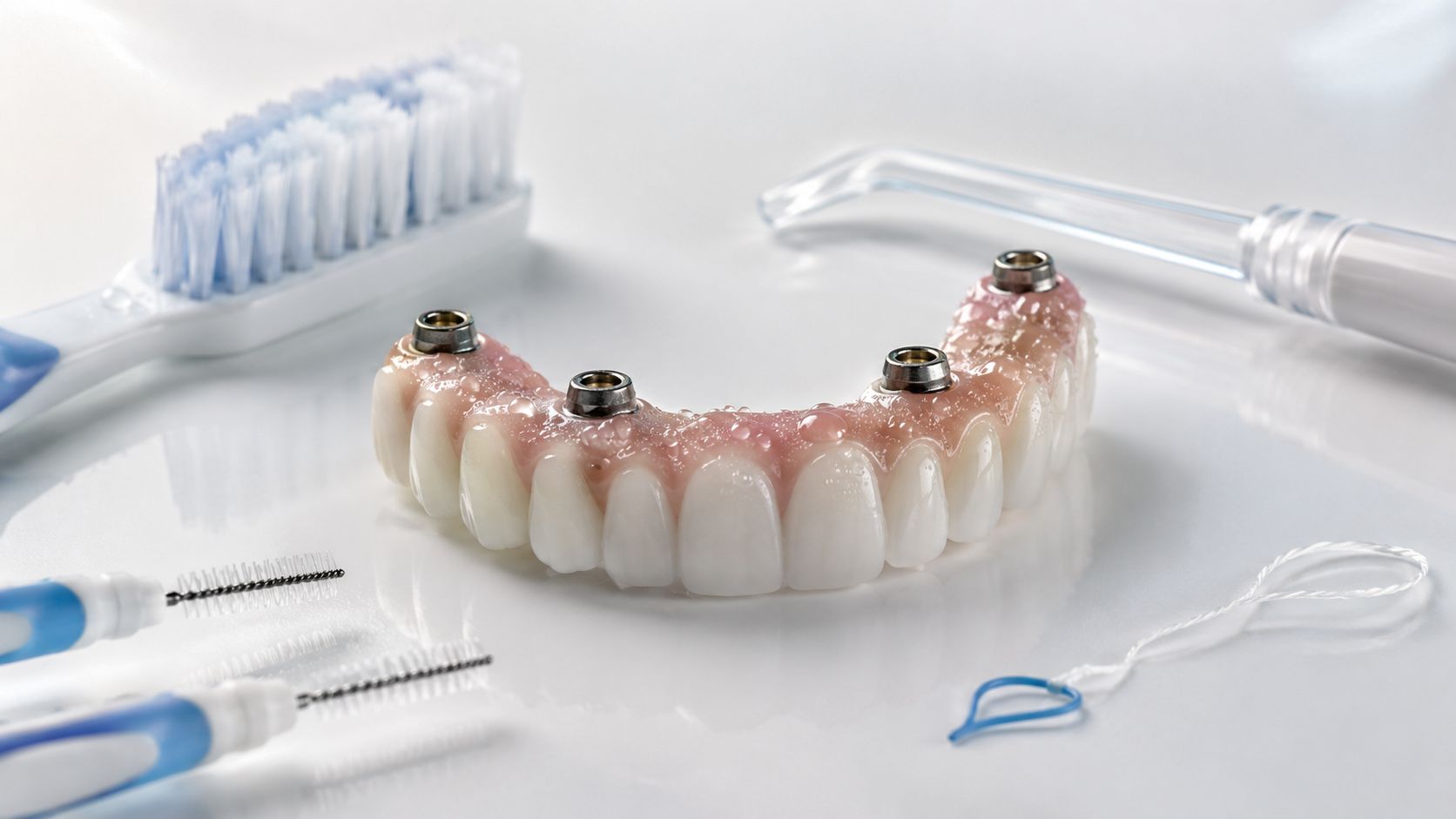
- Targeted home cleaning tools such as floss threaders, water flossers, interproximal brushes, or implant-specific hygiene tools recommended by your dental team
- Regular checks for inflammation so early tissue changes are caught before larger bone problems develop
- Immediate attention to soreness, bleeding, odor, or loosening rather than waiting
Clinical reality: Implants don't replace the need for gum care. They raise the value of gum care.
What tends to cause trouble
The pattern is usually familiar. Patients feel much better after treatment, then assume the hard part is over. Appointments get stretched out. Cleaning gets rushed around the prosthesis. Mild bleeding is ignored because nothing hurts yet.
That approach is where problems start. If you've had gum disease before, your long-term success depends on staying engaged with maintenance for years, not just healing from surgery. This is a partnership between you and the dental team.
Begin Your Smile Transformation in Austin or Georgetown
For those seeking a dentist in Austin, TX, dental implants near me, or help with failing teeth in Georgetown, the next step is simpler than often assumed. You don't need to know whether you need extractions, gum treatment, bone grafting, or a full-arch solution before you call. You need a careful evaluation that turns uncertainty into a plan.
For patients with gum disease concerns, the path usually follows a clear sequence:
- Thorough exam and imaging with digital x-rays, a CT scan when needed, and a full review of gum and bone health
- Disease control first if active periodontal infection is present
- Surgical planning for extractions, implant placement, and temporary teeth when you're ready
- Healing and final restoration followed by ongoing maintenance care

Why patients appreciate a full-service office
When care is coordinated under one roof, it's easier to move from diagnosis to treatment without feeling like you're piecing together separate opinions. That's especially useful when your case may involve periodontal care, extractions, implant planning, digital scans, temporary teeth, and later cosmetic or restorative refinements.
It also helps if you're looking for broader care beyond implants. Many patients who come in for full-arch concerns also need new patient exams, dental x-rays, cleaning and exams, restorative dentistry, or help from an emergency dentist because failing teeth don't always decline on a predictable schedule.
A practical note about affordability
Cost is a real part of the decision. Most patients want to know not only whether treatment can work, but whether it can fit into real life.
At 3D Dental, patients can discuss insurance, in-house payment options, and financing choices such as Cherry and Sunbit during the consultation process. Clear financial conversations matter because they let you compare options without guessing, delaying, or committing before you understand the full scope of care.
If you've been living with loose teeth, chronic gum problems, or a smile that no longer feels dependable, don't assume your situation is beyond repair. A personalized implant evaluation can tell you what can be treated, what needs to happen first, and which path gives you the safest long-term result.
If you're ready to find out whether All-on-4 is possible after gum disease, schedule a consultation with 3D Dental. Patients in Austin, Georgetown, Wells Branch, Cedar Park, Round Rock, and Liberty Hill can get a personalized exam, advanced imaging, and a clear treatment roadmap built around gum health, bone support, and long-term success.
Ready to get started?
Schedule a free, no obligation consultation with our team and see what's possible for your smile!
Georgetown
- Mon-Thurs8:30am-5pm
- Fri8am-3:30pm
- Sat-SunClosed
Austin
- Mon-Tues8am-5pm
- Wed-Thurs9am-6pmFri8am-2pm
- Sat-SunClosed