
Veneers vs Bonding Teeth: Costs, Durability & Results
Related Posts


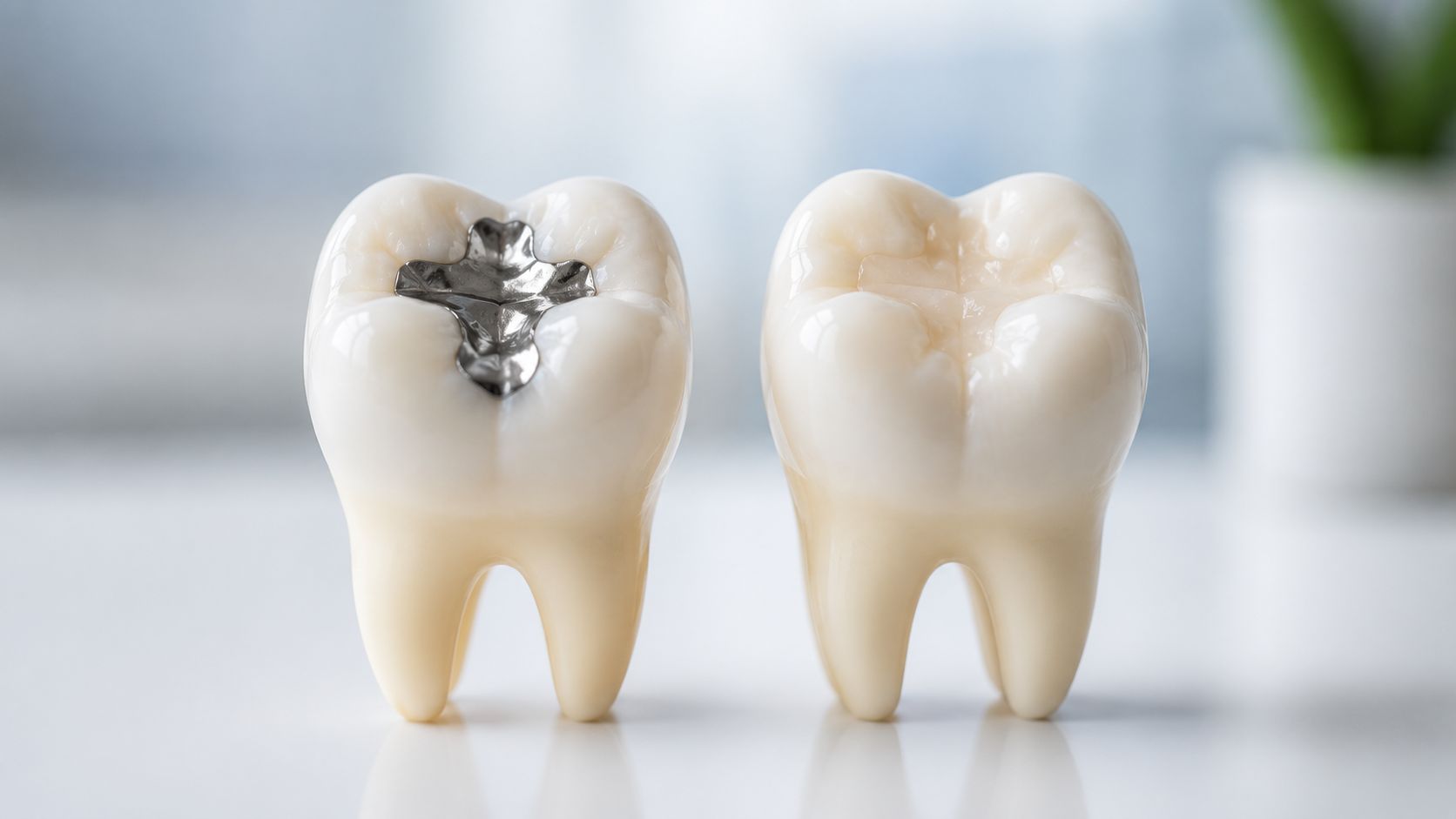
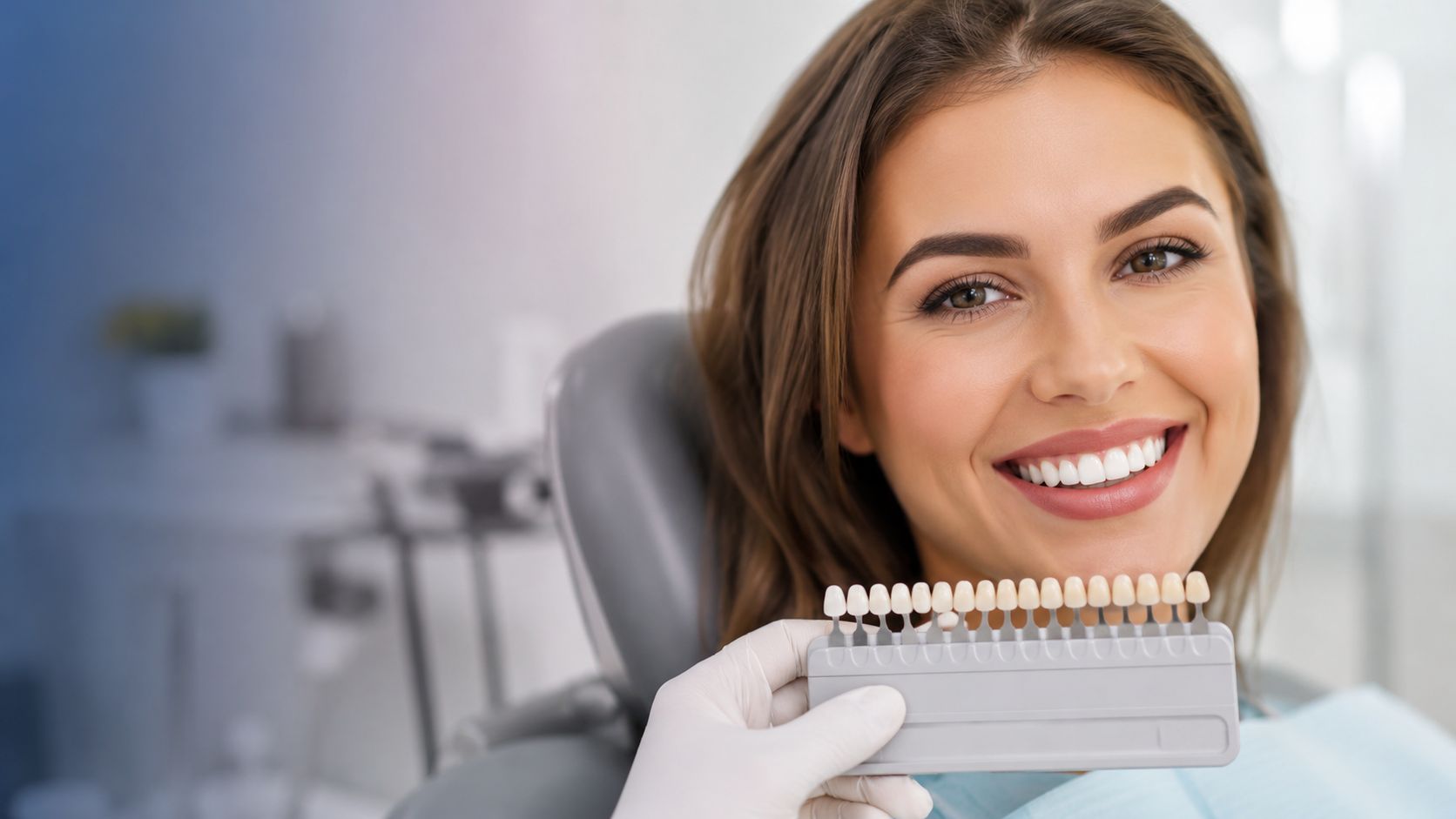

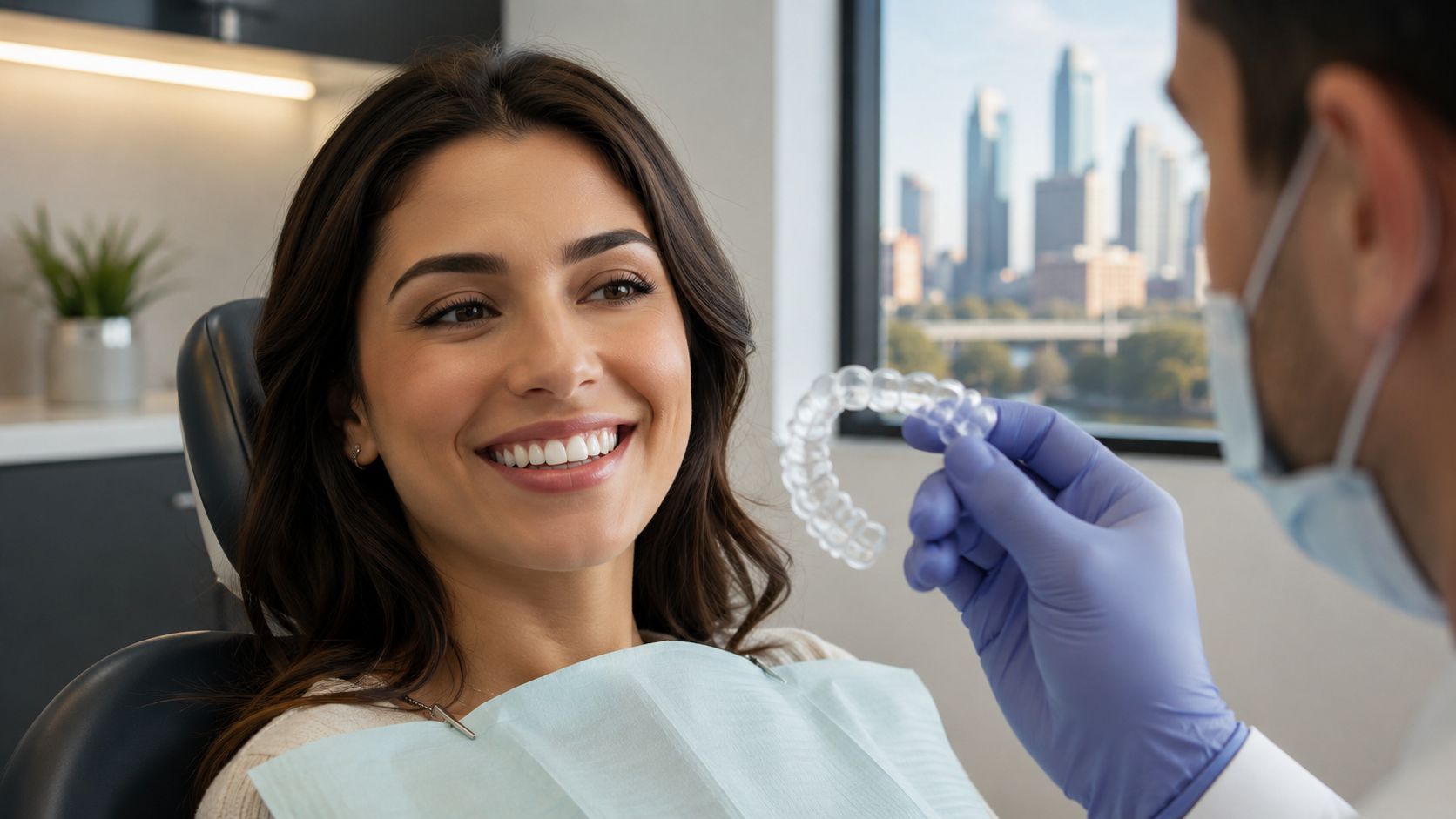
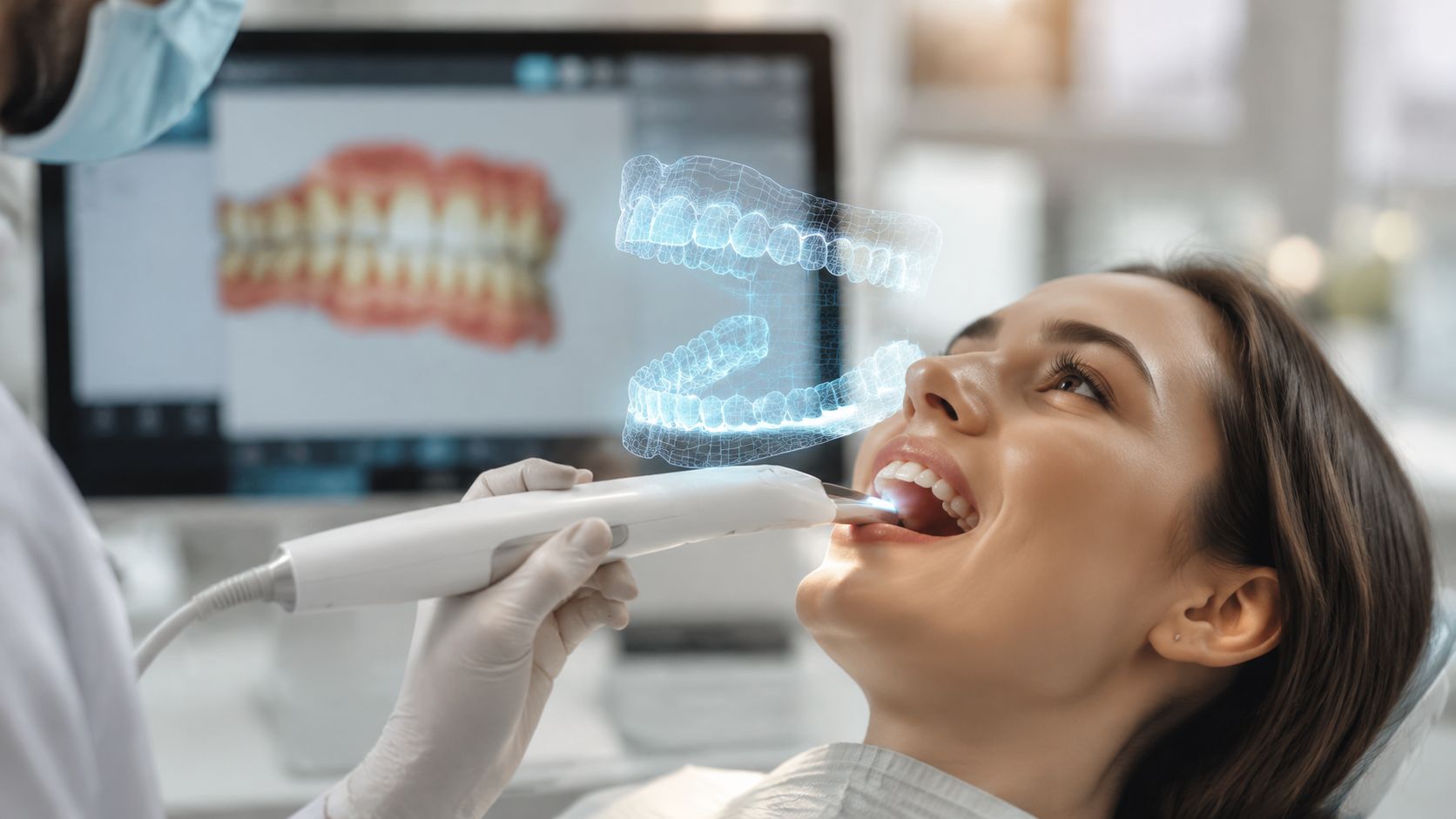
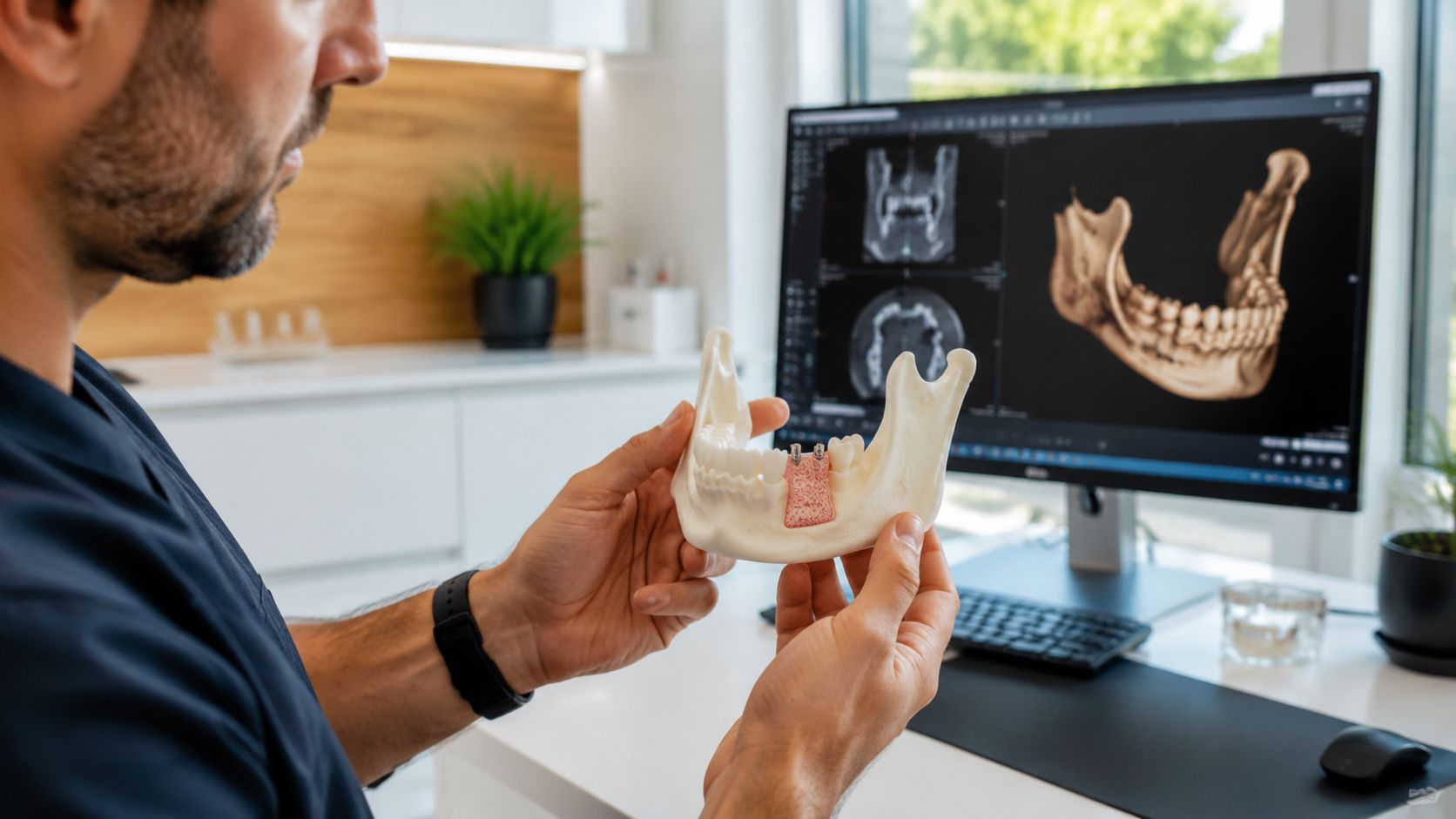
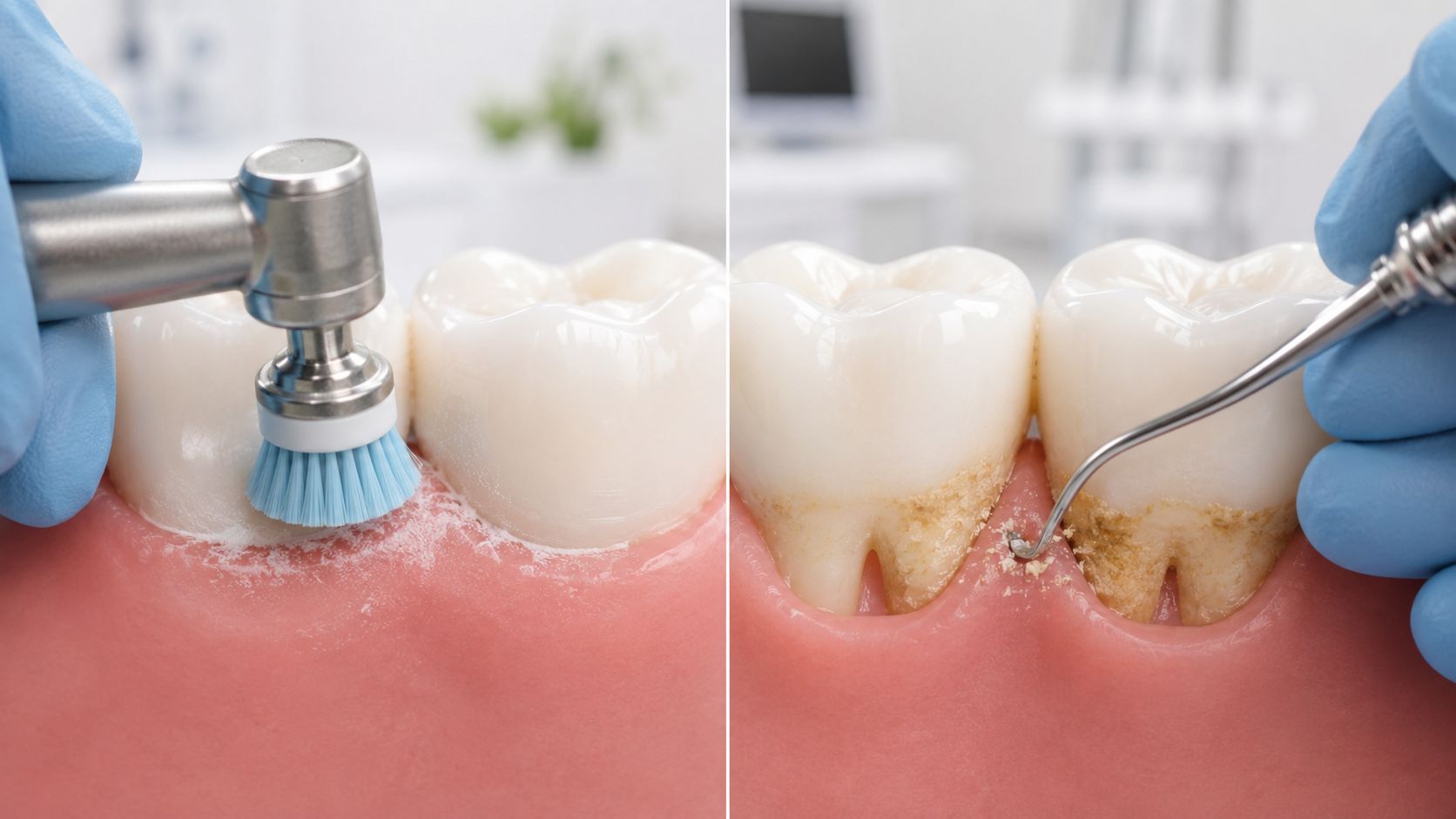
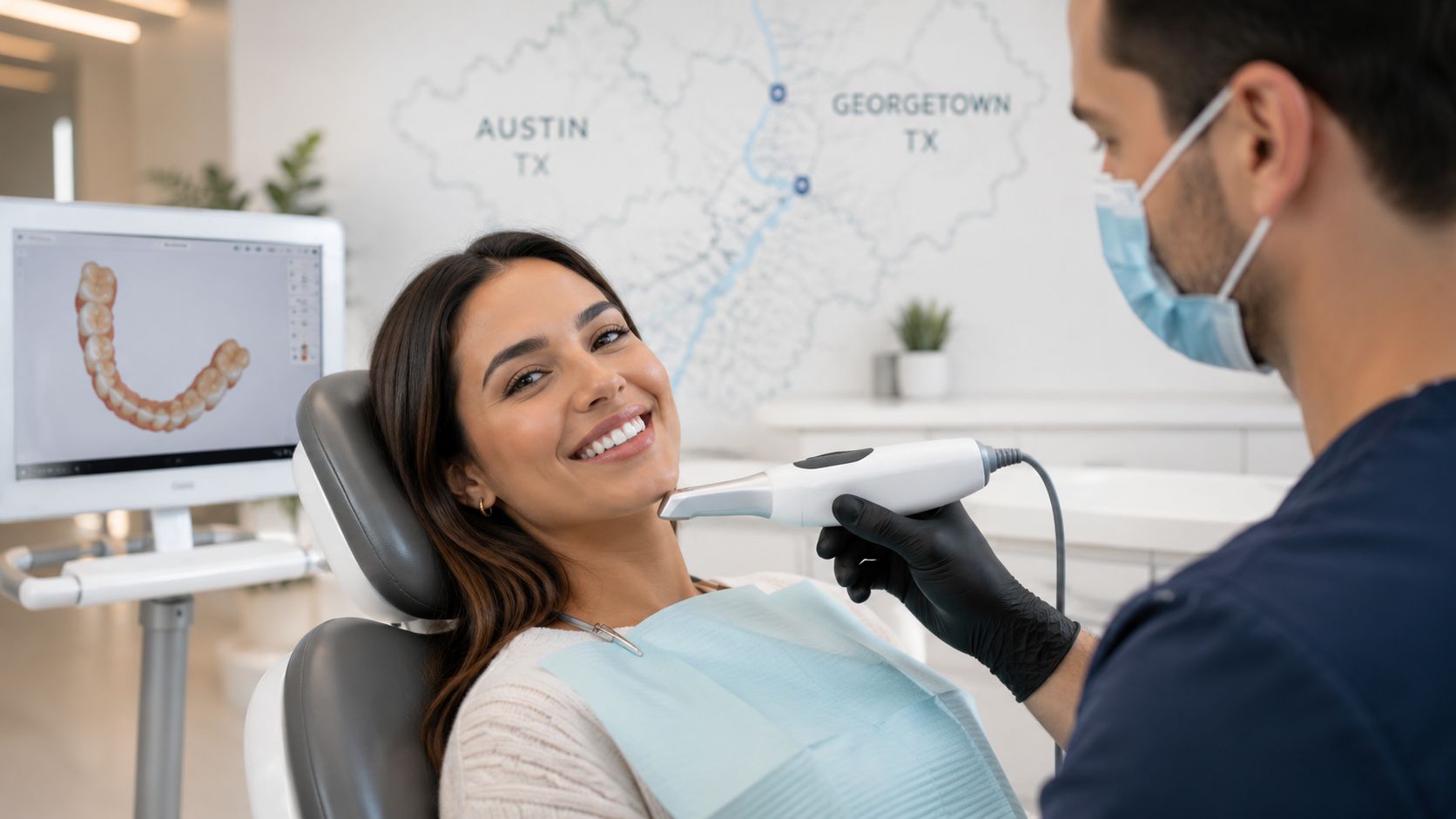
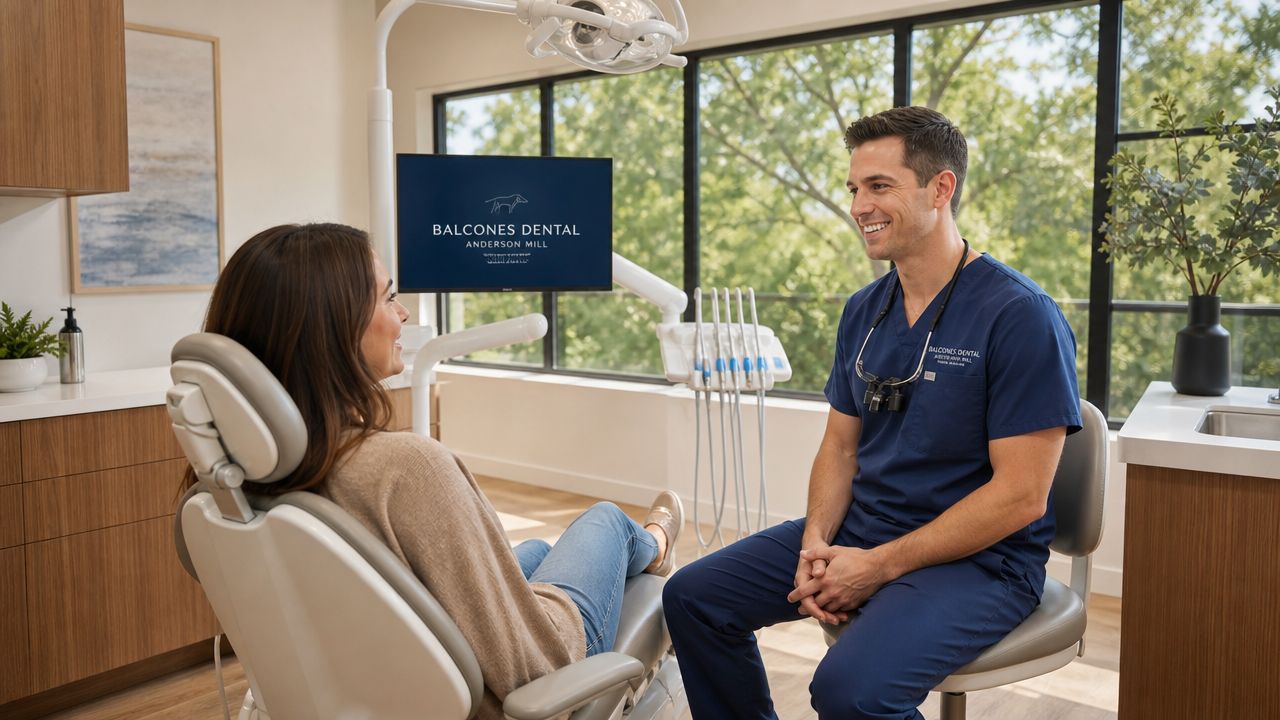
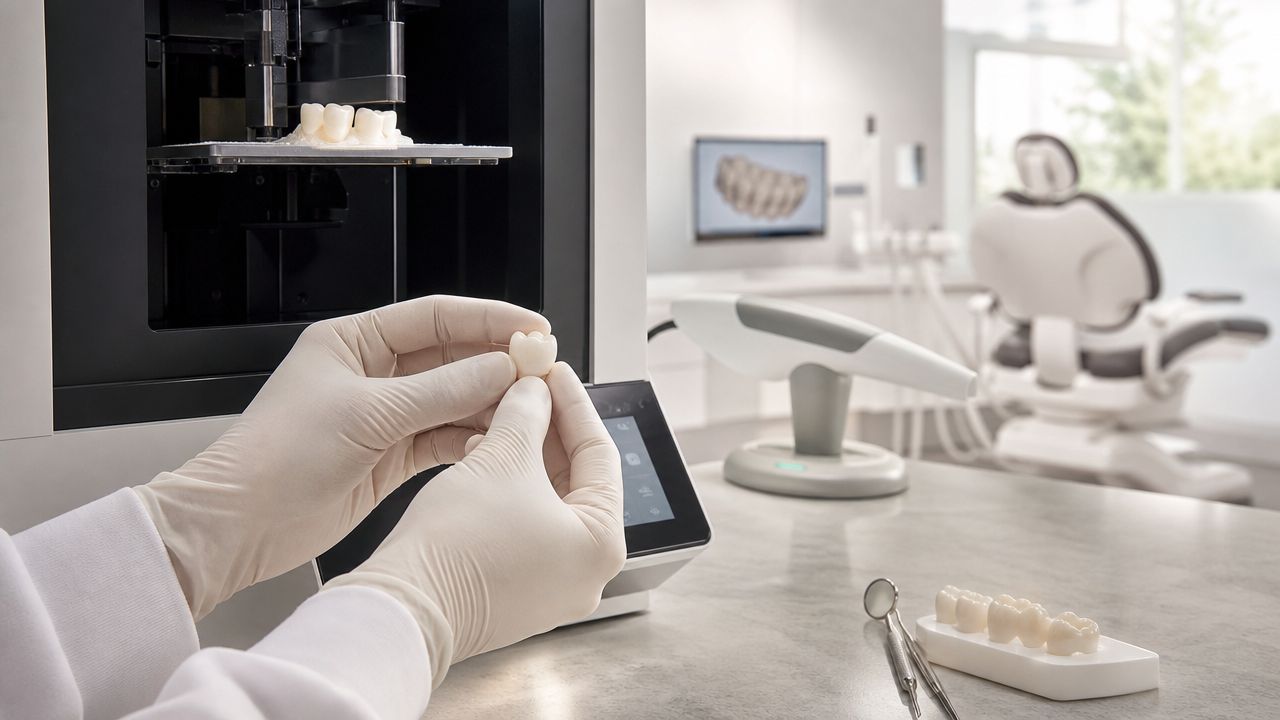
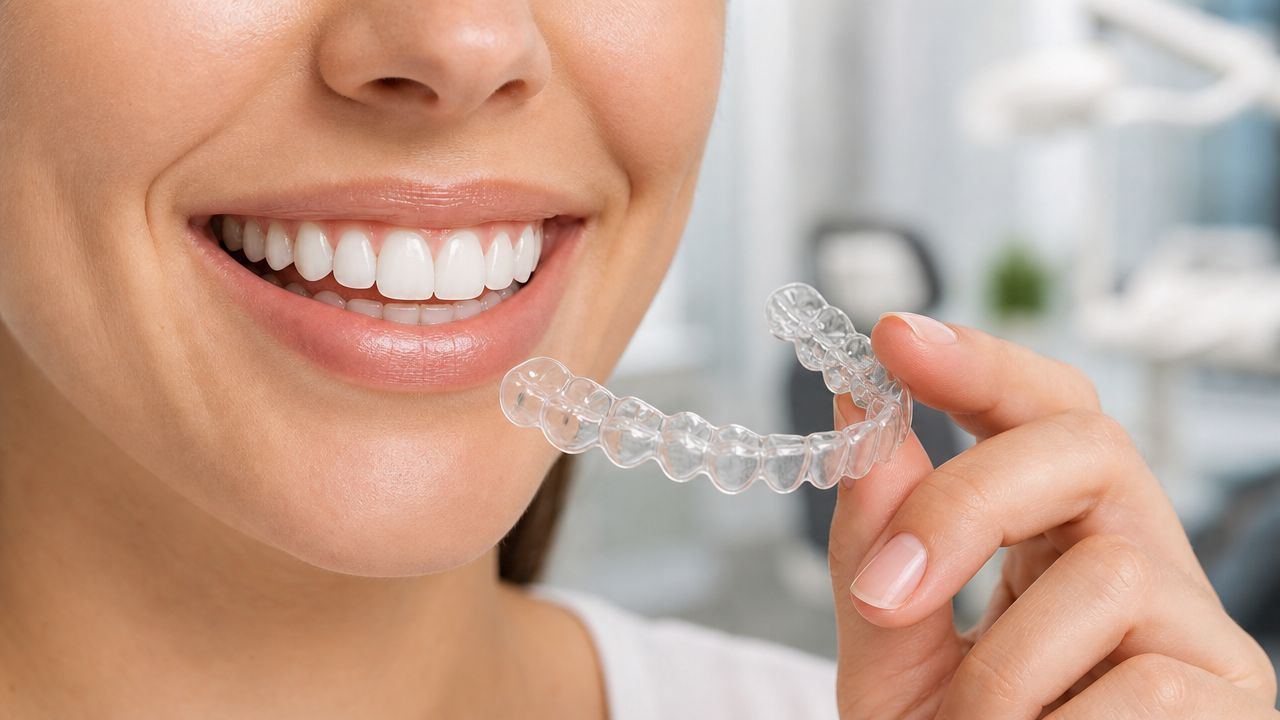

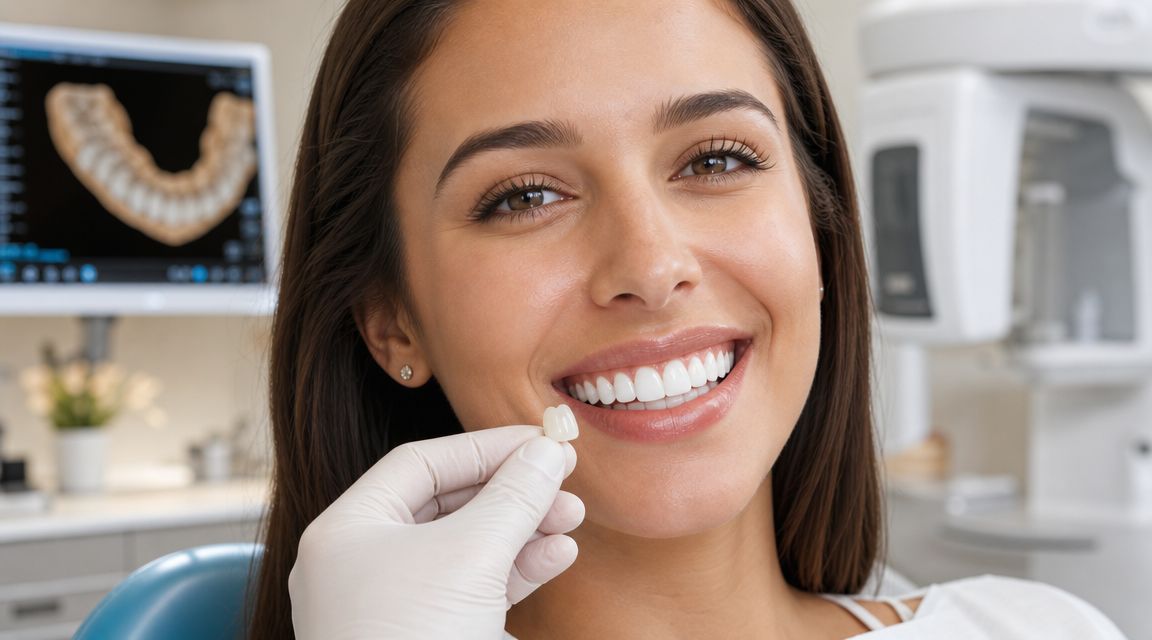













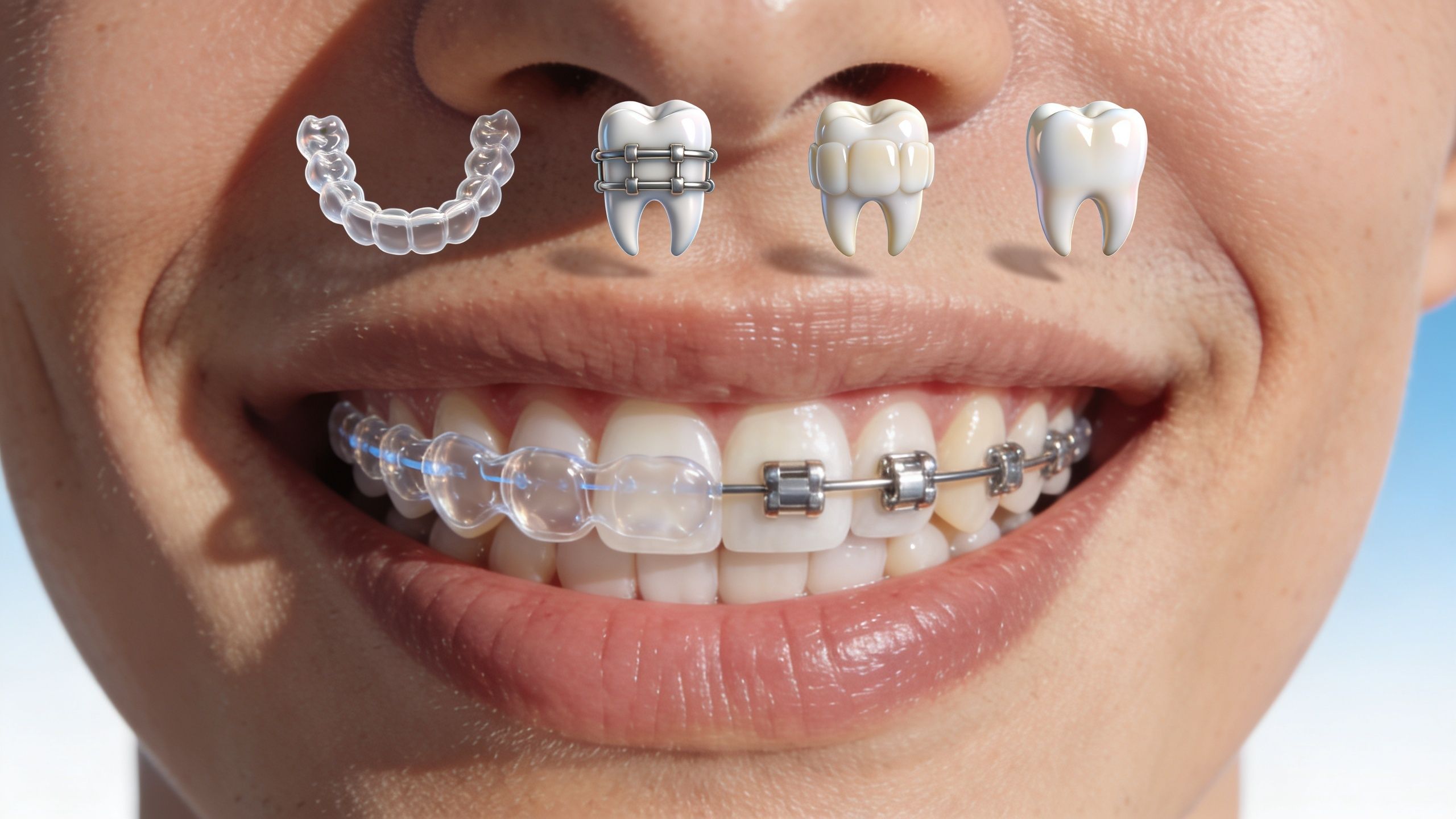





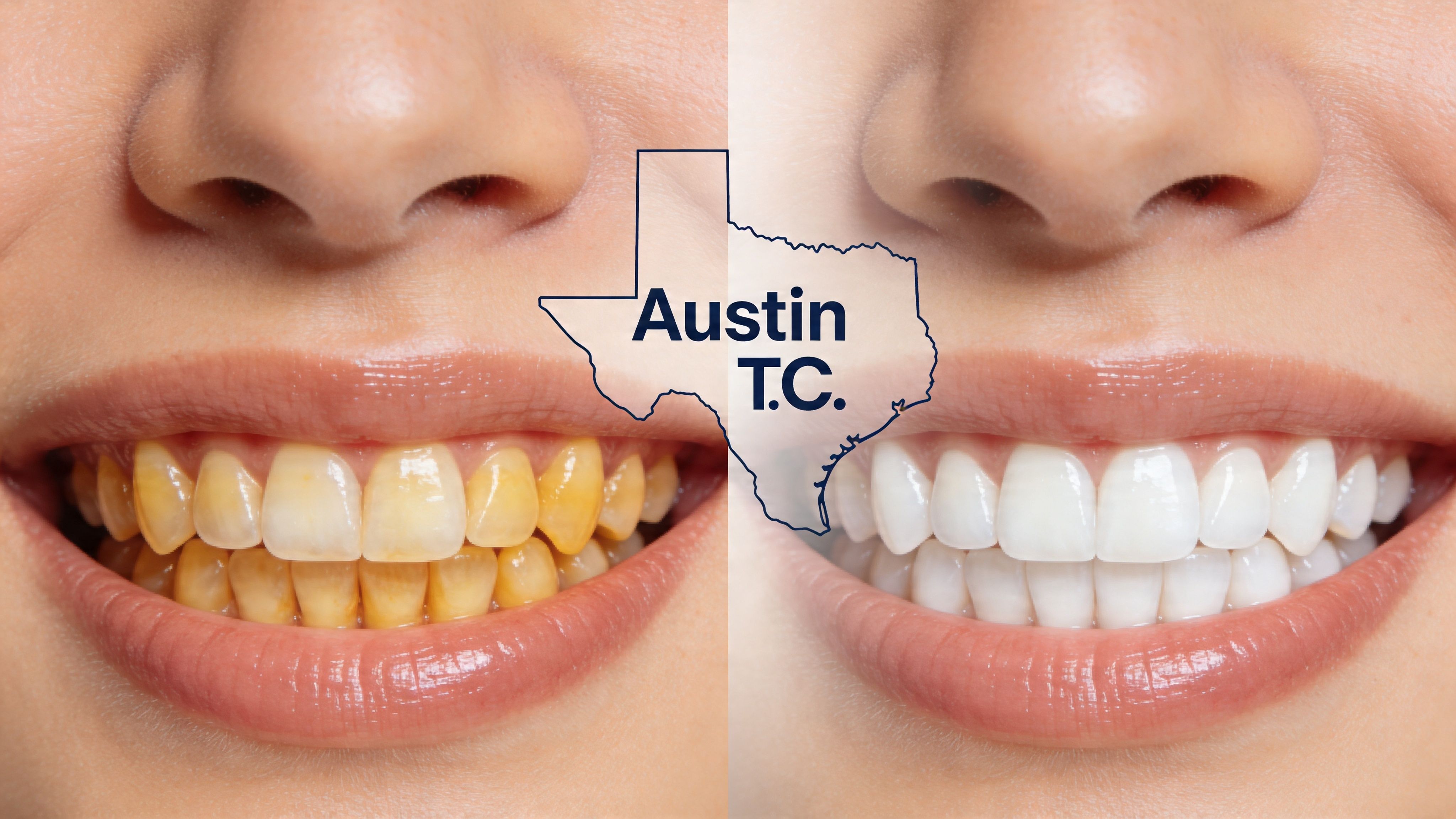
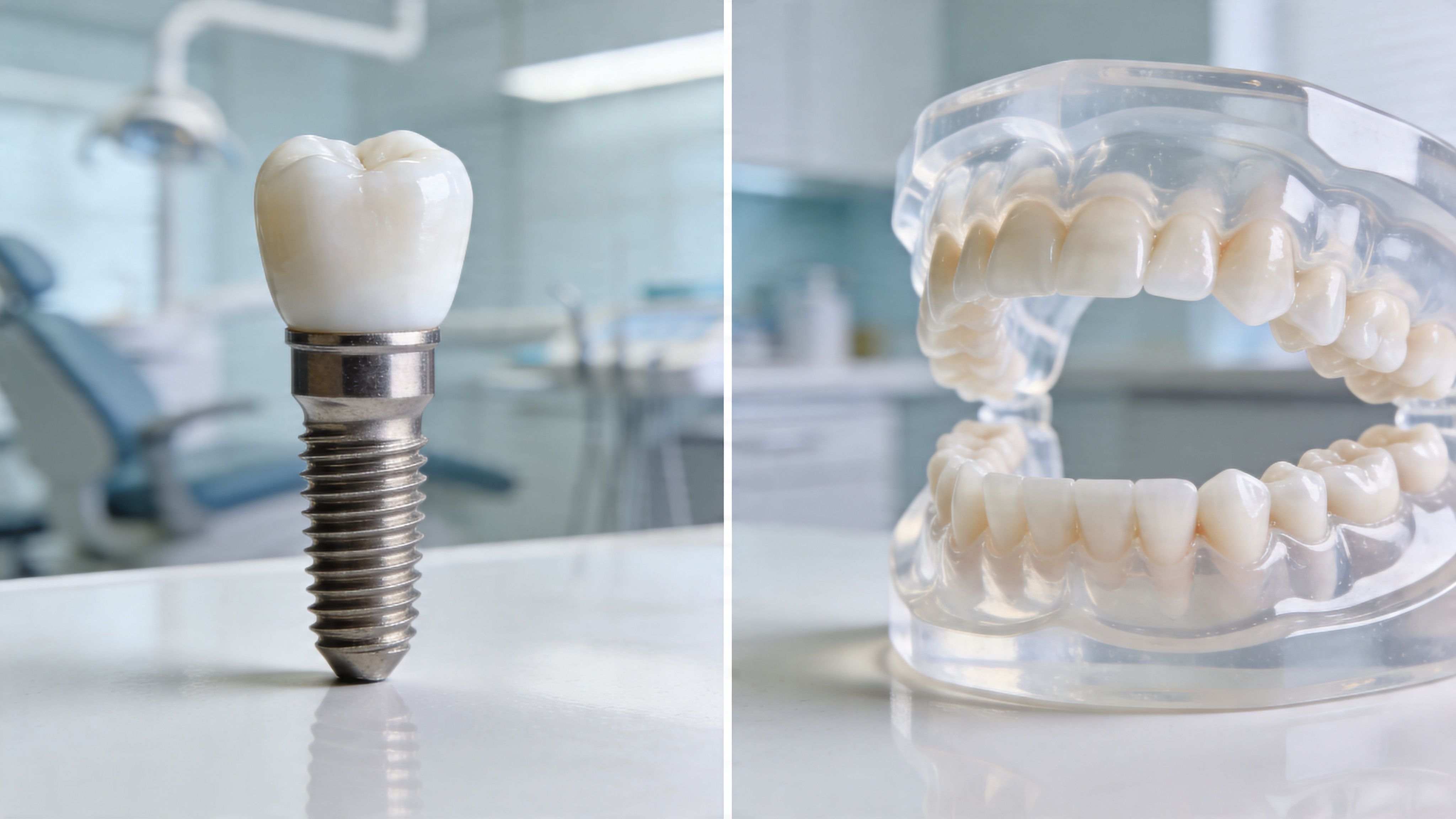
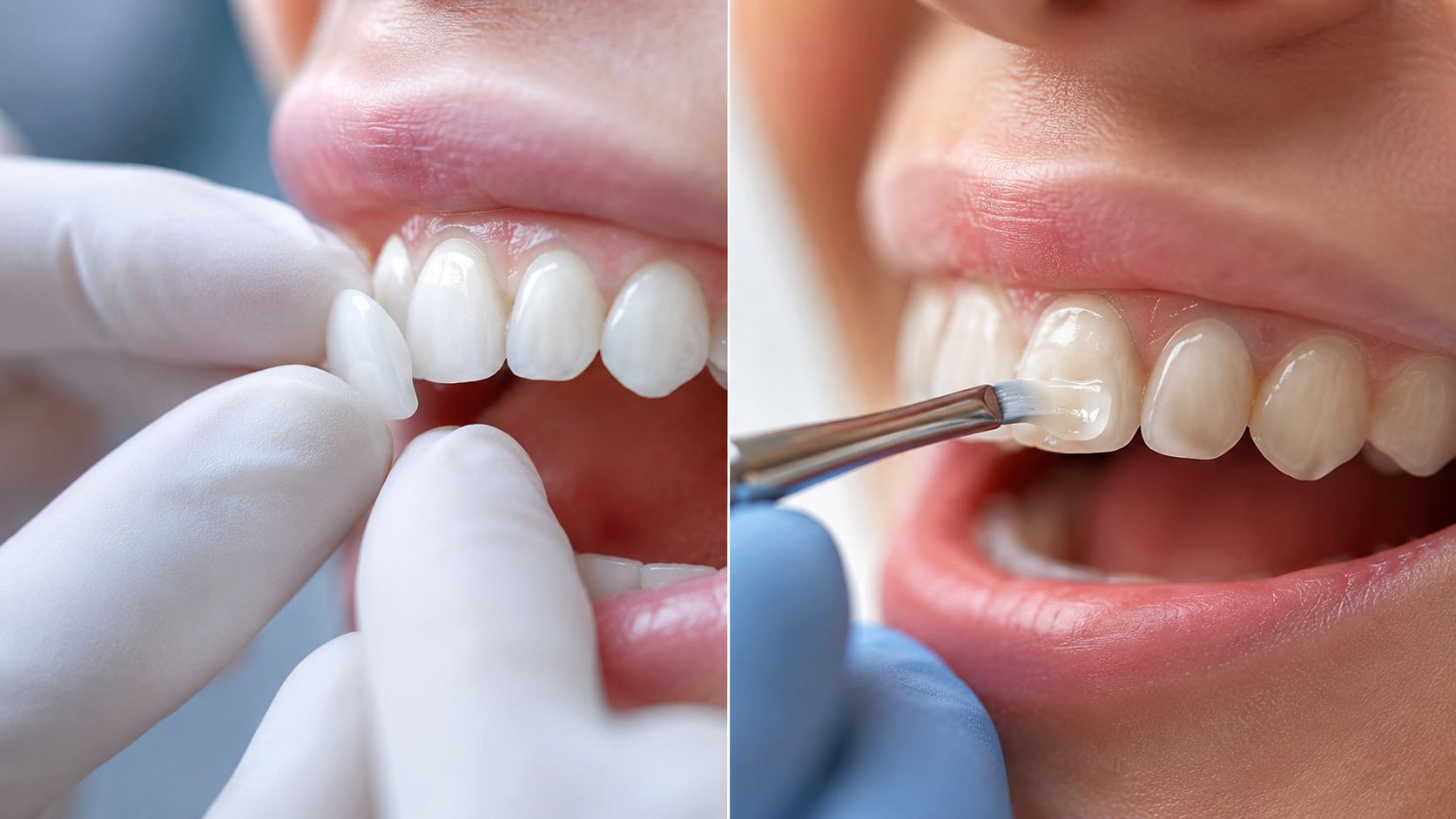
If you're researching veneers vs bonding teeth, you're probably in a familiar spot. You catch your smile in a mirror, notice the chip on one front tooth, the stain that whitening didn't fix, or the small gap you've always wanted to close, and then you start searching for a cosmetic dentist near me in Austin or Georgetown. A few clicks later, the options start to blur together.
That confusion makes sense. Both veneers and bonding can improve a smile. Both are used in cosmetic dentistry. Both can help you feel more confident when you talk, laugh, or take photos. But they don't solve the same problems in the same way, and the long-term experience can be very different.
For patients looking for a dentist near me in Austin, TX, Georgetown, TX, Wells Branch, Cedar Park, Round Rock, or Liberty Hill, the best choice usually comes down to three things: what you're trying to fix, how long you want the result to last, and how much change your teeth need.
Your Guide to a New Smile in Austin and Georgetown
A lot of people begin this process subtly. They aren't always looking for a dramatic Hollywood smile. Often, they just want to stop thinking about one or two teeth every time they speak.
You might have a front tooth that chipped years ago. Maybe one tooth is darker than the others. Maybe your teeth are healthy, but they look uneven in photos. Patients also ask about smile improvements during cleaning and exams, new patient exams, or after dental x-rays when they're already visiting a dentist in Austin, TX or Georgetown, TX for routine dental care.
A common situation patients describe
One person wants a fast fix before a wedding or job interview. Another wants a more complete smile makeover after years of feeling self-conscious. Those are very different goals, even if both people type the same search phrase into Google.
That matters because bonding is often a conservative option for smaller corrections, while porcelain veneers are often chosen for broader cosmetic changes. Neither is automatically better. The right answer depends on the tooth, the bite, the budget, and the finish you're hoping to see in the mirror every day.
| Treatment | Best known for | Time involved | Typical use |
|---|---|---|---|
| Porcelain veneers | Long-lasting, high-end cosmetic change | Multi-step treatment | Multiple visible teeth, shape and color changes |
| Composite bonding | Quick, conservative touch-ups | Usually same-day treatment | Small chips, tiny gaps, limited cosmetic repairs |
Practical rule: If you're fixing a small flaw on one tooth, bonding may be enough. If you want a more uniform, polished smile across several teeth, veneers are often the stronger option.
People also tend to assume this is only about appearance. It isn't. The condition of a tooth, the way your teeth meet, and your long-term maintenance all affect whether a cosmetic treatment will stay comfortable and attractive over time. That's why a thoughtful evaluation matters just as much as the final look.
If you're also comparing providers for restorative dentistry, teeth whitening, emergency dentist visits, or even future treatment like dental implants near me or tooth extraction, it's helpful to understand where veneers and bonding fit into the bigger picture of modern dental care.
Understanding Your Cosmetic Dentistry Options
A good way to understand veneers and bonding is to picture how each one changes a tooth. Both improve the front, visible surface. They do it in very different ways, and that difference affects appearance, durability, timing, and long-term cost.
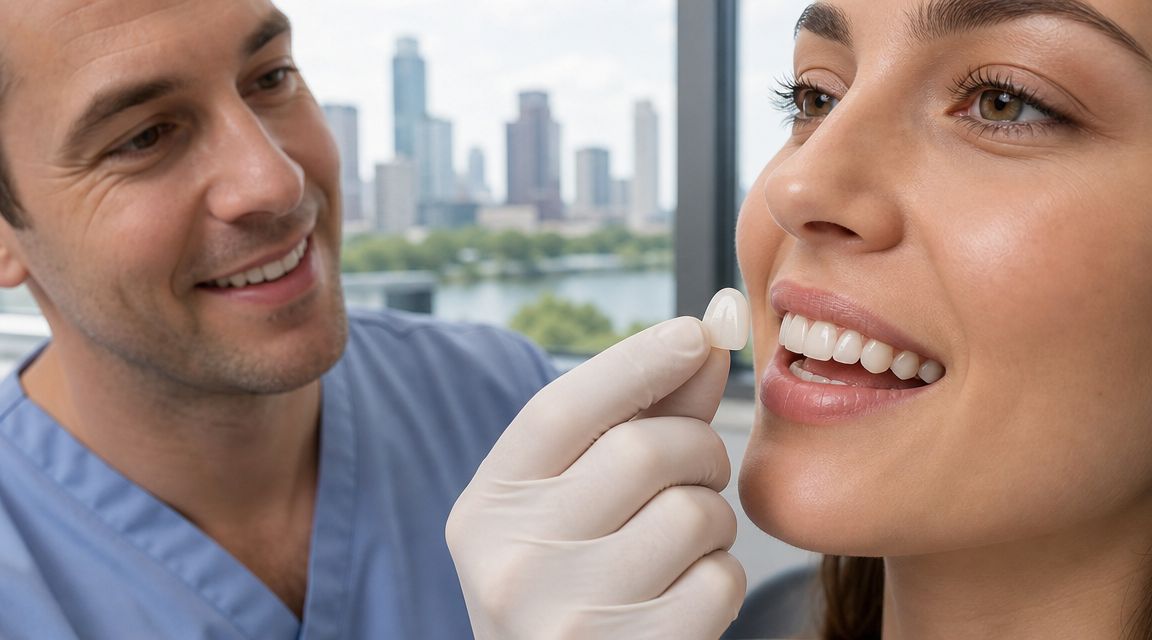
A porcelain veneer works like a custom-fitted facing for the tooth. It is a thin porcelain shell made after careful planning, then bonded to the front of the tooth to change color, shape, proportion, and symmetry in a controlled way. Because the veneer is designed before it is placed, the final result is usually more predictable across several teeth.
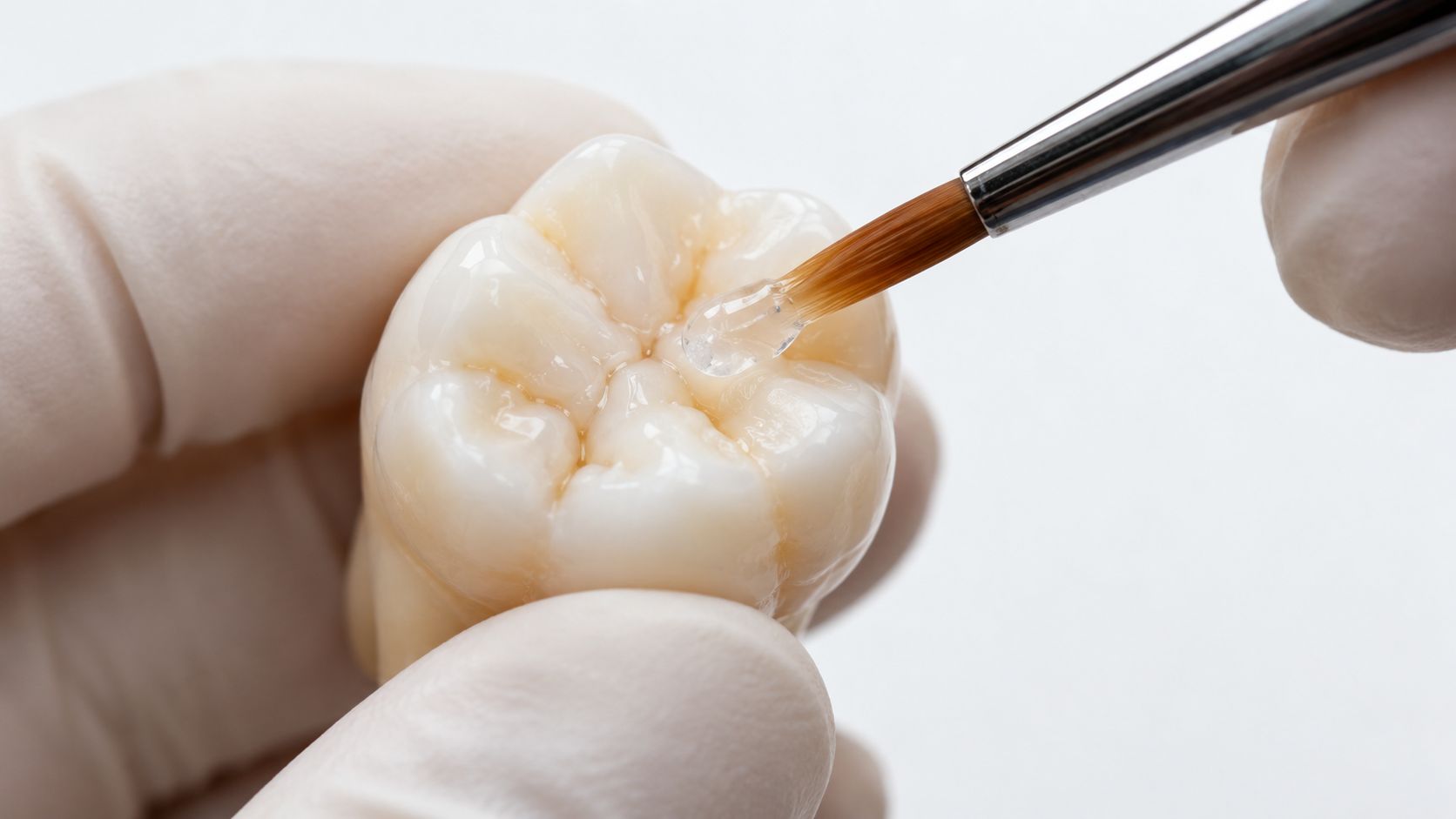
Composite bonding is more like precision sculpting. The dentist places tooth-colored resin directly onto the tooth, shapes it by hand, then hardens and polishes it. If you want to understand the material itself, this overview of bonding material for teeth explains why it can be so useful for small cosmetic repairs.
That difference matters more than many patients expect.
Bonding is often the conservative choice for a small chip, a slight edge irregularity, or a narrow gap. It usually removes little to no healthy tooth structure, and it can often be completed in one visit. The tradeoff is that resin is more likely to stain, dull, or chip over time, especially on teeth that handle a lot of biting pressure.
Veneers usually involve more planning at the start, but they allow more control. A veneer can change several things at once, including shade, length, contour, and the way a tooth reflects light. For someone who wants a broader smile upgrade rather than a single repair, that added control can make a major difference in satisfaction years later.
Patients often get confused because both options can look attractive on day one. The better question is whether the treatment still fits your goals on day one thousand.
Here is a simple way to separate them:
- Bonding fits smaller corrections. One tooth with a chip or minor shape issue is often a good example.
- Veneers fit bigger cosmetic goals. Several front teeth with wear, discoloration, uneven edges, or shape concerns often respond better to veneer planning.
- The process is different from the start. Bonding is built directly on the tooth in real time. Veneers are designed first, then fabricated and placed.
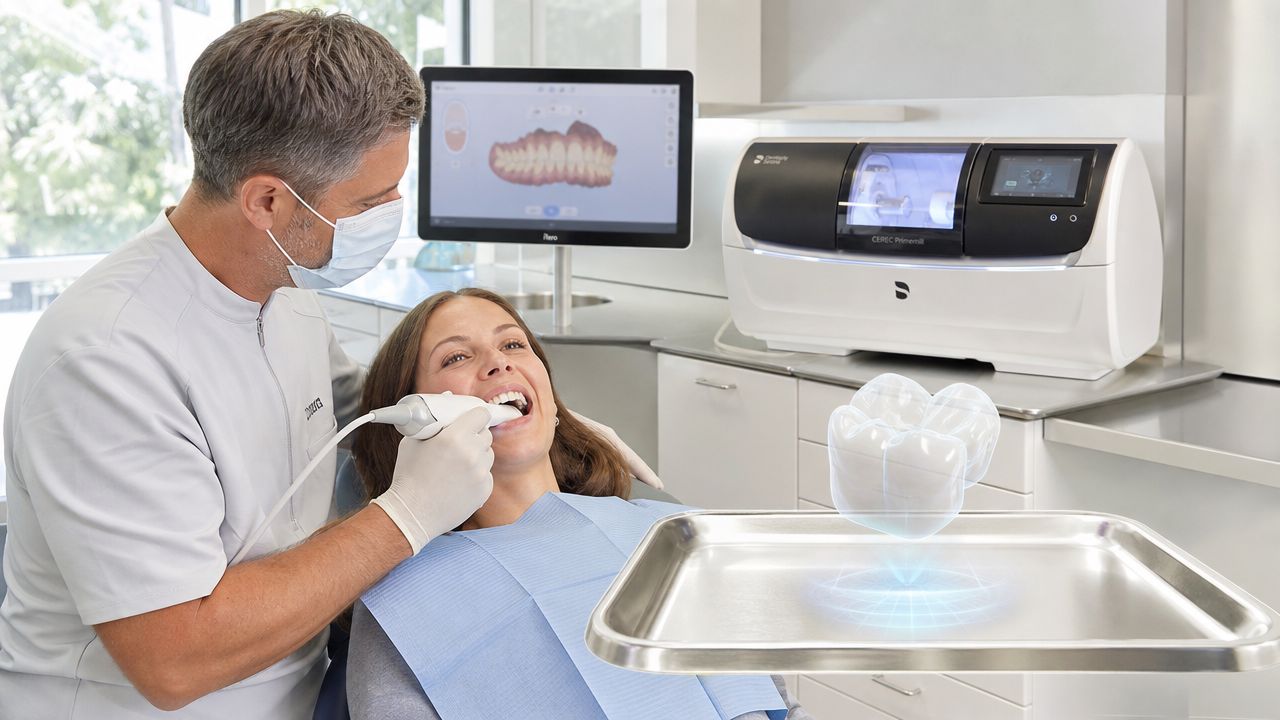
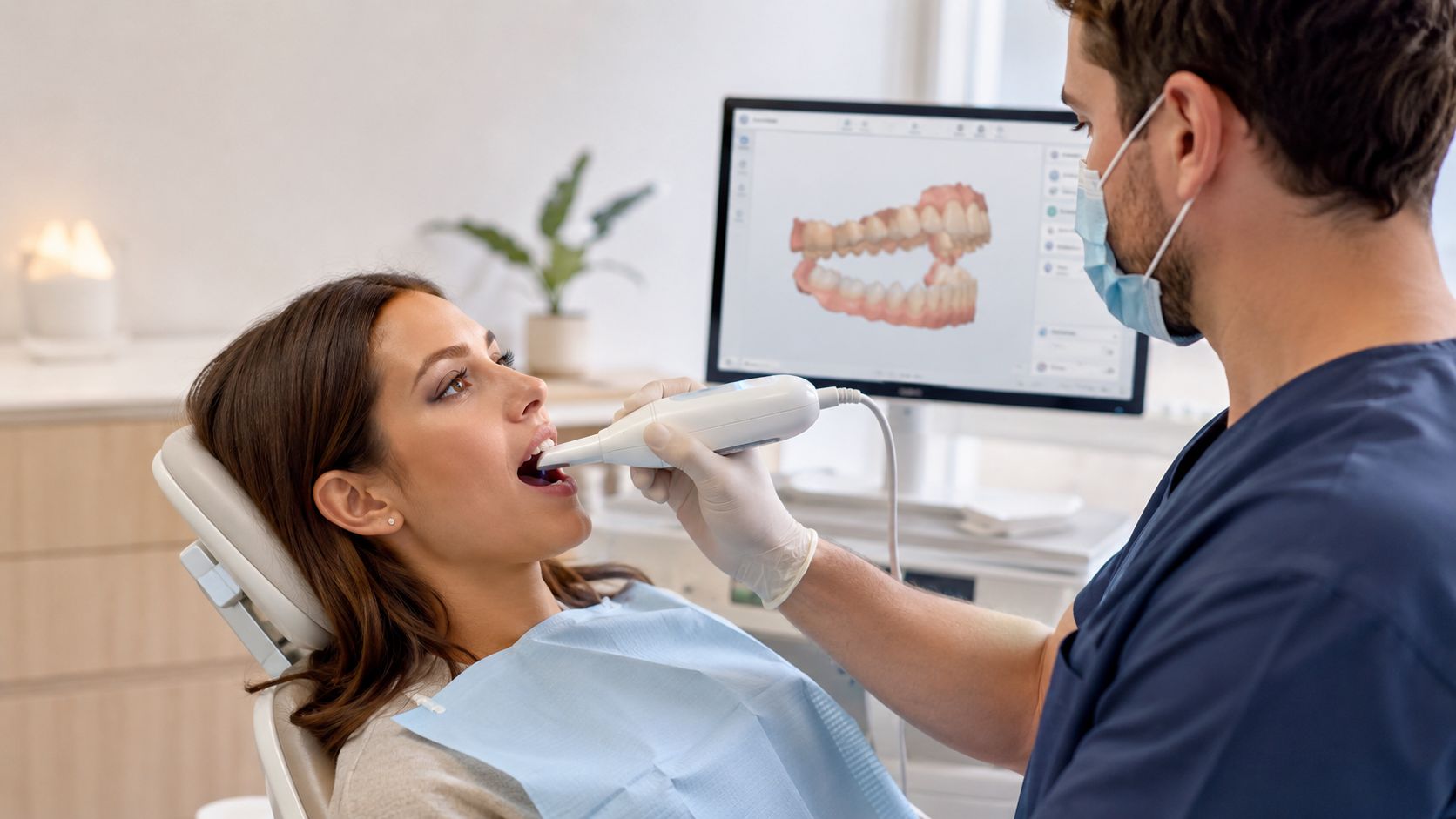
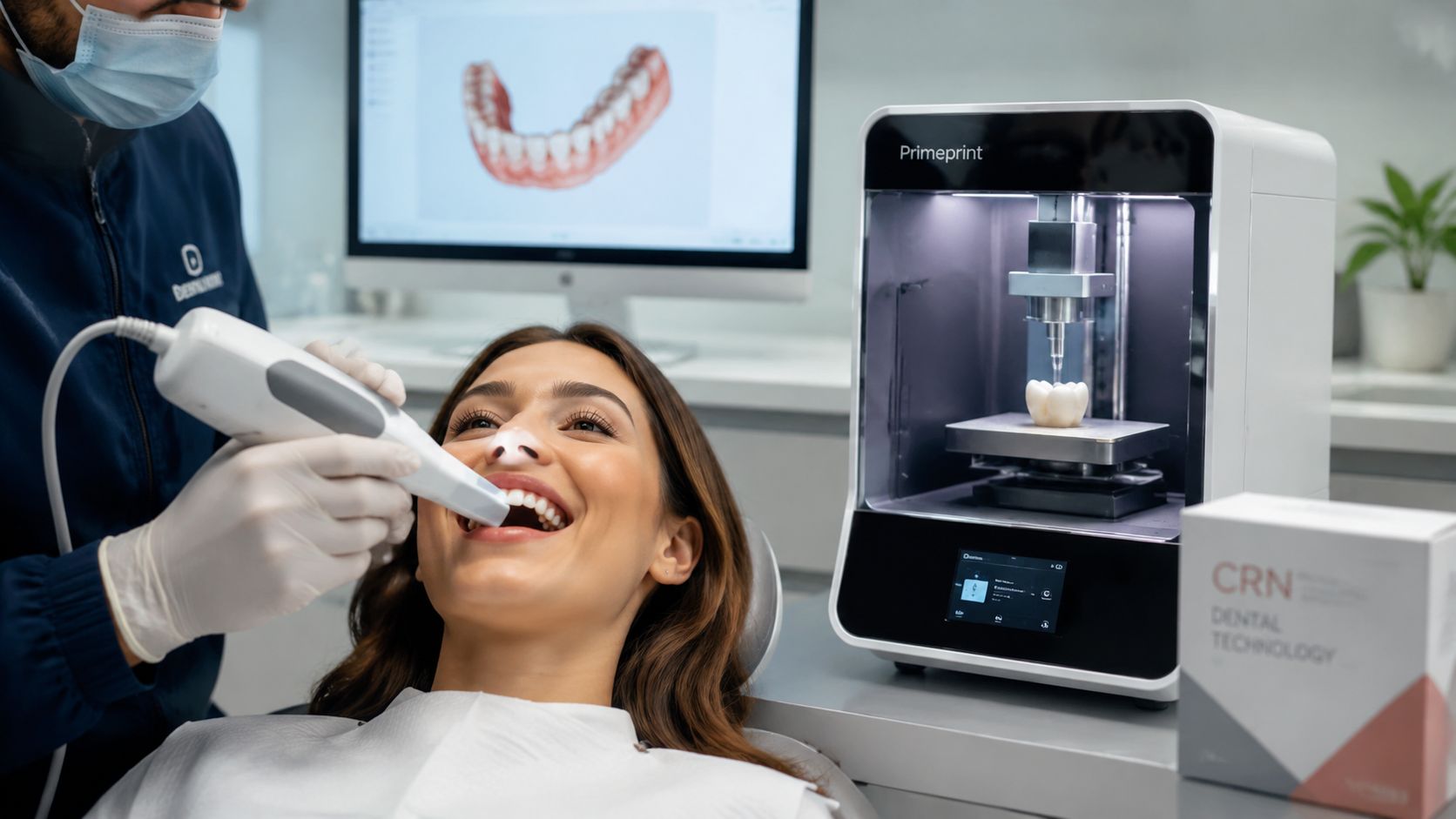
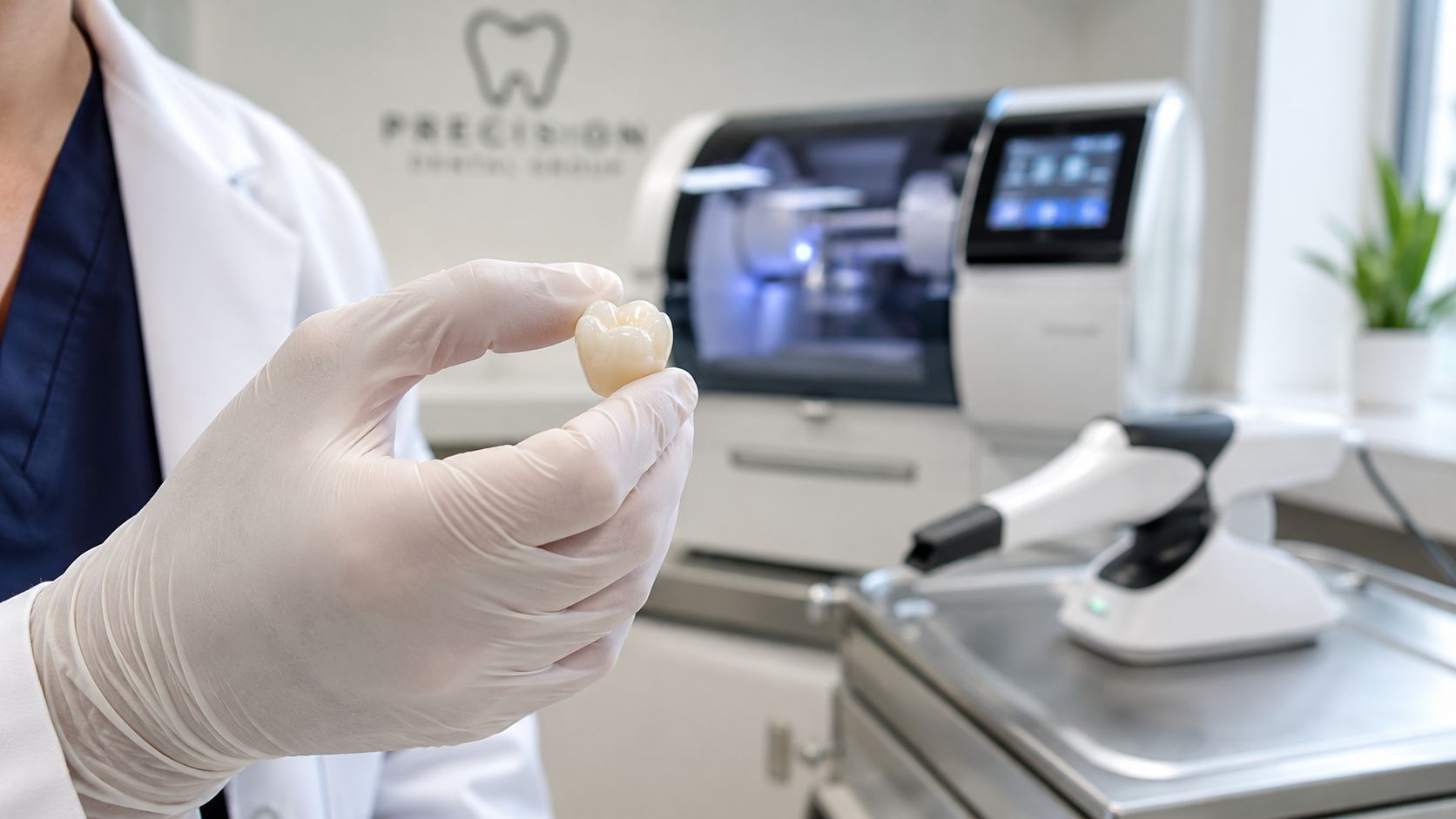
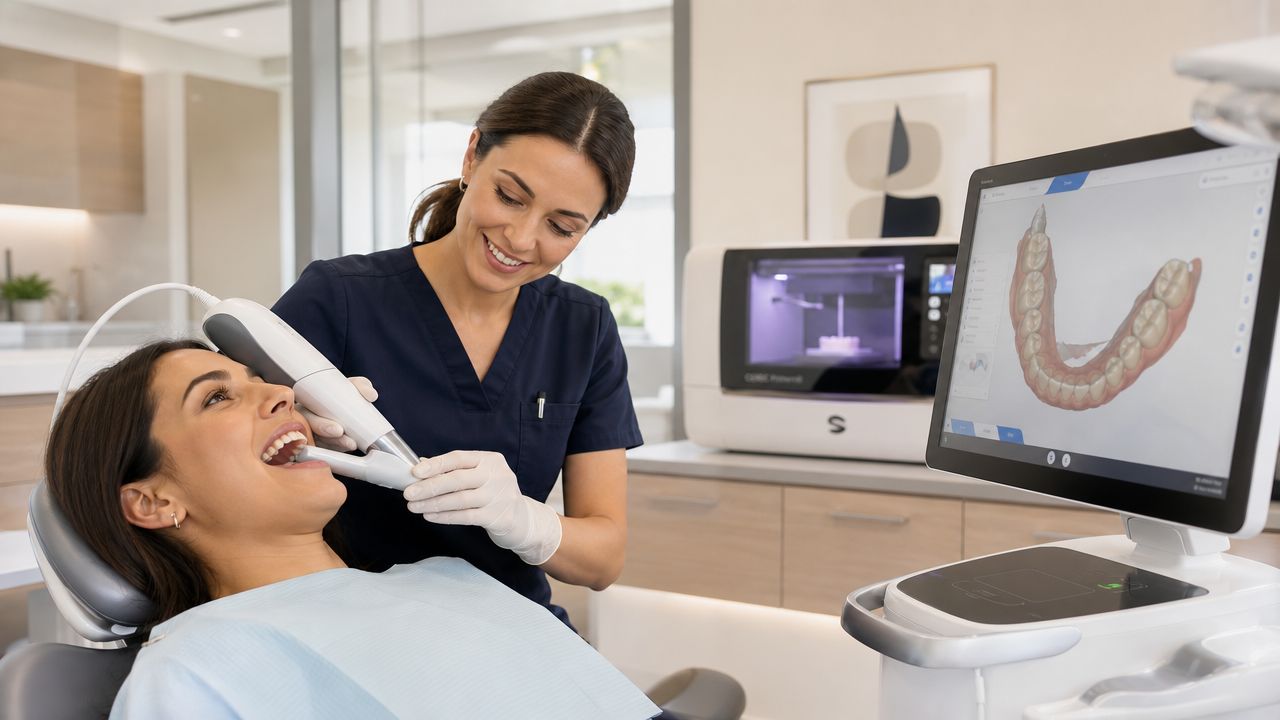
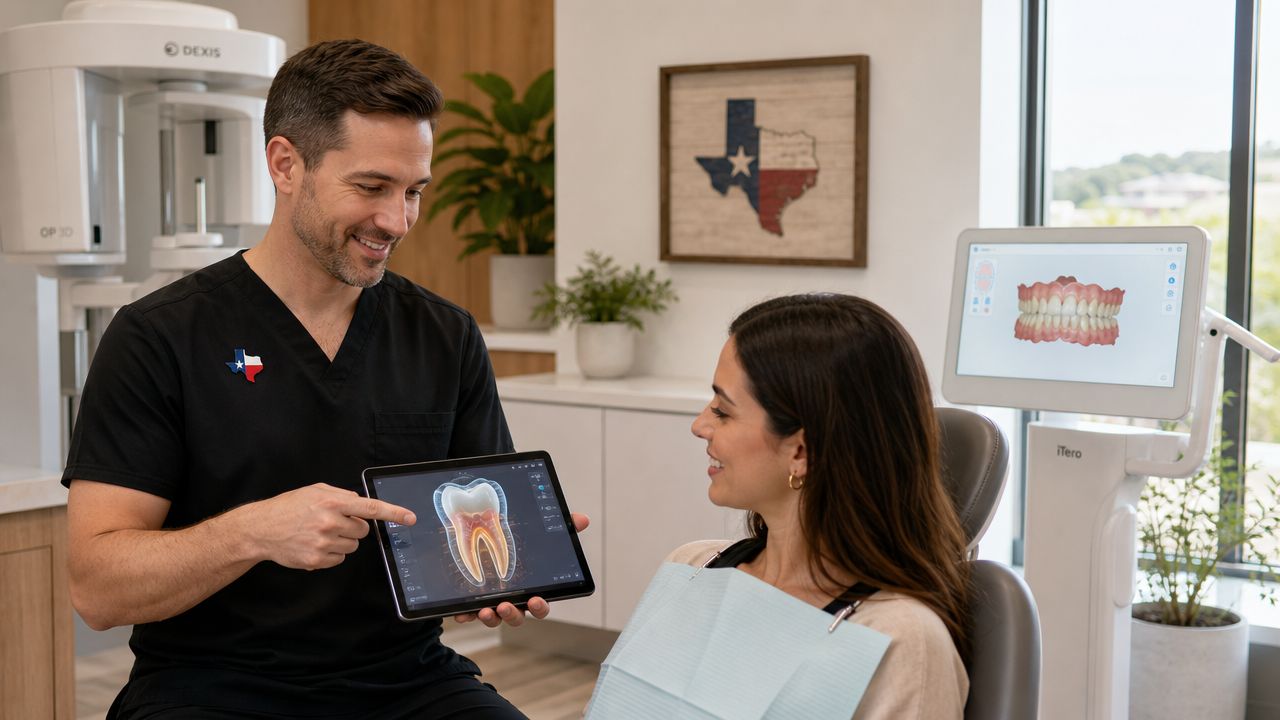
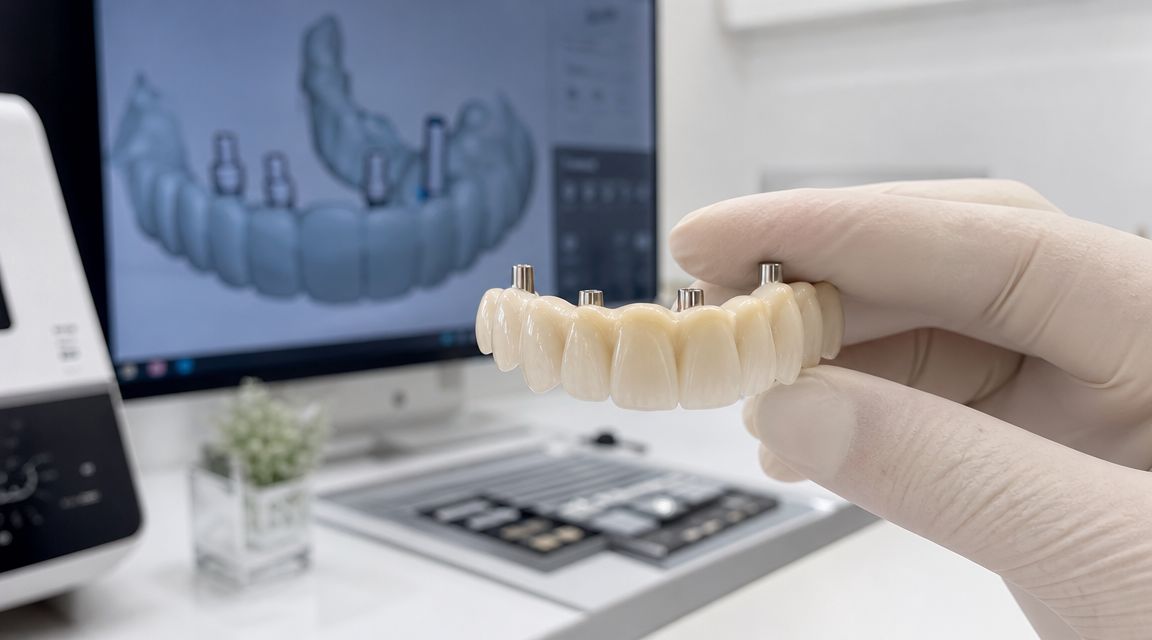
At 3D Dental, modern technology changes this decision more than many people realize. Digital 3D scans can replace messy traditional impressions, and in-house lab fabrication can shorten the timeline while improving fit and consistency. In practical terms, that means veneers are not just the "slower, more involved" option many patients assume they are. They can be a faster, more precise choice than older veneer workflows, which changes the value comparison in a very real way.
If you are deciding between the two, ask a question many offices skip: are you paying for a quick cosmetic fix, or for a result designed to hold its appearance and function with fewer compromises over time? That is usually where the right option becomes much clearer.
Veneers vs Bonding A Side by Side Comparison
When patients want a fast answer, I like to compare veneers and bonding across the questions people care about most: how they look, how long they last, what they cost, and what has to happen to the natural tooth.
Early in your research, a visual comparison helps:
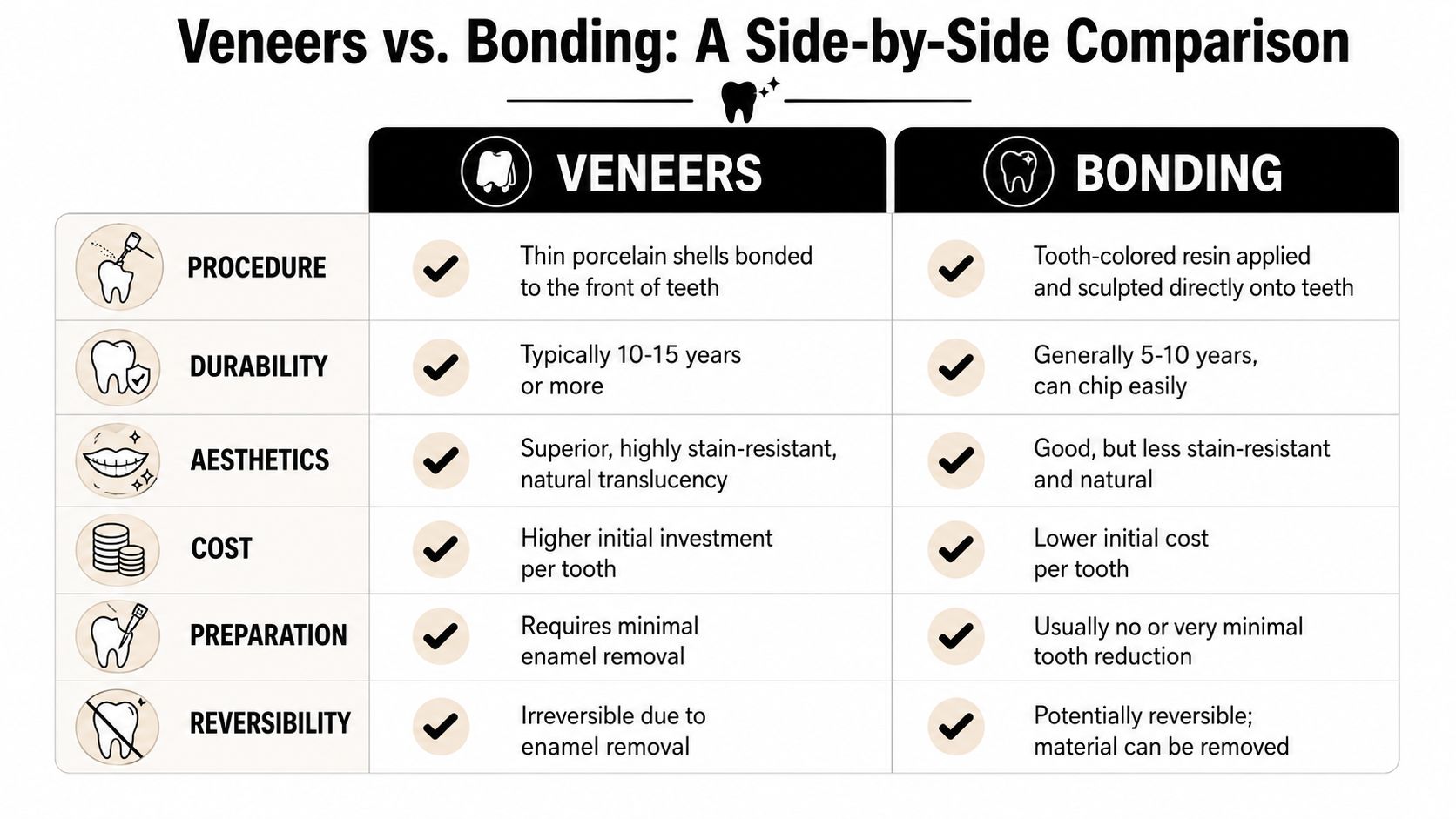
Quick comparison table
| Decision point | Porcelain veneers | Composite bonding |
|---|---|---|
| Material | Custom porcelain shell | Tooth-colored composite resin |
| Look | More lifelike translucency and polish | Good cosmetic improvement for smaller changes |
| Durability | Typically lasts longer | More prone to wear and chipping |
| Stain resistance | Strong stain resistance | More likely to discolor over time |
| Visits | Usually two to three visits | Usually one visit |
| Tooth preparation | Requires enamel removal | Usually little to no enamel removal |
| Reversibility | Irreversible | Often considered the more reversible option |
| Upfront cost | Higher | Lower |
Cost and treatment complexity
Cost is often the first filter for patients. According to this pricing comparison on veneers and bonding costs, porcelain veneers typically cost approximately four times more than composite bonding on a per-tooth basis. The same source lists veneers at $925 to $2,500 per tooth and bonding at $250 to $1,500 per tooth.
That gap is tied to how the treatments are made. Veneers involve custom fabrication and multiple visits. Bonding is placed directly on the tooth in one appointment.
Appearance and finish
Many patients observe the most significant difference in person with porcelain. Porcelain generally offers a more enamel-like look, especially when several front teeth are being corrected together. It reflects light in a way that often looks more natural across a full smile.
Bonding can still look very good, especially for one tooth or one small area. But when the cosmetic goal is larger, the limitations become easier to see. If you want a deeper explanation of the resin side of treatment, this review of bonding material for teeth is useful.
A short video can also help if you're deciding between a quick repair and a more complete cosmetic change.
Tooth preservation and commitment
The decision isn't just cosmetic. It's also about how much intervention the tooth needs. Bonding is usually the more conservative approach. Veneers require preparation, and that means commitment.
For some patients in Cedar Park or Wells Branch, that commitment is worth it because they want a stable, polished result over multiple visible teeth. For others, preserving the tooth with the least change possible matters more than having the most refined finish.
If your priority is low upfront cost and minimal tooth alteration, bonding often makes sense. If your priority is a more dramatic and durable cosmetic result, veneers usually move ahead.
Which Is Right for You Veneers or Bonding
You look in the mirror and notice the same flaw every day. Maybe it is one chipped corner that catches the light. Maybe it is four front teeth that never looked even, no matter how often you whiten them. Those are two very different smile problems, and they usually call for two different solutions.
The better question is not which treatment wins in general. The better question is which one fits the size of the change you want, the condition of your teeth, and how you want that result to hold up over time.
When bonding is often the better fit
Bonding works well for targeted cosmetic repairs. The American Dental Association explains that bonding is commonly used to repair chipped or cracked teeth, improve appearance, close spaces, and change tooth shape or color in a conservative way through resin applied directly to the tooth (ADA overview of dental bonding).
In plain terms, bonding is often a good match when the tooth is mostly healthy and the problem is small.
Common examples include:
- A small chip on one front tooth
- A slight gap between teeth
- A minor shape correction
- A quick touch-up for one discolored area
- A patient who wants to preserve as much untouched enamel as possible
Bonding works like a careful spot repair on a wall. If one area needs attention, you do not rebuild the whole room. You repair the specific defect and blend it in.
When veneers usually make more sense
Veneers are usually the stronger choice when the goal is a coordinated smile design across several visible teeth. The American Academy of Cosmetic Dentistry describes porcelain veneers as thin restorations used to improve color, shape, size, and overall smile harmony, especially when a bigger cosmetic change is needed (AACD explanation of porcelain veneers).
That often applies when a patient says:
- My front teeth do not match each other.
- Whitening helped, but the color still is not right.
- I want a more even smile line.
- I want to improve several teeth together instead of fixing one at a time.
Veneers are less like a spot repair and more like redesigning the visible front of the smile so each tooth relates well to the next one. That matters because teeth are judged side by side. One improved tooth can look great on its own. Six front teeth need to look balanced as a group.
A simple way to sort your options
These real-world examples usually make the decision clearer:
One chipped edge after biting something hard
Bonding is often the first option to consider if the tooth is otherwise healthy and the change needed is small.Several front teeth that are worn, uneven, or discolored
Veneers often give a more consistent result because they let the dentist plan color, contour, and symmetry across the full smile.You want the most conservative treatment possible
Bonding usually has the advantage if your top priority is limiting permanent change to the natural tooth.You want fewer cosmetic compromises over the next several years
Veneers often move ahead here, especially if you are treating multiple front teeth and want a result that stays stable longer. If you want a clearer picture of that timeline, this guide on how long veneers last and what affects their lifespan is helpful.
What changes the decision at 3D Dental
The old veneers versus bonding decision was often shaped by hassle as much as dentistry. Traditional veneers could mean messy impressions, more waiting, and less predictability before the final placement. Modern in-house technology changes that.
At 3D Dental, 3D scanning and in-house lab fabrication let us study your bite, tooth proportions, and smile design with much more precision before treatment is finalized. That does not mean everyone should choose veneers. It means patients who are good veneer candidates can make that decision with a clearer preview, a more accurate fit, and a faster process than many people expect.
That changes the conversation. A patient who wants long-term polish across several teeth may see veneers as more realistic once the process becomes more precise and efficient. A patient with one small defect may still choose bonding, and feel confident that the simpler treatment is the right one.
The right choice depends on the scale of the problem, the level of change you want, and how you want that investment to perform over time.
Patients across Austin, Georgetown, Round Rock, and nearby communities often come in assuming the answer is obvious. After an exam, photos, and digital planning, the better option usually becomes much easier to see.
Long-Term Value Durability and Maintenance
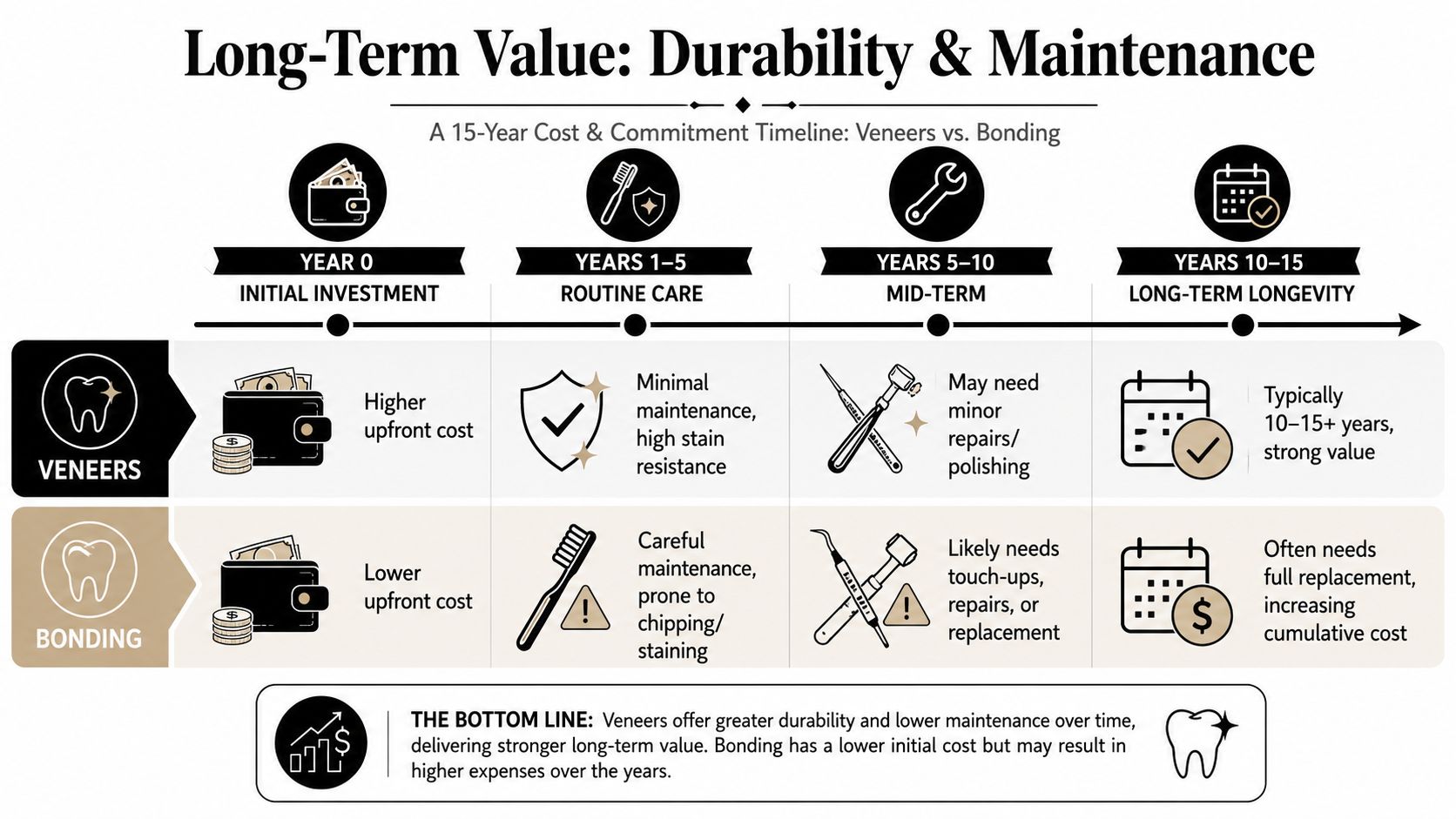
The biggest mistake people make when comparing veneers vs bonding teeth is focusing only on the first bill. That gives you the upfront price, but not the full picture.
The more useful question is this: what will this choice ask of you over time? That includes repairs, touch-ups, replacement, stain management, and how often you'll need the work revisited.
Lifespan and maintenance reality
A major difference is durability. According to this analysis of long-term maintenance costs for bonding and veneers, composite bonding lasts only 3 to 7 years and frequently requires touch-ups, whereas porcelain veneers last 10 to 15+ years. The same source states that patients who choose bonding for budget reasons often spend 20 to 30% more over a 10-year period because of repeated maintenance.
That doesn't mean bonding is a bad treatment. It means the cheaper starting point isn't always the cheaper long-term path.
What that means in daily life
Patients often feel the difference in small ways:
- Bonding may need more attention because resin can chip or discolor.
- Veneers usually ask for less cosmetic upkeep over a longer stretch.
- Time matters too because every repair visit adds another appointment to your calendar.
For a detailed look at veneer longevity, this article on how long veneers last adds helpful context.
Long-view advice: If you're treating one minor issue, bonding may still be the right value. If you're changing several front teeth, recurring maintenance can become the deciding factor.
Value isn't only about money
Durability also affects confidence. Some patients don't want to think about whether a repaired edge will stain, chip, or need a refresh before the next big event. They want a result that stays consistent with normal care and regular checkups.
That's why many people who initially search for the lowest-cost cosmetic option end up asking a different question at the consultation: "What will I be happiest with five or ten years from now?" That's usually the smarter place to begin.
How 3D Dental Technology Transforms Your Experience
A patient may come in expecting veneers to mean messy impressions, a long lab wait, and a lot of guesswork about the final look. That picture is based on an older process. With modern digital tools, the experience can be much more controlled from the first visit.
For patients comparing veneers and bonding, that matters. The decision is not only about the material on the tooth. It is also about how accurately the case is planned, how quickly restorations are made, and how confidently you can approve the result before treatment is finished.
Why digital planning matters
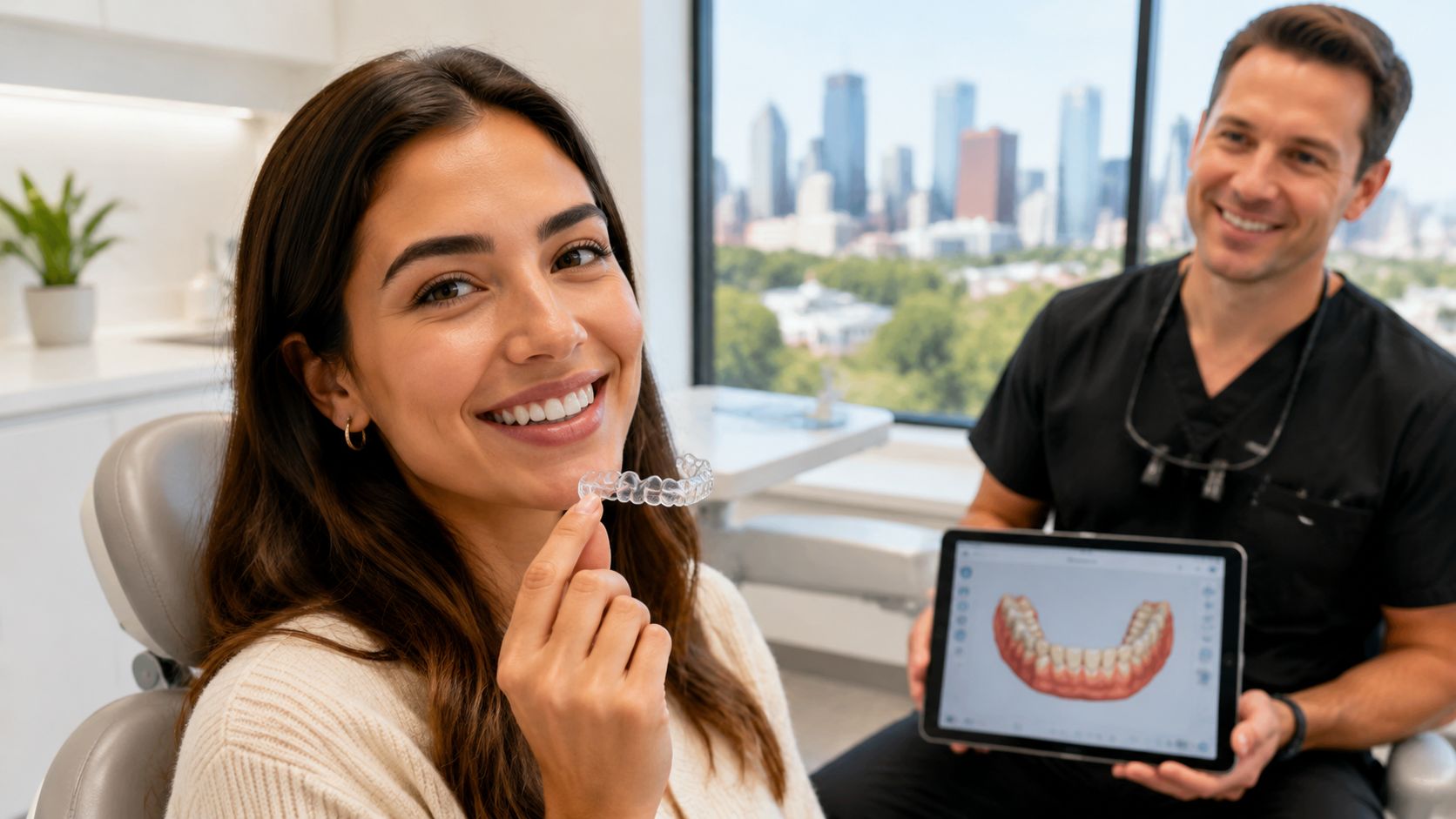
A digital scanner works like a high-detail map of your teeth and bite. Instead of relying on traditional impressions alone, your dentist can study how the teeth meet, where small asymmetries show up, and how each change will affect the full smile.
That is especially helpful when several front teeth are involved. One tooth can look beautiful on its own and still feel slightly off if the edges, proportions, or bite do not match the teeth beside it. Digital planning helps catch those details early, before they turn into remakes or mid-course changes.
It also makes the conversation clearer for patients. You can see the starting point, review the proposed changes, and understand why veneers may be recommended over bonding in a more complex case.
Faster fabrication and more precise coordination
The speed difference often comes from what happens behind the scenes. If a practice has in-house scanning and close control over lab fabrication, there are fewer handoffs, fewer chances for distortion, and a shorter path from design to delivery.
A review in the Journal of Functional Biomaterials on 3D printing in modern dentistry describes how digital workflows can improve manufacturing accuracy and shorten production steps compared with conventional methods. In practical terms, that can make veneers feel less like a drawn-out project and more like a well-orchestrated process.
At 3D Dental, that changes the decision matrix for many patients. Veneers have traditionally carried a "better result, longer process" tradeoff. With 3D scanning and in-house fabrication, the process can become faster and more predictable than many people expect.
Why this can change the veneers vs bonding decision
Bonding is still an excellent option for small, targeted fixes. If the goal is repairing one chip or softening a tiny gap, direct resin can be conservative and efficient.
Veneers start to pull ahead when the case needs coordination across multiple visible teeth. Shade, shape, length, surface texture, and bite all need to work together. That level of consistency is hard to create by hand in one visit, especially if you want a result that still looks balanced months and years later.
Technology does not replace clinical judgment. It strengthens it. Better records, better design control, and better fabrication usually lead to fewer surprises for the patient and a more confident final result.
That broader view also helps if cosmetic treatment overlaps with other needs, such as restorative work, whitening, implant planning, or extractions. The more accurately the teeth and bite are evaluated at the start, the easier it is to choose the option that protects long-term health as well as appearance.
Your Smile Makeover Checklist and Next Steps
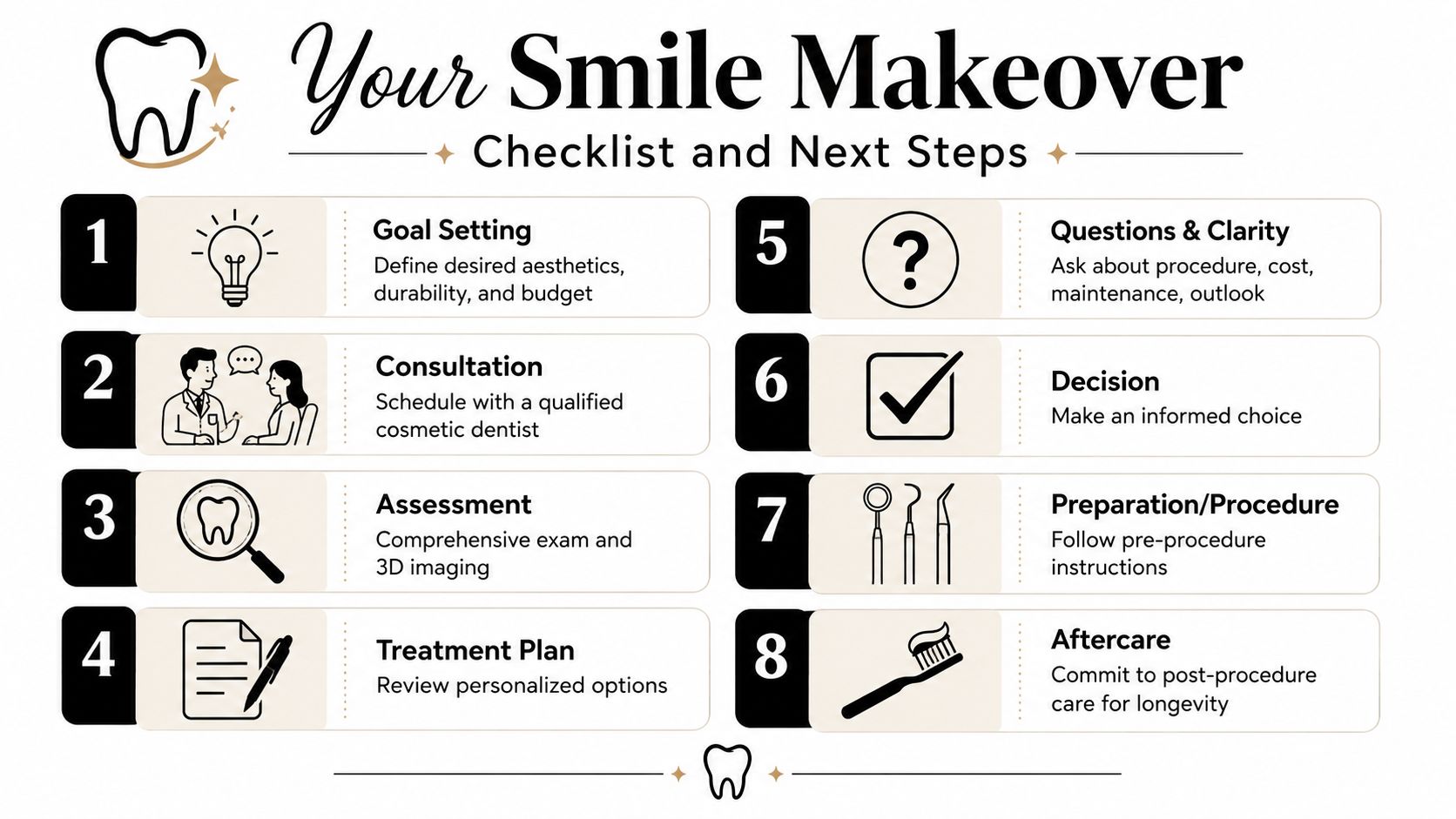
By the time you're choosing between veneers and bonding, the goal isn't just to pick a treatment. It's to pick the one you'll still feel good about later.
The final decision often comes down to a trade-off. As noted in this dentist's perspective on veneers and bonding, composite bonding is a minimally invasive, reversible technique for minor corrections, while veneers are an irreversible procedure involving enamel removal to achieve superior aesthetic fidelity. That same source also notes that veneer preparation is permanent, so the tooth will always require a restoration.
A simple decision checklist
- Define the problem first. Are you fixing one small issue, or do you want a fuller smile makeover?
- Think beyond upfront cost. A lower starting price doesn't always mean lower long-term commitment.
- Decide how conservative you want to be. If preserving natural tooth structure is your priority, bonding has appeal.
- Be honest about your cosmetic goal. If you want the most refined, uniform result, veneers may fit better.
- Ask about your bite and tooth condition. Cosmetic work lasts better when the foundation is healthy.
- Choose clarity over speed. A careful consultation is worth more than guessing from online photos.
What to expect at a cosmetic consultation
A good visit should feel straightforward. You should leave understanding your choices, the likely maintenance, the level of tooth preparation involved, and what result is realistic for your smile.
That same thoughtful process matters whether you're visiting for cosmetic dentist near me searches, routine dental care, or broader needs like emergency dental services, implants, whitening, or restorative treatment. The right plan should fit your goals, not force you into a treatment that sounds good online but doesn't fit your teeth.
If you're ready to compare your options in person, 3D Dental offers patient-focused care for Austin, Georgetown, Wells Branch, Cedar Park, Round Rock, and Liberty Hill. Whether you want a quick cosmetic repair or a more complete smile makeover, the team can evaluate your teeth, explain your choices clearly, and help you decide on a plan that supports long-term comfort, function, and confidence. Schedule a consultation to take the next step toward a smile that looks right and feels right.
Ready to get started?
Schedule a free, no obligation consultation with our team and see what's possible for your smile!
Georgetown
- Mon-Thurs8:30am-5pm
- Fri8am-3:30pm
- Sat-SunClosed
Austin
- Mon-Tues8am-5pm
- Wed-Thurs9am-6pmFri8am-2pm
- Sat-SunClosed