
Fast 3D Printed Crowns for Teeth: Single Visit Results
Related Posts




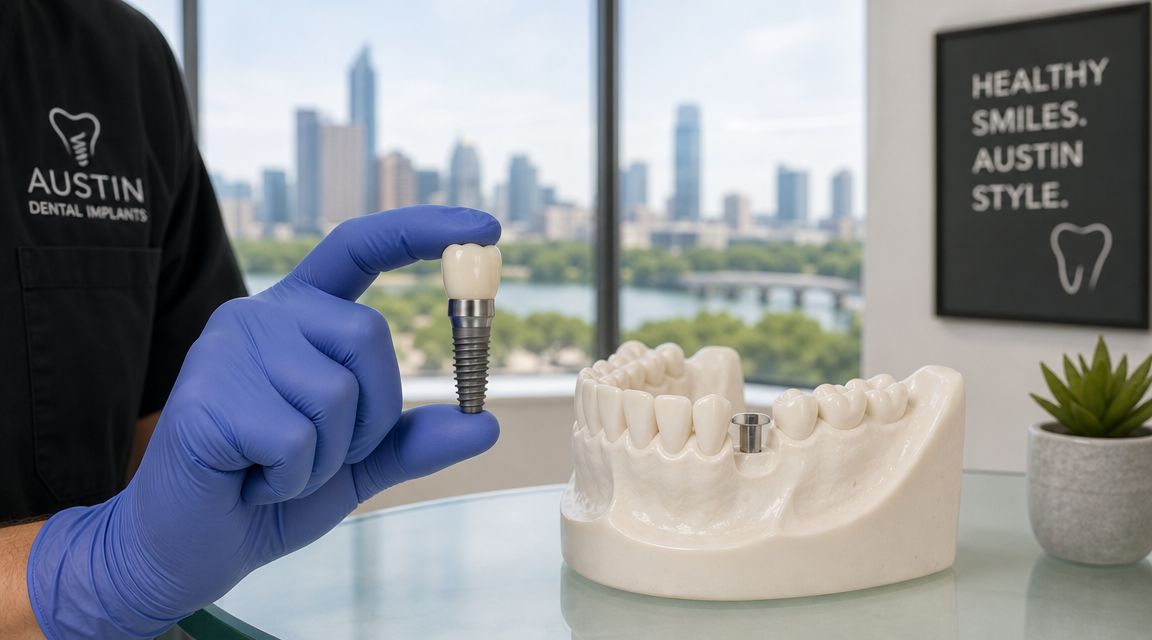


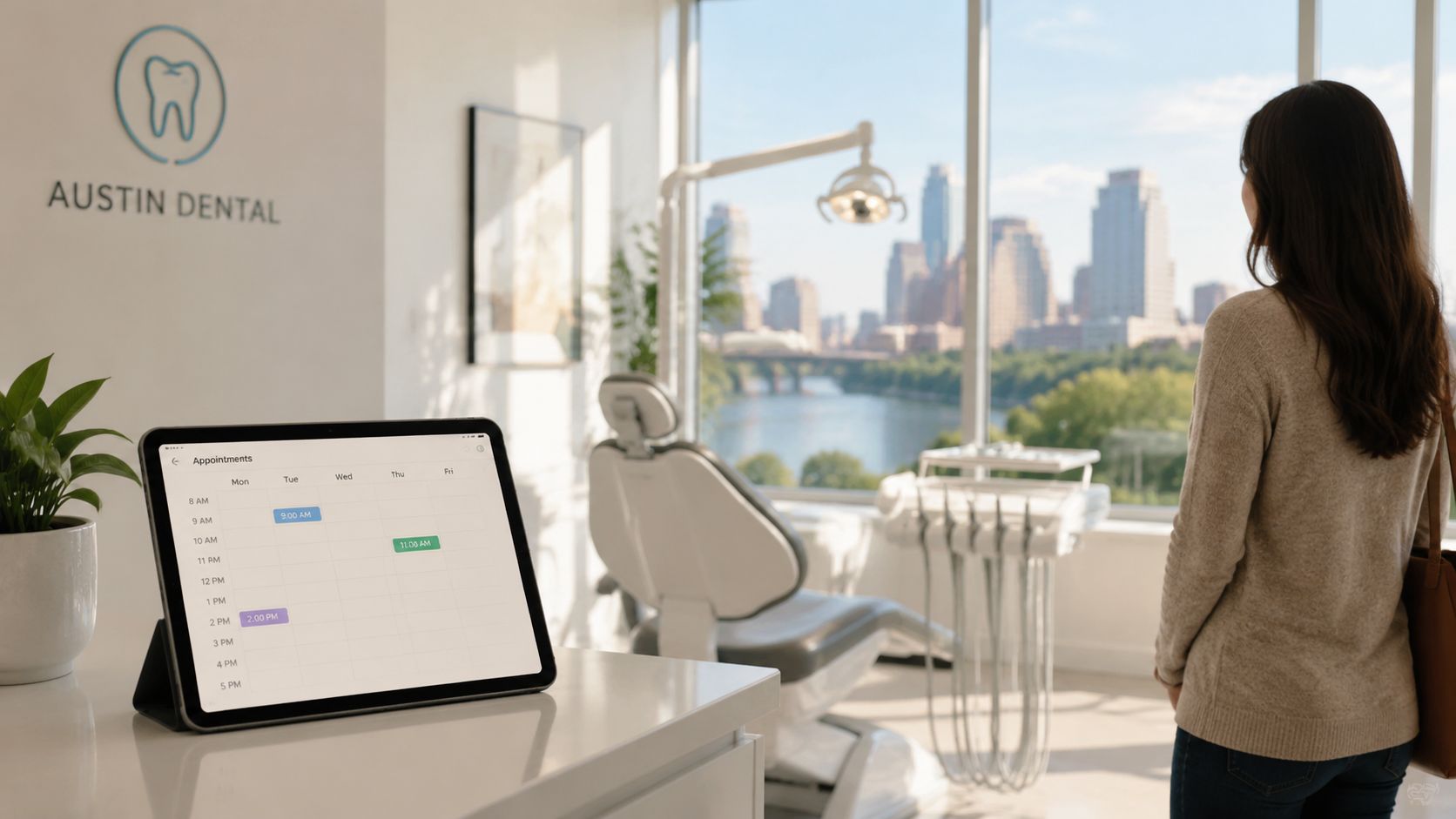




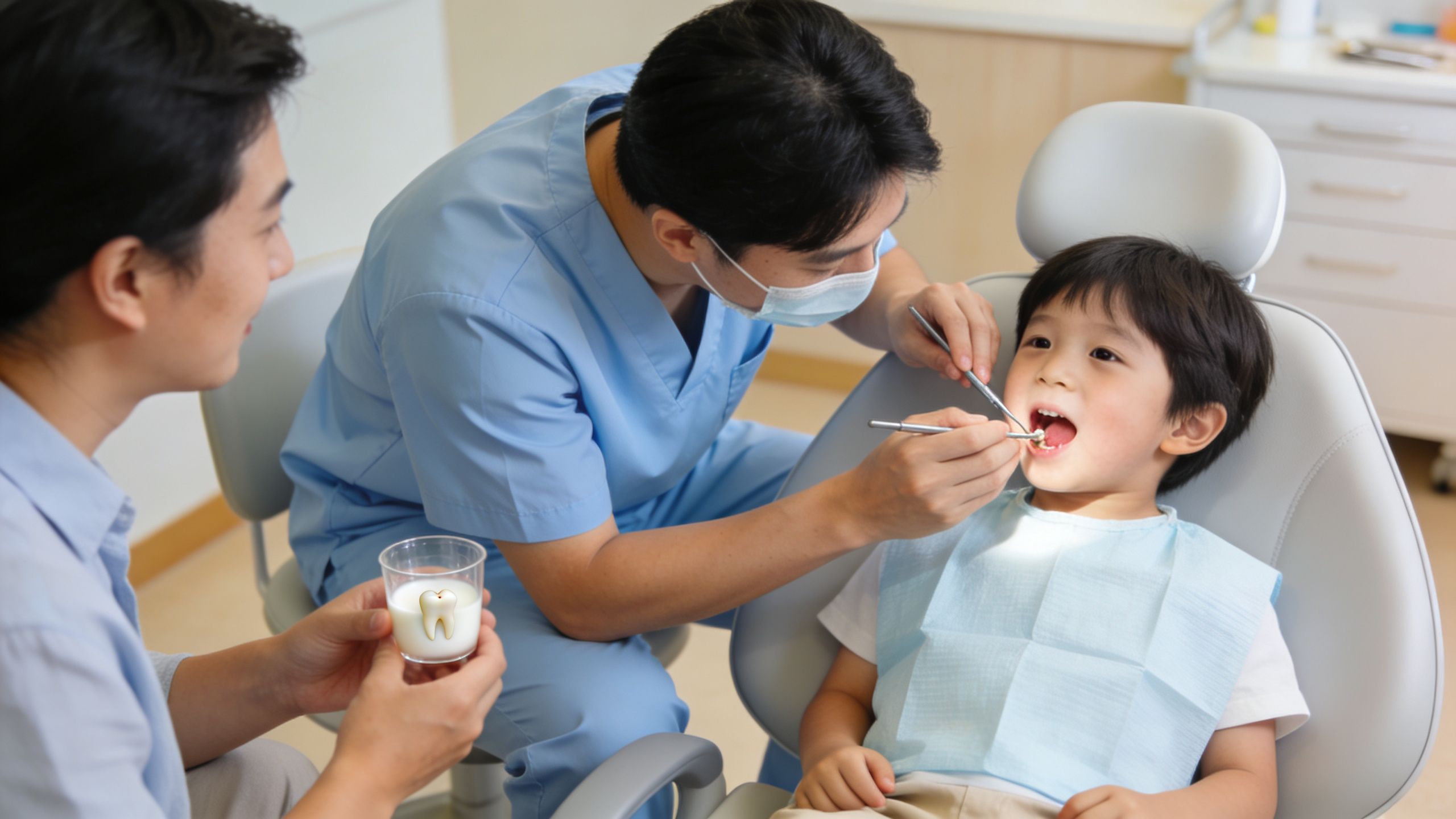
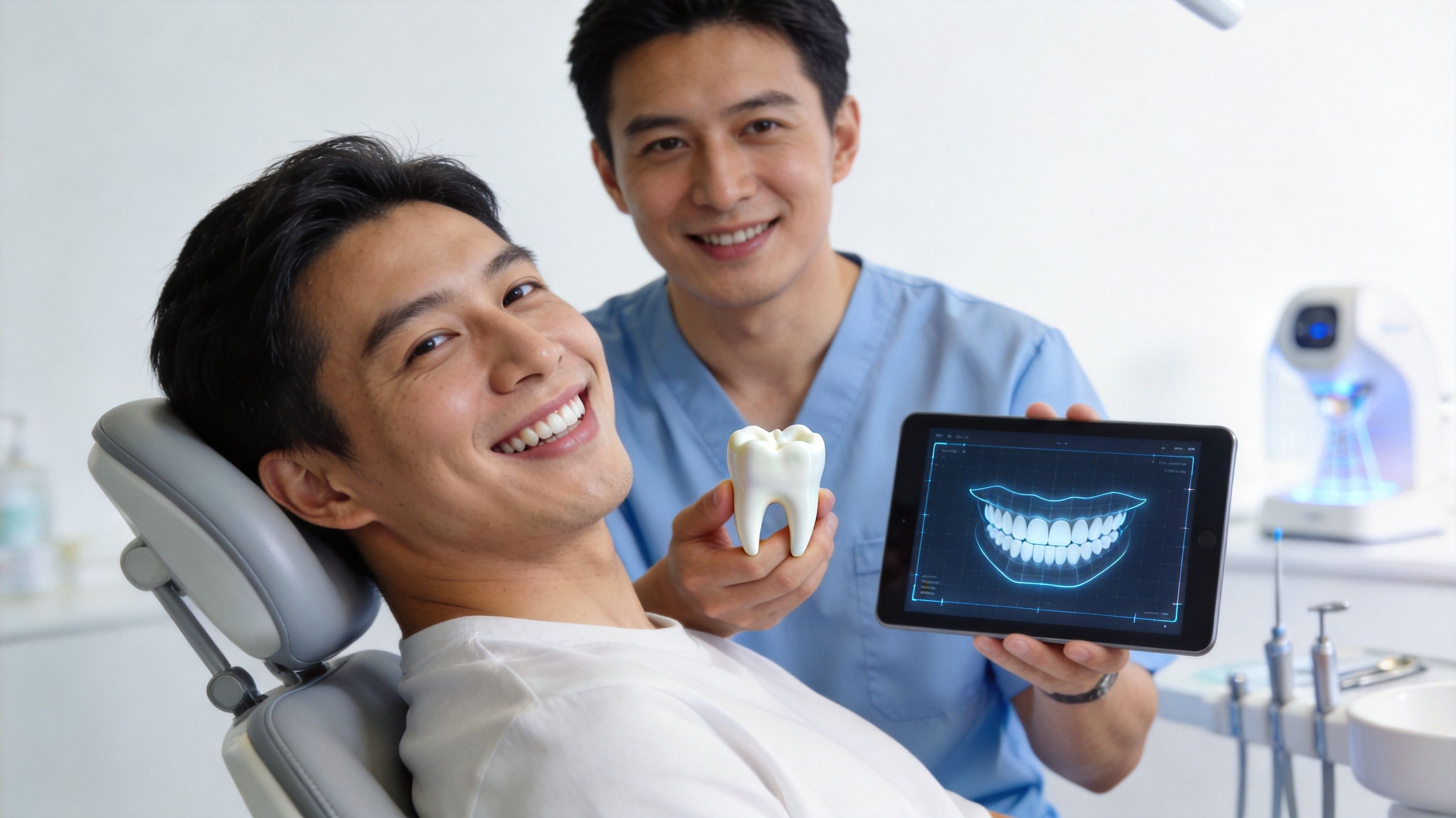








If you've just been told you need a crown, your first thought probably wasn't excitement. Most patients think about multiple visits, temporary crowns, messy impressions, and the hassle of fitting dental work into an already busy week. That's exactly why so many people in Austin and Georgetown ask whether there's a faster, more comfortable option.
There is. Modern digital dentistry has changed the crown process in a very practical way. With in-house scanning, design, and printing, many patients can move from diagnosis to restoration much faster than they expect. For people searching for a dentist near me, an emergency dentist, or a dentist in Austin, TX or Georgetown, TX, speed matters. So does knowing the crown will fit well and look natural.
Your Trusted Dentist for Modern Crowns in Austin and Georgetown
A common situation goes like this. You crack a tooth on a hard snack, or an old filling gives out, and suddenly you need treatment soon. You're not just worried about the tooth. You're worried about missing work, coming back for another visit, and walking around with something temporary that never feels quite right.
That's where digital crown treatment changes the experience for patients in Austin, Georgetown, Cedar Park, Round Rock, Wells Branch, and Liberty Hill.
Why patients ask about faster crowns
A crown is often the right treatment when a tooth is too damaged for a simple filling but can still be saved. That includes teeth with large fractures, deep decay, failing restorations, or damage after a root canal. In those cases, the goal is straightforward. Protect the tooth, restore chewing, and bring back a natural appearance.
Patients looking for restorative dentistry, cosmetic dentist near me, or even tooth extraction alternatives often don't realize that a crown can help preserve a tooth before things get worse.
- Less waiting: Digital workflows can reduce delays that used to come with outside labs.
- More comfort: Scanning is usually easier on patients than traditional impressions.
- Better continuity: The same team evaluates the tooth, designs the restoration, and fits it.
A local option that fits real life
Patients in North Austin and Georgetown often want dentistry that respects their schedule. They want cleanings and exams, digital x-rays, and restorative care in one place without bouncing between offices. That's part of why interest in 3D printed crowns for teeth has grown. The technology isn't just modern for the sake of being modern. It solves specific problems patients have felt for years.
A faster crown matters most when a patient is already dealing with pain, a broken tooth, or a major interruption to daily life.
For busy families, professionals, and anyone trying to avoid a drawn-out dental process, digital crown treatment can make care feel manageable again.
Understanding 3D Printed Dental Crowns
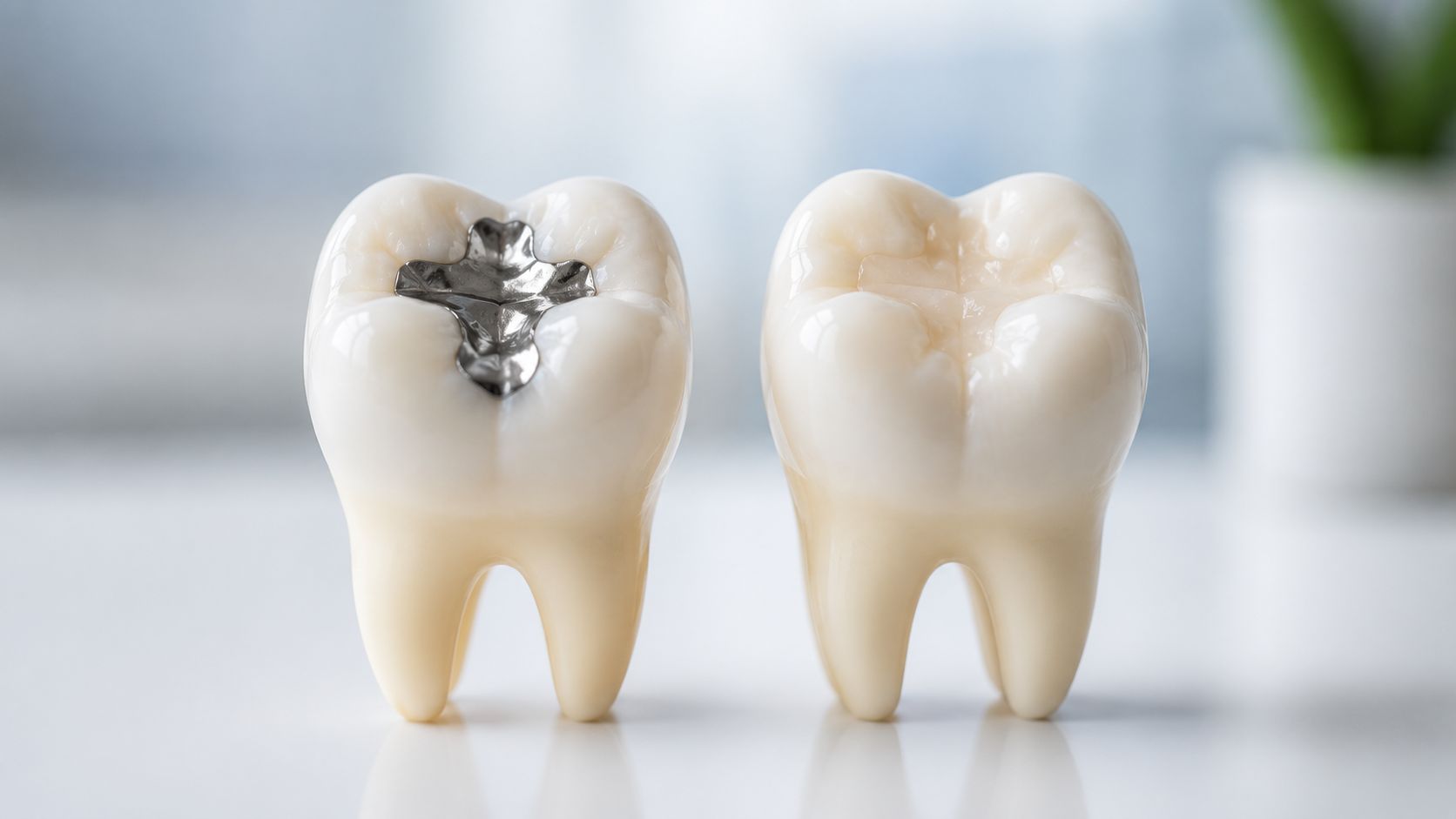
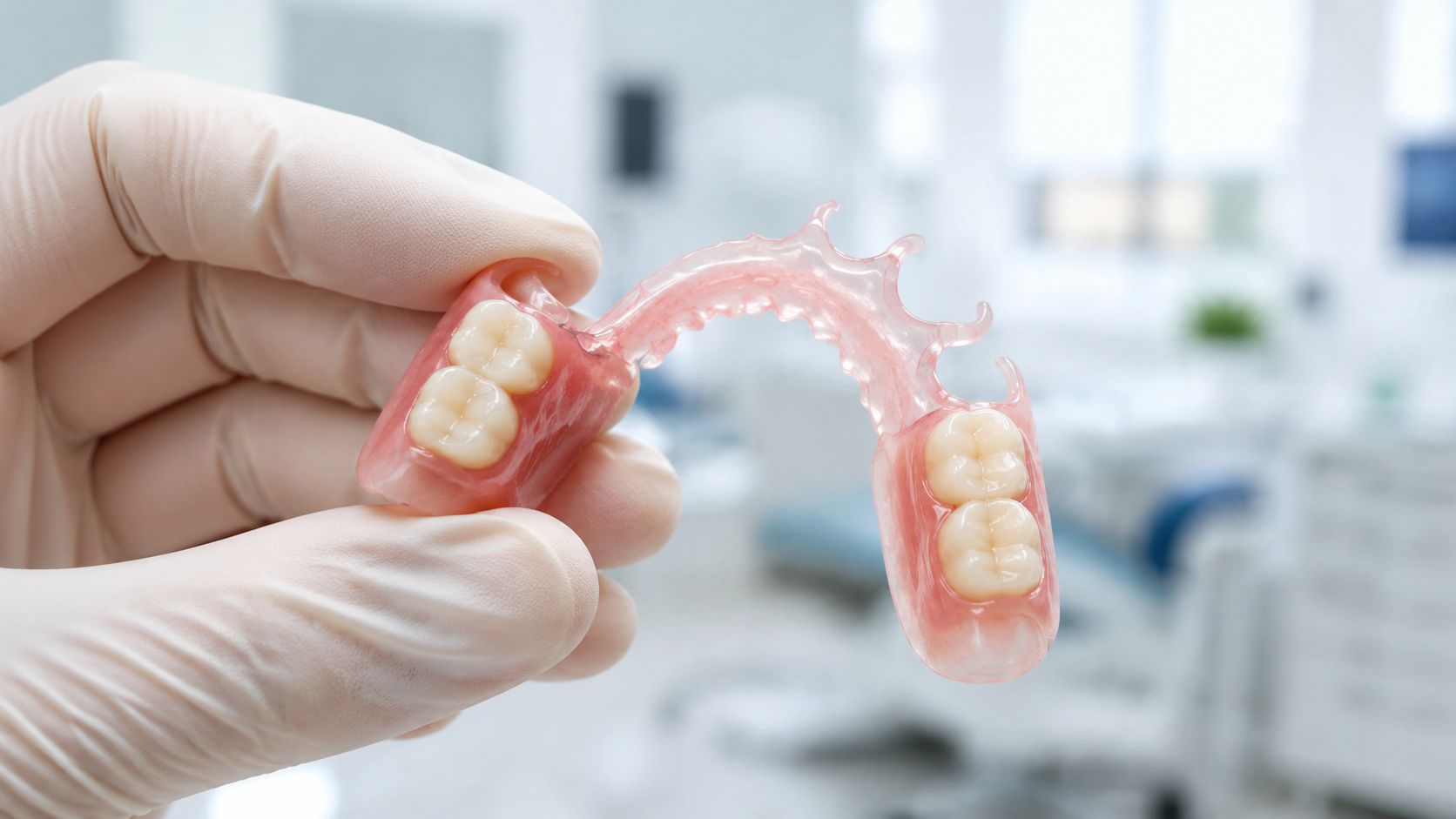
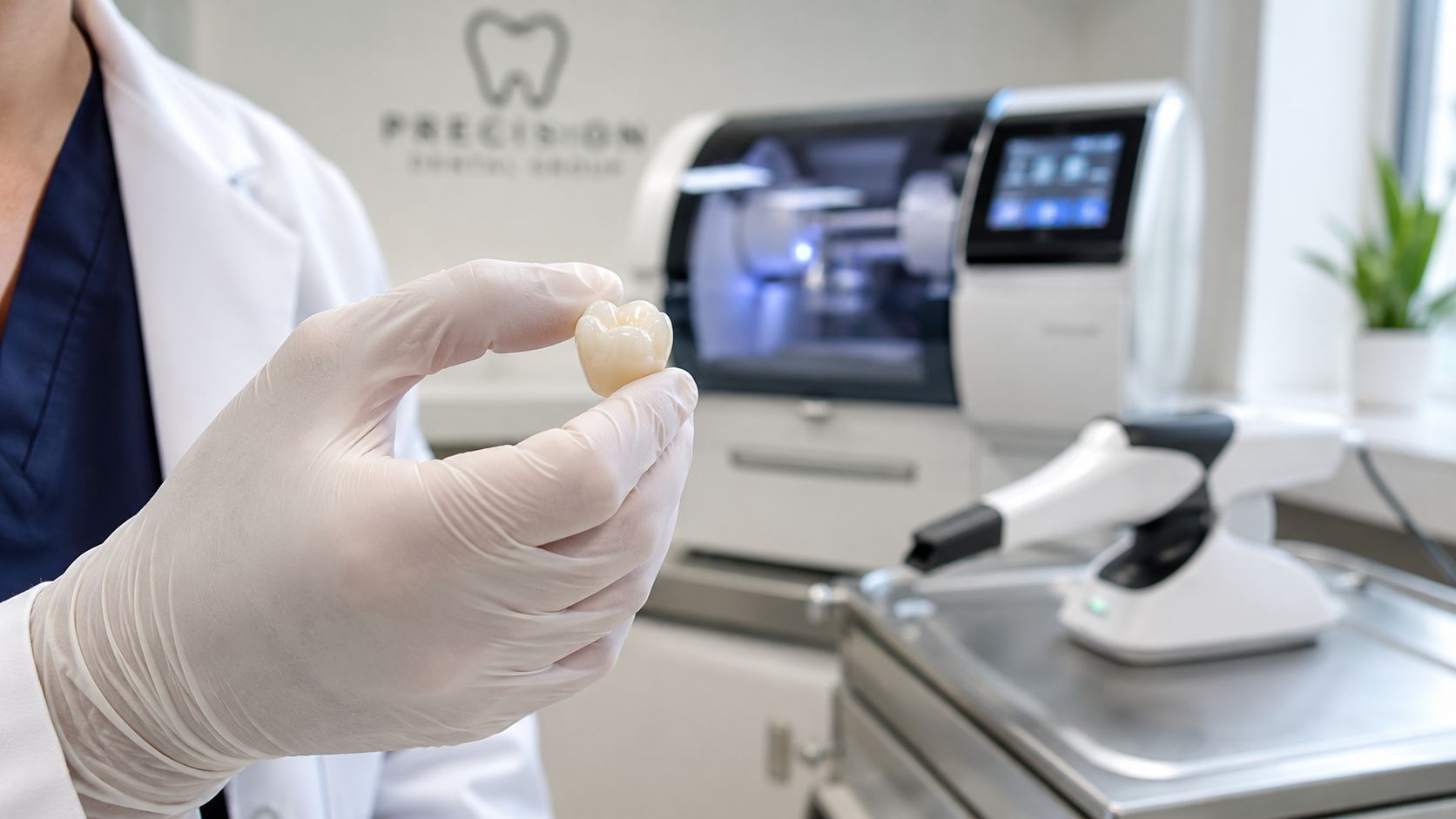
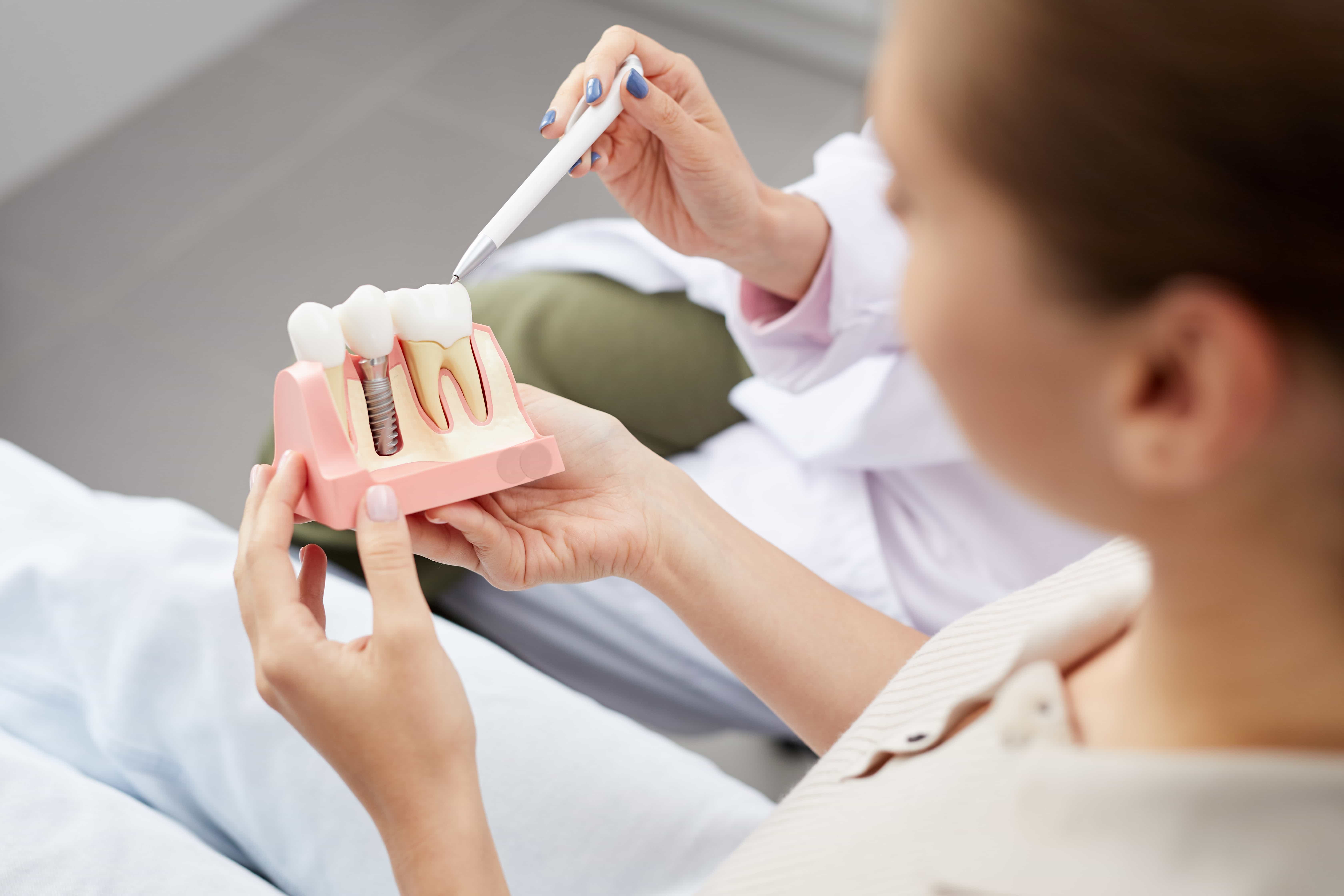
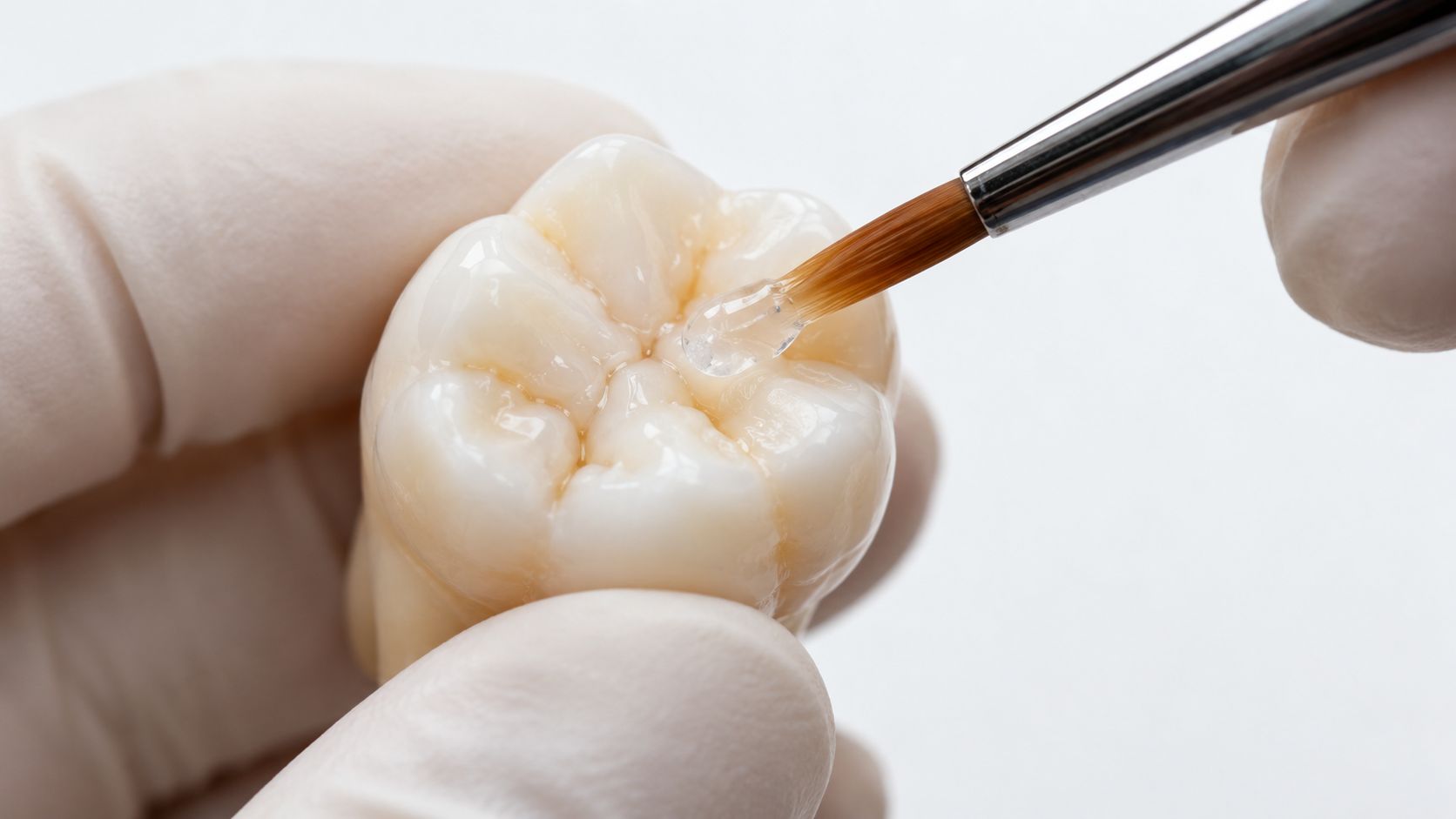
A dental crown is a custom cap that covers a damaged tooth. It restores shape, strength, and function. If the tooth is cracked, heavily filled, worn down, or weakened after treatment, a crown helps protect what remains.
If you want a basic overview of the traditional process, this guide on what a dental crown procedure involves is a useful starting point.
What makes a crown 3D printed
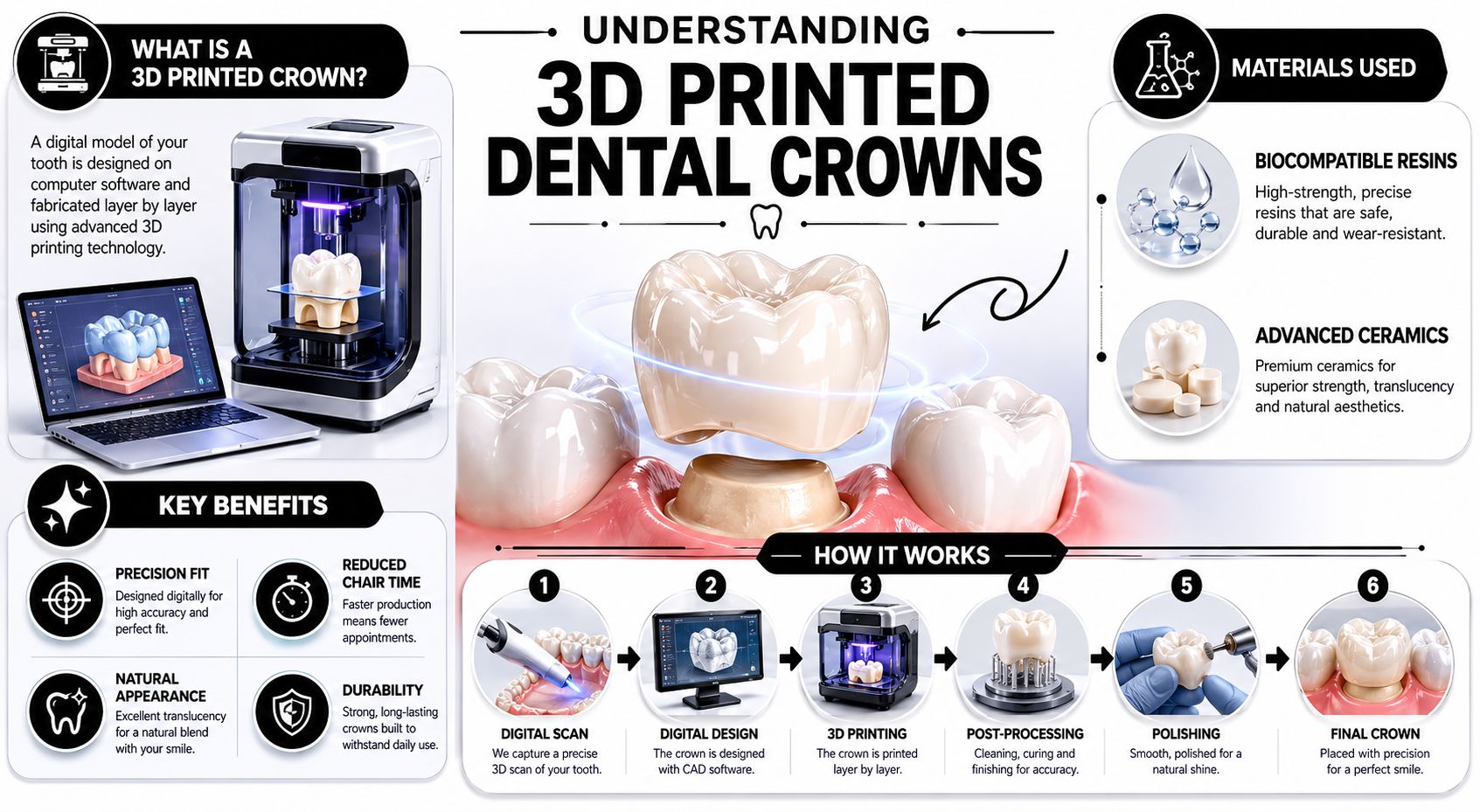
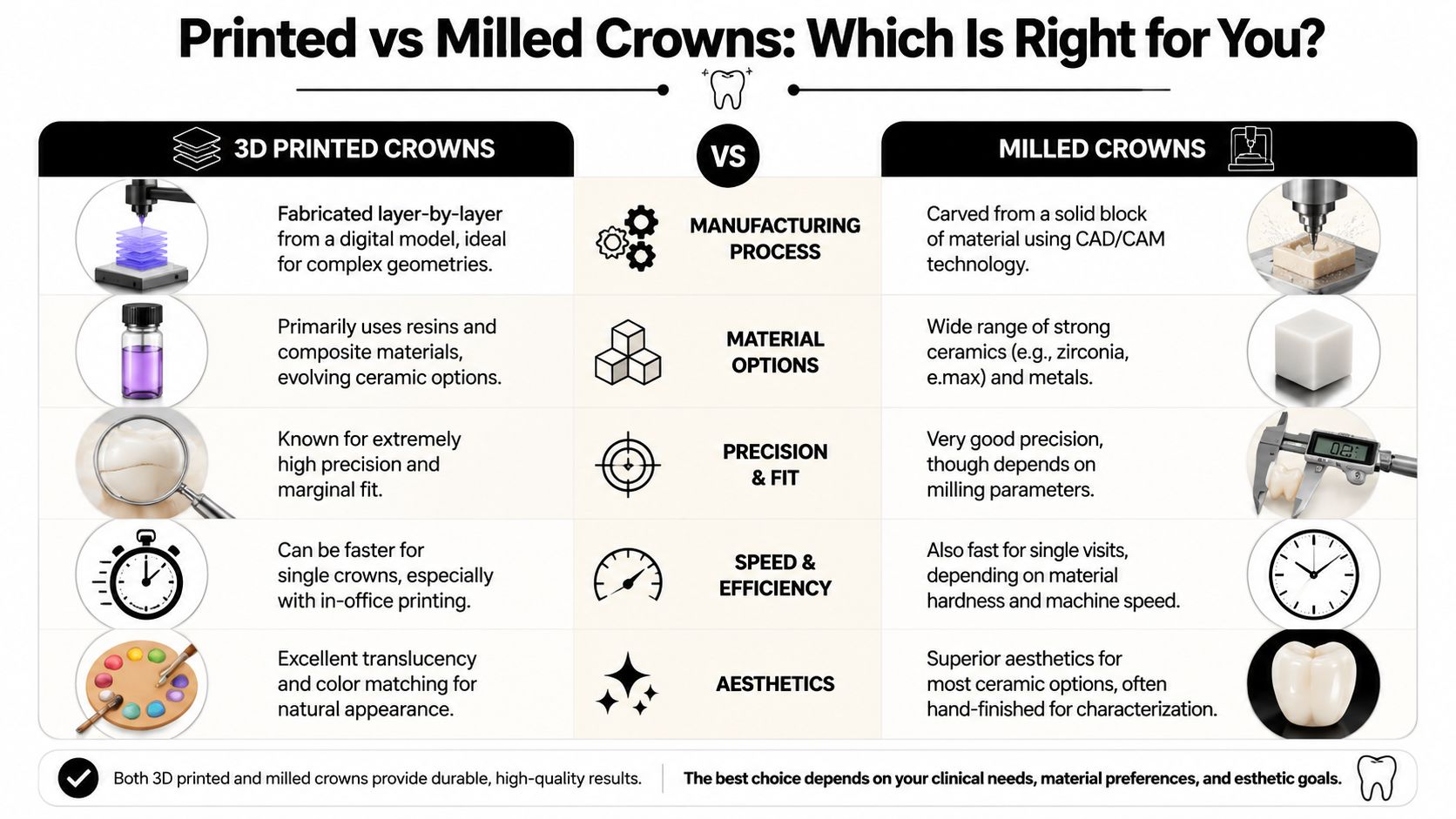
A traditional milled crown is carved from a solid block of material. A 3D printed crown is built layer by layer from a digital design. The difference is simple. One method subtracts material. The other adds it with precision.
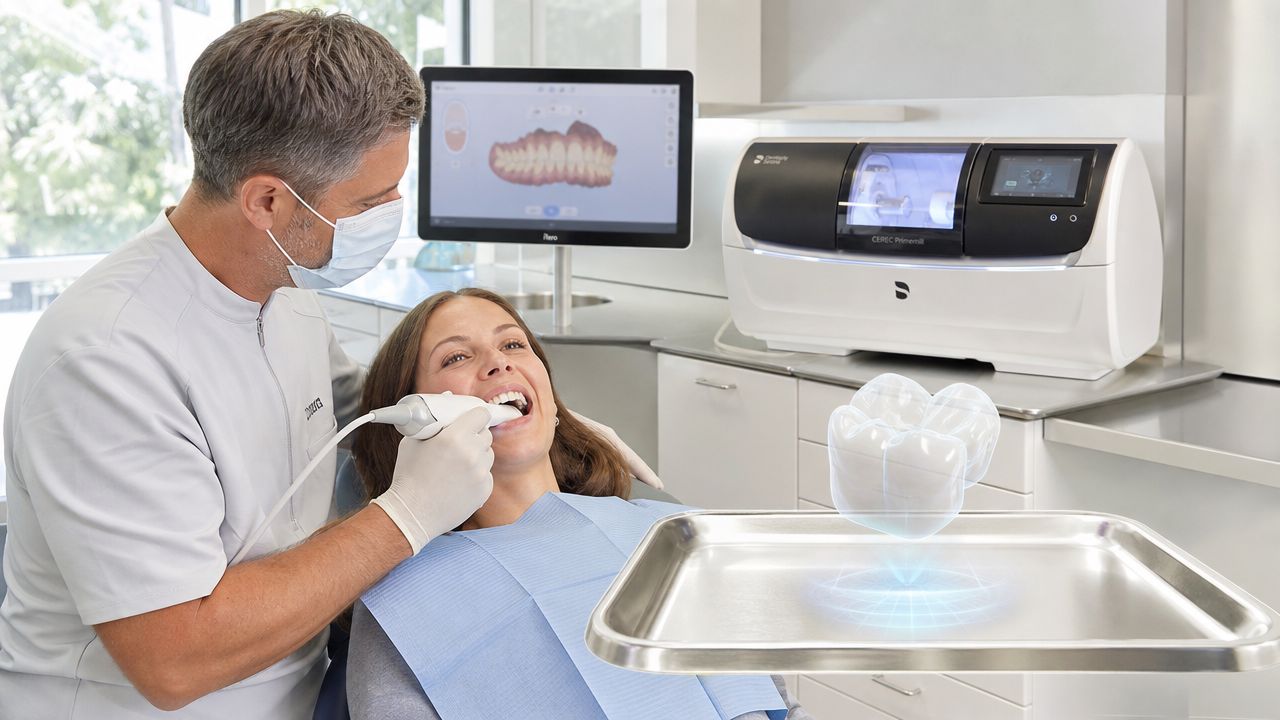
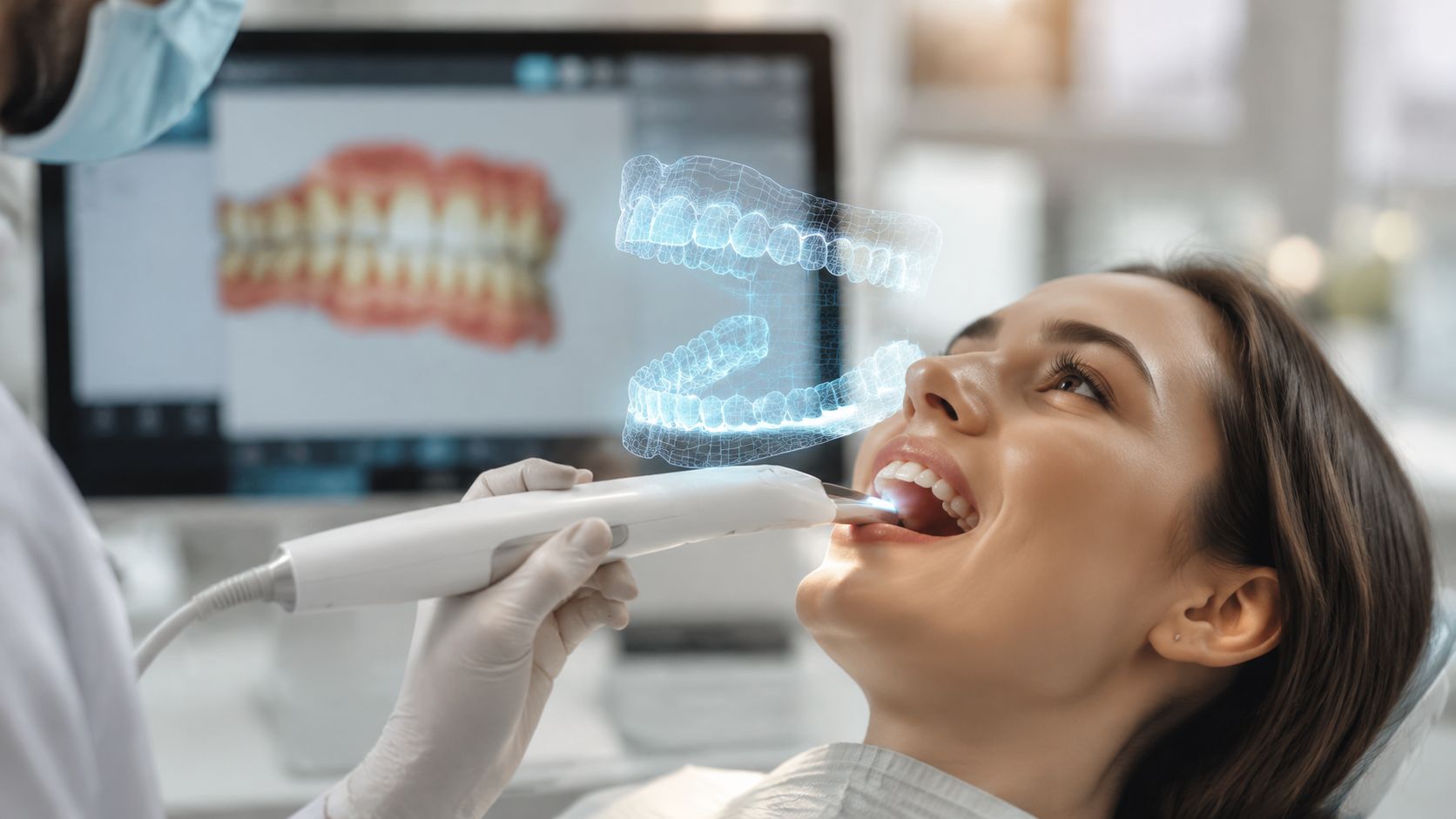
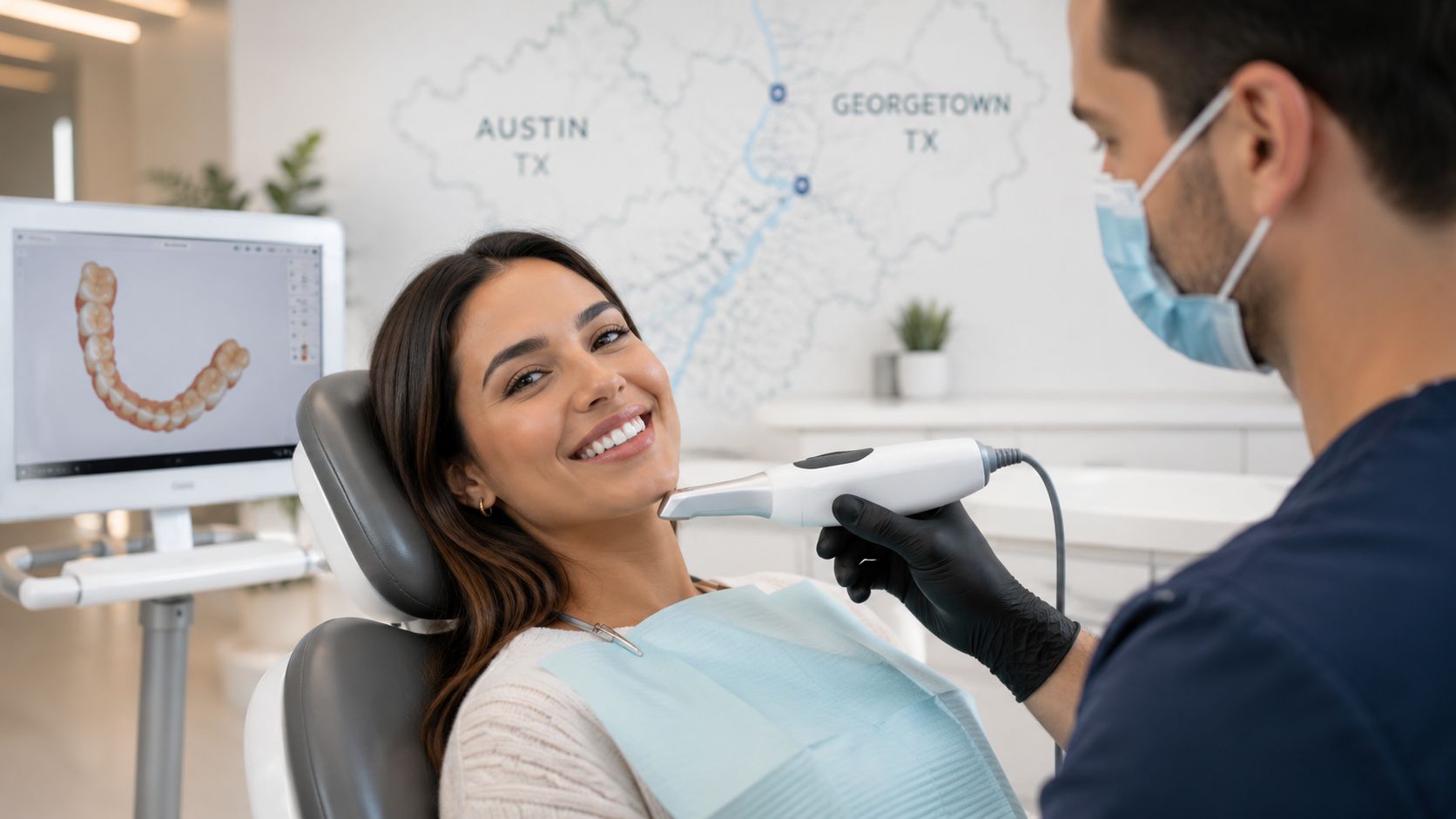
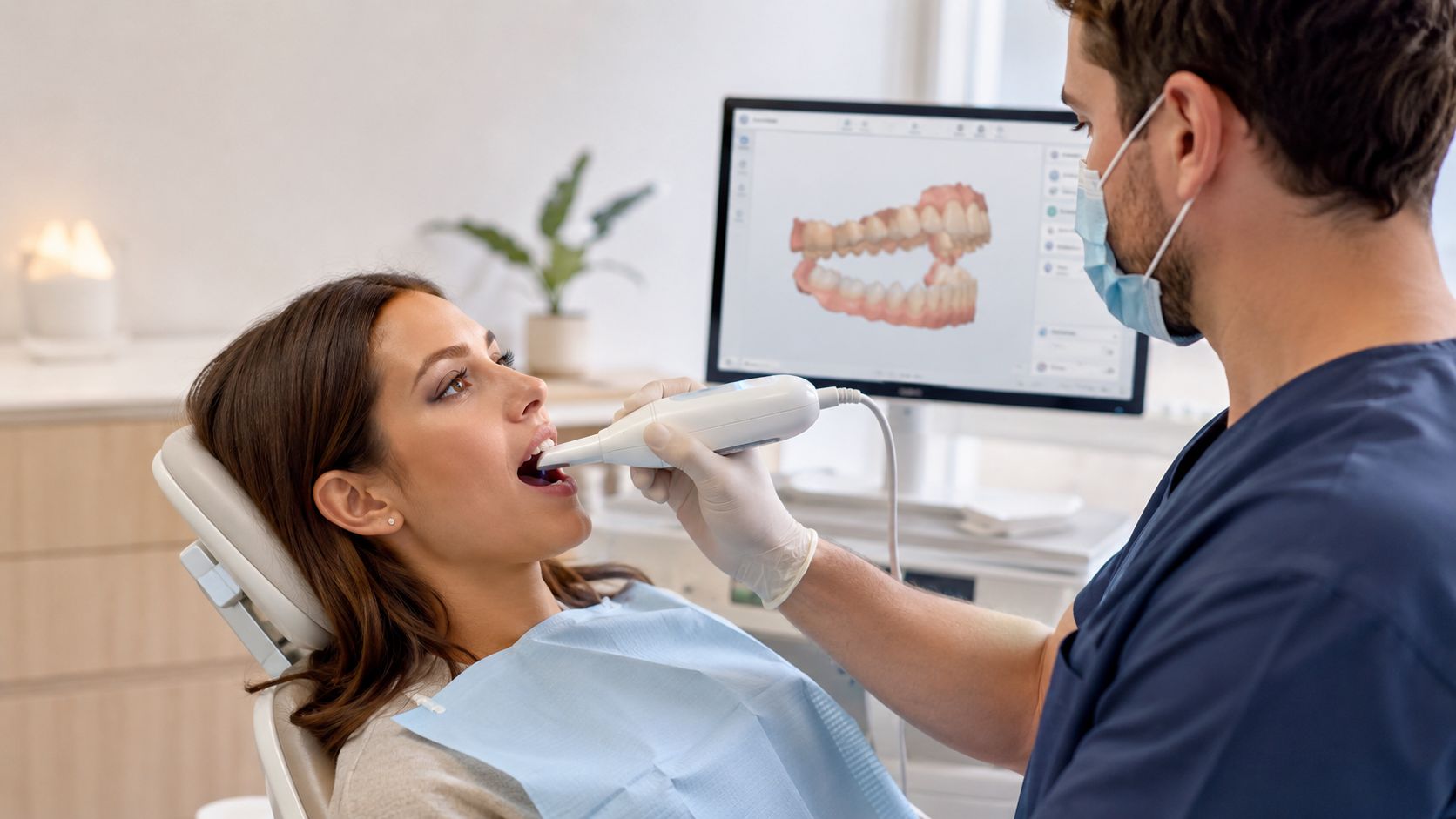
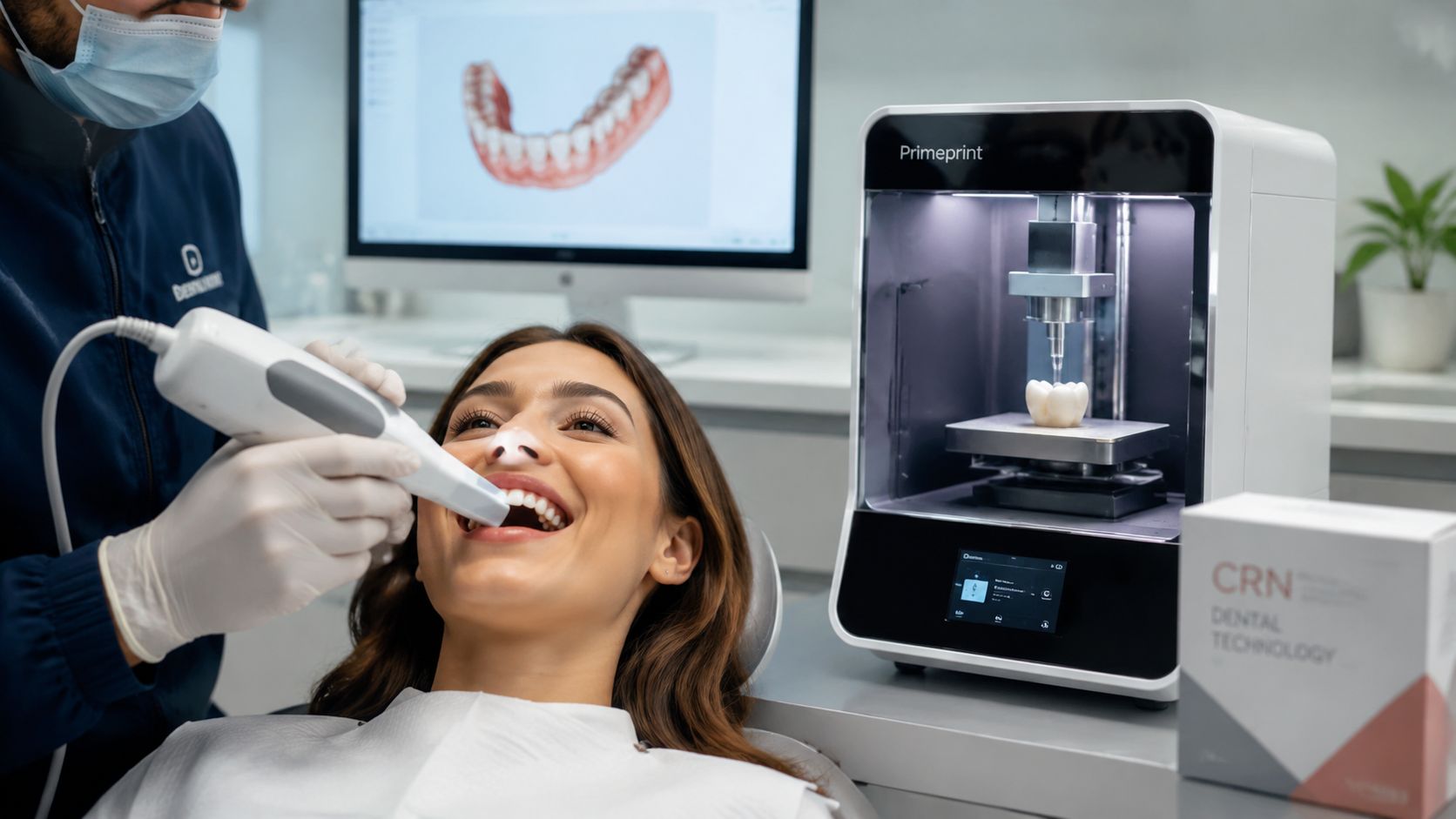
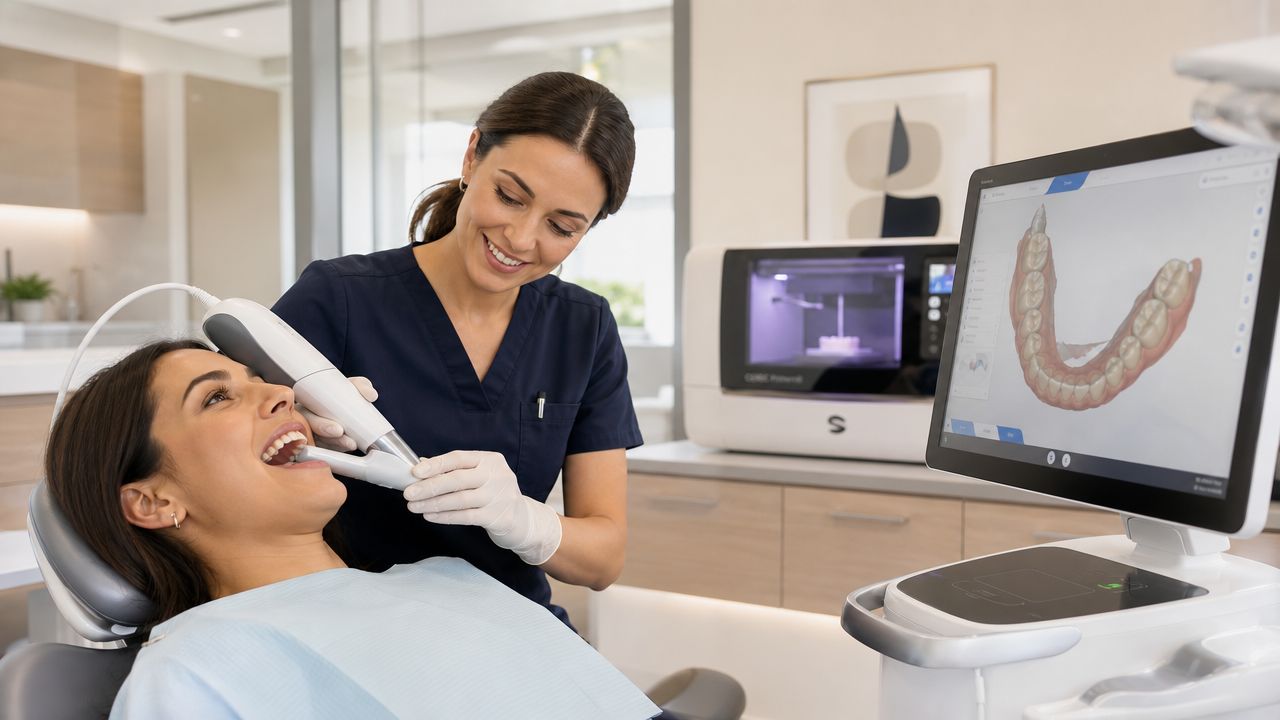
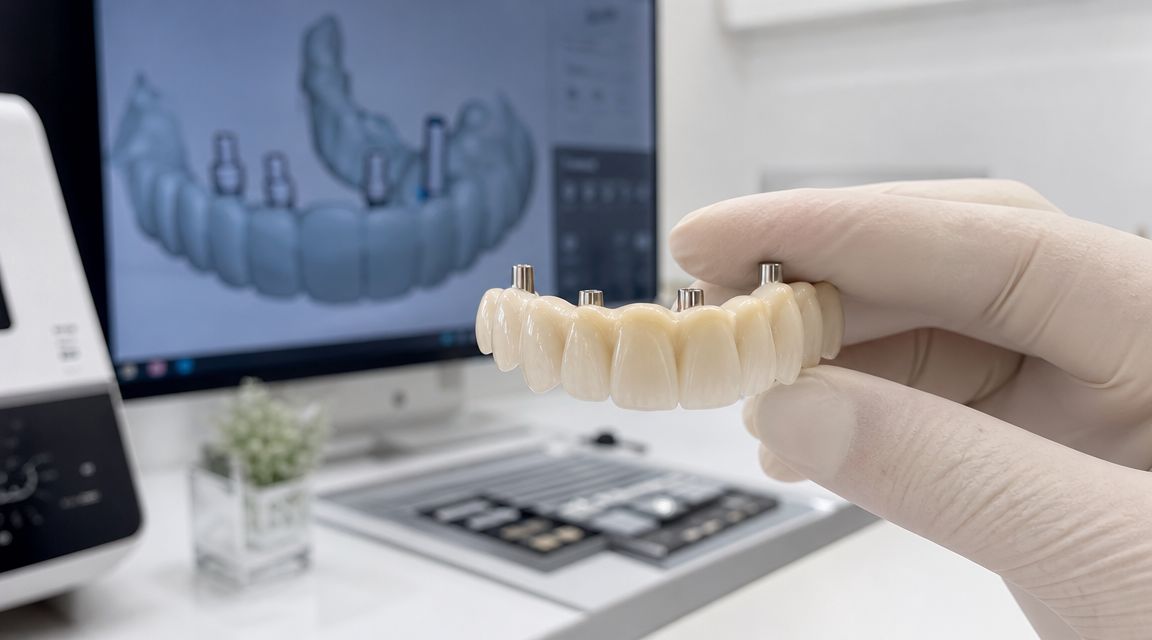
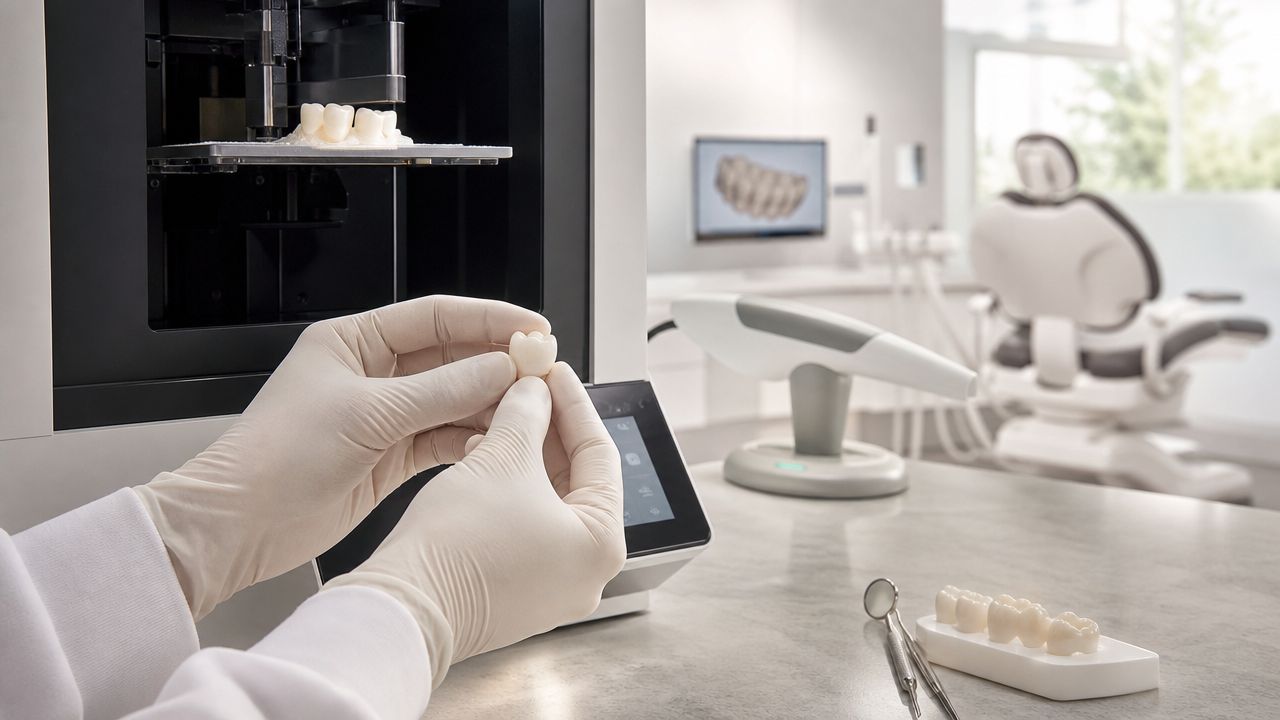
That digital workflow usually begins with an intraoral scan instead of putty impressions. The scan creates a detailed model of your tooth and bite. From there, the crown is designed on a computer and then printed with a validated dental material.
Where 3D printing is already proven
Public marketing often makes it sound like every printed crown is the same. That's not how dentistry works. Current use depends on the material, the workflow, and the clinical situation.
A recent overview from 3Shape notes that 3D printing is already established for night guards, surgical guides, smile designs, interim dentures, and interim crowns for full-mouth rehabilitations, while permanent single-crown use is still part of an evolving workflow in many settings, as described in 3Shape's discussion of when 3D-printed dental crowns are ready for prime time.
While the technology is rapidly advancing for permanent crowns, 3D printing is already a proven game-changer for night guards, surgical guides, and interim crowns.
That matters for patients getting dental implants near me, full-mouth rehabilitation, or cosmetic and restorative treatment plans that need well-fitting interim restorations while longer-term care is completed.
What patients should expect
The most helpful way to think about 3D printed crowns for teeth is this:
| Question | Short answer |
|---|---|
| Is it fast? | Yes, especially with in-house scanning and fabrication. |
| Is it useful today? | Absolutely, particularly for interim and selected same-day workflows. |
| Is it always the right choice? | No. Case selection still matters. |
| Does it replace every other crown option? | Not yet. Milled and other restorations still have an important role. |
That's the honest version patients deserve.
Your Same-Day Crown Journey at 3D Dental
The biggest difference patients notice is how straightforward the appointment feels. Instead of waiting on an outside lab, the crown process can move forward in the office, from scan to design to fabrication.
A local practice feature explains that digital scanning combined with an in-house 3D printing lab can compress the timeline for a new crown from several days or even weeks to just a few hours. For patients in Austin and Georgetown, that can mean fewer appointments and less disruption.
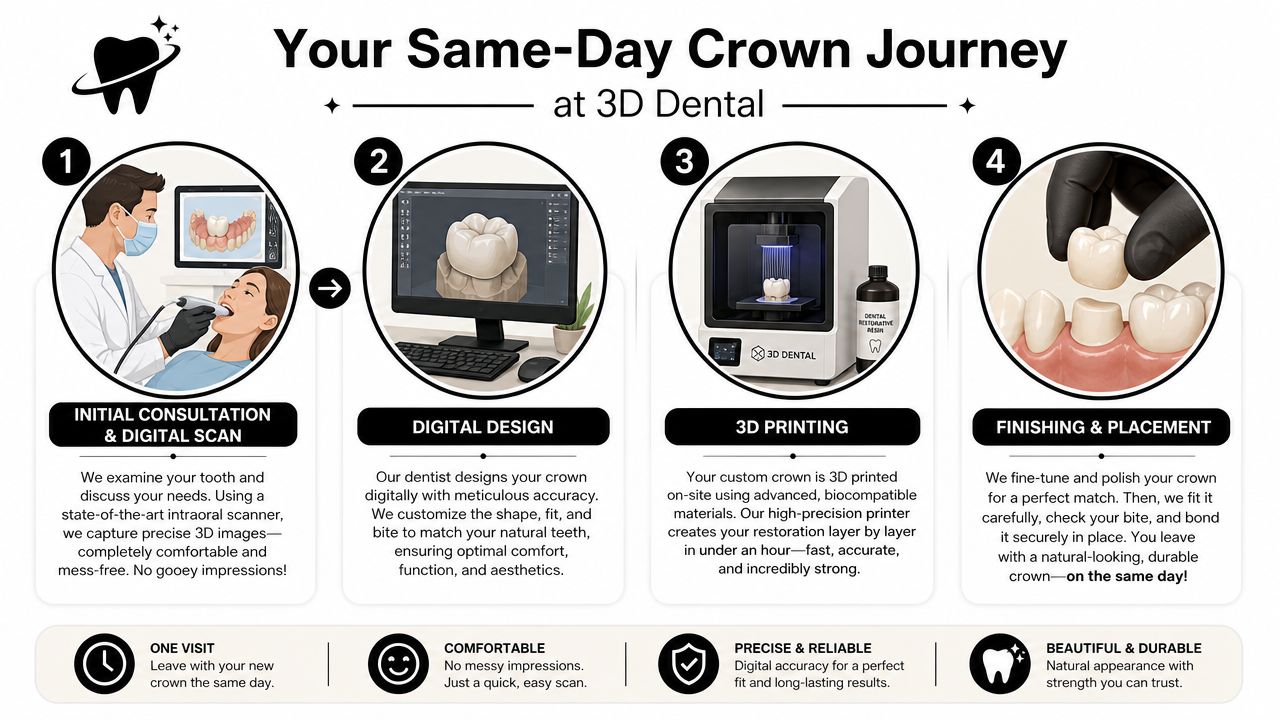
Step 1 The exam and digital scan
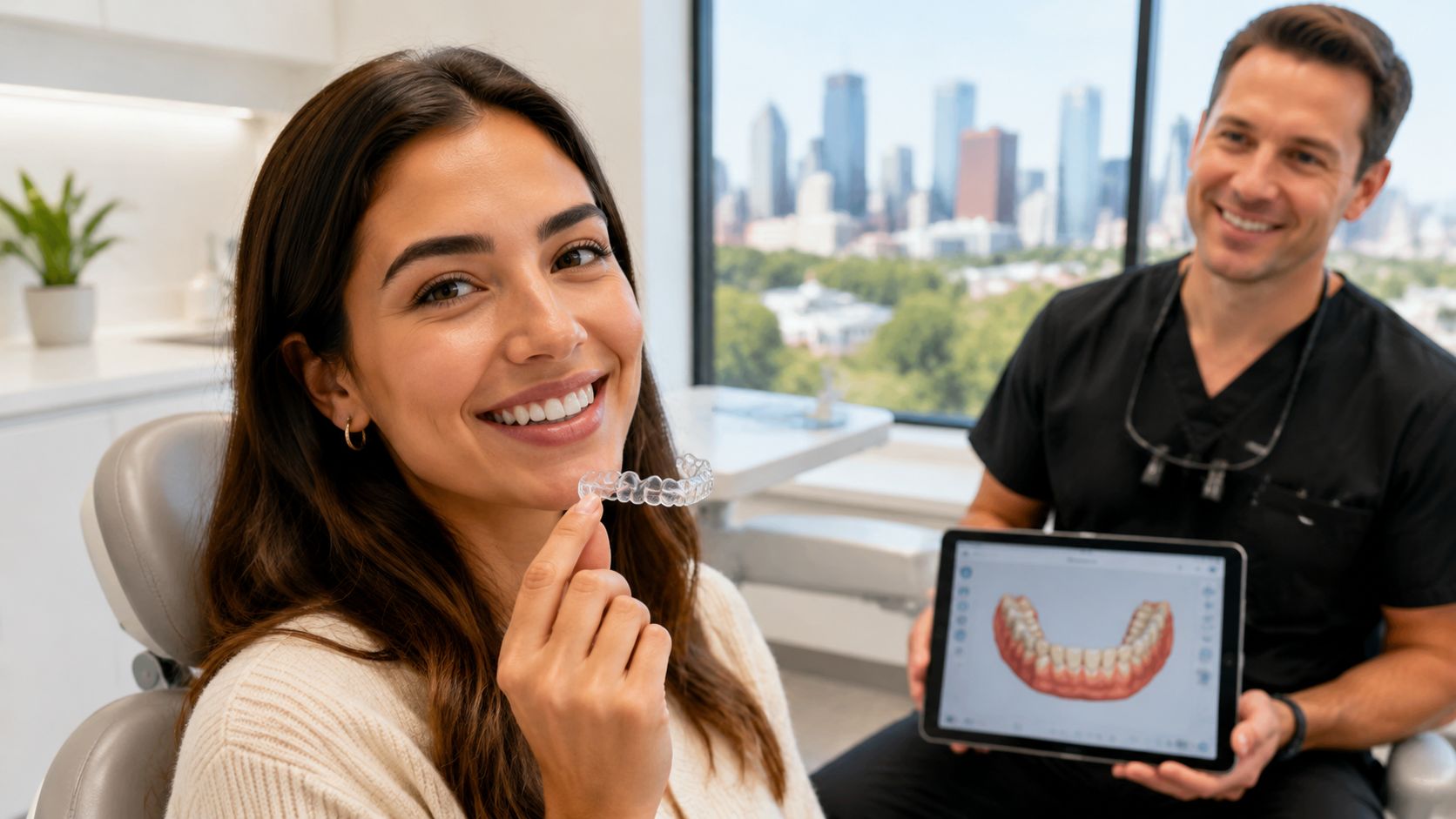
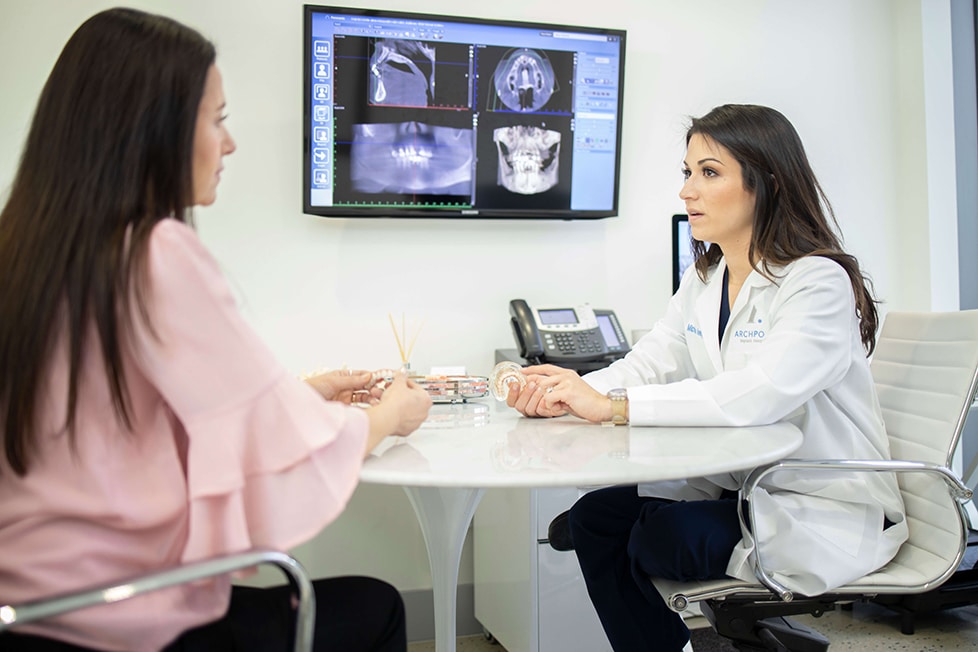
The visit starts with an exam, digital imaging when needed, and preparation of the tooth. Then the team captures a digital scan of the area. Patients usually appreciate this part because it replaces the old impression method that many remember as messy and uncomfortable.
The scan also helps with bite analysis and crown design. That matters because a crown shouldn't just look right. It needs to feel right when you chew and speak.
Step 2 The digital design
Once the scan is complete, the crown is designed on a screen. At this stage, modern dentistry becomes more precise and more personal at the same time. The shape, contours, and bite can be adjusted before the crown is ever made.
For front teeth, the design needs to blend with the smile. For back teeth, strength and bite harmony become a larger part of the conversation. The right design reduces chairside adjustments later.
A same-day crown workflow works best when the scan is clean, the margins are clear, and the bite is planned before fabrication starts.
Step 3 Printing and finishing
After design, the restoration is printed and then finished according to the material's workflow. That finishing stage matters more than patients often realize. A crown isn't ready the second it comes off the printer. It must be processed correctly so fit, surface quality, and performance are consistent.
For readers who want to see the concept in action, this short walkthrough gives a visual sense of the process.
Step 4 Try-in and placement
The final steps are the most satisfying. The crown is tried in, checked for fit and bite, adjusted if needed, and then bonded or cemented into place. In a well-run digital workflow, that last part tends to be smoother because the design and fabrication were handled with the final result in mind from the beginning.
For someone searching for an emergency dentist in Austin or Georgetown after a broken tooth, that kind of speed can make the difference between a drawn-out dental problem and a practical solution.
Printed vs Milled Crowns Which Is Right for You
Patients often ask a reasonable question. If 3D printed crowns for teeth are fast, why would anyone still choose a milled crown? The answer is that both options have real strengths, and the right choice depends on the tooth, the bite, the material, and how the restoration will be used.
Where printed crowns shine
Printing is especially helpful when speed, efficient fabrication, and digital flexibility matter. It fits well into workflows for interim restorations and selected single-crown cases where the material and indication are appropriate.
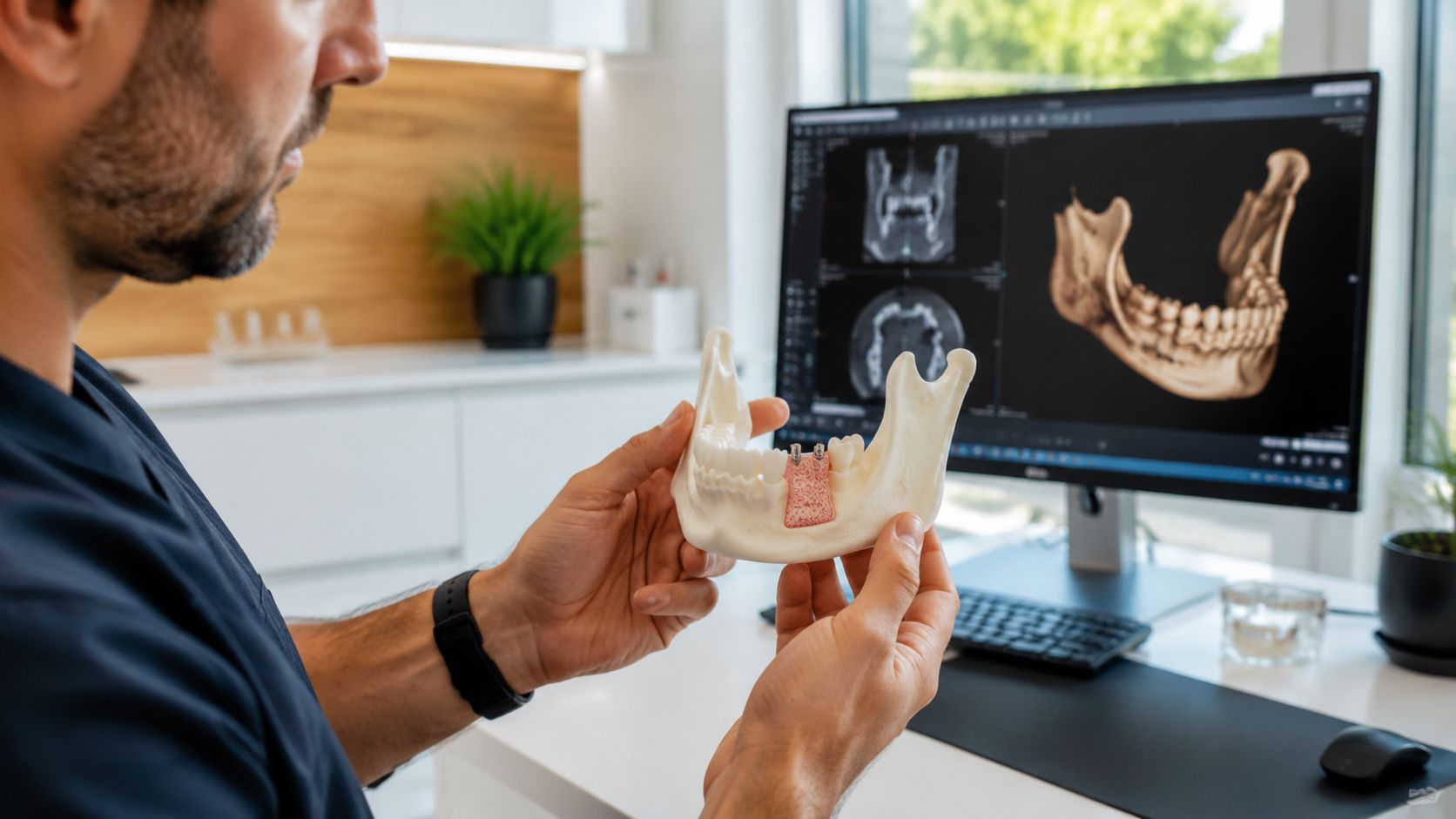
It can also support broader treatment plans. In implant and restorative care, printed appliances and interim restorations can help keep treatment moving without long delays.
Where milled crowns still matter
Milled ceramic crowns remain important, especially when long-term wear resistance is a priority. In an in vitro comparison, CAD-CAM ceramic crowns showed lower wear loss at 14.8 ± 2.3 µm than 3D-printed resin crowns at 29.1 ± 3.7 µm, with a statistically significant difference of p = 0.001, according to this comparative analysis of ceramic and 3D-printed resin crowns. The same study reported greater surface roughness in the printed resin group, with Ra 0.75 ± 0.10 µm versus 0.47 ± 0.07 µm for ceramic crowns.
That doesn't mean printed crowns are poor quality. It means they're not identical to ceramic in every performance category.
While in-vitro studies show that traditionally milled ceramic crowns may currently offer greater wear resistance, the resin materials for 3D printing are advancing rapidly.
A practical way to decide
This is the conversation worth having in the chair, not just online.
| Situation | Printed crown may make sense | Milled crown may make sense |
|---|---|---|
| You need fast turnaround | Yes | Sometimes |
| You need an interim restoration | Often | Less commonly |
| The tooth takes heavy posterior bite load | Depends on case and material | Often a strong option |
| The case calls for established ceramic wear performance | Less often | Often |
| A digital in-house workflow is a priority | Yes | Yes |
What the material data tells us
There are also permanent printed crown materials with promising mechanical data. SprintRay reports a flexural strength of 150±25 MPa and density of 1.6–1.7 g/cm³ for its ceramic crown resin. In technical data cited there, average fracture loads were 3,865 N, 3,978 N, and 4,012 N at occlusal thicknesses of 0.5 mm, 1.0 mm, and 1.5 mm, with no statistically significant thickness effect, as shown in SprintRay's ceramic crown material study PDF.
The practical takeaway is simple. Some printed materials are becoming strong enough for selected definitive use, but material choice and workflow discipline still matter. Dentistry isn't choosing between old and new. It's choosing the right tool for the tooth in front of you.
How Our In-House Lab Improves Your Dental Care
A printer by itself doesn't guarantee a good crown. The process around it matters just as much. Research has shown that final fit is influenced by printer technology and build settings. In a controlled study, both printer technology and build angle significantly affected marginal discrepancy in 3D-printed permanent crowns, with p < 0.001, even though the tested crowns remained within clinically acceptable limits, as reported in this study on printer technology, build angle, and marginal fit.
That finding matters because patients usually hear about speed, not workflow control. But fit, margin accuracy, and adjustment time are tied to what happens behind the scenes.
Why in-house control matters
When scanning, design, printing, and finishing stay under one roof, the team can respond in real time. If a margin needs another look, the scan can be reviewed immediately. If the design needs a slight refinement, it can be changed before the crown is finalized.
For patients, that means a more efficient visit. For the clinical team, it means fewer handoffs and tighter quality control.
- Fewer delays: There's no shipping back and forth to an outside lab.
- Closer collaboration: The dentist and lab workflow stay connected during the same appointment.
- Better troubleshooting: Adjustments can happen before placement instead of after a long wait.
Why this matters for busy patients
This is especially useful for people balancing work, school schedules, or urgent dental needs. If you've searched for a dentist in Georgetown, TX, dentist in Austin, TX, or new patient exam with modern technology, this is one of the clearest differences in the patient experience.
Patients who want to compare treatment details can review crowns and bridges at 3D Dental as one example of how a digital crown workflow fits into broader restorative care.
The real benefit of an in-house lab isn't just speed. It's that the same clinical team can manage the variables that affect fit.
Precision is a workflow issue
The most reassuring part for patients is this. A crown isn't more accurate because it's labeled digital. It's more accurate when the office controls scanning quality, printer settings, build orientation, and post-processing carefully.
That's what shortens chair time in a meaningful way. Not hype. Good systems.
Are 3D Printed Crowns a Lasting Solution
This is the question most patients care about after hearing the technology sounds convenient. Will it last?
The honest answer is that durability depends on whether the crown is temporary or permanent, what material is used, where the tooth is located, and how heavy your bite is. A front tooth, a back molar, and a patient who grinds their teeth don't all create the same demands.
What we know about temporary printed crowns
For temporary restorations, the clinical evidence is encouraging. A 2024 retrospective cohort study of 3D-printed temporary crowns reported a 98% survival rate, with only 2 catastrophic fractures among 98 restorations and 96 restorations still in place at the end of follow-up, according to the published study on 3D-printed temporary crown survival. The same study found significant improvement in oral-health-related quality of life and satisfaction with aesthetics.
That's an important point for patients who hear the word “printed” and assume “fragile.”
What good care looks like after placement
A crown still needs good habits to last well.
- Brush consistently: Keep the margin clean where the crown meets the tooth.
- Floss gently but thoroughly: Gum health affects the long-term success of any restoration.
- Protect against grinding: If you clench or grind, a night guard may be part of the plan.
- Keep recall visits: Cleanings and exams help catch wear, bite issues, or cement problems early.
Who is a good candidate
Some patients are excellent candidates for a printed restoration. Others will do better with a milled ceramic option or another restorative plan. That's why the consultation matters. The tooth condition, bite, appearance goals, and timeline all shape the recommendation.
For patients in Austin, Georgetown, Cedar Park, Round Rock, Wells Branch, and Liberty Hill, the best next step is a clinical exam, not a guess based on marketing language.
Get Your Fast Custom Crown at 3D Dental
If you need a crown, you probably want three things. You want the tooth fixed quickly, you want the restoration to fit comfortably, and you want clear advice about which option makes the most sense for your case.
That's where a digital workflow helps. It can reduce waiting, simplify the visit, and give patients a more comfortable experience from scan to placement. It also supports better coordination when your care involves more than one service, such as emergency treatment, restorative dentistry, cosmetic dentistry, or planning around dental implants.
For patients in Austin, TX and Georgetown, TX, and nearby communities including Wells Branch, Cedar Park, Round Rock, and Liberty Hill, getting help shouldn't mean a long, drawn-out process. If you've been searching for a dentist near me, cosmetic dentist near me, emergency dentist, or a practice that offers modern dental care under one roof, this is the kind of treatment model worth asking about.
Whether you need a crown because of a cracked tooth, deep decay, a failing filling, or a recent dental emergency, the right plan starts with an exam. From there, the team can determine whether a printed crown, a milled crown, or another restorative option is the right fit for your mouth, your bite, and your schedule.
If you're ready to restore a damaged tooth without unnecessary delays, schedule a visit with 3D Dental. Patients in Austin and Georgetown can book a new patient exam or consultation online, ask about insurance and payment options, and get help with everything from routine dental care to same-day restorative treatment.
Ready to get started?
Schedule a free, no obligation consultation with our team and see what's possible for your smile!
Georgetown
- Mon-Thurs8:30am-5pm
- Fri8am-3:30pm
- Sat-SunClosed
Austin
- Mon-Tues8am-5pm
- Wed-Thurs9am-6pmFri8am-2pm
- Sat-SunClosed